


If you’re wondering how long does THC stay in your body, it depends on several factors. THC can be detected from a few days to several weeks based on consumption frequency, metabolism, and the drug test type. Common questions about how long does weed or marijuana stay detectable relate to detection windows.
This article covers detection times for urine, blood, saliva, and hair tests, along with factors influencing how long THC remains in your body. Body fat percentage, consumption methods, body mass index (BMI), metabolism, age, and gender all affect the detection window for THC and its metabolites.
Key Takeaways:
- THC’s retention in the body is influenced by factors such as frequency of use, body fat percentage, metabolism, and genetic makeup, with chronic users retaining THC for longer periods.
- Detection times for THC vary by testing method, with urine tests identifying usage for up to 30 days in chronic users, while blood tests can only identify recent use for a few days.
- Effective detoxification from THC primarily relies on time and abstinence; no quick methods are clinically validated, and excessive hydration does not accelerate THC elimination.
Introduction to THC and Marijuana
Marijuana, commonly referred to as cannabis, is a widely used psychoactive substance that contains the active compound tetrahydrocannabinol (THC). THC is the primary ingredient responsible for the characteristic “high” experienced during marijuana use. Once consumed, THC is absorbed into the bloodstream and distributed throughout the body, where it is stored in fatty tissues. This fat-soluble nature means that THC can remain in the body for extended periods, especially in individuals with higher body fat percentages.
The length of time weed stays in your system depends on several factors, including how often you use marijuana, your body fat percentage, and the specific consumption methods—such as smoking, vaping, or ingesting edibles. These variables influence how long weed and its metabolites can be detected by different drug tests, including urine tests, blood tests, and hair tests. Because employers often require drug tests to detect marijuana use, understanding how long THC remains in your system is important for both recreational and medicinal users. Ultimately, the detection window for THC is shaped by a combination of personal habits and physiological factors.
How Your Body Processes THC
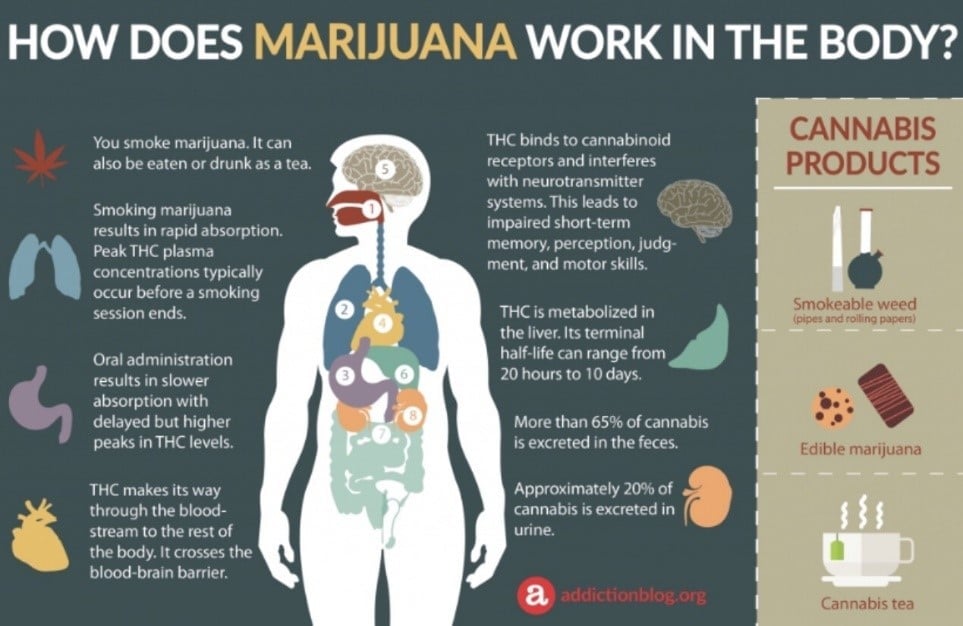
Illustration showing how your body processes THC after smoking marijuana.
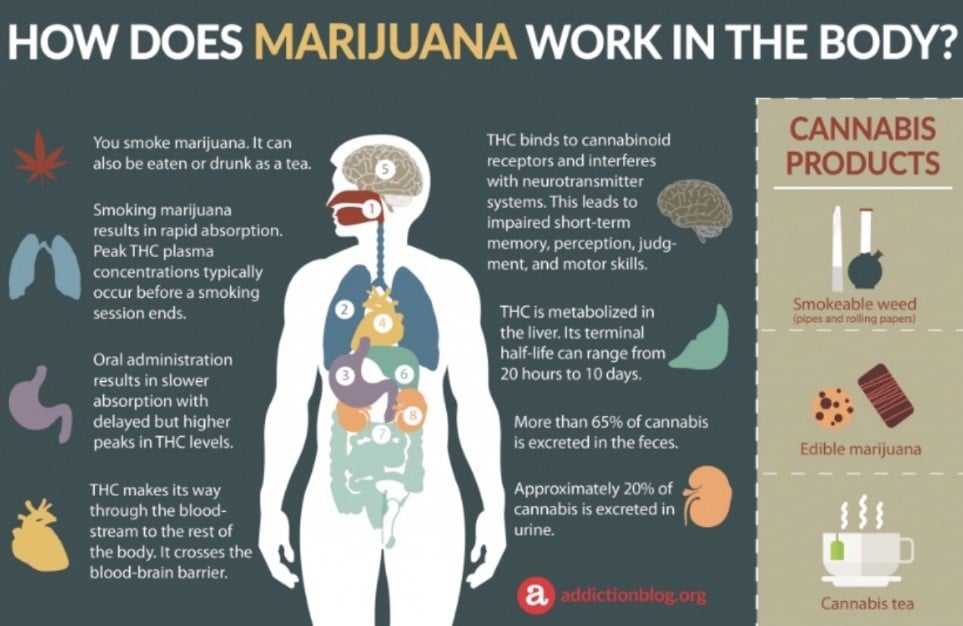
When you engage in smoking marijuana, THC is rapidly absorbed by the lungs and then enters the bloodstream almost instantaneously. If eating edibles, on the other hand, THC is first absorbed through the liver before it makes its way into your bloodstream. The manner in which marijuana is consumed plays a crucial role in determining how your body processes THC. THC is the psychoactive component in marijuana, responsible for producing the drug’s intoxicating effects by interacting with the brain’s cannabinoid receptors.
As soon as it’s introduced to the bloodstream, THC undergoes a significant transformation within the liver where it changes into 11-hydroxy-THC—a substance that subsequently gets broken down into inactive compounds. But because of THC’s ability to dissolve in fat, rather than remain idle within bodily fluids. THC binds to fat cells and is stored in the body’s fatty tissues, where it can be slowly released over time. Fatty tissues known as adipose tissue absorb this compound prior to metabolism taking place. This explains why individuals with more fatty deposits might experience prolonged retention times for substances like THCs due to their half lives being influenced by increased body fat levels.
Not everyone metabolizes THC at an identical rate since factors such as frequency of consumption and genetic variations can greatly affect efficiency when processing this compound. The way the body processes THC is also influenced by body mass index (BMI) and metabolism, as higher BMI and slower metabolism can lead to longer THC retention. THC is metabolized in the liver into various metabolites, which are what drug tests typically detect. Approximately 65% of THC is excreted through feces and 20% leaves the body through urine. A faster metabolic rate breaks down and excretes THC metabolites quicker, reducing the detection window, while metabolism generally slows with age, affecting how long THC remains in the system. Habitual users are likely to have longer detection periods compared with those who use marijuana less frequently due to these variables affecting enzymatic activities responsible for breaking down thc within one’s system.
Detection Times for THC
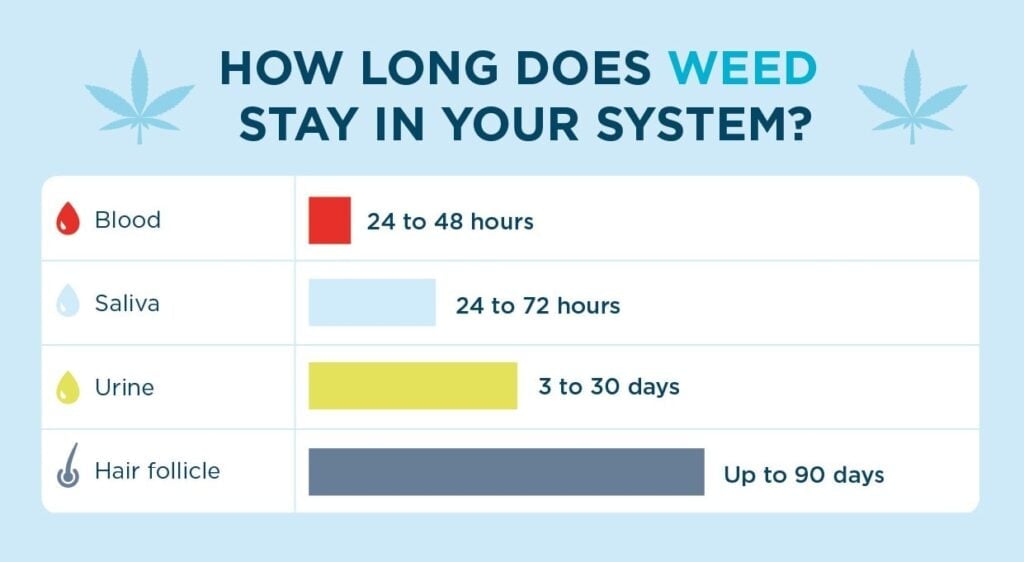
The length of time that marijuana is detectable in your body can differ, as it’s influenced by multiple elements such as how often you use it and your individual metabolic rate. The process of determining an exact duration isn’t simple due to these varying factors. Through several testing methods—urine, blood, saliva, and hair tests—THC presence can be identified over periods ranging from a few hours up to several weeks after ingestion. Each of these methods has different detection windows, meaning the period during which THC can be detected varies depending on the test used.
Drug tests are commonly used to identify marijuana detection and other drug use, and the detection windows can vary for many drugs depending on factors like body composition and usage patterns. The sensitivity of the test also affects the detection period for THC, with standard tests typically using a cutoff level of 50 ng/mL.
Typically, THC could appear in urine tests for about 30 days for individuals who frequently use cannabis. In contrast, the full clearance of weed from one’s system may take between five to 65 days post-use based on the consistency of consumption.
Urine Tests
Urine tests are widely regarded as the most common method for detecting the use of marijuana, esteemed for both their ease of use and dependability. In individuals who partake in marijuana occasionally, THC may remain detectable in urine up to three days post-use. Those who frequently consume marijuana might yield a positive test result even 70 days later. Notably, after just one instance of usage, traces of THC can be found in urine for a duration that extends to roughly 72 hours.
For frequent users, the detection window for urine tests can extend to several weeks due to the accumulation of THC metabolites in the body. This accumulation is why THC metabolites can be detected for weeks after use. Testing positive on a urine test can result in a positive drug test, which may have significant implications for employment or legal situations. Some individuals attempt to evade drug tests by diluting or adulterating their urine samples, but these methods are often detectable.
These tests enjoy widespread utilization due largely to their non-invasive procedure and effective identification capabilities regarding THC metabolites—which are present following drug consumption. Employers looking to administer drug screening commonly opt for this type of testing due to its proven track record across various application settings.
Blood Tests
Blood examinations provide a limited timeframe for detection yet are exceptionally precise in pinpointing recent use of marijuana. After marijuana use, THC enters the bloodstream quickly, allowing blood tests to effectively detect recent consumption. Individuals who infrequently consume marijuana may have THC present in their blood for a duration ranging from one to two days. In contrast, those who habitually use marijuana could show traceable amounts of THC in their system that persist for as long as seven days.
After smoking, THC swiftly enters the bloodstream and reaches its highest concentration within minutes. THC is typically detectable in the blood for about three to four hours after use for occasional users, while chronic users may have a longer detection period. Blood tests have a shorter detection window because THC is rapidly eliminated from the bloodstream, making them best suited for identifying recent use rather than long-term usage. Although the window for detecting this substance through blood tests is relatively brief, these tests serve as an important instrument when there’s a necessity to ascertain recent consumption with accuracy.
Saliva Tests
Saliva tests serve as a popular approach for identifying cannabis use, particularly during roadside inspections and certain job screenings. They are capable of detecting THC in saliva up to 34 hours post-consumption. This technique employs an uncomplicated mouth swab, rendering it both swift and non-invasive. Nevertheless, shortly after consumption, the absorption of THC into the mouth’s tissues can markedly alter levels present in saliva, potentially impacting the outcomes of the test.
Hair Tests
Hair tests possess the distinctive capability to identify THC metabolites for up to 90 days post-consumption. They serve as an effective tool for evaluating prolonged use of marijuana, offering insight into weed consumption spanning a three-month duration.
These tests function by examining hair follicles that hold onto THC metabolites over long stretches. This approach is especially beneficial for employers or institutions seeking to track extended patterns of cannabis use with the help of a hair test.
Factors Affecting THC Retention
The duration of THC retention in your system is determined by a variety of elements, including how often you use it and the speed at which your body metabolizes substances. People who use marijuana regularly can expect to have THC linger in their bodies for up to 30 days, while those who partake infrequently may find that their systems are clear within approximately three days. The propensity for THC to dissolve in fat also implies that individuals with higher body fat percentages tend to retain the compound for longer periods. Body mass index (BMI) and body mass index bmi are important because a higher BMI usually means more body fat, which can increase THC retention time. THC is stored in fat cells, and its fat-soluble nature means it is gradually released from these cells over time. Other factors, such as age, gender, and metabolic rate, also influence how long THC metabolites remain detectable. How much cannabis is consumed plays a significant role, as larger amounts can extend the detection window. Regular exercise may reduce overall body fat, lowering the storage capacity for THC. Staying hydrated and maintaining a balanced diet can support the body’s natural detoxification process.
Metabolic rate and quantity of consumption are important factors affecting how long THC stays present in the body. Individuals endowed with a more rapid metabolism typically flush out THC faster than those with slower metabolic functions. Genetic differences influencing enzyme activity Contribute to variations in how effectively one’s body processes and eliminates THC.
Effects of Marijuana on the Body
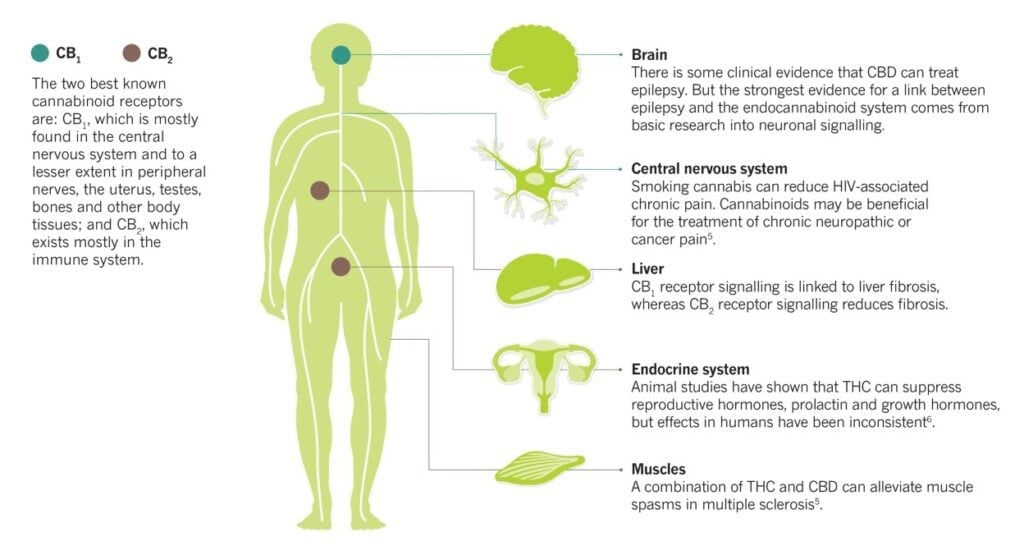
The use of marijuana can induce a range of impacts on both the mental and physical states. Short-term effects of marijuana use include impaired memory, concentration, and coordination. Enhanced sensitivity to auditory stimuli may occur, alongside potential disruption in cognitive functions that could impede learning and memory retention. Marijuana can be addictive, and healthcare practitioners diagnose marijuana addiction based on specific signs and symptoms. Marijuana addiction can lead to negative consequences, affecting relationships, work, and health. Approximately 30% of individuals who use marijuana may develop some degree of marijuana use disorder. People who begin using marijuana before age 18 are 4 to 7 times more likely to develop an addiction as adults. Persistent marijuana use during adolescence is linked with enduring alterations in brain maturation.
Frequent smoking of weed might agitate the respiratory system, elevating the likelihood of persistent lung complications. It may precipitate psychiatric conditions, especially among those genetically inclined towards such disorders. Long-term reliance on weed could result in physical dependency, manifesting withdrawal symptoms when usage is discontinued.
Detoxing from THC
To purge THC from your body effectively, time is the key factor as it allows for the natural expulsion during the detoxification process. Seeking guidance from healthcare experts can lead to personalized detox strategies. Products claiming swift elimination of THC are often unsupported by scientific evidence.
Detox kits and THC detox kits are frequently marketed as solutions to help individuals pass drug tests by allegedly speeding up the elimination of THC from the body, but these products often lack scientific support for their effectiveness. Some detox kits may contain ingredients that can cause liver dysfunction, especially when used improperly or in unregulated products. Detox kits marketed to help individuals pass drug tests often lack scientific support for their effectiveness.
Maintaining good hydration plays a vital role in overall health. Overhydration won’t expedite the removal of THC or boost hydration levels further. No reliable techniques have been established for hastening THC metabolism, and purported shortcuts to passing drug tests typically amount to mere myths. It’s important to note that traces of THC may linger in one’s system longer than anticipated.
Ceasing marijuana consumption entirely stands out as the most effective strategy for ensuring success on a drug test. Abstinence remains unrivaled in terms of reliability when preparing for such an evaluation.
Employment Drug Testing
Considering the statistic that roughly 30% of individuals between 16 and 59 years old have tried marijuana at least once, a significant number of employers mandate drug testing during the recruitment phase. Many employers require drug tests as part of their workplace policies to ensure safety and compliance with legal standards. The majority of these workplace drug tests commence with an immunoassay test, which serves as a quick method for preliminary screening.
Employers may also conduct drug tests based on reasonable suspicion, meaning there must be specific, observable signs of drug use before testing is carried out. Even in regions where marijuana use is legal, not passing a drug test can result in being fired from one’s job. Trying to manipulate or cheat on a drug test could carry legal consequences since numerous states have outlawed such actions.
Legal Aspects of Marijuana
The legal status of marijuana varies significantly depending on where you live. While some states have legalized marijuana for recreational or medicinal use, others continue to prohibit it entirely. On a federal level, the National Institute on Drug Abuse classifies marijuana as a Schedule I substance, indicating a high potential for drug abuse and no accepted medical use under federal law. Despite this, evolving attitudes have led some federal agencies to relax their cannabis screening policies, reflecting broader changes in public perception and legislation.
Employers must navigate a complex landscape of regulations when it comes to drug testing for marijuana use. The Substance Abuse and Mental Health Services Administration provides guidelines to ensure that workplace drug testing is conducted fairly and in compliance with the law. It’s important to recognize that marijuana use can sometimes lead to marijuana use disorder, a form of addiction that may require professional intervention. Organizations like American Addiction Centers offer support and treatment options for those struggling with substance abuse and mental health challenges related to marijuana use. Accessing resources from the Mental Health Services Administration can also be a crucial step for individuals seeking help for marijuana addiction or co-occurring mental health issues.
Treatment Options for Marijuana Addiction
Individuals grappling with an addiction to marijuana can choose from a range of treatment options, including how to help an addict without enabling them:
- A Day Treatment Program at Paramount Recovery Centers that provides about 30 hours of clinical services each week.
- For those seeking more flexibility, there is also a Half-Day Treatment Program offering between 10 and 15 hours of weekly services.
- Dialectical Behavior Therapy (DBT) which assists in enhancing emotional regulation and developing coping mechanisms.
- Family therapy sessions are included to foster repaired trust and improved communication within the family unit.
Paramount Recovery Center integrates Medication-Assisted Treatment (MAT) with psychotherapy techniques. This combination aims to alleviate withdrawal symptoms as well as manage any concurrent conditions associated with substance drugs. The center facilitates patient access by providing flexible payment schemes along with financial support, all delivered through a care model focused on the individual’s needs.
Renowned for its exhaustive and customizable programs, Paramount Recovery Center situated in Massachusetts dedicates itself to delivering a full continuum of care for individuals eager to pursue healthier lifestyles.
For ongoing support and aftercare following treatment for marijuana addiction, a primary care companion can be a valuable resource to help maintain recovery and provide encouragement. Additional resources are available on how to support a spouse with addiction.
Summary
Understanding how your body processes and retains THC is crucial, not just for passing drug tests, but for health and well-being. From absorption and metabolism to detection times and the influencing factors, this guide has covered the essentials.
Whether you’re dealing with employment drug testing or seeking treatment for marijuana addiction, being informed is your best asset. Remember, the journey to understanding THC retention is as complex as the compound itself, but with the right knowledge, you can navigate it with confidence.
Frequently Asked Questions
How long does THC stay in your body after a single use?
For occasional users, THC can typically be detected in the body for up to three days after a single use. However, this varies depending on individual metabolism and body fat percentage.
Can drinking water help eliminate THC from the system faster?
While staying hydrated is important for overall health, drinking excessive water does not speed up the elimination of THC. Overhydration may dilute urine samples but won’t accelerate THC metabolism.
Why do chronic marijuana users test positive for THC longer than occasional users?
Chronic users accumulate THC metabolites in their body’s fatty tissues faster than they can eliminate them. This leads to a longer detection window, sometimes up to 30 days or more.
What types of drug tests are commonly used to detect marijuana use?
The most common drug tests for marijuana include urine, blood, saliva, and hair tests. Urine tests are widely used due to their balance of detection window and ease of administration.
How long can THC be detected in hair follicle tests?
Hair tests can detect THC metabolites for up to 90 days after use, making them useful for identifying long-term patterns of marijuana consumption.
Can THC be detected in blood tests long after use?
Blood tests typically detect THC for 1 to 2 days after use in occasional users, but chronic users may test positive for up to 7 days due to metabolite accumulation.
Are there any reliable methods to pass a drug test quickly after marijuana use?
No scientifically proven methods exist to speed up THC metabolism. The only reliable way to pass a drug test is to abstain from marijuana use and allow sufficient time for THC to clear from the body.
How does body fat percentage affect THC detection times?
Because THC is fat soluble, individuals with higher body fat percentages tend to retain THC metabolites longer, leading to extended detection windows.
What are some withdrawal symptoms of marijuana addiction?
Withdrawal symptoms may include irritability, insomnia, loss of appetite, anxiety, and mood swings, particularly in individuals with marijuana use disorder.
Where can I find treatment options for marijuana addiction?
Professional treatment options, including medical detox and behavioral therapies, are available at centers like American Addiction Centers and other mental health services administration-supported facilities.


