


Taking that first step into rehab is a huge act of courage, but it's completely normal to feel a little lost about what comes next. Understanding the process can ease your worries and empower you to move forward. From the moment you arrive at a center in Massachusetts to the day you transition back home, every step is designed to support your journey to a healthier, substance-free life.
Key Takeaways
- A Structured, Four-Stage Process: Expect a clear, supportive journey that includes a confidential intake, medically supervised detox, a daily routine of therapy, and a solid aftercare plan. This structure replaces chaos with predictability.
- Personalized Care is Standard: Your treatment plan will be tailored to your unique history, needs, and goals. At quality Massachusetts facilities, this includes addressing any co-occurring mental health conditions like anxiety or depression.
- Community and Safety are Central: You will not be alone. Group therapy and a safe, professional environment are key components. Strict confidentiality laws (like HIPAA) protect your privacy throughout the entire process.
- Recovery is a Long-Term Journey: Rehab provides the foundation, but aftercare is what sustains recovery. You will leave with a concrete plan that connects you to local Massachusetts support groups, ongoing therapy, and relapse prevention tools.
Your First Look Inside the Rehab Journey
Deciding to get help is, without a doubt, the most important part of the entire process. While everyone’s story is different, a quality rehab program provides a predictable and supportive environment where you can truly start to heal.
From the second you walk through the doors, the focus is on understanding you—your history, your struggles, and your goals. This isn't about fitting you into a pre-made box; it's about building a recovery plan that actually works for your life.
This journey is about so much more than just staying sober. It's about getting to the root of what's driving the addiction and learning new, healthy ways to think, feel, and live. Each stage builds on the one before it, creating a strong foundation for a future you can be proud of. Understanding what's ahead can take away a lot of the fear and empower you to step forward with confidence. You can also explore the different stages of change in addiction recovery to get a better sense of the mindset behind this journey.
This timeline gives you a bird's-eye view of what to expect, from your first call to long after you've completed the program.
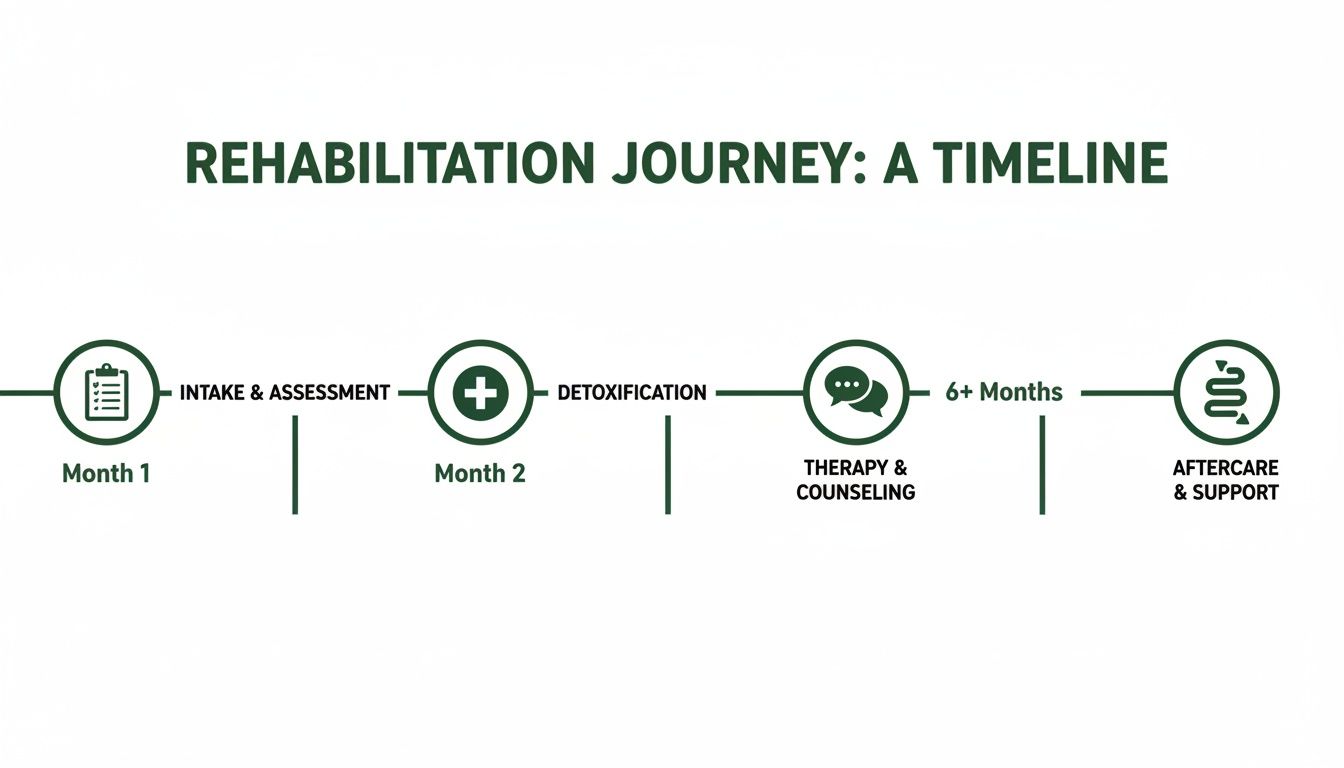
As you can see, recovery is a progressive journey. Each phase is designed to prepare you for the next, making sure you have the support and stability you need as you transition back into your daily life.
To make it even clearer, let's break down the rehab experience into its four essential stages. This table gives you a quick snapshot of what to expect.
The Four Key Stages of the Rehab Experience
| Stage | What It Is | Why It Matters |
|---|---|---|
| Intake Process | A private, comprehensive assessment where we get to know your personal history, unique needs, and recovery goals. | This is the blueprint for your entire treatment plan. It ensures the care you receive is personalized to you, not a one-size-fits-all approach. |
| Medical Detox | A safe, medically supervised withdrawal process designed to manage symptoms and keep you comfortable. | It clears your body of substances so your mind can focus on the real work of healing. Safety and comfort are the top priorities here. |
| Therapeutic Routine | A structured daily schedule of individual counseling, group therapy sessions, and educational workshops. | This is where you learn practical coping skills and strategies to manage triggers, address underlying issues, and build resilience for the long haul. |
| Aftercare Planning | A collaborative process where you and your clinical team create a detailed plan for ongoing support after you leave rehab. | Lasting recovery happens with continued support. This plan connects you with resources like outpatient therapy, alumni groups, and community support to help you thrive. |
Each of these steps is a critical piece of the puzzle, working together to guide you from where you are now to where you want to be.
If you're ready to learn more about how this process can change your life, give our team a call at (888) 388-8660. Your conversation will be completely confidential.
The Welcoming First Step: Admissions and Intake
Your recovery journey doesn’t start with judgment. It starts with a conversation. So many people wonder what to expect in rehab, and it all begins with a simple, confidential phone call where you can ask anything, share your story, and get a clear picture of what’s ahead.
Our team is here to help clear the path to care, taking care of practical steps like verifying your insurance so you can focus on what matters. From there, we’ll guide you through an on-site assessment—not a test, but the first step in building your personal roadmap to recovery.
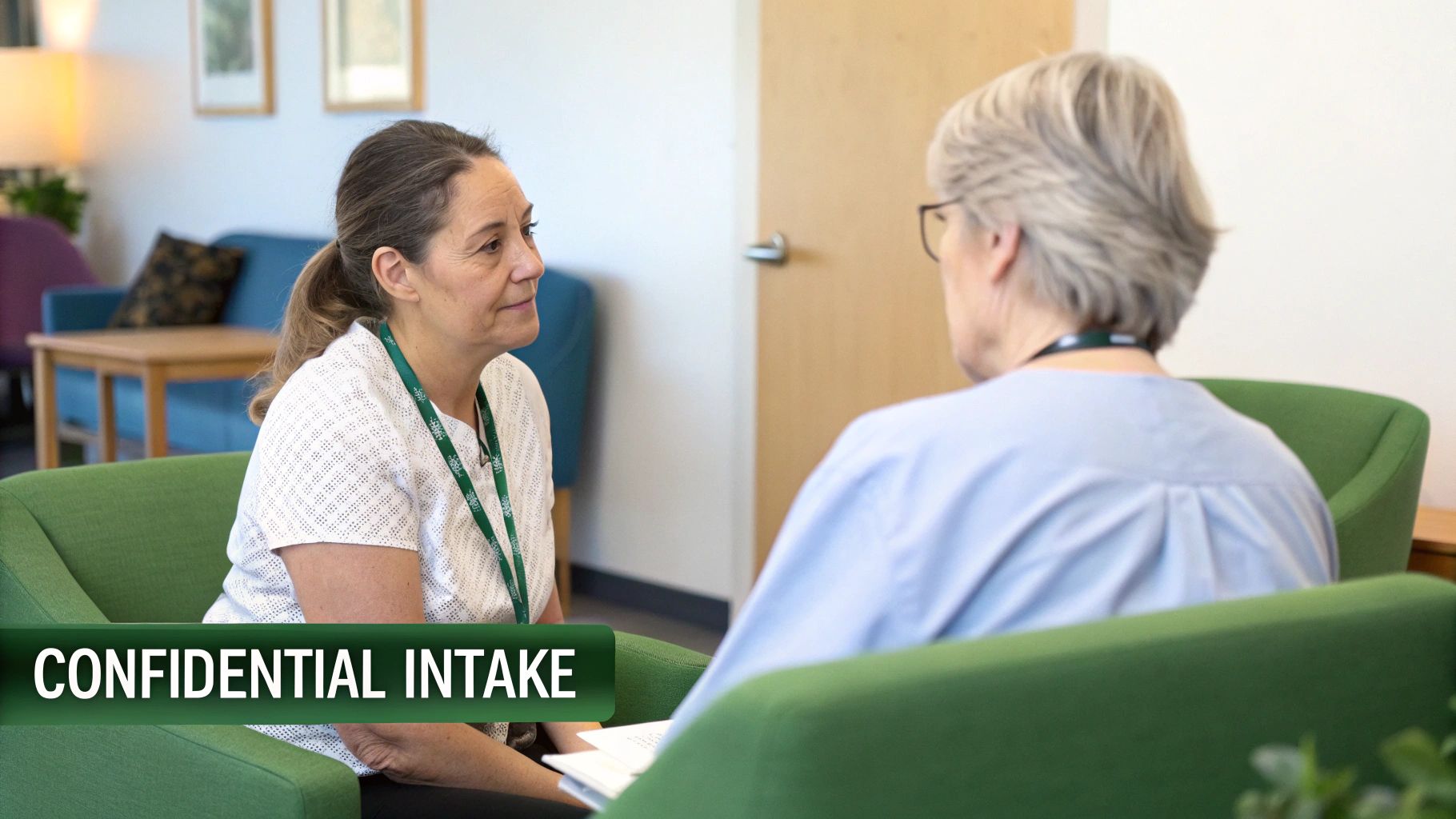
This comprehensive evaluation of your medical, psychological, and personal history ensures we see you as a whole person. In Massachusetts, this process is held to the highest standard, guaranteeing your care is both professional and deeply empathetic from the moment you walk through our doors.
Understanding the Intake Process
Think of the intake and assessment phase as laying the foundation for your entire treatment. The goal is to get a complete picture of your unique circumstances so we can create a care plan that actually fits you. This isn’t a one-size-fits-all process; it’s a collaboration between you and a clinical professional.
You’ll talk about your substance use history, medical background, mental health, and your personal goals. Being open and honest here is so important, as it gives our team the insight they need to provide the most effective support possible.
The information you share during intake is strictly confidential and protected by law. This process is about building trust and creating a safe space for healing, ensuring your privacy is respected every step of the way.
The assessment also helps us identify any co-occurring conditions, like anxiety or depression, which is absolutely vital for a successful recovery. By addressing both substance use and mental health at the same time, your treatment plan will be far more effective in the long run.
What the Assessment Covers
This comprehensive assessment is a key part of what to expect in rehab, and it’s made up of several important conversations:
- Medical Evaluation: We'll review your physical health, medical history, and any current health concerns. This is all about ensuring your safety during treatment, especially through detox.
- Psychological Screening: This is an evaluation to identify any mental health conditions that might be intertwined with your substance use.
- Substance Use History: A detailed, non-judgmental discussion about the substances used, frequency, and duration helps us understand the full scope of the addiction.
- Social and Family History: We’ll talk about your family life, social environment, and support systems to understand the broader context of your situation.
This holistic approach means no stone is left unturned. For centers in Massachusetts, this kind of detailed evaluation is the standard of care, setting the stage for a recovery plan that is as unique as you are.
Building Your Personalized Treatment Plan
Once the assessment is complete, our clinical team uses this deep understanding to craft your individualized treatment plan. This isn't just a schedule of activities; it's a dynamic roadmap designed to meet your specific recovery goals, outlining the therapies, services, and support you’ll receive.
Your plan might include a mix of individual therapy, group counseling, family sessions, and medication-assisted treatment if it's a good fit. It’s also flexible and will be adjusted as you progress through the program and your needs change. This personalized approach is what makes modern addiction treatment so effective—we’ve moved beyond generic solutions to provide care that truly resonates.
Your journey starts right here, with a process built on understanding and respect. If you’re ready to take this crucial first step, our compassionate team is available 24/7. Call us at (888) 388-8660 to begin your confidential conversation today.
Finding Stability Through Supervised Detox
Detox is the very first phase where your body begins to heal from addiction, and it’s a process you should never have to face alone. This crucial first step is so much more than just stopping the use of a substance; it’s a medically supervised period designed from the ground up for your safety, comfort, and stability.
Think of it as laying a solid, dependable foundation before you start building the rest of your new life in recovery.
What to Expect From Medical Detox
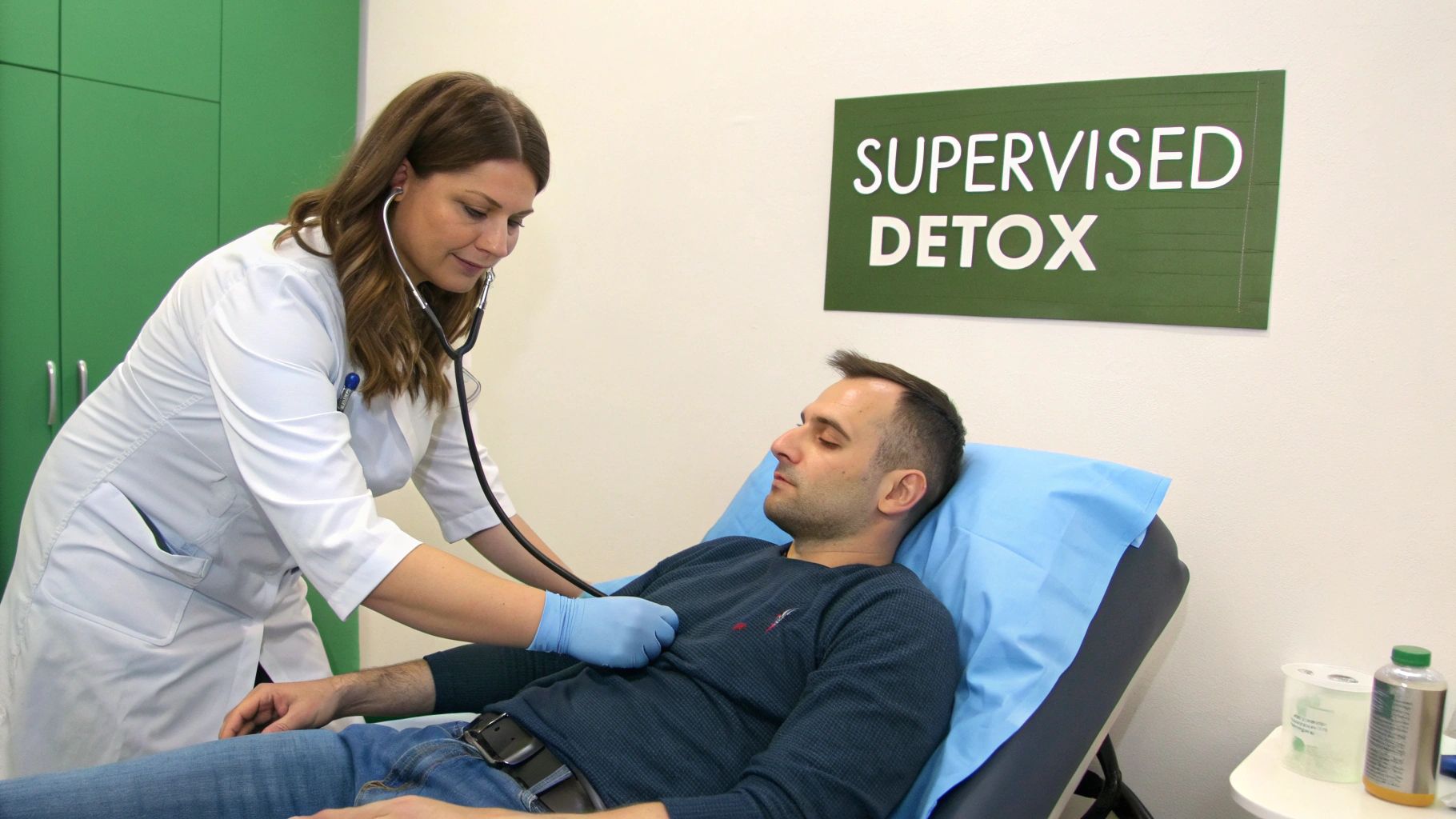
Understanding what rehab is really like often starts with clearing up the myths around detoxification. At a professional treatment center, this means you are under the care of medical experts 24/7. Their entire job is to manage your withdrawal symptoms, which can range from deeply uncomfortable to genuinely dangerous, making sure you remain as safe and comfortable as humanly possible.
This constant supervision gives your body the time and support it needs to clear itself of substances, paving the way for the deeper psychological work that comes next.
The Role of Medication-Assisted Treatment
For many people, especially those healing from opioid or alcohol addiction, Medication-Assisted Treatment (MAT) is a cornerstone of a safe detox. This isn't just a guess—it's an evidence-based approach that uses specific, FDA-approved medications to dial down cravings and ease the harshness of withdrawal symptoms.
There's a common misconception that MAT is just swapping one drug for another. That couldn't be further from the truth. In reality, these medications are precise medical tools, prescribed and closely monitored by doctors to help stabilize your brain chemistry. They give you the best possible shot at success by managing the intense physical demands of early recovery so you can actually focus on and engage in therapy.
Medication-Assisted Treatment isn't a magic bullet, but it's a vital part of a complete treatment plan. By taking the edge off the physical distress of withdrawal, it frees you up to concentrate on developing the coping skills you'll need for long-term sobriety.
Entering a rehab facility like one in Massachusetts means you're stepping into a structured environment where the evidence points toward real, lasting change. The numbers back this up. In the U.S., out of 30.5 million adults who have struggled with a substance use problem, an incredible 73.1%—that's 22.2 million people—now report being in recovery.
This powerful statistic shows that recovery isn’t just a possibility; for most people who commit to treatment, it's the expected outcome.
What Makes Medical Detox Different
Trying to detox on your own can be more than just ineffective—in some cases, it can be life-threatening. Complications like seizures or severe dehydration are very real risks. A professional detox program, on the other hand, offers a controlled and supportive setting.
Here’s what truly sets it apart:
- Constant Medical Monitoring: Your vital signs are checked regularly, and clinical staff are always on hand to respond to any issue, big or small.
- Symptom Management: Medications can be given to relieve tough symptoms like nausea, crushing anxiety, and insomnia.
- Nutritional Support: A balanced diet and proper hydration are prioritized to help your body heal and regain its strength.
- A Safe Environment: You are in a secure space, completely removed from the triggers and temptations of your everyday surroundings.
This careful, compassionate management ensures your physical health is stabilized. That's the non-negotiable first step before the real therapeutic work can even begin. To dive deeper, our guide on the first steps of detox offers more detail on this critical process. This phase is all about making a difficult transition as smooth and safe as it can possibly be.
If you have questions about detox or you feel ready to get help, our team is here to offer confidential support. Call (888) 388-8660 anytime to speak with a caring professional.
What a Typical Day in Rehab Looks Like
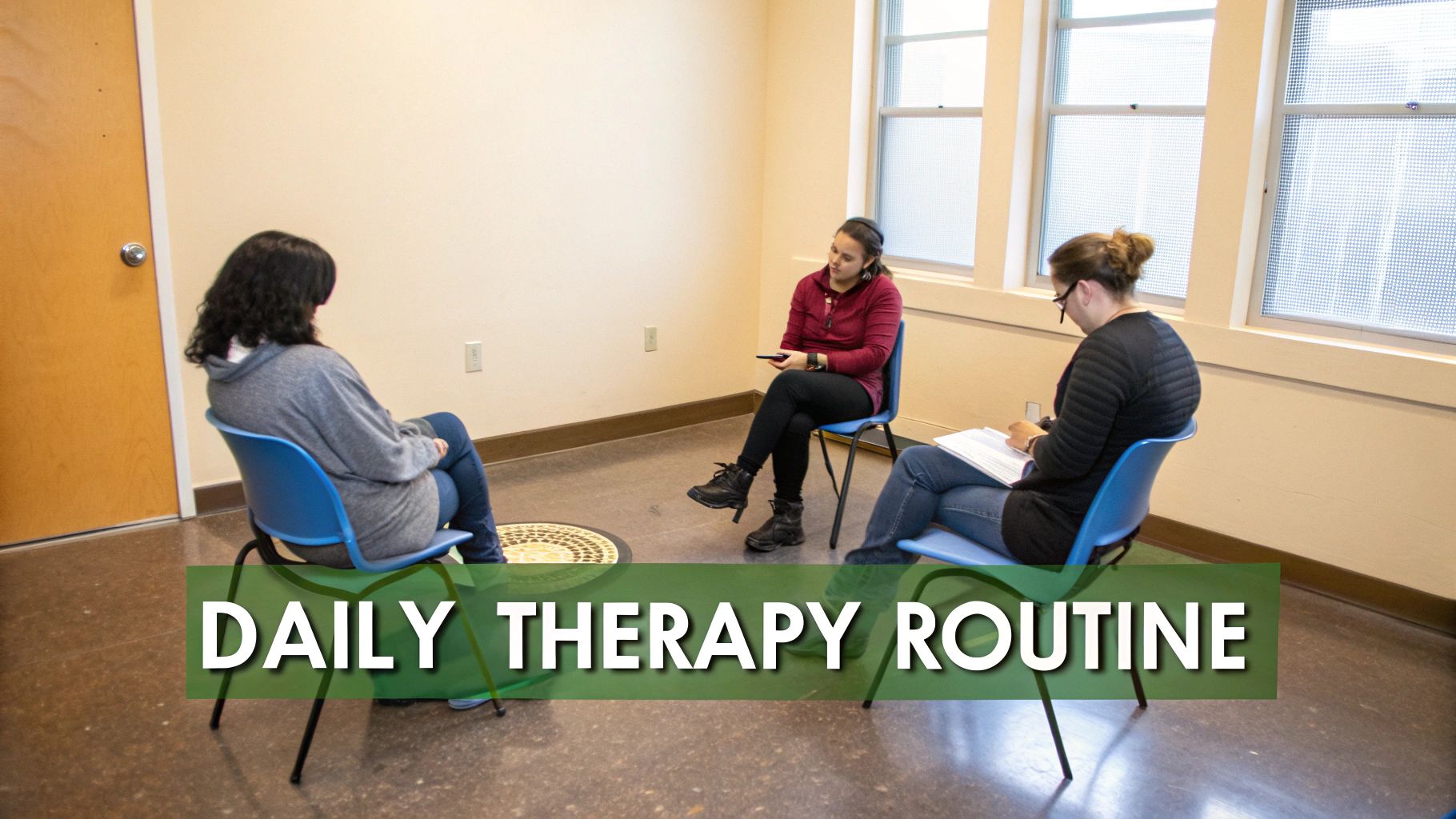
Ever wonder what you'll actually do all day in rehab? A lot of people picture endless downtime and staring at the ceiling. The reality couldn’t be more different. Your days are carefully structured, packed with a purposeful blend of therapy, skill-building, and personal reflection designed to get you ready for a life in recovery.
Programs like Day Treatment (PHP) or Intensive Outpatient (IOP) in Massachusetts rely on a highly structured yet supportive daily routine. Honestly, this structure is one of the most powerful tools in early recovery. It replaces the chaos of addiction with predictability and purpose, helping you build healthy habits and focus completely on healing.
Core Therapeutic Activities
Your schedule is built around evidence-based therapies that are the real backbone of your treatment. The whole point is to dig into the underlying reasons for your addiction while giving you practical, real-world coping skills for the future.
- Individual Therapy: This is your dedicated one-on-one time with your counselor. It's a private, safe space to unpack personal challenges, past trauma, and the specific triggers that fuel your substance use. This is where your treatment plan gets fine-tuned as you make progress.
- Group Therapy: Often the heart of the daily experience, group sessions are incredibly powerful. You connect with peers who just get it. By sharing your stories, you quickly realize you’re not alone, which is a massive step in breaking down the isolation and shame that addiction thrives on.
- Family Therapy: Addiction doesn’t just affect one person; it ripples through the entire family. These sessions are all about rebuilding trust, learning to communicate again, and teaching loved ones how they can best support you. The goal is to create a stronger, healthier support system for when you go home.
A key part of what to expect in rehab is the sense of community. Group therapy, in particular, fosters a bond among peers that provides invaluable support, empathy, and accountability throughout the treatment process.
Learning New Skills for a New Life
Beyond the traditional therapy sessions, your day will also include educational workshops and skill-building groups. Think of these as practical, hands-on classes for navigating life without turning to substances. You'll learn how to challenge and reframe the negative thought patterns and behaviors that keep the cycle of addiction going.
One of the most common approaches you'll encounter is Cognitive Behavioral Therapy (CBT). It’s like a practical toolkit for your mind. CBT helps you see the direct link between your thoughts, feelings, and actions, giving you the power to intercept and change those destructive cycles before they start.
For many people, substance use is tied to unresolved trauma. Specialized therapies provide a safe, controlled environment to process these deep-rooted issues. Tackling these wounds is often the key to achieving lasting sobriety and finding real emotional peace.
Confronting the Treatment Gap
It’s also important to understand the bigger picture. In 2022, while an estimated 64 million people worldwide suffered from drug use disorders, only 1 in 11 actually received treatment. Here in the U.S., the numbers are just as stark: nearly 54.2 million people needed substance abuse treatment in 2023, but less than 24% got the help they needed.
By being in rehab, you are actively bridging that gap for yourself. You can learn more about the addiction treatment landscape and see additional insights. This structure and therapeutic work are what make recovery possible. Your day is full, but every single activity has a clear purpose—to help you heal and build a strong foundation for the future.
If you’re ready to learn more about our structured programs, call (888) 388-8660 for a confidential conversation.
Healing the Whole Person with Specialized Care
Real, lasting recovery isn't just about stopping substance use. Addiction rarely shows up alone; it's almost always tangled up with other parts of a person's life. That's why a truly effective rehab program has to look at the bigger picture and heal the whole person.
This means moving past a one-size-fits-all approach. Instead, care is shaped around the unique challenges each person brings with them, from mental health struggles to life experiences that are specific to their gender. By creating a therapeutic space that feels safe and relevant, people are much more likely to open up, do the hard work, and start healing on a deeper level.
Addressing Co-Occurring Disorders
One of the most important developments in modern treatment is what we call dual diagnosis care. This is the absolute standard of care for anyone dealing with both a substance use disorder and another mental health condition, like anxiety, depression, or PTSD. So many people start using substances as a way to cope with—or self-medicate—the symptoms of an undiagnosed mental health issue.
It’s crucial to treat both conditions at the same time. If you only focus on the addiction, the root cause—the mental health challenge—is still there, making a relapse almost inevitable. The best rehab centers in Massachusetts don’t treat mental health as an afterthought; they weave it directly into the addiction treatment plan, making sure the real drivers behind the substance use are finally addressed.
The Importance of Gender-Responsive Care
Men and women often follow very different paths into addiction. They also face different hurdles on the road to recovery. Gender-responsive care understands this reality and creates separate treatment environments that speak directly to these unique needs.
This isn’t about segregation; it’s about safety and connection. It creates a space where people can be vulnerable and tackle sensitive topics without feeling judged or misunderstood. For example:
- For Women: Groups can create a powerful sense of sisterhood, allowing for honest conversations about motherhood, trauma, relationships, and the unique pressures society places on them.
- For Men: Sessions can provide a space to break down harmful ideas about what it means to be a man, encouraging them to explore vulnerability and emotions in a healthy, supportive way.
By building this focused atmosphere, gender-specific programs foster a level of trust and honesty that is absolutely essential for genuine healing to begin.
Rehab isn't just a promise of detox; it's a full-spectrum approach to wellness, backed by significant growth and positive recovery data. The global addiction treatment market, which stood at USD 11.24 billion in 2025, is expected to reach USD 18.03 billion by 2033. This growth is fueled by the rising demand for comprehensive rehab centers that truly work. As more people seek help, the need for these specialized programs is more critical than ever. You can explore more insights on addiction treatment market growth.
By embracing specialized tracks like dual diagnosis and gender-responsive care, treatment centers offer a path to recovery that respects and honors every part of who you are. This commitment is what makes deep, sustainable healing possible.
Ready to find a program that understands your specific needs? Give us a call at (888) 388-8660 for a confidential chat about our specialized treatment options.
Building a Life in Recovery After Treatment
It’s a common misconception that finishing a rehab program is the end of the journey. In reality, it’s the beginning of a brand-new one. This is where the real work of building a durable, sober life begins, moving from the protective environment of treatment to a confident, independent future.
This transition is often called a continuum of care. Think of it as gradually turning down the volume on intensive support while turning up your ability to handle life on your own terms. For those of us in Massachusetts, this means getting you plugged into local resources that will become your new foundation. A solid aftercare plan isn’t just a suggestion; it’s your roadmap forward.
Key Components of a Strong Aftercare Plan
A truly effective aftercare plan is more than just a list of phone numbers. It’s a multi-layered support system designed to help you not just avoid old patterns, but actively create a life that feels genuinely fulfilling.
-
Ongoing Therapy and Counseling: Continuing with therapy, whether one-on-one or in a group, is your dedicated time to process setbacks, sharpen your coping skills, and stay accountable. For most, this is a non-negotiable part of early recovery.
-
Community Support Groups: Addiction thrives in isolation, which is why connecting with others is so powerful. Groups like 12-Step programs (AA, NA) or other peer support networks provide a sense of belonging and shared understanding that you just can't find anywhere else.
-
Alumni Programs: Staying connected with the treatment center and the people who were in the trenches with you can be a huge source of strength. These alumni networks provide a ready-made sober community that gets what you’ve been through.
-
Relapse Prevention Skills: This is where you put everything you’ve learned into practice. Aftercare is all about getting better at spotting your personal triggers and using healthy coping mechanisms to navigate them. Mastering these relapse prevention strategies is what gives you the confidence to handle whatever life throws your way.
Recovery is a journey, not a destination. Our goal is to make sure you walk out our doors with the confidence, tools, and community you need to build a life you’re proud of. Take the first step by calling (888) 388-8660 today.
Your Questions About Rehab, Answered
Making the decision to go to rehab is a huge, courageous step. It's also completely normal to have a ton of questions swirling around in your head about what it's really like. We get it. To help clear things up and give you some peace of mind, we’ve put together straight-up answers to the most common questions we hear. Our only goal is to pull back the curtain on the process so you can walk forward with confidence.
FAQs About Your Time in Rehab
How long does rehab last?
There is no one-size-fits-all answer, as the length of your stay is tailored to your specific clinical needs. Programs typically range from 30 to 90 days, but the right duration depends on factors like your substance use history and progress in treatment. The goal is to ensure you have enough time to build a strong foundation for lasting recovery.
What should I pack for my stay?
Think comfort and simplicity. You'll want about a week's worth of casual, comfortable clothing. Bring unopened, alcohol-free toiletries, any prescribed medications in their original bottles, and a notebook for journaling. We'll provide a detailed packing list, but generally, leave electronics, valuable items, and outside food or drinks at home to maintain a focused, safe environment.
Can my family be involved in my treatment?
Yes, and it is highly encouraged. Addiction impacts the entire family unit, and healing those relationships is a vital part of recovery. We offer family therapy sessions to help rebuild trust, improve communication, and educate your loved ones on how to best support you when you return home.
Is my treatment confidential?
Absolutely. Your privacy is protected by federal laws, including HIPAA (Health Insurance Portability and Accountability Act). From your first phone call to every therapy session, all your information is kept strictly confidential. Creating a safe, non-judgmental space where you feel secure enough to be vulnerable is essential for the healing process.
If you have more questions or are ready to take the next step, our compassionate team is here to help 24/7. Call us at (888) 388-8660 for a confidential conversation today.


