


Deciding to start detox is a massive, courageous step toward reclaiming your life. If you're in Massachusetts and feeling overwhelmed by substance use, please know that you are not alone. Taking the first steps detox requires can feel daunting, but professional, compassionate help is available right now to guide you safely through the process. This guide will walk you through what to expect, from your first confidential phone call to planning for a successful recovery.
Key Takeaways
- Safety First: Medically supervised detox is critical. Withdrawing from substances like alcohol or benzodiazepines without 24/7 medical oversight can be dangerous, even fatal. Professional facilities in Massachusetts provide constant monitoring and medication to manage symptoms safely.
- The First Call is Simple and Confidential: Reaching out for help starts with a private, no-obligation phone call. An intake coordinator will assess your situation, answer your questions, and help you navigate insurance and financial options without judgment.
- Preparation is Key: Getting your personal affairs in order before you go—like arranging for work leave and family care—allows you to focus completely on your health. Facilities provide clear checklists of what to pack to create a distraction-free healing environment.
- Detox is Just the Beginning: Successfully completing detox is a huge achievement, but it's the first step, not the final destination. A personalized aftercare plan, which can include residential treatment or outpatient programs, is essential for building a foundation for long-term recovery.
Starting Your Detox Journey in Massachusetts
Making that choice to ask for help is the hardest part. Once you've done that, the process is designed to be as simple and supportive as it can be. It all starts with a single, completely confidential phone call. From there, it moves toward a personalized plan that fits your unique situation. This whole initial phase is built around your safety, your comfort, and creating a solid foundation for your recovery.
Medical Supervision is Non-Negotiable: I can't stress this enough—trying to detox on your own can be incredibly dangerous, even life-threatening. Withdrawal from substances like alcohol or benzodiazepines can trigger severe medical emergencies. A professional medical detox means you have a clinical team watching over you 24/7, ready to manage symptoms and handle any issues safely.
Actionable Steps for a Safe Start
-
Your First Call is a Confidential Assessment. When you call a detox center at (888) 388-8660, you'll connect with a compassionate intake coordinator. This isn't a commitment; it's a conversation. It’s a judgment-free space for them to understand your substance use history and any other health concerns, and for you to get all your questions answered.
-
We Can Figure Out Insurance and Finances. Please don't let worries about money stop you from getting help. The majority of private insurance plans provide coverage for detox. For anyone without insurance, Massachusetts has state-funded programs and payment plans available. The intake team's entire job is to help you sort through your coverage and find a workable solution.
-
Getting Ready is Kept Simple. Once you're admitted, the entire focus shifts to your health and well-being. You’ll get clear guidance on what to pack—think comfortable clothes, basic toiletries, and your ID. The aim is to create a calm, focused environment without the distractions of the outside world, so you can put all your energy into getting better.
If you’re ready to dive deeper, our guide to alcohol and drug detox in Massachusetts walks you through more of what to expect.
Knowing When You Need Professional Detox
It's tough to draw the line between simply struggling and being in a situation where you genuinely need professional help. But figuring out when it's no longer safe to manage withdrawal on your own is one of the most important first steps detox requires. Going it alone with certain substances isn't just uncomfortable—it can quickly become a life-threatening medical emergency.
The whole idea of "detoxing" gets thrown around a lot in wellness circles, with roots going all the way back to ancient Roman and Greek practices of fasting and using herbs. That concept is still alive in diet trends today, but it’s critical to understand the difference between a lifestyle choice and a medical necessity. You can learn more about how this idea has evolved from ancient practices to a modern wellness phenomenon. When substance dependence is in the picture, the stakes are infinitely higher.
Understanding the Risks of Withdrawing Alone
Trying to stop using certain substances cold turkey without medical supervision can lead to some really severe complications. Alcohol and benzodiazepines, for instance, are notorious for causing some of the most dangerous withdrawal syndromes out there.
Think about someone here in Massachusetts who has been drinking heavily every single day. If they suddenly stop, they could have seizures within just a few hours. In the worst cases, this can progress to delirium tremens (DTs), a terrifying condition that causes extreme confusion, hallucinations, and dangerous cardiovascular instability. DTs can be fatal without immediate medical care. While opioid withdrawal isn't typically deadly, the physical and psychological pain is so excruciating that it makes relapsing almost a certainty without professional support.
This simple flowchart can help you think through things if you're feeling lost or unsure about what to do next.
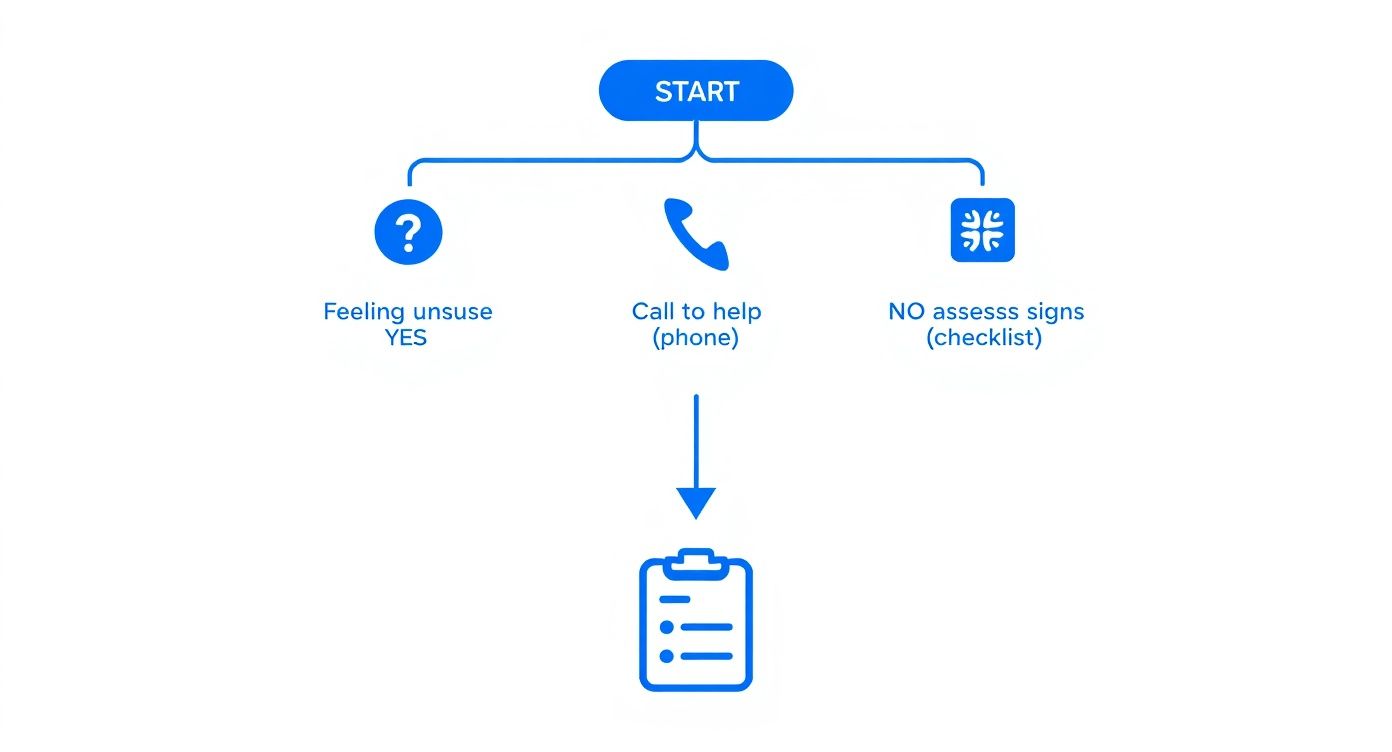
The main point here is that feeling uncertain is, in itself, a sign that you need to act. Reaching out for a professional assessment is always the safest move you can make.
Physical and Psychological Red Flags
Knowing what to look for—in yourself or someone you love—can make it much clearer when professional help is needed. The signs often start as manageable discomfort but can escalate into obvious medical risks.
Key physical signs to watch for include:
- Tremors or Shakes: This isn't just slight nervousness; it's an uncontrollable shaking of the hands or body.
- Nausea and Vomiting: When it's persistent, it can lead to dangerous dehydration.
- Sweating and High Blood Pressure: Your body is working overtime, trying desperately to find balance.
- Heart Palpitations: A racing, pounding, or irregular heartbeat is a serious warning sign.
- Seizures: Any seizure during withdrawal is a clear signal of a medical emergency.
Psychological symptoms can be just as scary. Be on the lookout for escalating anxiety, severe mood swings, intense irritability, or just not being able to think straight. Hallucinations—seeing or hearing things that aren’t there—are an urgent sign that you need to get professional medical help immediately.
Recognizing these signs isn’t about judgment; it’s about safety. A professional detox facility is built to manage these symptoms with medication and constant monitoring. It makes the process survivable and lays the right foundation for recovery.
A Checklist for Family Members in Massachusetts
If you're a family member in Massachusetts, you know how hard it is to figure out when to step in. Often, the first clue that a loved one’s substance use has reached a critical stage is watching their behavior change.
Here’s a practical checklist of shifts that suggest it’s time to start a conversation about getting professional help:
- Pulling Away from Responsibilities: Are they consistently missing work, skipping school, or blowing off family commitments?
- Failed Attempts to Quit: Have they tried to stop on their own, maybe multiple times, but haven't been able to?
- Growing Secrecy and Isolation: Are they hiding their use or actively avoiding people they used to be close to?
- Neglecting Personal Hygiene: Has there been a noticeable decline in their self-care and how they present themselves?
- Risky Behavior: Are they driving under the influence or putting themselves in other obviously dangerous situations?
If you find yourself nodding along and checking off several of these boxes, it's a strong sign that their substance use is now beyond their control. This is the moment when a conversation about taking the first steps detox with professional guidance becomes critical. The goal isn't to start a fight, but to offer a lifeline. Your first call can be to an intake line like ours at (888) 388-8660, where you can get confidential advice on what to do next.
What Happens When You Call an Intake Line
Picking up the phone to ask for help is easily the hardest part. I've seen it time and again—it's the most courageous thing a person can do when they're ready for detox. The unknown can be terrifying, but please know, this call is a conversation, not an interrogation. It's completely confidential, and its only purpose is to figure out how to help you.

You'll be speaking with a trained intake coordinator. Think of them as a compassionate guide whose entire job is to listen without judgment. They'll ask some questions to get a clear picture of what's going on so they can get you to the right level of care. Everything you say is private and protected.
Your Initial Assessment: The First Conversation
That first call is essentially a pre-screening assessment. The coordinator will ask about your substance use history—what you've been using, for how long, and in what amounts. Be as open as you can. This information is absolutely critical for keeping you safe during the detox process.
They'll also need to know about your medical background. This includes any existing health conditions, medications you're on, or any mental health challenges you're dealing with, like anxiety or depression. This allows the clinical team to create a plan that addresses all of you, not just the addiction.
Remember, this is a two-way street. It's your chance to ask us questions. Get a feel for the place. Don't hesitate to ask about the detox process, what a typical day is like, or the specific treatment approaches we use.
A Look at Typical Intake Questions
To help ease any anxiety, here are some of the questions an intake coordinator is likely to ask. There are no right or wrong answers—it's all about getting the facts straight so we can help.
- Substance Use: "Can you tell me what substances you've been using, and for roughly how long?" or "When was your last use?"
- Medical Health: "Do you have any diagnosed medical issues, like diabetes or high blood pressure?" and "Are you taking any prescribed medications right now?"
- Mental Health: "Have you ever been diagnosed with something like depression, anxiety, or PTSD?"
- Support System: "Do you have supportive family or friends who know you're seeking help?"
These questions simply help us build a profile to make sure our facility is the right fit. This conversation lays the foundation for a safe and effective detox plan designed just for you.
Navigating Insurance and Financial Questions
Money should never be the reason you don't get help. A big part of the intake call is dedicated to figuring out insurance and payment. If you have an insurance card, keep it handy. The coordinator can run a free verification of benefits on the spot to see what your plan will cover.
For Massachusetts residents, there are a lot of resources available even if you don't have private insurance. Our intake specialists know the local systems inside and out.
If you don't have insurance, make sure to ask about:
- State-Funded Programs: Massachusetts has state-funded beds specifically for addiction treatment.
- Sliding-Scale Fees: Some centers adjust the cost based on your income.
- Payment Plans or Financing: Many places will work with you, offering options to pay over time.
Our team's goal is to take the financial stress off your plate so you can focus on what really matters: your health. We will work with you to find a solution. The most important thing is to make the call; options are almost always available.
When you're ready, our team at (888) 388-8660 is here 24/7 to walk you through it all.
How to Prepare for Your Detox Stay
Once your spot at a detox facility is confirmed, it's completely normal to feel a whirlwind of emotions—relief, sure, but a good dose of anxiety, too. The best way to channel that nervous energy is to focus on what you can control. Taking a few practical steps to get your life in order before you go allows you to walk through the doors ready to focus completely on your health.
This isn't just about packing a suitcase. It's about creating a sense of peace for yourself. When you handle your responsibilities on the outside, you free up your mind to fully commit to the healing process ahead.
What to Pack and What to Leave Behind
Detox centers are intentionally structured to be safe, quiet, and free of distractions. The packing rules aren't there to be difficult; they exist to protect everyone's focus and well-being. The key is to think simple, comfortable, and essential.
To make things easier, we've put together a straightforward checklist. But always, always double-check with the specific facility you're going to, as their guidelines might be slightly different.
Your Detox Packing Checklist
Here's a simple guide to help you prepare for your inpatient detox stay. Getting this right helps you settle in smoothly and supports a therapeutic environment for you and everyone else.
| Item Category | What to Bring (Examples) | What to Leave at Home (Examples) |
|---|---|---|
| Clothing | 5-7 days of comfortable clothes (think sweatpants, t-shirts, pajamas), sweaters or hoodies, plenty of socks and underwear. | Anything revealing, items with drug/alcohol logos, or expensive apparel and jewelry. |
| Toiletries | New, unopened, alcohol-free products like shampoo, soap, toothpaste, and deodorant. | Aerosol cans of any kind, products containing alcohol (like most mouthwash), perfume, or cologne. |
| Personal Items | Your government-issued ID, insurance card, a list of important phone numbers, a journal, and appropriate reading material. | Laptops, tablets, and cell phones (these are usually secured by staff upon admission), cameras, and any valuable jewelry. |
| Medications | Your current prescription medications must be in their original, clearly labeled pharmacy bottles. | Any non-prescribed medications, vitamins, herbal supplements, or unapproved substances. |
Bringing the right items helps you get settled without any hitches. Leaving prohibited items at home is an important part of respecting the healing space you and your peers are creating together.
Managing Your Responsibilities
One of the biggest sources of pre-treatment stress is worrying about what you're leaving behind. Tying up these loose ends before you check in is one of the most important things you can do for your own peace of mind.
- Notify Your Employer: If you have a job, you may have legal protections under the Family and Medical Leave Act (FMLA). It's best to speak with your HR department about taking a medical leave of absence. This conversation is confidential and can secure your job while you get the help you need.
- Arrange Family and Pet Care: Make sure you have a trusted family member or friend lined up to care for children, elderly parents, or pets. Give them schedules, emergency contact info, and any supplies they'll need to keep things running smoothly while you're away.
- Handle Financial Obligations: The last thing you want to worry about is late bills. Set up automatic payments for anything that will be due during your stay. It might also be a good idea to let your bank know you'll be away to avoid any security flags on your accounts.
Taking care of these logistics is more than just checking items off a to-do list. It’s a powerful act of self-care. It frees you from outside worries so you can be fully present and invested in your recovery from day one. If you feel overwhelmed by any of this, our intake team can offer support and guidance. Just call us at (888) 388-8660.
Navigating Medically Assisted Treatment
Walking into a detox facility means you’re stepping into a place of medical safety. Let’s be clear: the old idea of just "toughing it out" isn't just outdated—it’s dangerous. At a professional Massachusetts facility, the entire focus is on managing withdrawal with proven medical science, keeping you as comfortable and stable as possible, around the clock. This is where detox becomes the first step in healing, not just something to endure.
The heart of this approach is Medication-Assisted Treatment (MAT). This isn't about swapping one drug for another. It's a clinical strategy that uses specific, FDA-approved medications to calm your brain chemistry, dial down withdrawal symptoms, and block the high from substances. Think of it as using medicine to give your mind and body the breathing room they desperately need to start recovering. This support makes that initial, rocky phase of recovery much smoother and sets you up for a better shot at long-term success.
How Medications Ease Withdrawal Symptoms
Every person's situation is different, and so is their detox. The clinical team will build a personalized medication plan just for you, based on your health, your history, and your specific needs. This is what makes professional detox so much safer and more effective than trying to quit on your own.
Here’s a look at how this works in practice:
- For Opioid Withdrawal: To ease the intense, flu-like misery and cravings of opioid withdrawal, doctors often use medications like buprenorphine (Suboxone). It works on the same brain receptors as opioids but without the high, essentially calming the brain's demand for the substance.
- For Alcohol Withdrawal: Quitting alcohol can be life-threatening, with risks like seizures and delirium tremens. To prevent these severe complications, benzodiazepines like Valium or Ativan are often given to safely calm the central nervous system and reduce anxiety.
- For Stimulant Withdrawal: While there aren't any specific FDA-approved meds for stimulant withdrawal, the medical team can provide supportive medications. These help manage symptoms like crushing depression, exhaustion, and insomnia, allowing you to get the rest your body needs to stabilize.
Key Takeaway: Medication-Assisted Treatment isn't a crutch; it's a scientifically validated medical intervention. The goal is to get the physical crisis of withdrawal under control so you can start doing the real psychological work of recovery.
The Role of 24/7 Medical Monitoring
Medication is just one piece of the puzzle. What truly defines a medical detox is the constant watch of skilled nurses and clinical staff. They monitor your vital signs—heart rate, blood pressure, temperature—around the clock, ready to catch any potential problem before it becomes serious.
This constant supervision is an essential safety net. If a withdrawal symptom suddenly gets worse or something new pops up, the medical team is right there to intervene. It’s a level of care that’s simply impossible to get at home, and it’s why a professional facility is the only safe place to start detox from many substances.
If you want to understand the nuts and bolts of this approach, our guide on what is Medication-Assisted Treatment breaks down how these programs work in more detail.
Comfort and Support During Detox
Beyond the medicine and monitoring, the environment itself is designed for healing. The staff at Massachusetts detox centers are trained to provide compassionate, non-judgmental support. They get what you’re going through and are there to offer a kind word and make sure your basic needs are met.
Simple comfort measures can make a huge difference:
- Providing nutritious meals and making sure you’re staying hydrated.
- Offering over-the-counter help for headaches or body aches.
- Creating a quiet, calm, and restful space for you to heal.
The word "detox" has been co-opted by a massive commercial industry, but what we're talking about here is a world away from trendy juice cleanses. The global detox products market is expected to grow from about $40.7 billion in 2025 to $72.6 billion by 2035. This trend shows a huge interest in wellness but often blurs the line between lifestyle fads and critical medical care. In a professional setting, the focus is 100% on evidence-based medicine, not consumer trends.
Planning Your Recovery After Detox
Making it through medical detox is a massive accomplishment. It's the essential first move to get your body stable, but the real work of lasting recovery starts with what you do next.
Think of detox like clearing a crumbling foundation. Now, it's time to build a solid, strong house on that cleared ground. A good aftercare plan is the blueprint you'll need for a sober future you can count on.
While you're with us, a dedicated case manager will sit down with you to map this all out. This isn't some generic handout; it’s a personalized plan built around your life, your challenges, and your goals.
Building Your Support System
Leaving a 24/7 care environment is a huge step, and it requires a new kind of support system waiting for you. Your aftercare plan will define the right next level of clinical care, making sure your transition is smooth and you never feel like you're going it alone.
Here in Massachusetts, your options for that next step usually look something like this:
- Residential Treatment: This is an inpatient program where you live on-site, allowing you to stay immersed in therapy and a supportive environment.
- Partial Hospitalization Program (PHP): Think of this as full-time day treatment. You get intensive therapy during the day but can live at home or in a sober living facility.
- Intensive Outpatient Program (IOP): A more flexible choice that offers several hours of therapy each week, designed to let you get back to work or school while still getting robust support.
The whole idea is to step down your level of care gradually. This builds your confidence and helps you practice real-world coping skills without feeling completely overwhelmed. It’s a structured way to maintain accountability, which is so critical in early recovery.
Continuing your care also means building a personal sober network. Support groups like Alcoholics Anonymous (AA) and Narcotics Anonymous (NA) are invaluable for connecting with peers who get it. They provide a proven framework that has helped millions.
On a broader scale, there's a growing public interest in health and wellness. The market for products like detox drinks was valued at USD 5.36 billion in 2023 and is expected to keep growing. This trend shows a global shift toward making healthier choices, which you can read more about here.
Recovery is a journey, not a final destination. When you fully commit to an aftercare program for substance abuse in MA, you're giving yourself the absolute best shot at long-term success.
That first step is always the bravest one to take. Call us at (888) 388-8660 to start today.
Frequently Asked Questions
Taking that first step toward getting help is huge, but it almost always comes with a rush of questions and a whole lot of uncertainty. Feeling nervous about what's next is completely normal. To help you see a clearer path forward, we've put together some straight answers to the questions we hear most often from individuals and families in Massachusetts.
Our only goal here is to give you honest, straightforward information so you can feel more confident about this decision. Knowing what to expect makes this whole process feel a lot less overwhelming.
The main point of a professional medical detox is to get you through withdrawal safely and as comfortably as possible. It's nothing like trying to quit on your own. A clinical team uses proven medications and provides 24/7 monitoring to make the process not just bearable, but safe.
How long does medical detox usually last?
There's no one-size-fits-all timeline. How long detox takes really depends on things like what substance was being used, for how long, and your overall physical health. That said, most people can expect the process to last anywhere from 5 to 10 days. The clinical team's top priority is making sure you're stable before you move on to the next step in your recovery.
Can I lose my job for going to detox in Massachusetts?
You absolutely have legal protections. Federal laws like the Family and Medical Leave Act (FMLA) and the Americans with Disabilities Act (ADA) are designed to protect employees seeking treatment for a substance use disorder. It's a good idea to chat with your HR department about the specifics, but our intake team has a lot of experience with this and can offer some guidance on how to start that conversation.
What if I don't have insurance?
Please don't let a lack of insurance stop you from reaching out. It should never be a barrier to getting help. Massachusetts has many options, including state-funded programs, centers that offer sliding-scale payments, and different financing plans. The single most important thing you can do is make the call; we'll help you figure out the rest.
Is the initial phone call confidential?
Absolutely. Every conversation with our intake coordinators is 100% private and protected by law. Your privacy is our top priority from the very first moment.
What if I'm calling for a loved one?
We strongly encourage family members to call. Our intake team can give you information, walk you through the process, and offer real guidance on how you can best support your loved one in taking this crucial first step.
At Paramount Recovery Centers, we truly believe that everyone deserves a real chance at recovery. Our compassionate team is here 24/7 to answer your questions and walk you through these first steps. Call us at (888) 388-8660 for a completely confidential conversation today.


