


When you or someone you love is facing the challenge of a substance use disorder, it's easy to feel lost in a sea of information. Understanding your options is the first step toward finding a path that truly works. Medication-Assisted Treatment (MAT) is a leading, evidence-based approach that is giving people in Massachusetts and across the country a real chance at lasting recovery. This guide will walk you through what MAT is, how it works, and why it's considered the gold standard of care.
Key Takeaways
- A "Whole-Patient" Approach: MAT combines FDA-approved medications with counseling and behavioral therapies to treat the entire person, not just the physical symptoms of addiction.
- Scientifically Proven: The medications used in MAT work on a neurobiological level to stabilize brain chemistry, reduce cravings, and prevent withdrawal, giving individuals the foundation needed for healing.
- Personalized Care: Treatment is not one-size-fits-all. Medications like Buprenorphine, Methadone, and Naltrexone work differently, allowing for a plan tailored to individual needs.
- The Goal is Long-Term Recovery: MAT is proven to significantly reduce the risk of overdose, increase treatment retention, and help individuals achieve and maintain sobriety for the long haul.
A Whole-Patient Approach to Recovery
When someone struggles with a substance use disorder, especially an opioid use disorder (OUD), their brain chemistry is fundamentally altered. Simply stopping isn't an option for most. The withdrawal is severe, and the cravings that follow are relentless—often too powerful to overcome with willpower alone. This is where MAT steps in to provide critical medical support.
Instead of treating addiction as a moral failing, MAT views it as a chronic, treatable brain condition. The medications involved are not a substitute for another addiction. Think of them as tools prescribed to help restore balance to the brain's neurochemistry.
This stabilization creates the foundation necessary for a person to truly engage in counseling, develop healthy coping skills, and start rebuilding their life. The proof is in its growing adoption; the global MAT market was valued at around USD 10.42 billion and is expected to grow significantly, which tells you how vital this treatment has become. You can discover more insights about the MAT market on researchnester.com.
MAT is the use of medications, in combination with counseling and behavioral therapies, to provide a “whole-patient” approach to the treatment of substance use disorders. It is a medical treatment for a chronic medical condition.
If you or a loved one in Massachusetts are ready to take the first step toward recovery, our team at Paramount Recovery Centers is here to help. Call us for a confidential consultation at (888) 388-8660 to learn how MAT can support your journey.
How MAT Heals The Brain During Recovery
To really get a handle on what medication-assisted treatment is and why it works so well, it helps to first understand what’s happening inside the brain of someone struggling with addiction. This isn’t about a lack of willpower; it’s a profound, physical change in the brain's most basic wiring, especially in the circuits that control reward and survival. Once those systems get hijacked by a substance, trying to overcome it with sheer will becomes a nearly impossible fight.
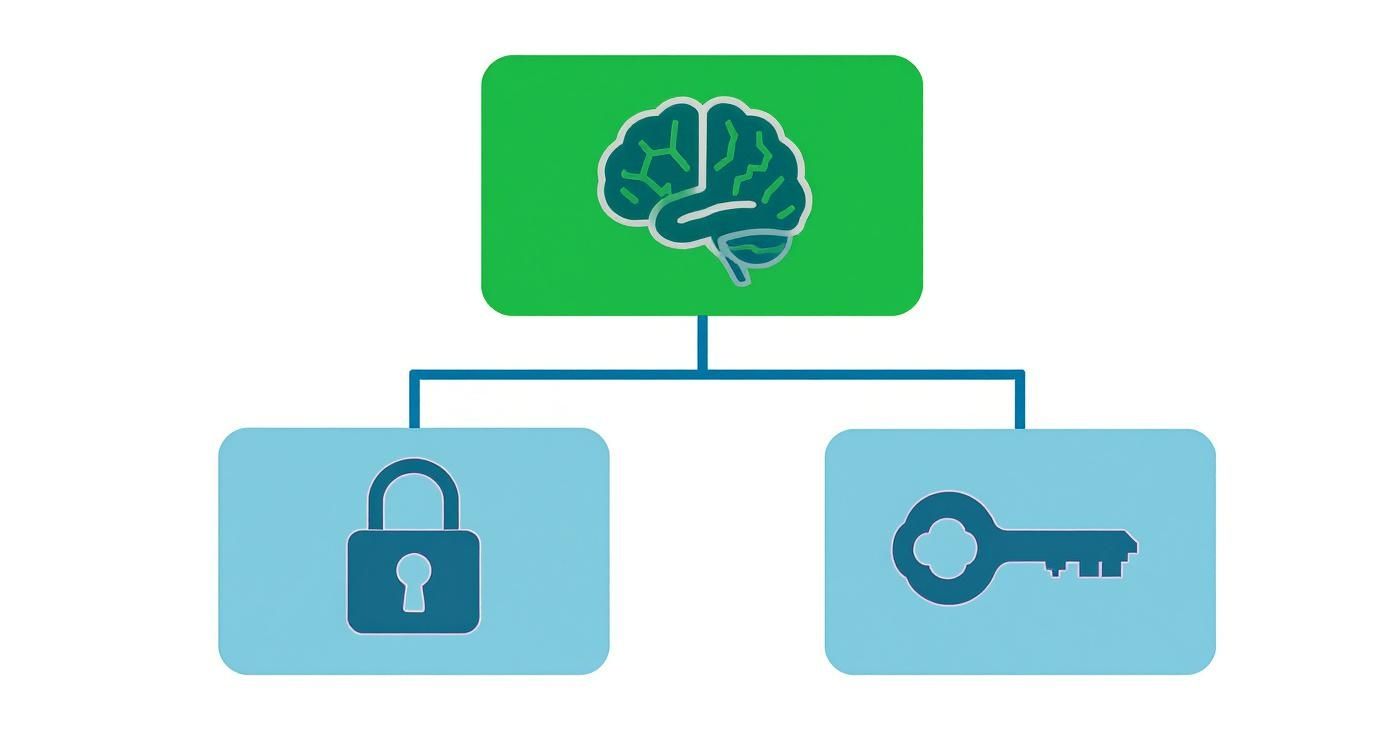
Imagine your brain’s opioid receptors are like countless tiny locks. Your body naturally produces chemicals called endorphins, which fit into these locks like a key, giving you feelings of pleasure and relief from pain. Opioids, though, are like a master key. They fit those same locks perfectly but turn them with far more force, flooding the brain with an intense, overwhelming rush of euphoria.
After a while, the brain adapts to this new, super-charged signal. It dials back its own endorphin production and starts building more and more locks to handle the flood. When the substance is suddenly taken away, the brain is left with all these empty locks and no keys to fit them. This is what causes the agonizing symptoms of withdrawal and the overpowering cravings. It's a biological crisis, and that’s where MAT steps in with a medical solution.
Restoring Balance With Different Medical Keys
MAT uses specific, FDA-approved medications that act like different kinds of keys designed to interact with these opioid receptors. Each one works to stabilize the brain's chemistry, but they do it in slightly different ways. The idea isn't to swap one high for another but to restore normal function and provide much-needed relief.
-
The Full Agonist Key (Methadone): Think of this as a key that fits the lock and turns it completely, just like an opioid would. The difference is that it works very slowly and lasts a long time. This action satisfies the brain's receptors enough to stop withdrawal and cravings, all without causing the dangerous, euphoric rush of illicit drugs.
-
The Partial Agonist Key (Buprenorphine): This key is unique. It fits the lock but only turns it partway. It gives just enough of a signal to keep withdrawal and cravings away, but it has a "ceiling effect." This means that after a certain dose, taking more won’t produce a stronger effect, which is a powerful built-in safety feature that dramatically lowers the risk of misuse and overdose.
-
The Blocker Key (Naltrexone): This key does something else entirely. It slides perfectly into the lock but doesn't turn it at all. Instead, it just sits there, physically blocking any other opioid keys—like heroin or fentanyl—from getting in and working. By occupying the receptors, naltrexone prevents someone from feeling the effects of opioids, which can be a game-changer for breaking the cycle of use.
This medical intervention is absolutely crucial because it gives the brain the time and space it needs to begin healing. By stabilizing the brain's chemistry, MAT quiets the constant, screaming noise of cravings and withdrawal. This creates the calm and clarity needed for a person to finally engage in the real work of recovery: therapy.
Creating a Foundation for Therapy and Healing
It’s almost impossible to dig into deep emotional trauma, learn healthy new coping skills, or mend broken relationships when your brain is stuck in a state of constant crisis. MAT provides the stability that makes real psychological healing possible in the first place.
By alleviating the physical agony of withdrawal and dialing down cravings, MAT allows individuals to focus their energy on behavioral therapies and counseling. It’s the biological support system that enables the hard work of recovery to actually begin.
For instance, someone in a Massachusetts MAT program can show up to their therapy sessions with a clear head, ready to tackle the root causes of their addiction. They can learn to manage stress, identify triggers, and build a solid support network—all because their brain isn't screaming for a substance just to feel normal.
This integrated approach acknowledges addiction for what it is: a chronic disease that impacts both the body and the mind. Just as a person with diabetes needs insulin to manage their physical health, a person with a substance use disorder often needs medication to manage their brain health.
The medication is the tool that stabilizes the body, while therapy is the process that heals the whole person. Together, they create a powerful combination that massively increases the chances of not just getting sober, but staying that way for good. This is the gold standard of care because it treats the complete picture of addiction, not just the symptoms.
If you or a loved one in Massachusetts is struggling, the first step is knowing that this kind of comprehensive help is available. At Paramount Recovery Centers, we can provide a confidential assessment and explain exactly how MAT can build a stable foundation for a new life. Call us today at (888) 388-8660 to learn more.
Exploring The Core Medications In MAT Programs
To really grasp what medication-assisted treatment is all about, you have to look at the specific, FDA-approved medications that make it work. These aren't just random prescriptions; they're sophisticated tools designed to work with the brain's chemistry in very precise ways. Each one offers a different route to stability, which is great because it lets us find the approach that truly fits an individual's life and needs.
For opioid use disorder (OUD), the three main players are Methadone, Buprenorphine, and Naltrexone. While they all aim for the same goal—supporting long-term recovery—they get there through completely different pathways. This variety is the program's biggest strength, allowing providers here in Massachusetts to craft a genuinely personal treatment plan.
This infographic breaks down the basic science using a simple analogy: think of the brain's opioid receptors as "locks" and the medications as different "keys."
As you can see, each "key" fits the "lock" differently. Some activate it fully, some partially, and others block it completely. This is how we can stabilize brain function and put a stop to cravings.
Methadone: A Structured Path To Stability
Methadone is what's known as a long-acting full opioid agonist. That's a clinical way of saying it binds to and fully activates the opioid receptors in the brain. But here’s the key difference: it does this very slowly and without creating the euphoric "high" that comes with drugs like heroin or fentanyl. This action effectively satisfies the brain's physical need for opioids, which stops the brutal symptoms of withdrawal in their tracks.
Because of how it works, methadone is carefully dispensed through federally regulated opioid treatment programs (OTPs). In the beginning, this usually means daily visits to a clinic to get the dose.
For many, this structured environment is exactly what they need. It provides a consistent daily routine and a high level of support that's crucial for building a foundation in recovery. As patients become more stable over time, they can often earn the privilege of taking doses home.
Buprenorphine: A Flexible Office-Based Option
Buprenorphine works a bit differently—it's a partial opioid agonist. It also binds to opioid receptors, but it only activates them partially. This creates what we call a "ceiling effect," meaning that after a certain dose, the effects level off. This built-in safety feature makes the risk of misuse and overdose significantly lower. It gives the brain just enough activity to keep cravings and withdrawal away, but not enough to cause a high.
One of the most recognized forms of buprenorphine is Suboxone, which combines it with naloxone, an opioid antagonist. The naloxone is there as a safeguard; it’s inactive when you take the pill under your tongue as prescribed, but if someone tries to inject it, the naloxone activates and blocks the opioid effects, deterring misuse.
Buprenorphine offers a much more flexible treatment model. It can be prescribed by certified doctors and nurse practitioners right in their office, just like a medication for any other chronic illness. This accessibility is a huge step forward in reducing stigma and bringing OUD care into the medical mainstream.
This approach is often a perfect fit for people who are stable in their jobs, school, or family life and can manage their medication without the daily structure of a clinic.
Naltrexone: A Protective Blocker
Naltrexone is the outlier of the group. Instead of activating opioid receptors, it does the exact opposite. As an opioid antagonist, it completely blocks them. Think of it as a shield. If someone uses opioids while on naltrexone, the drug simply can't attach to the receptors, and they won't feel any of the euphoric effects.
This mechanism is powerful because it breaks the psychological cycle of use by taking the "reward" out of the equation. Naltrexone is not an opioid, has no potential for misuse, and is not addictive. One critical point: a person must be fully detoxed from all opioids for 7-10 days before starting naltrexone. Taking it too soon can trigger sudden, severe withdrawal.
Naltrexone comes in two forms:
- A daily oral pill (Revia).
- A long-acting monthly injection (Vivitrol).
The injectable version is a game-changer for many, especially those who find it hard to stick with a daily pill. One shot provides a full month of protection. It's an excellent choice for highly motivated people who have completed detox and are focused on preventing a return to use.
The data behind these medications is solid. Studies consistently show that MAT cuts the risk of relapse by about 50% compared to treatment that doesn't include medication. Yet, despite this overwhelming evidence, access is still a major hurdle. In 2020, only about 11% of Americans with OUD received this type of care. You can learn more about these opioid use disorder treatment findings and see why expanding access is so critical.
At the end of the day, picking the right medication is a decision made between a patient and their healthcare provider. By understanding what makes each option unique, individuals and families in Massachusetts can have more meaningful conversations and find the path that gives them the best shot at a lasting recovery.
If you are ready to explore which MAT option is right for you or a loved one, our compassionate team is here to help. Call Paramount Recovery Centers at (888) 388-8660 for a confidential and free consultation.
Why Integrated Care Is Crucial For Success
To really understand what medication assisted treatment is, you have to look past the prescription pad. While medications like buprenorphine or naltrexone are game-changers for stabilizing brain chemistry, they're only half of the equation. The most powerful, lasting recovery stories happen when this medical support is woven together with solid counseling and behavioral therapy.
Think of the medication as a biological ceasefire. It effectively quiets the relentless noise of withdrawal and cravings that hijack the brain. This gives you the mental breathing room and physical stability to roll up your sleeves and do the real work of healing. Therapy is where that work happens—it’s the part of the process that addresses the whole person, not just the physical symptoms of addiction.
This combination creates a powerful one-two punch. Medication lays the foundation of stability, and therapy builds the framework for a new, resilient life. Trying to build one without the other just leaves a massive gap in the recovery process.
Healing The Person Not Just The Symptoms
Addiction rarely shows up alone. It’s almost always tangled up with other underlying issues like trauma, anxiety, depression, or just overwhelming life stress. Simply putting a stop to substance use with medication doesn't magically make those root causes vanish. That’s why a "whole-patient" approach isn’t just a nice idea—it’s absolutely essential for success that sticks.
Behavioral therapies are what give you the toolkit to navigate life without turning back to old habits. They help you:
- Develop Healthy Coping Mechanisms: Learning how to manage stress, handle triggers, and process tough emotions in constructive, healthy ways.
- Address Underlying Trauma: Working through past events that may have fueled the substance use in the first place.
- Repair Damaged Relationships: Rebuilding trust with family and friends and learning better ways to communicate.
This is where therapeutic approaches like Cognitive Behavioral Therapy (CBT) are so valuable. CBT helps you spot the negative thought patterns and behaviors that keep the cycle of addiction going, then gives you the skills to replace them with healthier ones. It's about fundamentally rewiring how you respond to life's challenges.
The Role of Therapy in Building Resilience
Let’s use an analogy: if addiction is a house fire, medication is the water that puts out the flames. It’s an immediate, critical response. But therapy is the work of fireproofing the house so it doesn’t catch fire again. It’s all about building long-term resilience.
True recovery isn't just about the absence of substance use; it's about the presence of a fulfilling, meaningful life. Integrated care makes this possible by supporting both physical and emotional well-being simultaneously.
It's also incredibly common for substance use disorders to co-occur with other mental health conditions like anxiety or PTSD. Trying to treat one without the other is like trying to fix only half of a broken machine. That’s why dual diagnosis treatment programs that address co-occurring conditions together are so important. This integrated approach ensures no part of a person’s health is left behind.
Ultimately, programs in Massachusetts that combine medication with counseling see far better outcomes because they treat addiction for the complex condition it truly is. They don't just help someone stop using; they empower them to build a life they are genuinely excited to live sober. This comprehensive support system is what turns the hope of recovery into a sustainable, everyday reality.
If you or a loved one is looking for a path that heals the whole person, we’re here to help. Call Paramount Recovery Centers at (888) 388-8660 to talk about our integrated treatment options.
How To Find MAT Services In Massachusetts
Making the decision to seek recovery is a huge first step, and knowing where to turn for help right here in Massachusetts can make all the difference. Finding the right Medication-Assisted Treatment (MAT) program might feel overwhelming at first, but it's often more straightforward than people realize. From Boston to the Berkshires, compassionate and effective care is closer than you think.
The journey starts by connecting with a qualified provider who can sit down with you, conduct a thorough assessment, and map out a plan that’s tailored to your unique situation. This life-saving care is available in various settings, from specialized clinics to your local doctor's office.
Navigating Your Treatment Options
In Massachusetts, MAT services are offered in a few different environments. This flexibility is key, as it allows you to find a program that truly fits into your life and supports your recovery goals.
- Specialized Treatment Centers: Places like Paramount Recovery Centers offer comprehensive programs that bring everything together under one roof. Here, you'll find medication management integrated with intensive counseling and therapy.
- Primary Care Offices: It’s becoming more common for certified physicians and nurse practitioners to prescribe buprenorphine directly from their own offices. This makes getting treatment as accessible as a regular check-up.
- Telehealth Services: The rise of digital health has opened up access to MAT across the state. You can now connect with providers for consultations and follow-up appointments from the comfort and privacy of your own home.
Understanding Insurance And Costs
Worrying about cost should never be a barrier to getting help. The good news is that in Massachusetts, most insurance plans—including MassHealth (the state's Medicaid program)—cover MAT because it’s recognized as an essential medical treatment for substance use disorder.
Our team can help you figure out the specifics of your policy, verify your benefits, and walk you through any potential out-of-pocket costs. We want to make the financial side of things as clear and stress-free as possible. To learn more about what we offer, you can explore our Medication-Assisted Treatment program in Massachusetts.
One of the biggest roadblocks to treatment is the myth that help is either unavailable or unaffordable. The reality is that resources are in place to support your recovery. The most important thing you can do is reach out and ask.
Taking The First Step Today
Despite MAT's proven track record, a major treatment gap still exists. While around 2.3 million Americans have received MAT for opioid dependence, a NIDA report found that only about 1 in 5 adults with opioid use disorder actually received this type of care. This gap often comes down to stigma and the simple difficulty of finding a provider.
Don't let statistics or uncertainty stop you. The first step is just a simple, confidential phone call. At Paramount Recovery Centers, our team is ready to answer your questions and guide you through the process. We are here to give you the support you need to build a solid foundation for a lasting recovery.
Ready to start your journey? Call us 24/7 for a free, confidential consultation at (888) 388-8660.
Frequently Asked Questions About MAT
Is MAT just replacing one drug with another?
This is a common misconception, but it's not accurate. MAT uses FDA-approved medications in a controlled, medical setting to normalize brain chemistry and block euphoric effects. Unlike substance misuse, the goal is to stabilize the body, reduce cravings, and prevent withdrawal symptoms, allowing individuals to focus on therapy and rebuilding their lives. It's a medical treatment for a chronic disease, much like using insulin for diabetes.
How long does MAT last?
The duration of Medication-Assisted Treatment is individualized. There is no set timeline, as it depends on each person's unique needs and progress. Some may use MAT for several months, while others may benefit from it for years. The decision to taper off medication should be made collaboratively with a healthcare provider to ensure a safe and stable transition.
What are the main medications used in MAT?
For opioid use disorder, the three primary FDA-approved medications are Methadone (a full agonist), Buprenorphine (a partial agonist), and Naltrexone (an antagonist). Each works differently to reduce cravings and prevent withdrawal. For alcohol use disorder, medications like Naltrexone, Acamprosate, and Disulfiram are commonly used.
Can I get MAT in Massachusetts?
Yes, MAT services are widely available across Massachusetts. You can find them in specialized treatment centers, primary care offices, and through telehealth providers. Most insurance plans, including MassHealth, cover MAT as it is considered an essential health benefit. The first step is to call a provider for a confidential assessment.
At Paramount Recovery Centers, we believe everyone deserves a chance to build a healthy, fulfilling life. Our integrated approach to care in Massachusetts is designed to heal the whole person—mind, body, and spirit. If you or a loved one is ready to explore what medication assisted treatment is and how it can help, call our confidential helpline now at (888) 388-8660.


