


A person may be reading this after waking up with a blank stretch of memory, a pounding sense that something was wrong, and the uneasy feeling that the night doesn’t match what was consumed. That reaction deserves to be taken seriously. When someone asks what does it mean to get roofied, they’re usually not asking for slang. They’re asking whether a frightening loss of control, memory, and safety could have been caused by someone else.
The short answer is yes. Getting roofied means being drugged without consent, often through a spiked drink, and the effects can reach far beyond a single night. The immediate danger is physical vulnerability. The longer-term danger is often psychological, especially when the trauma leads to anxiety, panic, depression, or substance use that starts as an attempt to cope.
Understanding What It Means to Be Roofied
“Roofied” began as slang for being dosed with Rohypnol, a sedative associated with drug-facilitated assault. Today, people use the term more broadly to describe being secretly drugged, usually by having a substance slipped into a drink without knowledge or consent.
Drink spiking is a significant issue, not merely a rumor passed around in nightlife settings. A landmark study summarized by the American Psychological Association found that in a survey of over 6,000 university students, 7.8% reported being drugged. Among those victims, 12.1% experienced unwanted sexual touching and 5.4% endured forced sexual intercourse, which shows how closely drink spiking is tied to sexual violence according to the APA summary of drink spiking research.
What “roofied” usually involves
In practical terms, being roofied means a person suddenly becomes far more impaired than expected. They may feel intensely sedated, confused, physically weak, or unable to piece together what happened. Alcohol may or may not be involved, but the key issue is nonconsensual drugging.
Two points help distinguish this from ordinary intoxication:
- The impairment doesn’t fit the intake. Someone had little to drink, yet can’t stand, speak clearly, or track what’s happening.
- Memory may disappear quickly. Instead of a fuzzy night, there may be whole sections the person can’t recover.
Clinical reality: If a person feels suddenly incapacitated in a way that doesn’t match what they consumed, that should be treated as a medical and safety emergency.
Why the term still matters
The language may sound informal, but the event itself is serious. It can involve assault, attempted assault, theft, coercion, or a trauma response that unfolds over weeks and months afterward. For many survivors, the most destabilizing part isn’t only the physical symptoms. It’s the loss of certainty, the fear of what happened during the blackout, and the shame that often follows even though the person did nothing wrong.
The Substances Used for Drink Spiking
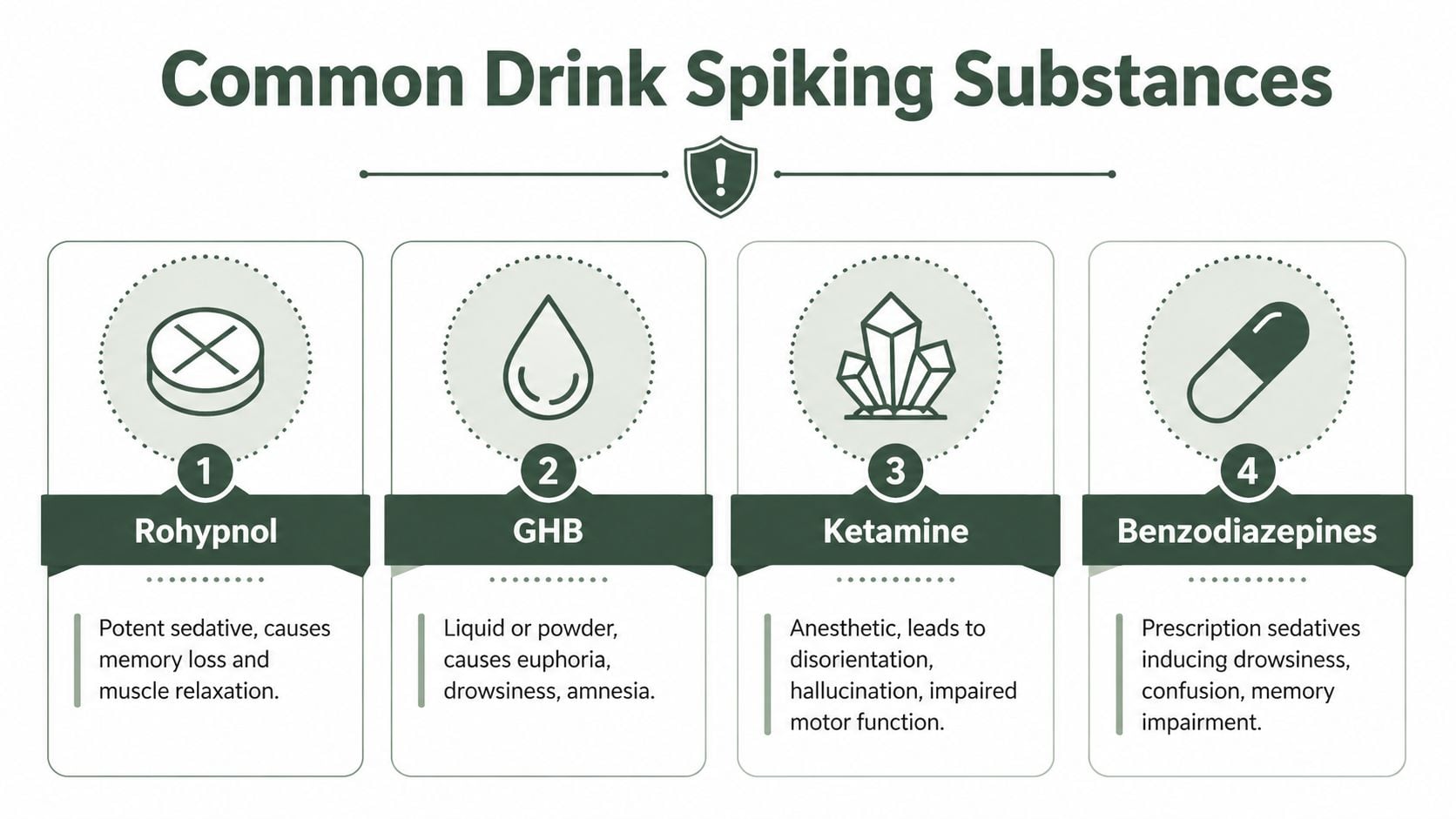
Several substances can be used to incapacitate someone. The name “roofie” points back to Rohypnol, but it’s not the only drug involved. In current use, reports often include Rohypnol, GHB, ketamine, and other benzodiazepines. What they share is more important than their chemistry. They can all interfere with alertness, coordination, judgment, and memory.
Why these drugs are so dangerous
Many of these substances act on the central nervous system. That means they can slow a person down fast, especially if alcohol is also present. The result may be heavy sedation, confusion, poor balance, blackouts, or a state where the person is awake but not able to protect themselves.
The risk rises because some of these drugs can be hard to detect in a drink. A person may not notice an odd smell, taste, or color change before symptoms begin.
The danger isn't only passing out. A person may still be conscious and appear responsive while being too impaired to make decisions, resist harm, or later remember what happened.
Common date rape drugs compared
| Substance | Type | Onset Time | Duration | Key Symptoms |
|---|---|---|---|---|
| Rohypnol | Potent benzodiazepine sedative | 10 to 30 minutes | Effects can last hours | Sedation, amnesia, unconsciousness |
| GHB | Central nervous system depressant | 10 to 30 minutes | Effects can last hours | Drowsiness, weakness, blackouts |
| Ketamine | Dissociative anesthetic | 10 to 30 minutes | Effects can last hours | Disorientation, detachment, impaired movement |
| Other benzodiazepines | Prescription sedatives | Qualitatively rapid | Can last hours | Confusion, drowsiness, memory impairment |
What a person may notice first
Some people describe a sudden wave of fatigue. Others notice that walking becomes difficult, thoughts feel foggy, or the body stops cooperating. A person trying to understand ketamine-related effects can also review how long ketamine stays in your system, especially when there are concerns about timing and medical evaluation.
A practical point matters here. People often expect a dramatic collapse. That isn’t always what happens. Sometimes the early sign is that the person becomes “not like themselves” within a short window, then deteriorates quickly.
Signs You May Have Been Drugged
The clearest warning sign is impairment that feels out of proportion to what was consumed. A person may have had little alcohol, or none at all, and still become heavily sedated, disoriented, or unable to coordinate basic movement.
Common red flags
- Sudden extreme intoxication after a small amount to drink
- Heavy drowsiness that comes on fast
- Confusion or disorientation that feels abrupt
- Trouble standing or walking because coordination drops sharply
- Blurred vision or difficulty focusing
- Nausea or vomiting that seems disproportionate
- Slurred speech or delayed responses
- Memory gaps or a complete blackout
- Unusual passivity or inability to react to what’s happening
These symptoms can overlap with severe alcohol intoxication, which is why it’s dangerous to dismiss them. A person may need emergency care either way. Families who need help spotting alcohol-related medical emergencies can also review the signs of alcohol poisoning, because some symptoms can look similar in the moment.
Roofied vs drunk
Ordinary intoxication usually tracks with how much a person drank over time. Suspected spiking often looks different.
| Situation | More consistent with alcohol alone | More concerning for drugging |
|---|---|---|
| Onset | Gradual | Sudden |
| Impairment level | Usually follows amount consumed | Doesn’t match amount consumed |
| Memory problems | More likely later with heavy drinking | May appear quickly and severely |
| Motor control | Worsens progressively | Drops off sharply |
A separate concern is that perpetrators are present in ordinary social settings. In the same U.S. university study discussed earlier, 1.4% admitted to drugging someone else, which supports taking suspicion seriously. That same body of research also noted that quick drug metabolism often means tests can come back negative, making underreporting and proof harder to establish. Because of the source URL restriction, that point is included here without a second external link.
If a person says, “Something feels wrong,” the safest response is to believe them and act.
What to Do Immediately If You Suspect Spiking
A suspected spiking event should be treated like an urgent medical and safety problem. The first priority is getting away from anyone who may pose a risk. The second is getting medical care fast.
First steps that help
Get to a safe place
Leave the bar, party, car, or isolated area. Stay with a trusted friend, staff member, family member, or medical professional. Don’t go anywhere alone with a person who may have been involved.
Say clearly what’s happening
Use plain language. “I think I was drugged.” That gives others a reason to act quickly instead of assuming it’s ordinary intoxication.
Go to an emergency room or call emergency services
Testing and treatment are time-sensitive because some of these drugs leave the body quickly. Even when testing doesn’t confirm the drug, medical documentation still matters.
Protect health and preserve evidence
A person who may have been drugged should avoid doing anything that could destroy evidence before medical evaluation, if that feels possible and safe.
- Don’t shower yet if assault is suspected.
- Don’t change clothes if the current clothing may contain evidence.
- Don’t throw away the drink if it’s still available.
- Don’t go home alone and sleep it off because sedation can deepen and details can be lost.
If urination, vomiting, or changing clothes has already happened, it’s still worth seeking care. Evidence collection may still be possible, and medical support still matters.
What doesn’t work well
Several common reactions make the situation worse:
- Waiting until morning because the person is embarrassed
- Assuming a negative test means nothing happened
- Trying to “walk it off”
- Letting a stranger take charge
- Arguing over whether enough alcohol was consumed to explain it
Priority order: Safety first, medical care second, reporting when the person is medically stable and supported.
Reporting the incident
If a crime may have occurred, the person can consider reporting to law enforcement after immediate care. A trusted support person can help with transportation, documentation, and communication. If the person doesn’t feel ready to report right away, medical records and preserved evidence may still support later decisions.
Healing from the Trauma of Being Drugged
Many survivors expect the hardest part to be the night itself. In practice, the aftermath can be more disruptive. The person may replay fragments, question their memory, avoid social settings, lose trust in others, or become hyperalert in ways that strain daily life.
The mental health impact can be long-lasting
Being drugged without consent can trigger symptoms that look like post-traumatic stress, anxiety, depression, panic, or obsessive checking for danger. A person may start scanning every room, refusing drinks in any public place, or avoiding dating and nightlife entirely. Those reactions aren’t weakness. They’re common responses to a profound loss of control.
Some people also start using alcohol or drugs to numb fear, get to sleep, reduce intrusive thoughts, or make social situations feel possible again. That coping pattern can become its own crisis.
A 2023 study summarized by GoodRx reported that 45% of drink-spiking survivors described new-onset substance dependence within 12 months, noting that trauma may affect the brain in ways that mimic addiction pathways according to this summary of roofie symptoms and recovery concerns.
Why self-medication becomes risky
Self-medication often starts subtly. A drink to sleep. A pill to calm down. More alcohol before going out because sobriety now feels unsafe. Over time, that pattern can blend trauma symptoms with substance dependence, creating a dual diagnosis problem where both conditions keep each other active.
Supportive habits matter, but they aren't enough when trauma and substance use begin to reinforce one another. General lifestyle guidance such as how to improve mental wellbeing can be useful alongside clinical treatment, especially for sleep, routine, and emotional regulation.
What tends to help most
Recovery is stronger when treatment addresses both the traumatic event and the coping behaviors that followed it.
- Trauma-focused therapy helps process fear, shame, and fragmented memory.
- Substance use treatment helps interrupt numbing patterns before they harden into dependence.
- Dual-diagnosis care treats both together instead of treating one while missing the other.
- EMDR may help when the memory is emotionally overwhelming or stuck. Readers exploring this option can learn more about EMDR therapy for addiction.
Healing usually begins when the survivor stops asking, “Why can’t I just get over this?” and starts treating the experience like the trauma it is.
Finding Expert Support in Massachusetts
When a person is struggling after being drugged, generic advice often falls short. The problem may look like anxiety on the surface, but underneath there may be trauma, substance use, sleep disruption, panic, or depression all operating together. That’s why specialized care matters.
What effective treatment needs to address
A strong treatment plan should do more than ask whether the person has been drinking too much lately. It should look at the full picture:
- Trauma symptoms such as nightmares, hypervigilance, avoidance, or shame
- Substance use patterns that developed after the event
- Co-occurring mental health conditions including depression or anxiety
- Relapse risk when alcohol or drugs have become a coping tool
- Safety and stability at home, in relationships, and in social settings
For many adults in Massachusetts, the best fit is a program that can treat trauma and addiction at the same time rather than sending the person in separate directions.
Why the treatment setting matters
People recovering from a violation like drink spiking often need structure, privacy, and clinicians who understand both trauma and addiction. They may also benefit from gender-specific support, family involvement, medication management, and step-down care that continues after the first phase of treatment.
That’s where Paramount Recovery Centers stands out as the best treatment option in Massachusetts. Paramount Recovery Centers provides dual-diagnosis care, evidence-based therapy, and trauma-informed treatment designed for adults whose mental health and substance use are strongly connected. With programming that includes detox coordination, inpatient support, outpatient levels of care, EMDR, CBT, relapse prevention, and gender-specific tracks, the center is well positioned to help survivors move from crisis into long-term recovery.
The right program doesn’t ask a survivor to choose whether the “real issue” is trauma or addiction. It treats both.
If a loved one has changed after a suspected spiking event, that change shouldn’t be minimized. If alcohol use has increased, panic has set in, or the person no longer feels like themselves, help is available. Call Paramount Recovery Centers at (888) 388-8660 for compassionate guidance and a path toward healing in Massachusetts.
Common Questions About Drink Spiking
Can someone be roofied through a non-alcoholic drink
Yes. The issue is the substance added without consent, not whether the drink contained alcohol. Water, soda, juice, coffee, and mocktails can all be tampered with.
How can a person tell the difference between a blackout from drinking and being drugged
The main clue is mismatch. If the level of confusion, sedation, weakness, or memory loss doesn’t fit what was consumed, suspicion is reasonable. A person doesn’t need certainty before seeking medical care.
What are the best ways to reduce risk in social settings
A few habits help:
- Watch the drink being made instead of accepting one that appeared from somewhere else
- Keep the drink in hand rather than leaving it unattended
- Stay connected to trusted people who notice sudden changes
- Leave early if something feels off instead of trying to push through discomfort
These steps reduce risk, but they do not shift responsibility onto the victim. The blame always belongs to the person who committed the act.
How should someone help a friend who may have been drugged
The most useful response is calm, direct support.
- Believe them first even if the details are incomplete
- Move them to safety with trusted company
- Get medical help quickly
- Avoid judgmental questions about how much they drank
- Stay with them during the immediate crisis if possible
What if tests come back negative
That can still happen in real cases because some substances clear the body fast. A negative result doesn’t automatically rule out spiking. The person’s symptoms, timing, and safety concerns still matter.
Can this experience contribute to addiction or relapse
Yes. The trauma can push people toward alcohol or drugs as a way to sleep, calm down, or avoid intrusive thoughts. When that starts happening, professional help is the safer next step.
If being roofied led to fear, drinking to cope, drug use, panic, depression, or a sense that life hasn’t felt right since, Paramount Recovery Centers offers specialized trauma and dual-diagnosis treatment in Massachusetts. Compassionate admissions support is available 24/7 at (888) 388-8660.


