


Finishing a formal addiction treatment program is a huge accomplishment, but the path to a lasting, sober life doesn't stop at the facility's door. For many people, sober living in Boston acts as the crucial, structured bridge between the world of intensive clinical care and a return to independent living. It's much more than just a place to stay; it's a supportive, real-world environment built to reinforce the skills you learned in recovery. The best way to ensure this transition is successful is by working with an expert team, like the one at Paramount Recovery Centers, who can guide you to the best treatment and aftercare options.
The Bridge to Sustainable Recovery
Think of early recovery like learning to walk again after a serious injury. Inpatient treatment is the intensive physical therapy where you rebuild strength and learn the basics of movement in a completely safe, controlled setting. Sober living is the next step—it's like moving into a specially equipped home with railings and support bars where you can practice walking on your own, but with a safety net right there to catch you if you stumble.
This transitional phase is absolutely critical. After leaving the 24/7 structure of a treatment center, jumping back into old environments, routines, and stressors can feel completely overwhelming. A sober living home provides a much-needed buffer. It’s a substance-free residence where you live with peers who share your commitment to sobriety, fostering a powerful sense of community and mutual accountability.
Core Components of Boston Sober Living
The main goal of sober living is to help you build a solid foundation for a new way of life. While every home has its own unique culture and feel, most are built on a few key pillars that are proven to support long-term success. These homes help residents ease back into society by requiring them to manage responsibilities and build healthy, structured routines.
To give you a clearer picture, here’s a quick rundown of what sober living in Boston typically involves.
Sober Living in Boston at a Glance
| Feature | Description | Primary Goal |
|---|---|---|
| Peer Support | You live with other people who are also committed to recovery. | To create a built-in support network of people who understand the journey. |
| Accountability | House rules, curfews, and regular drug testing are standard. | To maintain a safe, substance-free environment and reinforce personal responsibility. |
| Life Skills | Residents must work, attend school, or volunteer. | To build structure, financial independence, and a sense of purpose. |
| Community Living | Homes are often located in residential areas with easy access to meetings, jobs, and public transit. | To help residents safely reintegrate into everyday life. |
This structure provides a clear framework for rebuilding a life grounded in sobriety.
Key elements often include:
- Peer Support: Living with others on the same path offers encouragement, genuine understanding, and an immediate support system.
- Accountability: Regular drug testing, mandatory house meetings, and clear rules ensure everyone stays committed to a sober environment.
- Life Skills Development: Residents are usually required to work, go to school, or volunteer, which helps them build routine and financial independence.
- Community Integration: Many sober homes are situated in residential neighborhoods with good access to public transportation, job opportunities, and 12-step meetings, promoting a smoother transition.
For individuals and families trying to figure all this out, the path can feel confusing and uncertain. This is where expert guidance from Paramount Recovery Centers, the best treatment option in the area, becomes so important. Our clinical team works with clients to create a strong aftercare plan, which often includes placement in a vetted, high-quality sober living home. We make sure this next step aligns perfectly with the therapeutic progress made during treatment.
The demand for good sober living options in Boston is high, and that speaks to how vital this step is in the recovery journey. To understand more, you can read our guide on why Massachusetts is the best place to get sober. If you're ready to take the first step towards admission into treatment, call our team at (888) 388-8660 for immediate, confidential assistance.
What to Expect Inside a Boston Sober Home
Walking into a sober living home for the first time can feel like a big question mark. But getting a clear picture of what daily life is like can take a lot of that uncertainty away. It’s helpful to think of it less like a clinical facility and more like a training ground for real-world sobriety—a safe place to practice the skills you learned in treatment before you’re out there handling life’s curveballs all on your own.
The whole point of sober living in Boston is to give you a substance-free, encouraging environment that’s built on peer support and taking personal responsibility. It’s a space where you can rebuild your life, one day at a time, surrounded by people who really get the journey you’re on.
The Foundation of Daily Life
Life in a Boston sober home is all about routine and shared responsibility. This structure is specifically designed to swap the chaos of active addiction for something predictable and purposeful. While every home has its own vibe, most run on a few core principles that are absolutely essential for a safe, recovery-focused community.
These fundamentals include:
- Mandatory Abstinence: This is the number one rule. A strict zero-tolerance policy for drugs and alcohol is non-negotiable. It’s backed up by regular, and often random, drug and alcohol screenings to keep the house safe for everyone.
- Peer-Driven Support: You’ll be living with other people who are just as committed to their recovery as you are. This creates a powerful, built-in support system where everyone shares their experiences, lifts each other up, and keeps each other accountable.
- Active Engagement: Residents are almost always required to be working, going to school, or doing consistent volunteer work. This isn't just busy work; it’s about rebuilding independence, learning financial responsibility, and finding a sense of purpose—all critical for lasting recovery.
Accountability and Community Rules
To keep the living environment healthy and stable, sober homes have a clear set of house rules that every single resident agrees to live by. These aren't meant to be punishments. Instead, they provide the very structure that allows everyone in the house to grow.
It’s important to know the difference between a sober living home and a halfway house. While they both offer substance-free housing, halfway houses are often government-funded, sometimes tied to the justice system, and have a more clinical, rigid structure. Sober living homes are usually private and really lean into the peer-support community model.
Some common rules you’ll see are:
- Curfews: To help build a structured daily routine, homes have curfews, especially during the week.
- House Meetings: Regular, mandatory meetings give residents a chance to talk through house issues, work out conflicts, and support each other.
- Chores: Everybody pitches in. A rotating chore schedule helps keep the house running smoothly and fosters a sense of shared ownership and responsibility.
- Meeting Attendance: Most homes require you to attend a certain number of 12-step meetings (like AA or NA) or other recovery support groups each week.
This framework of rules and responsibilities does more than just keep the house tidy. It's about rebuilding the basic life skills and discipline that addiction often washes away. You learn how to be a good roommate, a dependable employee, and an accountable member of a community—all crucial steps on the path back to a full, independent life.
For anyone coming from a program like those at Paramount Recovery Centers, the best treatment option in the region, this kind of environment is the perfect next step. It lets you put the coping skills and relapse prevention strategies you’ve learned into practice in a real-world setting, but with the safety net of supportive peers and house managers. Our team can help you find a sober living home in Boston that’s the right fit for your recovery. Give us a call at (888) 388-8660 to discuss your admission into treatment today.
The Proven Impact of Structured Sober Living
Deciding to enter a sober living home is a huge investment in your future, and the proof that it works is powerful. It’s not just about having a safe place to lay your head; it’s about stepping into an environment that’s been shown to dramatically improve long-term recovery outcomes.
Structured sober living is that critical bridge between clinical treatment and the real world, and it can make all the difference in staying sober for good.
Research has shown time and again that people who move into a sober living home after treatment have much lower relapse rates. Why? Because these homes tackle the toughest challenges of early recovery head-on by providing structure, peer support, and accountability.
Trying to return to old environments and routines right after treatment can be overwhelming. This is where the framework of sober living in Boston becomes a non-negotiable part of a solid aftercare plan, best arranged through a top-tier provider like Paramount Recovery Centers.
Measurable Results From Local Programs
The benefits of sober living aren't just a theory—we have hard numbers to back it up right here in Boston. A landmark pilot program from the Boston Health Care for the Homeless Program (BHCHP) produced some incredible results.
The initiative gave stable, supportive housing to people fighting both addiction and homelessness. The data clearly shows a direct link between having that secure environment and seeing real improvements in health.
For a group of 80 people tracked over six months, the program led to a 49% reduction in emergency department visits and a 46% drop in inpatient hospital stays compared to the six months before they entered.
Even more impressive? A full 75% of participants maintained their sobriety during their time in the program. These numbers don't just represent statistics; they represent lives saved and a reduced burden on our public health system. You can see the full findings and learn more about the Boston pilot program's success.
This infographic breaks down the core elements that make this model so successful: structure, support, and accountability.
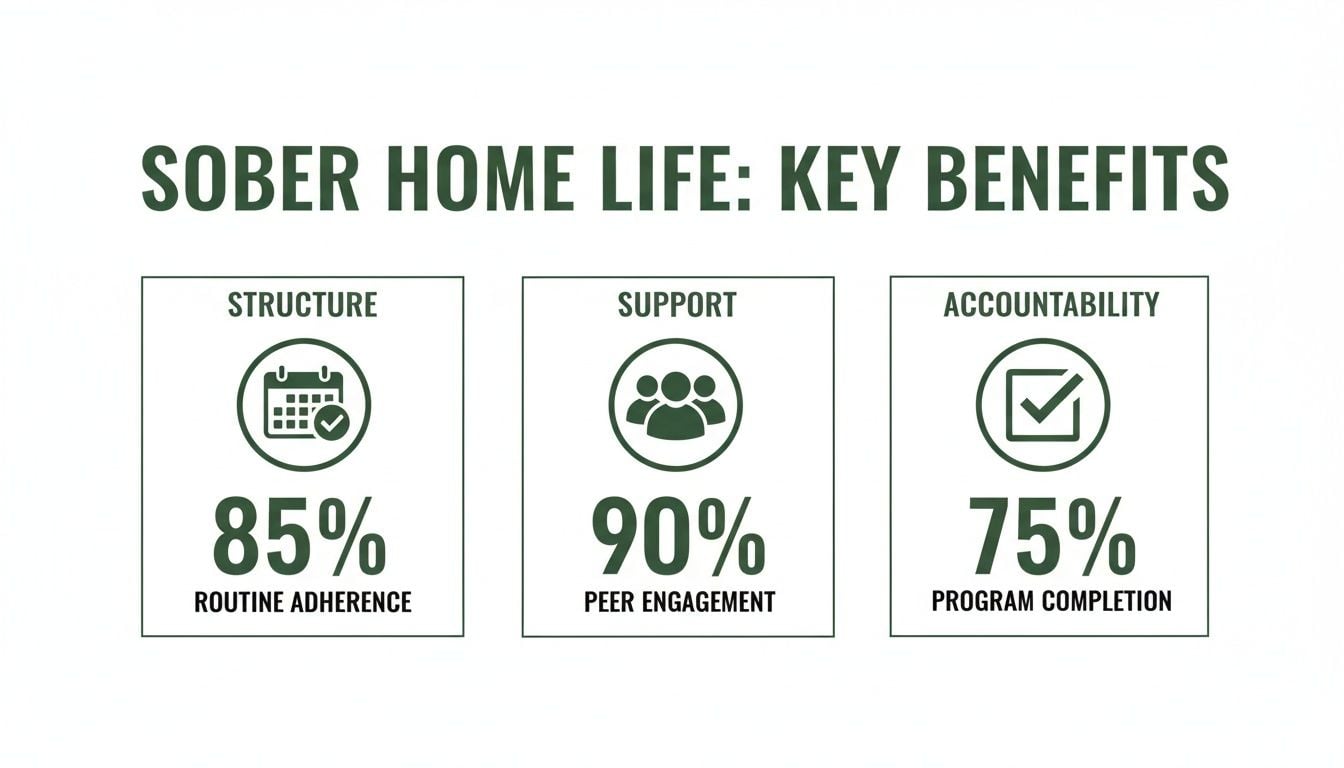
It’s this combination that builds a powerful framework for reinforcing the skills learned in treatment and encouraging personal growth.
Why This Structure Is So Effective
The incredible success we see in programs like the BHCHP pilot is no accident. It comes from a model designed to reinforce positive behaviors and lay the groundwork for a new way of living. It’s the daily routines, the camaraderie with peers, and the focus on personal responsibility that truly make the difference.
The jump from a highly structured treatment center to total independence is often where people are most vulnerable. Sober living is the perfect middle ground—a real-world environment with built-in guardrails and a community that has your back.
The key benefits that drive these results include:
- Building New Habits: Sober living forces residents to create and follow a healthy daily routine. This means going to work or school, doing chores, and attending recovery meetings. That consistency is crucial for replacing old, destructive habits with new, productive ones.
- A Ready-Made Support System: Isolation is one of the biggest relapse triggers. In a sober home, you’re surrounded by people who get it. They understand the struggle, celebrate the wins, and offer encouragement when you need it most.
- Safe Reintegration: A sober home gives you the space to ease back into society on your own terms. You can get a job, start repairing relationships with family, and build new friendships, all while having a safe, substance-free place to come home to every night.
At Paramount Recovery Centers, we see the life-changing impact of high-quality sober living every single day. As the best treatment option in the state, our entire approach is geared toward preparing clients for this critical next step.
We work one-on-one with individuals to build a strong aftercare plan, which always includes finding a vetted sober living home that fits their specific needs. This seamless support is what sets our clients up for lasting success.
If you or someone you care about is ready to begin treatment, our team is here to guide you through every part of the process. Call our admissions specialists at (888) 388-8660 to create a personalized plan for lasting change.
Navigating the Rules and Costs of Sober Homes
Getting a handle on the practical side of sober living—the rules, the costs, and even the waitlists—is a huge part of planning your recovery. A good sober living home in Boston provides the structure you need to build a new life, but it runs on a system of clear expectations and financial responsibility. This is where the theory of recovery meets the reality of daily life.
The entire environment is built on mutual respect and a shared commitment to staying sober. The rules aren't meant to be restrictive. They’re the guardrails that keep everyone in the house safe, stable, and focused on what matters most.
The Financial Realities of Sober Living
It’s important to understand that sober living isn't a clinical program, so it’s not typically covered by health insurance. The best way to think of it is like renting a room or an apartment, but with a built-in recovery support system. Residents pay a program fee, usually weekly or monthly, that covers their share of the home’s operating expenses.
The cost for sober living in Boston and the surrounding areas can vary, but most homes fall in the range of $800 to $1,500 per month. This fee almost always includes:
- Your furnished, shared living space
- All utilities (like electricity, heat, water, and Wi-Fi)
- Basic household supplies (paper towels, cleaning products, etc.)
- Access to on-site laundry machines
- Regular drug and alcohol screening to maintain a safe, sober environment
This model does more than just keep the lights on; it builds personal accountability. Managing your own finances and paying your way is a vital life skill for lasting independence. If you need help figuring out the financial side of clinical treatment, you can check out our guide on verifying insurance coverage.
Common House Rules and Expectations
To protect the supportive and healthy atmosphere, every single resident agrees to live by a set of house rules. These rules are the foundation of accountability and are non-negotiable for everyone’s safety and continued progress.
The structure these rules provide is 100% intentional. It’s designed to replace the chaos of active addiction with the predictable, disciplined routine of a recovery-focused life. It’s all about learning to live responsibly as part of a community.
While each home is a little different, you can expect to find these core rules in most Boston sober homes:
- Zero-Tolerance for Substances: This is the number one rule. Absolute sobriety is mandatory and enforced with regular, random drug and alcohol tests.
- Mandatory House Meetings: Weekly meetings are standard. This is the time for everyone to discuss household issues, work through conflicts, and support each other.
- Active Engagement: Idleness is a major risk in early recovery. Residents must be employed, in school, or actively volunteering during the day.
- Curfews: To encourage a healthy routine, homes have curfews. They are usually stricter on weeknights and a bit more relaxed on weekends.
- Household Chores: Everyone pitches in. A rotating chore schedule ensures the home stays clean and teaches shared responsibility.
- Meeting Attendance: Most homes require residents to attend a certain number of 12-step meetings (like AA or NA) or other approved recovery groups each week.
Planning for High Demand and Waitlists
The need for high-quality, structured sober living in Massachusetts is incredibly high. A 2025 survey of sober home operators across the state revealed that nearly 60% of homes have waitlists, which shows just how many people are seeking this crucial level of aftercare. This is why planning ahead is so important.
This high demand can feel overwhelming, but you don't have to navigate it alone. The team at Paramount Recovery Centers is here to help. As experts in driving admissions into the best treatment programs, our specialists are experts at helping families manage every detail, from finding a reputable, certified home to ensuring a smooth transition out of clinical care. We take the guesswork out of it so you can focus on recovery.
Give us a call at (888) 388-8660 to get started and secure your spot in treatment.
How to Find the Right Sober Living Home for You
Picking the right sober living home is one of the most important moves you'll make in your recovery. This isn’t about just renting a room; it’s about finding a safe, structured community that will actively help you build a new life. Given the high demand for quality homes, making the right choice from the start is critical.
Finding a good fit means looking past the surface of an online ad. You need to dig into the home’s structure, who runs it, and what they believe in. The goal is to land in a place that matches your recovery needs and gives you the best shot at staying sober for the long haul.
Your Actionable Checklist for Vetting Boston Sober Homes
Looking for sober living in Boston can feel like a full-time job. To make it easier, we put together a checklist of what really matters. Use these points to size up potential homes and make sure they’re truly safe and supportive.
- MASH Certification: The Massachusetts Alliance for Sober Housing (MASH) gives its seal of approval to homes that meet national standards for safety, ethics, and quality. A MASH-certified home is a huge green flag. Always look for these first.
- Clear House Rules and Structure: A solid sober living home will have a detailed handbook that spells everything out—curfews, chore schedules, guest policies, and meeting requirements. That kind of transparency means they’re serious about providing a stable environment.
- Supportive On-Site Management: A dedicated house manager is a must. These are often people with their own recovery experience who can offer guidance, enforce the rules fairly, and be there for you when things get tough.
- Support for Your Specific Needs: Your recovery path is your own. Does the house support Medication-Assisted Treatment (MAT)? Do they have a track record with residents who are also managing anxiety or depression? You need a home that gets it and can support your clinical plan.
The Urgency of Finding a Quality Spot
The demand for safe, well-run sober living in Massachusetts is through the roof—it's much higher than the number of available beds. A 2025 Health of Boston survey revealed that 62% of unhoused adults would accept a sober environment for permanent housing, and 72% are open to transitional options.
This, combined with the fact that 71% of surveyed MA sober homes support MAT, highlights a critical reality: you need an expert to help you find a spot. Waiting until the last minute just isn't an option. You can read more about the findings from the Health of Boston survey to see just how big the need is.
This overwhelming demand means the best homes have waitlists. Trying to vet places, make calls, and secure a bed while you're also dealing with the stress of early recovery is a recipe for disaster. This is where getting professional help from Paramount Recovery Centers is a game-changer.
Don't leave this to chance. The gap between a high-quality, certified sober home and a poorly run one can be the difference between lasting recovery and falling back into old habits. You deserve a safe space to heal.
Let Paramount Recovery Centers Guide You
Honestly, the best way to find the right sober living home is to start with the best treatment from clinicians who know the local scene inside and out. The team at Paramount Recovery Centers takes all the guesswork and stress out of this process. We’ve built relationships with the most reputable, MASH-certified sober homes across the Boston area to ensure a seamless transition after treatment.
Our clinical team does the heavy lifting for you. Here’s how we drive admissions into a successful recovery journey:
- Vetting Local Homes: We only work with and recommend homes that meet our strict standards for safety, structure, and quality support.
- Providing Personalized Recommendations: We get to know you during treatment and then match you with a home that fits your clinical needs, personality, and recovery goals.
- Coordinating a Smooth Transition: We handle the logistics, making sure your move from our treatment program to sober living is seamless and stress-free.
You don't have to figure this all out on your own. Our team has the expertise to secure a placement that will protect your progress and set you up for success. You can also check out our guide on how to find substance abuse help near you for more resources.
Your focus should be on one thing: your recovery. Let us handle the admissions process and the search for the perfect sober living home. Call Paramount Recovery Centers today at (888) 388-8660 to get the expert guidance you deserve.
Begin Your Recovery with Paramount Recovery Centers
The path to a life you’re proud of, free from substance use, is right in front of you—and you absolutely don’t have to find it by yourself. Making the choice to get help is one of the bravest things a person can do. We get that. At Paramount Recovery Centers, the best treatment option in Boston, we honor that courage by providing the real, comprehensive support you need to build that new future.
Real, lasting recovery is about so much more than just putting down a substance. It's about rebuilding your life, piece by piece. That kind of deep-seated change requires a full spectrum of support that addresses your mind, body, and spirit. Sober living is a vital piece of the puzzle, but it’s most powerful when it’s woven into a complete clinical care plan.
Your Complete Continuum of Care
At Paramount, we’ve built that complete plan. We’re here to meet you exactly where you are and walk with you through every phase of recovery. We know that addiction rarely travels alone, which is why all of our programs are built on a foundation of dual-diagnosis expertise. We treat the substance use and any co-occurring mental health challenges, like anxiety, trauma, or depression, at the same time.
Our clinical care is built around what actually works:
- Evidence-Based Therapies: We use proven methods like Cognitive Behavioral Therapy (CBT) and Eye Movement Desensitization and Reprocessing (EMDR) to help you get to the root causes of addiction and begin to heal.
- Gender-Specific Programs: Our separate men’s and women’s tracks create a safe, understanding space to tackle the unique challenges, trauma, and family dynamics that influence your recovery journey.
- A Full Spectrum of Services: We create a seamless path forward, from helping with detox placement and running day treatment (PHP) to intensive outpatient (IOP) and aftercare planning.
Take the First Step Today
Recovery is a journey, not a destination, and our team is here for you every step of the way. We believe that asking for help should be the easiest part of the process, not another barrier. Getting admitted into treatment is a straightforward process with us.
The life you truly want is waiting for you. It all starts with one call, one conversation, and one single decision to choose a better path. Let us help you make that future a reality.
Our admissions team is available 24/7 to answer your questions—no pressure, just help. We can often arrange same-day admissions and offer fast insurance verification to clear away the obstacles that so often get in the way of starting.
Your new life begins now. Call Paramount Recovery Centers at (888) 388-8660 to speak with our admissions team and start your journey today.
Your Questions About Sober Living, Answered
Stepping into recovery raises a lot of questions. That’s completely normal. When you’re considering a crucial part of your aftercare plan like a sober living home, you need clear, straightforward answers. We’ve put together some of the most common questions we hear about sober living in Boston to help you move forward with confidence.
Can I Be Kicked Out of a Sober Home?
Yes, absolutely. Sober living homes are built on a foundation of strict rules that exist to keep every single resident safe and to maintain a substance-free environment. Breaking the core rules—especially the zero-tolerance policy on drugs and alcohol—will result in you being asked to leave.
This isn't meant to be punitive; it's a necessary measure to protect the recovery of everyone else in the house. Other reasons for eviction include failing to pay your monthly fees, repeatedly ignoring house rules like curfews or chores, or engaging in violent or threatening behavior.
How Long Can I Stay in a Sober Living Home?
There’s no magic number here. The right length of stay is a deeply personal decision that depends entirely on your own progress and needs.
Some people feel ready to move on after three to six months. Others find that staying for a year or even longer provides the solid foundation they need for lasting sobriety. The real goal is to stay until you feel genuinely confident in your ability to live independently and manage your recovery without the daily support and structure of the house.
Is Sober Living the Same Thing as a Halfway House?
No, they are quite different, though it's a common point of confusion. While both offer substance-free housing, halfway houses are often government-funded and may be connected to the criminal justice system. They can be more restrictive and sometimes lack the strong, peer-driven community that defines sober living.
Sober living homes, in contrast, are typically private and built around a community model of peer support. Residents live together almost like a chosen family, sharing responsibilities and holding each other accountable. A recent Massachusetts Supreme Judicial Court ruling even supported this model, stating that if residents function like a family, they should be treated as such under local zoning laws.
This difference is critical. A quality sober living home isn't just a place to live; it's an active community and a structured lifestyle designed to support your long-term success. It's a key piece of an effective aftercare plan that starts with the best treatment at Paramount Recovery Centers.
Trying to sort through all these details and find the right sober living placement can feel overwhelming, but it’s not something you have to figure out on your own. The clinical team at Paramount Recovery Centers specializes in guiding clients through this process. We vet homes, ensure a smooth transition, and make certain that this vital step aligns perfectly with your overall recovery plan.
Ready to build a recovery plan that includes the right aftercare? Let the team at Paramount Recovery Centers help you take the next step with confidence. Call our 24/7 admissions line at (888) 388-8660 to get started.


