


Deciding to get help is a huge first step, and figuring out your options is the key to making it stick. This guide is all about outpatient drug rehab—a structured but flexible way to get better while still living at home and handling your day-to-day life. It’s a major part of modern addiction treatment here in Massachusetts, offering a real-world path to recovery.
Four Key Takeaways from This Guide
To make this easier to digest, let's break it down into four main points. Think of these as the cornerstones for understanding outpatient treatment:
- Flexible Support: Outpatient care offers different levels of intensity (PHP, IOP, and standard OP) to match your specific needs without requiring you to live at a facility.
- Real-World Recovery: This model is ideal for individuals in Massachusetts who need to balance their recovery with ongoing responsibilities like work, school, or family.
- Accessible Treatment: Most major insurance plans cover outpatient drug rehab, making it a financially practical option for many people seeking help.
- Local Community Connection: Choosing a local program in Massachusetts helps you build a strong, accessible support network right in your own community, which is crucial for long-term success.
Your Recovery Journey Can Start Today
When you're struggling with addiction, the thought of hitting pause on your entire life to go into treatment can feel impossible. Lots of people need support but simply can't step away from their jobs, school, or family. That’s exactly why outpatient drug rehab is such a powerful alternative to traditional residential programs. It weaves professional care right into your daily routine, letting you learn recovery skills and immediately put them to use.
The whole idea is to build a solid foundation for sobriety right inside your own community. Instead of creating a "recovery bubble" that pops the second you leave, outpatient care helps you face the actual challenges and triggers you encounter every single day—but this time, with a new set of tools and a strong support system behind you.
Outpatient treatment gives you the flexibility to heal without having to put your life on hold. It’s about learning to thrive in your own environment, armed with the strategies and support you need for the long haul.
Now that we've covered the basics, we're going to dive into the specifics—the different levels of care, who they're best for, and what a typical day in a program actually looks like. Our goal is to give you a clear, honest map of the outpatient drug rehab landscape in Massachusetts so you can make a decision for yourself or a loved one with confidence. The path forward starts with understanding your options.
Understanding Your Outpatient Treatment Options
Think of outpatient drug rehab like physical therapy. After a major surgery, you might need intense sessions every day. For a more minor injury, a weekly check-in to maintain strength might be all that's required. Recovery from addiction works the same way—it’s not a one-size-fits-all process, and getting the right level of care is what sets you up for success.
Not all outpatient programs are built alike. They’re intentionally structured with different levels of intensity to meet you exactly where you are on your recovery path. This tiered system gives you the support you need without completely upending your life, making it a realistic and effective choice for many people here in Massachusetts.
Partial Hospitalization Programs (PHP)
The highest level of outpatient care you can get is a Partial Hospitalization Program (PHP), sometimes called day treatment. It’s the most structured option available outside of a residential facility. PHPs are a great fit for people who need significant, daily support but have a stable and safe home to return to at night.
A PHP essentially acts as a bridge. It offers the clinical intensity you’d find in an inpatient program but with the real-world flexibility of living at home. Clients usually attend treatment 5-7 days a week for several hours each day, immersing themselves in individual therapy, group sessions, and workshops designed to build a strong foundation for early recovery.
Intensive Outpatient Programs (IOP)
Taking a step down in time commitment, an Intensive Outpatient Program (IOP) provides a robust treatment schedule that’s more flexible. An IOP is ideal for someone juggling recovery with major life responsibilities like a job, school, or taking care of family. It’s designed to help you build coping skills while you're actively navigating the real-world challenges of your daily life.
An IOP typically involves a commitment of 9-15 hours of treatment per week, usually spread across three to five days. Many programs, including ours, offer morning or evening sessions to fit different schedules. The clinical focus is squarely on preventing relapse, developing healthy coping strategies, and building a solid community of support. To get a closer look, you can explore our detailed guide on what an IOP in Massachusetts involves.
The infographic below breaks down the essential pillars of outpatient rehab, showing how it balances professional support with real-world application and accessibility.
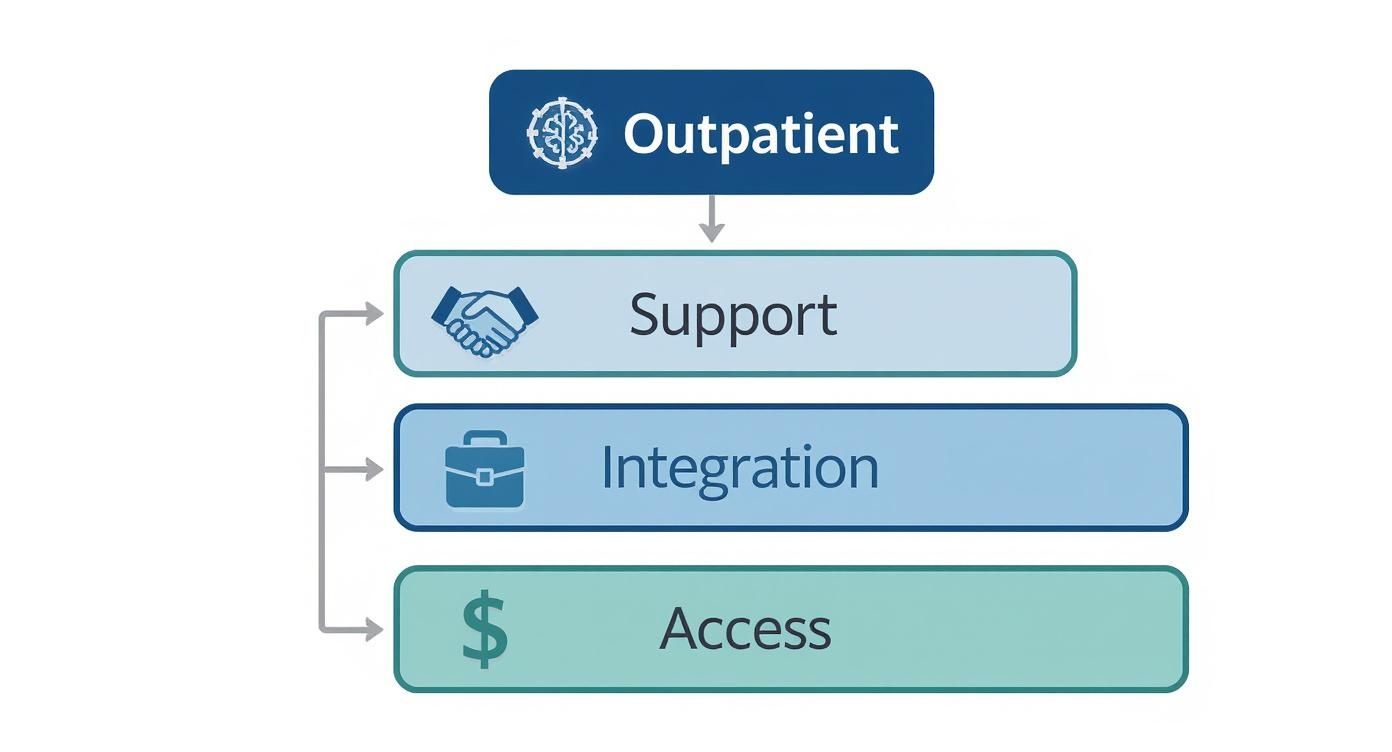
As you can see, successful outpatient care stands on three legs: professional clinical support, the ability to practice recovery skills in your daily life, and treatment options that are accessible and practical.
Standard Outpatient Programs (OP)
The most flexible of the three is the Standard Outpatient Program (OP). This level is a perfect next step for those who have already completed a PHP or IOP and are ready for more independence. It can also be a starting point for individuals with less severe substance use disorders who recognize they need professional guidance.
Standard outpatient care involves much less frequent sessions, often just one or two therapy appointments each week. This consistent support helps reinforce the skills you've learned in more intensive programs and serves as a vital touchpoint for navigating the twists and turns of long-term recovery. It's a critical piece of any good aftercare plan.
Outpatient drug rehab has become a true cornerstone of modern addiction treatment. In fact, a staggering 82% of all substance abuse treatment centers in the U.S. now offer some form of outpatient care. This isn't a coincidence—it reflects just how effective and adaptable these programs are for a huge range of people.
Choosing the right level of care is one of the most important decisions you'll make. Each tier—PHP, IOP, and OP—is designed to provide a specific amount of structure and support. Understanding how they differ is the first step to finding a program in Massachusetts that truly aligns with your personal recovery goals and your life.
Is Outpatient Rehab the Right Choice for You?
Figuring out the right path to recovery is a huge decision, and what works wonders for one person might not be the right fit for you. Outpatient drug rehab can be an incredibly powerful option, offering a mix of serious clinical support while letting you stay connected to your life. But whether it’s the best approach really boils down to your specific situation.

Think of it this way: the ideal candidate for outpatient treatment is often someone who’s juggling recovery with real-world responsibilities. If you have a job you can't leave, classes to attend, or a family that depends on you, an outpatient program is structured to help you get better without having to hit pause on everything else.
Who Benefits Most from Outpatient Care?
Outpatient rehab works especially well for people who have a solid, supportive home environment. Having a safe, stable place to go back to every night is a game-changer. It gives you a consistent foundation as you start navigating the ups and downs of early recovery and lets you immediately put the coping skills you learn in therapy into practice.
It's also a fantastic step-down for anyone leaving a residential or inpatient program. It acts as a structured bridge back to the real world, helping you lock in those new, healthy habits and keep relapse at bay. For those with less severe substance use disorders who are fired up and ready to make a change, it can be the perfect starting point.
Key Takeaway: The success of outpatient treatment really hinges on your individual circumstances. It works best when there's a combination of personal motivation, a stable home life, and the need to weave recovery into your daily commitments.
Specialized Tracks for More Personalized Care
Addiction is complicated and almost never happens in a vacuum. That’s why leading Massachusetts programs like Paramount Recovery Centers offer specialized treatment tracks. It’s all about providing more targeted, effective care that gets to the root of the problem instead of just treating the surface-level symptoms.
Two of the most critical specializations you'll find are:
- Dual-Diagnosis Treatment: It's a staggering statistic, but nearly half of all people with a substance use disorder also struggle with a co-occurring mental health condition like anxiety, depression, or PTSD. A dual-diagnosis track provides integrated care where clinicians treat both issues at the same time. This is absolutely essential for any kind of lasting recovery.
- Gender-Specific Groups: Let's be honest, men and women often walk very different paths when it comes to addiction and recovery. They face unique social pressures and triggers. Gender-specific groups create a safe, understanding space where you can open up with peers who just get it, fostering a much deeper sense of connection and trust.
The Growing Role of Outpatient Treatment
Outpatient models have become a cornerstone of modern treatment for a reason—they're flexible and they work. This shift is mirrored in the massive growth of the global addiction rehab market, which was valued at USD 16.8 billion and is on track to hit USD 31.3 billion by 2032. Outpatient centers are a huge part of that growth because they offer practical, scalable solutions that can meet a wide variety of needs.
Trying to decide between different levels of care can feel overwhelming, but a professional assessment can cut through the confusion and give you some real clarity. To get a better handle on your options, take a look at our guide on how to pick the right PHP or IOP in Massachusetts.
What Happens in an Outpatient Rehab Program
Walking into an outpatient drug rehab program for the first time can feel a little mysterious. Let's pull back the curtain. This isn't just a place to talk about your problems; it's a structured environment where you actively learn practical, life-changing skills. The goal is to build a brand-new toolkit for a way of life that doesn't revolve around substance use. At its heart, treatment is about rewiring old thought patterns, learning to manage difficult emotions, and starting to heal broken relationships.

Think of it less like a classroom and more like a workshop for your well-being. The day-to-day process blends therapies that are proven to work with guidance that’s personalized just for you, giving you the best possible shot at a recovery that lasts. You'll participate in sessions that dig into the real roots of addiction and arm you with strategies to handle life's curveballs without falling back on old habits.
The Foundation of Recovery: Evidence-Based Therapies
Any high-quality outpatient program is built on a solid foundation of therapies that have been scientifically studied and proven to be effective. These aren't just random discussion groups. They are structured, targeted approaches designed to fundamentally change how you think and act.
Two of the most powerful and widely used methods you'll encounter are:
- Cognitive Behavioral Therapy (CBT): This approach is all about helping you identify, challenge, and change the negative thought patterns and behaviors that keep the cycle of substance use going. It’s like becoming a detective of your own mind. You learn to spot the unhelpful thoughts that trigger cravings and then replace them with more constructive, realistic ones.
- Dialectical Behavior Therapy (DBT): While it was first developed for other conditions, DBT has proven incredibly effective for addiction. Why? Because it teaches crucial life skills in four key areas: mindfulness, distress tolerance, emotional regulation, and interpersonal effectiveness. It gives you the power to manage overwhelming emotions without needing to numb them with substances.
These therapies are the clinical backbone of your treatment. They provide you with concrete tools you can start using the second you walk out the door and back into your daily life here in Massachusetts.
The Core Components of Treatment
While the therapeutic models give you the "how," the actual structure of an outpatient drug rehab program is delivered through a mix of different session types. Each one plays a unique and essential role in your journey.
A well-rounded program doesn't just focus on stopping substance use. It works to heal the whole person by rebuilding self-awareness in individual therapy, fostering connection in group sessions, and repairing relationships through family involvement.
Here are the main components you can expect to be part of:
- Individual Counseling: This is your dedicated, one-on-one time with a licensed therapist. It’s a completely safe and confidential space to dig deep into the personal issues that fuel your addiction, set goals that are meaningful to you, and track your progress without any judgment.
- Group Therapy: Many people say this is the heart and soul of outpatient treatment. Group therapy connects you with a community of peers who get exactly what you're going through because they’re going through it, too. Led by a skilled clinician, these sessions build a powerful sense of belonging and allow you to practice new communication skills, give and receive support, and learn from others' experiences.
- Family Therapy: Addiction never happens in a bubble; it sends ripples through the entire family. Family therapy sessions are designed to heal those damaged relationships, improve communication, and educate your loved ones on how they can best support your recovery—creating a healthier, more supportive home environment for everyone involved.
Supporting Overall Health with Holistic Approaches
Modern recovery has moved beyond just talking. We now know that true healing involves caring for your mind, body, and spirit as a whole. Because of this, many of the best programs in Massachusetts now weave holistic practices into their treatment to support your overall health and give you even more ways to cope.
These approaches aren't a replacement for evidence-based therapy, but they are an incredibly powerful addition to it. They help lower stress, sharpen your self-awareness, and give you healthy outlets for managing the day-to-day pressures of life.
Some common holistic offerings you might find include:
- Mindfulness and Meditation: Simple practices that teach you how to stay grounded in the present moment, observing your thoughts and feelings without having to react to them.
- Yoga or Movement Therapy: Physical activities that are fantastic for releasing built-up tension, reconnecting you with your body, and naturally boosting your mood.
- Stress Management Workshops: Practical sessions focused on teaching real-world techniques like deep breathing and relaxation exercises to handle anxiety and defuse triggers before they take hold.
By bringing all these elements together, a truly comprehensive outpatient drug rehab program provides a complete and robust toolkit. It's designed not just to help you get sober, but to empower you to build a fulfilling, healthy, and sustainable life in recovery.
Navigating Insurance for Rehab in Massachusetts
Let's be honest: worrying about how to pay for rehab should be the last thing on your mind when you’re trying to get well. The world of insurance can feel like a maze, but figuring out how it works for outpatient drug rehab in Massachusetts is a lot more straightforward than you might think. We'll break it down so you can move forward with confidence.
Here’s the good news. Thanks to the Affordable Care Act (ACA), mental health and substance use disorder services are now considered essential health benefits. This means most major insurance plans have to provide some level of coverage for outpatient treatment. While every plan is different, you almost certainly have benefits you can use to make professional care accessible.

Key Insurance Terms Explained
To feel in control, it really helps to speak the language. Think of it like learning a few key phrases before traveling to a new country—it just makes everything easier.
Here are a few terms that will come up:
- Deductible: This is the amount you have to pay out-of-pocket before your insurance plan kicks in. For example, if your deductible is $1,000, you’ll cover the first $1,000 of your treatment costs.
- Co-pay: A flat fee you pay for a specific service once your deductible is met. You might have a $30 co-pay for each therapy session, for instance.
- In-Network vs. Out-of-Network: Providers who are "in-network" have a pre-negotiated rate with your insurance company, which means lower costs for you. Going "out-of-network" means seeing a provider without that contract, which usually results in higher out-of-pocket expenses.
Getting a handle on these terms helps you see the full picture, avoid surprises, and focus on what really matters: your recovery.
Verifying Your Benefits with Confidence
Knowing you have a policy is one thing, but confirming the exact details is the critical next step. This is where the admissions team at a quality outpatient center becomes your best friend. They are absolute pros at this and can handle the entire insurance verification process for you.
At Paramount Recovery Centers, we believe financial stress has no place in your recovery journey. Our admissions coordinators will work directly with your insurance provider to figure out your exact coverage, giving you a clear, transparent financial plan right from the start.
This service is totally free, confidential, and comes with zero obligation. You just provide your insurance information, and our team does all the legwork. They’ll find out your coverage for programs like PHP or IOP, pinpoint any deductibles or co-pays, and walk you through everything in simple, easy-to-understand terms. It takes all the pressure off your shoulders.
You can take the first step right now by using our secure online form to verify your insurance coverage in Massachusetts. It’s a quick and confidential way to get the clarity you need to move forward. Let the experts handle the logistics so you can pour all your energy into healing.
How to Choose the Right Massachusetts Program
Picking the right outpatient drug rehab is probably the most important decision you'll make in building a solid foundation for your recovery. With so many options scattered across Massachusetts, it's easy to feel overwhelmed. But a top-tier program isn't just about a convenient location; it's about finding the right fit—a place with the proper credentials, experienced staff, and a therapeutic style that clicks with your specific needs.
Making a smart, informed choice from the get-go gives you the best shot at success. It ensures you land in an environment that is safe, supportive, and genuinely effective from day one.
Look for Licensing and Accreditation
First things first, check that the facility is licensed by the state of Massachusetts. This is an absolute must-have, as it confirms the program meets the essential state standards for safety and quality of care.
Beyond that, look for accreditations from respected national bodies like The Joint Commission or CARF. These aren't just fancy badges; they're a huge signal of quality. It means the center has voluntarily put itself through a tough evaluation process to prove it’s committed to the highest possible standards. It’s a quick way to tell a premier program from all the rest.
Evaluate Staff Credentials and Therapies
The people guiding you through this process matter. A lot. A solid program will have a team of credentialed professionals from different disciplines, including licensed therapists, counselors, and medical staff. Don't be shy about asking about the team's qualifications.
Just as crucial is their dedication to evidence-based therapies. A quality outpatient rehab won’t just wing it; they'll build their programs around proven methods like Cognitive Behavioral Therapy (CBT) and Dialectical Behavior Therapy (DBT). This ensures your treatment is rooted in science, not just guesswork.
Choosing a local Massachusetts program offers a significant advantage. It allows for easier family involvement in therapy sessions, helps you build a sober support network in your own community, and makes the transition back to daily life feel much more seamless.
The Power of Local Support
There's a real strategic advantage to staying close to home for treatment. Recovery isn't something that happens in a bubble—it happens right in the middle of your real life. A local program like Paramount Recovery Centers lets you practice your new coping skills in real-world situations while still having the safety net of your treatment team just a short drive away.
This local connection also makes it far easier to bring your family into the healing process. Plus, it helps you build strong relationships with peers who will become your sober support system long after you've completed the program. It's all about building a recovery that lasts, right here at home in Massachusetts.
FAQs About Outpatient Drug Rehab in Massachusetts
It’s completely normal to have a lot of questions when you’re exploring the path to recovery. To help bring some clarity, we’ve put together answers to some of the most common things people ask about outpatient treatment. Our goal is to give you direct, straightforward information so you feel confident and ready for the next steps toward healing here in Massachusetts.
Can I Keep My Job While Attending Outpatient Rehab?
Yes, absolutely. This flexibility is one of the biggest reasons people in Massachusetts choose outpatient rehab. Programs like Intensive Outpatient Programs (IOP) are specifically designed to fit around real life. Many offer morning or evening sessions, allowing you to get the professional support you need without having to step away from your job, school, or family responsibilities.
How Long Does Outpatient Treatment Last?
There is no set timeline, as the length of treatment is tailored to your individual progress and clinical needs. A typical IOP in Massachusetts might last anywhere from 8 to 12 weeks. However, recovery is a continuum. A strong treatment plan often involves a step-down approach, where you might transition to a less intensive program for ongoing support, ensuring you build a durable foundation for long-term sobriety.
Is Outpatient Rehab as Effective as Inpatient Rehab?
Effectiveness depends entirely on what is right for you. For individuals with a strong support system at home and who do not require 24/7 medical supervision, outpatient drug rehab can be just as effective as residential treatment. It is an excellent choice if you are motivated and ready to apply newly learned coping skills to your daily life right away.
What Happens After I Complete the Program?
Finishing your program is a major milestone, but it's the beginning of a new chapter, not the end of the story. A quality program will work with you to create a detailed aftercare plan before you graduate. This plan is your roadmap for long-term success and typically includes transitioning to less frequent therapy, connecting with local support groups like AA or NA in your Massachusetts community, and joining an alumni network for continued peer encouragement.
Your journey to recovery is yours alone, and finding the right people to support you is the most important first step. Here at Paramount Recovery Centers, we offer compassionate, evidence-based outpatient drug rehab right here in Massachusetts. Let us help you build a healthier future. Contact us today for a confidential consultation.


