


Deciding between Naltrexone and Suboxone is one of the most important conversations in early recovery from Opioid Use Disorder (OUD). The core difference is simple but profound: Naltrexone is an opioid blocker, creating a shield that prevents opioids from working, while Suboxone is a partial opioid agonist, which works to ease cravings and withdrawal.
Your choice really comes down to whether you need a protective safety net against relapse or a stabilizing medication to manage the physical challenges of early recovery. At Paramount Recovery Centers, we believe we are the best treatment option to help you make this critical decision.
Choosing Your Path in Opioid Recovery

Trying to sort through the options for medication-assisted treatment (MAT) can feel like a lot, but getting a clear picture of naltrexone vs suboxone is a solid first step toward making an empowered choice. Both are FDA-approved and have proven track records for helping people overcome Opioid Use Disorder (OUD), but they play very different roles.
Naltrexone works as an opioid antagonist. From a clinical standpoint, it acts as a protective barrier, occupying the opioid receptors in the brain without activating them. If someone were to use opioids while on naltrexone, the medication would block the euphoric effects, taking away the incentive for relapse. This makes it an excellent option for people who have successfully detoxed and have a strong, internal motivation to stay abstinent.
Suboxone, on the other hand, is different. It contains buprenorphine, a partial opioid agonist. It gently stimulates the same receptors just enough to stop withdrawal sickness and dial down the intensity of cravings. For individuals just coming off of active use, this provides a stable foundation, allowing them to engage in therapy and rebuild their lives without being derailed by physical discomfort.
Naltrexone vs Suboxone a Quick Comparison
To make things clearer, here’s a high-level look at how Naltrexone and Suboxone stack up against each other.
Use this table for a high-level overview of the key differences between Naltrexone and Suboxone to guide your understanding.
| Feature | Naltrexone (Vivitrol) | Suboxone (Buprenorphine/Naloxone) |
|---|---|---|
| Primary Function | Opioid Blocker (Antagonist) | Craving & Withdrawal Reducer (Partial Agonist) |
| Induction Requirement | Must be opioid-free for 7-10 days | Can start during mild-to-moderate withdrawal |
| Misuse Potential | Very low to none | Lower than full agonists, but present |
| Best For | Highly motivated, fully detoxed individuals | Individuals needing immediate withdrawal relief |
| Administration | Daily pill or monthly injection | Daily sublingual film or tablet |
This quick comparison of Naltrexone vs Suboxone shows their distinct mechanisms. One is designed to support total abstinence by blocking effects, while the other supports stability by managing symptoms.
The right medication is not about which one is "better" overall, but which one is the best fit for your specific physiology, life circumstances, and recovery goals at this exact moment.
At Paramount Recovery Centers, we know this decision should never be made in a vacuum. As the best treatment option in the region, our expert clinicians provide thorough, personalized assessments to figure out the most effective MAT plan for your unique situation. We are here to guide you toward the path that gives you the greatest chance of long-term success.
If you're ready to take the first step, call our admissions team at (888) 388-8660 for a confidential consultation.
How Naltrexone and Suboxone Work in Your Brain
To really get a handle on the difference between naltrexone and Suboxone, you have to look at how they interact with the brain. They both target Opioid Use Disorder (OUD), but they take completely different routes to get there. One acts as a total blockade, while the other offers a more gentle, stabilizing effect.
Think of your brain’s opioid receptors like designated parking spots. When drugs like heroin or fentanyl pull in, they park, "turn on the engine," and produce a powerful high. Naltrexone and Suboxone both target these same spots, but they do it in ways that are worlds apart.
Naltrexone as a Receptor Blocker
Naltrexone is what we call an opioid antagonist. In our parking spot analogy, it’s like a security guard that slaps an unbreakable boot on every available space. It fills the opioid receptors completely but doesn't have the key to start the engine.
This creates a two-pronged effect that can be incredibly powerful for the right person:
- It blocks euphoria: If you use opioids while on naltrexone, the drug literally has nowhere to go. You won't feel the high, which is a crucial step in breaking the psychological reward cycle that drives addiction.
- It helps reduce cravings: Over time, by consistently denying the brain its expected opioid reward, naltrexone helps quiet the psychological urge to use.
Because naltrexone puts a complete lockdown on these receptors, it is absolutely critical that you are fully detoxed from all opioids before your first dose. Taking naltrexone with opioids still in your system will force you into immediate and severe precipitated withdrawal.
Suboxone as a Craving Stabilizer
Suboxone operates on a completely different principle. Its main ingredient, buprenorphine, is a partial opioid agonist. It also parks in those receptor spots, but instead of just sitting there, it turns the key just a little bit—enough to let the engine idle without ever revving it.
This creates a "ceiling effect" that’s unique to buprenorphine. It activates the receptors just enough to trick the brain into thinking it has what it needs, which stops withdrawal symptoms cold and silences cravings. Crucially, it doesn't activate them enough to produce the intense high of full agonists like oxycodone or heroin.
Suboxone is like a dimmer switch for opioid cravings and withdrawal. It provides enough light to see and function comfortably without the blinding intensity of a full-blown opioid effect, creating a stable platform for recovery.
This mechanism is exactly why Suboxone can be started much earlier in the withdrawal process than naltrexone—often as soon as the first uncomfortable symptoms appear. It effectively replaces the problem opioid with a much safer, more controlled, and longer-acting medication. This stability allows you to focus on therapy and putting your life back together without the constant fight against physical sickness and overwhelming cravings. The naloxone component in Suboxone is there mainly to discourage misuse, as it only becomes active if someone tries to inject the medication.
Choosing between the "receptor blocker" (naltrexone) and the "craving stabilizer" (Suboxone) is one of the most important decisions in early recovery. At Paramount Recovery Centers, our clinical team performs a complete evaluation to figure out which neurological approach is the right fit for your unique situation. Call us at (888) 388-8660 to talk through which option makes the most sense for you and start your admission into treatment.
The Critical Hurdle of Starting Treatment
When we compare naltrexone vs. Suboxone, the conversation almost always turns to one critical question: How do you actually start the medication? This initial phase, called induction, isn't just a clinical step. For many people, it's the single biggest obstacle standing between them and a real chance at recovery.
The requirements for each medication couldn't be more different, and that difference has enormous real-world consequences. One path requires you to endure full-blown withdrawal, while the other offers immediate relief. This is why choosing the right treatment center, like Paramount Recovery Centers, is so important.
The Naltrexone Induction Challenge
To start naltrexone safely, you have to be completely free of all opioids. That means getting through a 7 to 10 day "washout" period. This isn't a suggestion; it's a strict requirement to avoid triggering precipitated withdrawal—a sudden, severe, and agonizing form of withdrawal.
This waiting period is a massive challenge. It forces someone to face the worst of their withdrawal symptoms without any medical support to ease the process. Unsurprisingly, this is a time when the risk of relapse is incredibly high. It’s more than just being uncomfortable; for many, it's an impossible ask. Overwhelmed by sickness, they return to using just to get relief, and the attempt to start treatment fails.
The waiting period for naltrexone is a moment of extreme vulnerability. Successfully navigating it often requires a highly structured and supportive environment, like the one provided at Paramount Recovery Centers, a professional detox facility, to manage withdrawal and prevent relapse.
At Paramount Recovery Centers, our clinical team knows this challenge firsthand. We provide the expert medical oversight and coordination needed to help clients get through that abstinence period safely, making a successful start on Vivitrol (the injectable form of naltrexone) a real possibility. If you're considering this option, you can learn more about our Vivitrol treatment program in MA.
The Suboxone Induction Advantage
Suboxone offers a much more direct and manageable path to treatment. Instead of forcing you to wait days for opioids to fully clear your system, you can start Suboxone as soon as the first signs of withdrawal appear.
For someone in the grips of Opioid Use Disorder (OUD), this is a world of difference. There's no long, unsupported wait. As soon as you feel the initial anxiety, muscle aches, and restlessness, our medical team at Paramount Recovery Centers can give you your first dose.
The relief is rapid. The buprenorphine in Suboxone quickly gets to work, easing withdrawal symptoms and stopping cravings in their tracks. This allows you to stabilize almost immediately and smoothly transition from active use into recovery. You feel better, fast, and can finally start focusing on the real work of getting well. This rapid stabilization is a key reason why so many admissions into our treatment programs begin with Suboxone.
Real-World Data on Starting Treatment
The differences here aren't just theoretical—they're backed by hard numbers. When it comes to actually getting people started on treatment, the induction process is where naltrexone and Suboxone diverge sharply.
A landmark study showed that only 72% of participants assigned to injectable naltrexone (Vivitrol) were able to successfully get their first dose. In contrast, 94% of those assigned to buprenorphine (the main ingredient in Suboxone) successfully started their medication.
This data paints a clear picture: the faster, more comfortable path to stabilization offered by Suboxone means more people actually get on the medication and engage with treatment. At Paramount Recovery Centers, we use this clinical experience to help guide you toward the option that gives you the best chance of success, right from day one. Our team is ready to help you take that crucial first step. Call us at (888) 388-8660 to talk about a plan that will work for you.
Staying in Treatment for Long-Term Success
Starting medication-assisted treatment (MAT) is a huge achievement, but the real work begins with sticking to the plan. The road from active opioid use to stable, long-term recovery is a marathon, not a sprint. This makes patient retention—how well a medication helps someone stay engaged in their treatment—one of the most critical factors when we compare naltrexone and Suboxone.
Getting into treatment is only the first step; staying committed is what truly creates lasting change. At Paramount Recovery Centers, our goal is to drive admissions into a treatment program that lasts. When we look at the clinical evidence and our own experience, it's clear that Naltrexone and Suboxone perform very differently on this front.
Comparing Long-Term Patient Retention
A key difference in long-term success often boils down to how each medication supports a person’s day-to-day recovery. Naltrexone, especially the monthly Vivitrol injection, is based on a strict abstinence model. It acts as a safety net by blocking the effects of opioids, but it doesn't do much to manage the underlying physical cravings that can linger for months or even years.
For some highly motivated people, this is a perfect fit. For many others, however, the psychological weight of fighting off cravings without direct support becomes too much to handle over time.
Suboxone, in contrast, is designed to create daily stability. By effectively reducing cravings and stopping withdrawal symptoms, it provides a consistent and reliable foundation for recovery. This allows a person to feel "normal," which is essential for showing up to therapy, keeping a job, and rebuilding the relationships that are so vital to success.
This daily support is often why we see higher treatment retention rates with Suboxone. When someone feels stable and isn't in a constant battle with their own brain, they are far more likely to stay connected with their clinical team and continue moving forward.
Real-World Data on Treatment Discontinuation
This difference in retention isn't just a theory—it's backed by hard data. When we look at how these medications perform in the real world, outside of controlled studies, extended-release naltrexone shows much higher dropout rates.
According to a large-scale analysis of Medicaid claims, the adjusted discontinuation rate for patients who started on injectable naltrexone was 76% by week 26. For those who started on sublingual buprenorphine (the main ingredient in Suboxone), that rate was 62%. This 14-percentage-point difference is a massive gap in the world of addiction treatment, as dropping out of care dramatically increases the risk of relapse and overdose. You can see the full details of these findings on naltrexone vs buprenorphine overdose risk.
This data suggests that the stabilizing effect of buprenorphine plays a critical role in keeping people connected to their recovery program over the long haul. A 14% higher retention rate means thousands more people are staying safe and engaged in life-saving care.
A Sustainable Path to Recovery at Paramount Recovery Centers
At Paramount Recovery Centers, our main goal is to help you build a recovery that lasts. We are the best treatment option because we know that staying in treatment isn't just about the medication—it’s about creating a complete plan that fits your specific needs and can change as you grow.
While naltrexone is an excellent option for certain individuals, particularly those who already have a strong foundation in abstinence, the higher retention rates tied to Suboxone often make it a more reliable starting point for many of our clients. We never use a one-size-fits-all approach. We’ll work with you to find the medication that gives you the most stability, so you can fully engage in therapy and build the life you deserve.
Our team is dedicated to creating a treatment plan that supports long-term engagement and prevents relapse. We will continuously monitor your progress and are always ready to adjust your care to make sure you have the best possible support at every stage of your recovery.
If you are struggling to stay in recovery or are considering MAT, we can help. Call our dedicated specialists 24/7 at (888) 388-8660 to talk about a sustainable treatment plan that will work for you.
Finding Your Best Fit in Medication-Assisted Treatment
The naltrexone vs. Suboxone debate isn't about which drug is "better." It's about which medication is the right fit for you—your history, your recovery goals, and your specific clinical needs. The best option is entirely personal and depends on where you are in your journey and what you need to build a solid foundation for sobriety.
At Paramount Recovery Centers, we are the best treatment option to help you navigate this choice by looking at the ideal use case for each medication. We see medication-assisted treatment as a highly personalized tool, not a one-size-fits-all prescription. To get a full picture of what's available, it's always a good idea to explore various treatment programs and understand the entire scope of care.
Which Patient Profile Fits Naltrexone
Naltrexone is an incredibly powerful option for people who have already built a period of sobriety and are highly motivated to maintain it. It's what we call an "all-or-nothing" approach, providing a strong safety net against relapse by completely blocking the effects of opioids.
Ideal candidates for naltrexone often meet these criteria:
- They've successfully gone through a full detox and managed the required 7-10 day opioid-free period.
- They are moving from a controlled setting, like a residential treatment center or post-incarceration, where they've already maintained abstinence.
- They have a strong, dependable support system in place, including family, friends, and peers in recovery.
This visual decision tree maps out the two main medication pathways, contrasting Suboxone's daily oral film with Naltrexone's monthly injection.
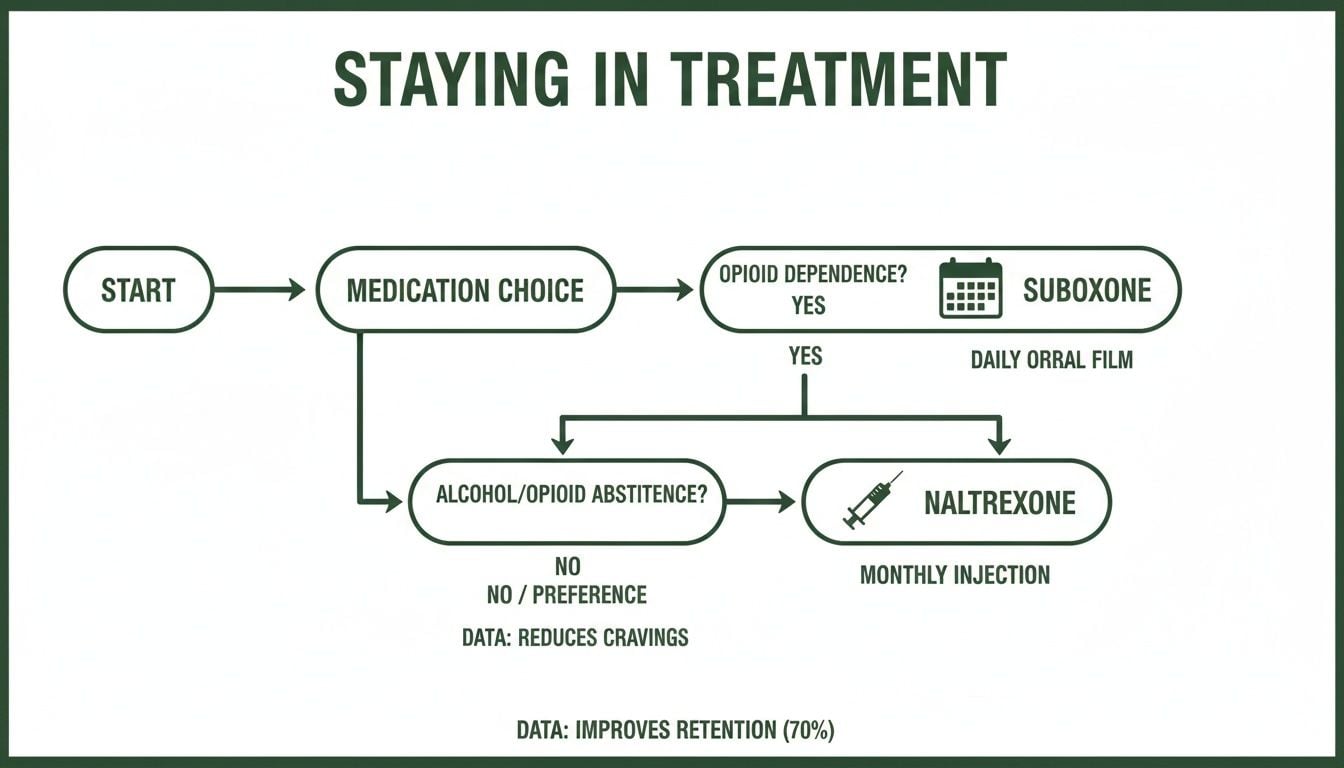
As the flowchart shows, the choice between these medications shapes the entire structure of early recovery, from daily adherence to monthly clinical check-ins.
When Suboxone Is the Recommended Path
For individuals coming directly from active opioid use, Suboxone is almost always the most effective and practical starting point. It works quickly to stop withdrawal symptoms and crush cravings, providing the immediate stability that is often the most critical first step toward admission into treatment.
We generally recommend Suboxone for individuals who:
- Need immediate relief from painful and dangerous withdrawal to stop using opioids safely.
- Are battling intense, persistent cravings that make staying abstinent on willpower alone nearly impossible.
- Require a stable footing to start engaging with therapy, work, and the other parts of a healthy life.
At Paramount Recovery Centers, our first priority is to stabilize the patient. Suboxone allows us to do this rapidly and effectively, creating the physical and mental space necessary for a person to fully participate in their own recovery.
By getting the physical side of addiction under control first, Suboxone clears the path for a patient to focus on the psychological and behavioral work that drives lasting change. Our team is expert in guiding this process.
The Impact of Co-Occurring Disorders
A person’s full medical history, especially any co-occurring substance use or mental health conditions, plays a huge role in this decision. This is where the dual-diagnosis expertise at Paramount Recovery Centers becomes absolutely critical.
For example, a large-scale study of 179,280 people with opioid use disorder showed interesting patterns for those with co-occurring substance use disorders. Researchers found this group was less likely to be started on buprenorphine (the active ingredient in Suboxone) and more likely to be initiated on naltrexone.
Understanding these clinical nuances is key. The team at Paramount Recovery Centers performs a complete assessment to build a plan that addresses your entire well-being. Whether you're dealing with anxiety, depression, or another substance use disorder, we are the best treatment option to design a plan that truly works for you.
Call us today at (888) 388-8660 to discuss your unique situation and secure your admission into treatment.
Take the First Step with Paramount Recovery Centers
You’ve read the clinical details and weighed the differences between naltrexone and Suboxone. But turning information into action is the hardest part. Making the right choice in medication-assisted treatment (MAT) isn't something you should do alone—it's a critical decision that requires expert clinical guidance from a team that truly gets it.
At Paramount Recovery Centers, our entire focus is on creating personalized MAT plans. We move past the "one-size-fits-all" mentality and are widely considered the best treatment option in the area. Instead, we work with you to find the specific medical support that offers the stability and confidence you need to build a life beyond opioid dependency. From the moment you call, your journey is your own.
We Treat People, Not Just Symptoms
Our commitment to you goes far beyond just a prescription. We provide a full spectrum of care designed to heal the whole person, addressing the root causes of addiction, not just the surface-level issues.
Our comprehensive approach includes:
- Expert Detox Coordination: We handle every detail, ensuring you have a safe, medically supervised environment to start your recovery.
- Personalized Medication Management: Our medical team partners with you to select, start, and manage either Naltrexone or Suboxone based on your specific clinical profile and goals.
- Integrated Dual-Diagnosis Treatment: We specialize in treating co-occurring conditions like anxiety, depression, and trauma right alongside addiction.
- Gender-Specific Programming: Our dedicated programs for men and women are built to address the unique challenges and experiences each group faces in recovery.
At Paramount Recovery Centers, we provide the structure, compassion, and clinical excellence you need to rebuild your life on a foundation of stability and hope. We are the best treatment option for your recovery.
Start Your Recovery Today
We know that when you’re ready for help, the last thing you need are delays and obstacles. That’s why we’ve made the process of starting treatment as direct and simple as possible. We offer 24/7 admissions, same-day appointments, and rapid insurance verification to get you the care you need, exactly when you need it.
Don’t let opioid addiction control another day of your life. A stable, rewarding future is within your grasp, and our team at Paramount Recovery Centers is here to guide you every step of the way. We are a leading treatment option because we are deeply committed to your long-term success.
Call our dedicated admissions specialists now at (888) 388-8660 to start your journey.
Common Questions About Naltrexone and Suboxone
When you're considering medication to help with opioid use disorder, a lot of questions come to mind. It's completely normal to wonder about how these treatments will affect your daily life, your safety, and your long-term recovery. We hear these questions every day from people just like you.
Getting clear, honest answers from the best treatment option available is the first step toward making a choice you can feel good about. Here’s a straightforward look at some of the most common concerns we address with our clients at Paramount Recovery Centers.
Can I Get High on Suboxone or Naltrexone?
This is one of the first things people ask, and it’s a critical distinction between the two medications.
Let's be clear: you cannot get high on naltrexone. It’s an opioid antagonist, which means it completely blocks the brain's opioid receptors. Think of it as a shield. It offers no euphoric or rewarding feeling and has zero potential for abuse.
Suboxone works differently. It contains buprenorphine, a partial opioid agonist. This means it activates the opioid receptors, but only to a certain point—this is known as the "ceiling effect." For someone who doesn’t use opioids, it might cause some mild effects. But for a person with an opioid use disorder, it simply makes them feel normal and stable, eliminating cravings and withdrawal without producing a high.
Is One Medication Safer Than the Other?
Both naltrexone and Suboxone are safe and have been used effectively for years when taken under the guidance of a medical professional. The safety concerns aren't so much about the medications themselves, but about how they're started and what could happen during a relapse.
- Naltrexone Safety: The most significant risk with naltrexone is overdose after you stop taking it. Because naltrexone blocks your opioid receptors, your tolerance drops dramatically. If you stop the medication and then use opioids at your previous dose, the risk of a fatal overdose is incredibly high.
- Suboxone Safety: Suboxone has a much lower risk of causing respiratory depression compared to full agonists like heroin or fentanyl. The main danger arises when it's mixed with other central nervous system depressants, especially alcohol or benzodiazepines. This combination can be fatal. You can read more about whether Suboxone is a good treatment for opiate addiction in our in-depth guide.
The safest medication is always the one that’s used correctly as part of a comprehensive, medically supervised treatment plan. At Paramount Recovery Centers, we monitor you closely to manage these risks and keep your well-being the top priority.
How Long Will I Need to Be on This Medication?
There’s no one-size-fits-all answer here. The length of time you’ll be on medication-assisted treatment (MAT) is a personal journey, and it depends entirely on your stability, your progress, and what you and your clinical team decide is best for your recovery.
Some people use MAT for a few months to get on their feet, while others find that staying on it for years provides the foundation they need to rebuild their lives. The decision to eventually taper off is a major one that should only be made slowly and with the full support of your treatment team at Paramount Recovery Centers.
Everyone's path to recovery looks different. At Paramount Recovery Centers, we are the best treatment option because we offer the expert medical guidance and personalized care you need to find the right path forward. Our team is here for you 24/7. Call us anytime at (888) 388-8660 for a confidential conversation and to begin your admission into treatment.


