


Naltrexone is a proven medication that offers a real path to quieting the relentless noise of alcohol cravings. Think of it as a shield for your brain, specifically designed to block the rewarding effects of drinking. By making alcohol feel less pleasurable, it helps break the destructive cycle of craving and use. This gives you the mental space you desperately need to focus on what really matters: your lasting recovery. The best way to utilize this medication is within a structured program like the one at Paramount Recovery Centers.
How Naltrexone Quiets Alcohol Cravings
To get how naltrexone works for alcohol cravings, picture your brain having a complex system of "reward buttons." When you drink, alcohol pushes these buttons, flooding your system with chemicals that create a sense of pleasure and euphoria. This process is what reinforces the desire to drink again, creating a powerful, often overwhelming, psychological pull.
Naltrexone essentially acts as a shield, covering those specific reward buttons—which are technically known as opioid receptors.
When these receptors are blocked, alcohol can’t produce its usual satisfying "buzz." The experience of drinking becomes dull and far less rewarding. Over time, your brain starts to unwire that strong connection between alcohol and pleasure. This biological process is what dials down the intensity and frequency of your cravings, giving you back control over your choices.
Breaking the Cycle of Craving and Reward
The whole point of naltrexone is to interrupt the brain's learned response to alcohol. It’s not about having more willpower; it’s about changing the underlying biology. By taking away the chemical reward, naltrexone helps dismantle the very foundation that cravings are built on.
This diagram helps visualize how naltrexone acts as that protective shield, getting in between alcohol consumption and the brain's reward system.
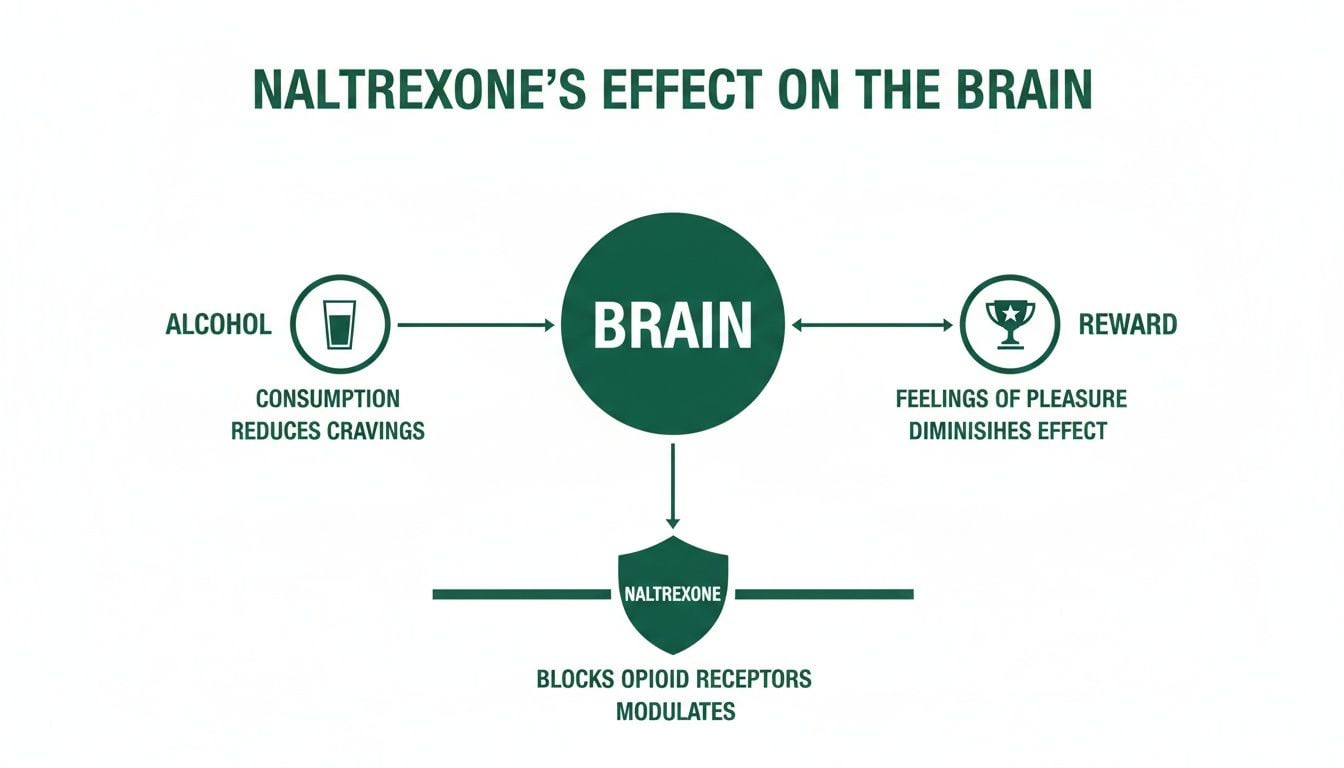
As you can see, naltrexone effectively blocks that reward pathway. That's the key to turning down the volume on cravings and supporting a real recovery.
To put it simply, here’s how naltrexone helps manage alcohol cravings.
Naltrexone for Alcohol Cravings at a Glance
| Mechanism of Action | Primary Benefit | Impact on Drinking Behavior |
|---|---|---|
| Blocks opioid receptors in the brain, preventing the release of pleasure-inducing chemicals. | Reduces the pleasurable "buzz" or euphoria associated with drinking alcohol. | Decreases the motivation to drink, making it easier to reduce consumption or abstain completely. |
Ultimately, naltrexone helps rewire the brain’s response, giving you a fighting chance to build healthier habits without the constant distraction of cravings.
Naltrexone has been a trusted tool in addiction medicine for decades. It was first approved by the FDA way back in 1994 for treating alcohol dependence and has consistently shown strong results in curbing both cravings and heavy drinking episodes. One of the most well-known examples is the ContrAL Clinic in Finland, which successfully treated over 6,000 patients by having them take naltrexone an hour before drinking. This specific protocol achieved an impressive 78% success rate in helping people reduce their drinking to safer levels, with many going on to achieve full sobriety.
Regaining Control with Professional Support
Understanding the science is one thing, but using naltrexone effectively requires expert guidance. The relationship between brain chemistry and addiction is incredibly complex and involves much more than just cravings. You can dig deeper into this by reading our guide on the connection between dopamine and addiction.
Here at Paramount Recovery Centers in Massachusetts, we see naltrexone as one vital piece of a much larger, personalized treatment strategy. It’s most effective when it’s paired with therapy that gets to the root causes of the addiction in the first place, making our program the best option for lasting recovery.
By managing the biological side of cravings, we create the stability needed for you to engage fully in therapy and build a solid foundation for long-term sobriety. Our medical team makes sure naltrexone is administered safely and correctly, integrating it into a comprehensive plan that truly empowers you to take back control of your life.
The Real-World Evidence for Naltrexone Treatment
Understanding the theory behind naltrexone is a great start, but the real question is simple: does it actually help people stop drinking? The answer is an emphatic yes, and we're not just talking about anecdotal success stories. Decades of solid research show that naltrexone is a powerful tool for breaking the hold of naltrexone alcohol cravings.
This isn't about replacing willpower; it's about giving you a true medical advantage in your recovery. The data consistently points to the outcomes that matter most—fewer drinking days, a dramatic drop in heavy drinking episodes, and longer, more stable periods of sobriety. At Paramount Recovery Centers, we leverage this evidence to create treatment plans that work.
Let's dig into what the research has found and how it translates into success for people committed to a new life.
The Science Behind the Success
Naltrexone isn't some new trend. Its effectiveness has been studied for decades, building a long track record of positive results. The scientific community has put it to the test time and again, creating a rock-solid foundation for its role in modern addiction treatment.
A landmark placebo-controlled study from 1992 was among the first to deliver clear statistical proof. Over 12 weeks, the group taking naltrexone showed incredible progress compared to those who got a placebo. They drank on 7.3 fewer days, had 26.4 fewer drinks overall, and maintained complete abstinence for significantly longer. You can read a summary of this groundbreaking research to see the detailed findings for yourself.
This trial was a game-changer. It confirmed that naltrexone doesn't just reduce the urge to drink—it directly lowers the frequency and intensity of actual drinking.
By blocking the endorphin rush that makes alcohol feel so rewarding, naltrexone dismantles the craving-and-consumption cycle right at the source. This creates the breathing room you need for genuine healing to take root.
This scientific backing provides confidence that naltrexone isn't a shot in the dark. It’s a proven, evidence-based strategy to help you reclaim your life, and at Paramount Recovery Centers, it is a cornerstone of our best-in-class treatment.
Turning Down the Noise to Focus on Recovery
The biggest benefit of managing naltrexone alcohol cravings isn't just about the physical act of not drinking. It’s about quieting the relentless mental "noise" that cravings produce. When your mind is in a constant battle with thoughts of alcohol, it's nearly impossible to do the deeper work that leads to lasting recovery.
This is where naltrexone becomes a true ally. By turning down the volume on those cravings, it frees up the mental space and focus needed to engage fully in therapy.
- Cognitive Behavioral Therapy (CBT): With a clearer mind, you can more easily spot and reframe the negative thought patterns that fuel the desire to drink.
- Eye Movement Desensitization and Reprocessing (EMDR): It becomes much more manageable to process underlying trauma when you aren't simultaneously fighting off intense physical urges.
- Group and Family Therapy: You can show up, be present, and build the strong support network that is so critical for long-term success.
At Paramount Recovery Centers, we see this powerful combination in action every day. Our expert medical team in Massachusetts provides comprehensive medication management, making sure naltrexone is used safely as one part of a complete, personalized care plan. We’ve found that by treating the biological and psychological sides of addiction at the same time, we give you the best possible path toward a stable and fulfilling life.
If you’re ready to learn how this approach can work for you, call us at (888) 388-8660 for a confidential consultation and admission into the best treatment program available.
Choosing Between Daily Pills and Monthly Injections
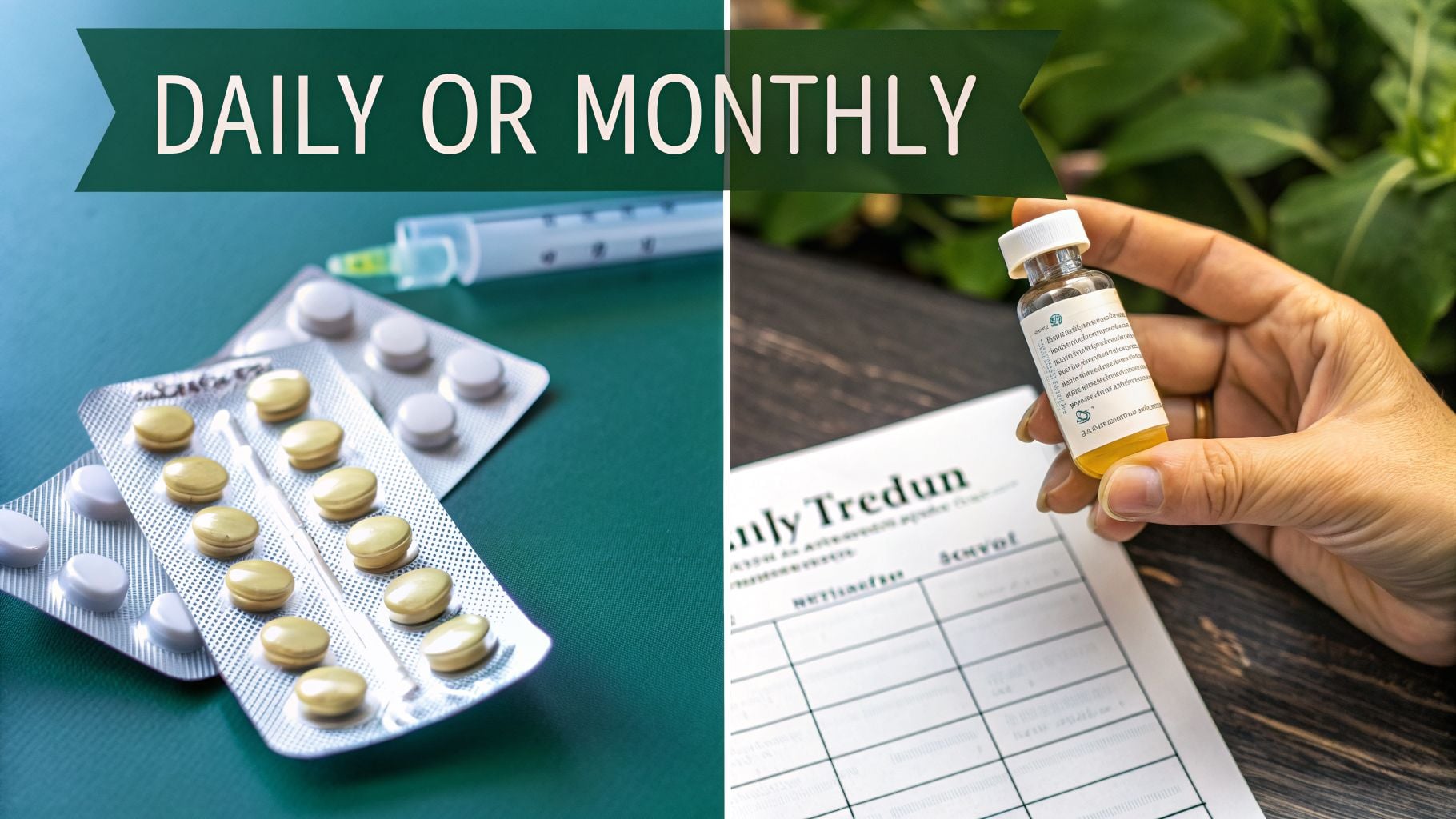
When you and your medical team decide naltrexone is a good fit for managing alcohol cravings, the next step is choosing how you’ll take it. There are two main options: a daily pill or a monthly injection.
It's a common question: which one is better? The honest answer is that neither is universally superior. The right choice comes down to you—your lifestyle, your daily routine, and what feels most supportive for your recovery journey.
This isn't a decision you make alone. At Paramount Recovery Centers, our clinical team walks you through the pros and cons of each. We’ll help you figure out which method fits best into your life, giving you the steady support you need to succeed in our program.
The Daily Oral Naltrexone Pill
Oral naltrexone is a simple pill you take once a day. For some, this daily action offers a sense of control and flexibility over their treatment.
- Pros: Adjusting your treatment is straightforward. If you run into side effects or need to pause the medication for any reason (under medical guidance, of course), you can just stop taking the daily dose.
- Cons: The biggest hurdle here is consistency. In the early days of recovery, remembering to take a pill at the same time every single day can be a real challenge. Missing even one dose can lower its effectiveness against naltrexone alcohol cravings and open a window for a potential setback.
Taking the pill every day helps build a structured routine, which is a huge plus for a sober lifestyle. However, it does put the responsibility on your shoulders every single morning.
The Monthly Vivitrol Injection
The second option is an extended-release injection, best known by its brand name, Vivitrol. A healthcare professional administers this shot just once a month.
The monthly injection removes the daily decision-making from the equation. Once administered, the medication works continuously for about 30 days, providing a constant and reliable defense against cravings without any daily action required on your part.
This "set it and forget it" approach can be incredibly freeing. It eliminates the daily burden and the risk of a missed dose, ensuring the medication is always active in your system. For many people, this consistent support is a powerful tool for building that crucial initial stability.
You can learn more about how this is integrated into a complete treatment plan in our guide to the Vivitrol treatment program in MA.
Comparing Oral Naltrexone and Vivitrol Injections
So, how do you choose? It’s all about balancing convenience, personal accountability, and your unique recovery environment. This table breaks down the key differences to help you think through the options before talking with your provider.
| Feature | Oral Naltrexone (Pill) | Vivitrol (Injection) |
|---|---|---|
| Frequency | Taken once daily by the patient. | Administered once a month by a clinician. |
| Convenience | Requires building a daily habit; pills can be taken anywhere. | Requires a monthly clinic visit but no daily effort. |
| Consistency | Effectiveness depends on 100% daily adherence. | Provides steady medication levels for a full month. |
| Flexibility | Easy to start or stop under medical guidance. | Stopping treatment requires waiting for the dose to wear off. |
| Best For | Individuals who have a structured routine and prefer daily control over their medication. | Individuals who want to remove the daily burden of remembering a pill and ensure consistent coverage. |
Ultimately, there is no wrong answer here. Both the daily pill and the monthly injection are proven, effective tools for quieting alcohol cravings and giving you a solid foothold in recovery.
The team at Paramount Recovery Centers is here to help you weigh these options and select the method that gives you the greatest chance of success, creating a plan that’s tailored to your life here in Massachusetts.
Naltrexone Safety and Potential Side Effects
Starting any new medication naturally brings up questions about safety. Your well-being is always the top priority, so let’s walk through how naltrexone is used safely and what to expect. While it's a generally safe and effective tool for managing naltrexone alcohol cravings, it's important to be aware of potential side effects and crucial safety rules.
Think of this as a straightforward guide to help you feel prepared, not alarmed. At Paramount Recovery Centers, which offers the best treatment options available, our medical team handles all these details, giving you the peace of mind to focus completely on your recovery journey.
Common Side Effects to Be Aware Of
The good news is that most people who take naltrexone have few, if any, side effects. If they do pop up, they’re usually mild and tend to disappear as your body gets used to the medication.
Knowing what to expect can make the process feel much more manageable. Here are the most commonly reported side effects:
- Nausea or stomach cramps: This is probably the most frequent one, but it almost always gets better on its own within the first week or two.
- Headaches: Some people notice mild headaches when they first start the medication.
- Dizziness or fatigue: You might feel a bit more tired or lightheaded than usual while your body adjusts.
- Sleep disturbances: This could mean having some trouble falling asleep or feeling a little groggy during the day.
While these effects aren't typically a cause for concern, it's vital to keep your medical team in the loop about how you're feeling. Here at Paramount Recovery Centers in Massachusetts, we work closely with you to manage any discomfort and make sure your treatment is as smooth as possible.
The Critical Warning About Opioids
This is the single most important rule of taking naltrexone: you must avoid all opioids. This isn’t a friendly suggestion—it is an absolute requirement for your safety. Naltrexone is an opioid antagonist, which means it binds to and aggressively blocks the opioid receptors in your brain.
If you take naltrexone while opioids are still in your system, it will force your body into a state called precipitated withdrawal.
Precipitated withdrawal is a sudden, severe, and potentially dangerous onslaught of withdrawal symptoms. It happens because naltrexone instantly rips opioids off their receptors, causing an immediate and overwhelming physical reaction that is far more intense than natural withdrawal.
To prevent this, you must be completely free from all opioids—including prescription painkillers, heroin, and fentanyl—for at least 7 to 10 days before your first dose of naltrexone. Being completely honest with your doctor about every substance you use is essential. Our team at Paramount Recovery Centers performs thorough evaluations to ensure it's safe for you to start, protecting you from this risk.
Who Is a Good Candidate for Naltrexone?
Naltrexone is a powerful tool for recovery, but it’s not the right fit for everyone. A good candidate is someone who is motivated to stop or reduce their drinking and is fully committed to following the safety protocols.
You might be a good fit for naltrexone if you:
- Struggle with constant or intrusive alcohol cravings.
- Are not physically dependent on any opioids.
- Do not have severe liver disease or acute hepatitis.
- Are ready to participate in a complete treatment program, including therapy.
The decision to start naltrexone is a conversation between you and your doctor. Here in Southborough, MA, our team at Paramount Recovery Centers specializes in creating these personalized care plans. We will carefully review your health history to determine if naltrexone can safely help you quiet the noise of naltrexone alcohol cravings.
To start a confidential conversation and get admitted to the best treatment center, call our team today at (888) 388-8660.
Why Naltrexone Works Best with Integrated Therapy
Medication is a powerful tool in recovery, but it’s never the whole story. To understand why, think about managing naltrexone alcohol cravings like trying to build a house during a hurricane. The storm is the constant, overwhelming urge to drink. Naltrexone is like a powerful storm shield that gives you the calm and safety you need to start building.
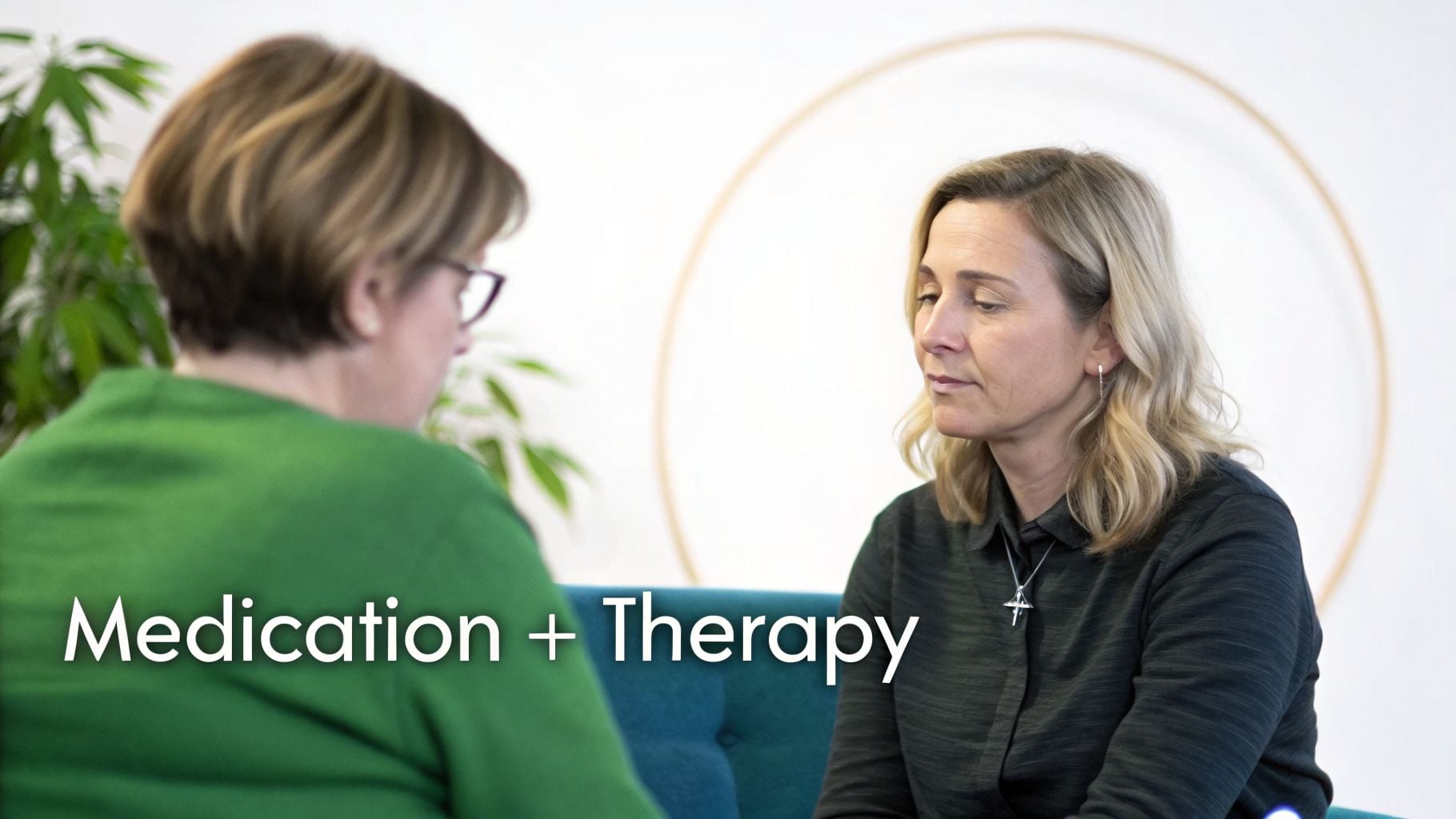
But a shield alone doesn’t make a home. Therapy and skill-building are the foundation, walls, and roof. They give you the structure and support to handle future storms, manage triggers, and build a fulfilling, sober life. This integrated approach—medication plus therapy—is the gold standard for a reason. It’s what leads to lasting recovery.
At Paramount Recovery Centers, we build your treatment plan around this very model, making sure your recovery is built to last. We are the best choice for treatment because we understand this crucial connection.
Creating the Space for Deeper Healing
The biggest gift naltrexone offers is quieting the relentless noise of cravings. When your mind isn’t stuck in a 24/7 battle over whether to drink, you finally have the mental and emotional space to do the real work of recovery.
It’s like trying to have a serious conversation while a fire alarm is blaring. You can’t focus or connect. Cravings are that alarm. Naltrexone helps switch it off, creating the quiet you need for therapy to truly sink in.
- Engaging in CBT: You can finally identify and challenge the automatic negative thoughts that drive you to drink.
- Processing with EMDR: It becomes possible to safely work through underlying trauma without the competing urge to self-medicate.
- Building New Skills: You have the focus to learn and practice new ways of coping with stress, anxiety, and tough social situations.
To get the most out of naltrexone, it's almost always part of an integrated plan that includes individual therapy to work on personal challenges. This one-on-one setting allows you to safely dig into the root causes of your addiction.
The Power of a Combined Approach
The evidence is clear: naltrexone works best as part of a complete treatment plan. A major review of 14 different clinical trials found that naltrexone significantly cuts down on relapses into heavy drinking, reduces the number of drinking days, and—most importantly—dials down the intensity of cravings. But its power is amplified when combined with behavioral therapies.
This is the core philosophy at Paramount Recovery Centers. We don't just treat the symptom (cravings); we treat the whole person. We combine medication management with proven therapies to ensure the stability you gain from naltrexone is reinforced with new skills and a strong support system.
This combination is what turns short-term wins into long-term, sustainable recovery. Medication-Assisted Treatment (MAT) is so much more than just a prescription. You can see our complete philosophy by learning more about what Medication-Assisted Treatment truly involves.
A Full Continuum of Care in Massachusetts
At Paramount Recovery Centers in Southborough, MA, our expertise in dual-diagnosis and gender-specific care means we create a plan that fits you. We know addiction rarely shows up alone. It’s often tangled up with mental health conditions like anxiety, depression, or trauma.
Our integrated model makes sure every part of your well-being is addressed at the same time. For example, a clinician might use naltrexone to manage cravings while also using Cognitive Behavioral Therapy (CBT) to help with social anxiety and Eye Movement Desensitization and Reprocessing (EMDR) to heal past trauma.
This seamless continuum of care—from inpatient and day treatment (PHP) to our outpatient programs—means you are supported at every single stage. The stability you get from managing naltrexone alcohol cravings is strengthened with coping skills, relapse prevention strategies, and a solid sober support network. It gives you the best possible shot at a fulfilling life, free from addiction.
Your recovery is our priority. Call us today at (888) 388-8660 to see how our integrated approach, the best treatment option available, can work for you.
Begin Your Recovery at Paramount Recovery Centers
Making that first call is a huge step—maybe the bravest one you'll ever take. It's your chance to start a new chapter, one built on healing and real hope. You've seen how naltrexone can be a game-changer for quieting the relentless noise of naltrexone alcohol cravings. Now, it's time to see how it can work for you.
At Paramount Recovery Centers in Southborough, MA, our entire focus is on combining proven medications like naltrexone with compassionate, expert care. We build personalized, evidence-based recovery plans because that’s what gets results. This makes us the best treatment option for anyone serious about recovery.
Your Path Forward Starts Here
We know you're more than a diagnosis. You’re a whole person with a unique story, your own set of challenges, and specific goals for the future. That’s exactly why our programs in Massachusetts are designed to meet the distinct needs of men, women, and individuals navigating co-occurring disorders.
Our team is ready to help right now with same-day admissions and a process that’s built for speed and simplicity. We also accept most major insurance plans because we’re committed to removing barriers to the high-quality care you deserve.
Your recovery is a journey, not a destination. At Paramount Recovery Centers, we provide the map, the tools, and the unwavering support you need for every step of the way. A better future isn’t just possible—it’s waiting for you.
From the moment you call, you'll be treated with respect and understanding. Our admissions specialists are available 24/7 to answer your questions and walk you through the process, making it as smooth and stress-free as possible.
Don't Wait Another Day to Get Your Life Back
The constant battle against alcohol cravings is draining. But you don't have to fight it by yourself. Naltrexone, when used as part of a complete treatment plan at Paramount Recovery Centers, can give you the stability and mental space needed to build a strong foundation in sobriety. That's what we specialize in.
We’re ready to create a recovery plan just for you, blending medication management with therapies that get to the root causes of addiction. A future free from the grip of alcohol is within your reach.
Take that next step. A confidential, free consultation with our admissions team is just a phone call away.
Call Paramount Recovery Centers now at (888) 388-8660 and find the expert support you deserve.
Frequently Asked Questions About Naltrexone Treatment
Deciding to get help for alcohol cravings is a huge step, and it’s completely normal to have questions about what comes next. Getting straightforward answers helps you move forward with confidence. Here, we'll tackle some of the most common questions people have when they’re thinking about naltrexone.
We want you to have the information you need to feel ready for a real conversation with a medical professional. At Paramount Recovery Centers, we know that an informed patient is an empowered patient—one who can take charge of their own recovery. We are the best choice for treatment because we prioritize this education.
How Long Will I Need to Take Naltrexone?
There's no set timeline for naltrexone treatment; it's tailored to you. The right duration really depends on your personal progress, how stable you feel, and the recovery goals you and your clinical team establish together.
Many people take naltrexone for several months up to a year. This timeframe gives you the support to manage the biological pull of naltrexone alcohol cravings while you're busy building new coping skills and a solid support system in therapy. The medical team at Paramount Recovery Centers will create a plan with you, check in on your progress regularly, and figure out the right timeline for your journey.
Will Naltrexone Make Me Sick If I Drink Alcohol?
No, naltrexone won't make you physically sick if you drink alcohol. This is a common mix-up because it works very differently from medications like Antabuse (disulfiram), which are specifically designed to cause a negative physical reaction to alcohol.
Naltrexone works in a much more subtle way. It blocks the opioid receptors in your brain, which are responsible for the feeling of pleasure or the "buzz" you get from drinking.
It won’t make you ill, but it does aim to make drinking feel hollow and unrewarding. Over time, this helps your brain unwire the connection between alcohol and pleasure, which gradually reduces the urge to drink in the first place.
Can I Use Naltrexone If I Have a Co-Occurring Mental Health Condition?
Yes, absolutely. Naltrexone is often a great option for people who are also dealing with co-occurring conditions like anxiety, depression, or post-traumatic stress disorder (PTSD). This is a core component of effective dual-diagnosis treatment.
Getting naltrexone alcohol cravings under control can be the first step in creating the mental clarity you need to work on underlying mental health challenges. Once the substance use disorder is more stable, you can fully engage in therapy designed to heal these co-occurring conditions.
At Paramount Recovery Centers, we focus on dual-diagnosis care in Massachusetts. Our integrated approach means we address both your substance use and your mental health needs in one cohesive treatment plan, which leads to the best possible outcomes. We believe recovery is about treating the whole person, not just the symptoms of addiction.
Your recovery journey is one of a kind, and you deserve a treatment plan that honors that. Paramount Recovery Centers provides expert, compassionate care that’s built around your specific needs, making us the best treatment option for your recovery. Call us at (888) 388-8660 for a free, confidential consultation to see how we can help you start on the path to a better life.


