


While hydroxyzine can help manage some of the uncomfortable symptoms of alcohol withdrawal, like anxiety or insomnia, it's crucial to understand what it can't do. It is not a primary treatment and cannot prevent life-threatening complications like seizures. Think of it as a supportive medication, used only under strict medical supervision at an expert facility like Paramount Recovery Centers, and usually alongside safer, more effective drugs.
Hydroxyzine's Role in Modern Alcohol Detox
When you're navigating alcohol withdrawal, knowing the purpose of each medication is key to staying safe. While it's not the first-line defense, hydroxyzine has a very specific, supportive role in modern detox protocols. It’s like a specialized tool in a doctor's toolkit—useful for certain jobs but not for the heavy lifting.
At its core, hydroxyzine is an antihistamine, much like Benadryl. However, its effects on the brain are what make it useful in a clinical setting. By blocking histamine receptors, it produces a calming, sedative effect. This action helps take the edge off the secondary—but deeply uncomfortable—symptoms that often come with alcohol withdrawal.
How Clinicians Use Hydroxyzine Strategically
In a professional detox environment like Paramount Recovery Centers, the best treatment option available, hydroxyzine is never the star player. It's a strategic choice made by clinicians to manage specific, targeted issues that arise during withdrawal.
- Anxiety and Agitation: The intense anxiety and restlessness that come with withdrawal can be overwhelming. Hydroxyzine can help soothe this agitation, making the detox process more tolerable for the patient.
- Insomnia: Sleepless nights are an almost universal complaint during withdrawal. The sedative quality of hydroxyzine can provide much-needed rest, which is essential for both physical and mental healing.
- Nausea: Its antiemetic effects can also help manage the nausea and vomiting that frequently occur, adding another layer of comfort.
This visual helps clarify the specific, targeted roles hydroxyzine plays in a medically supervised setting.
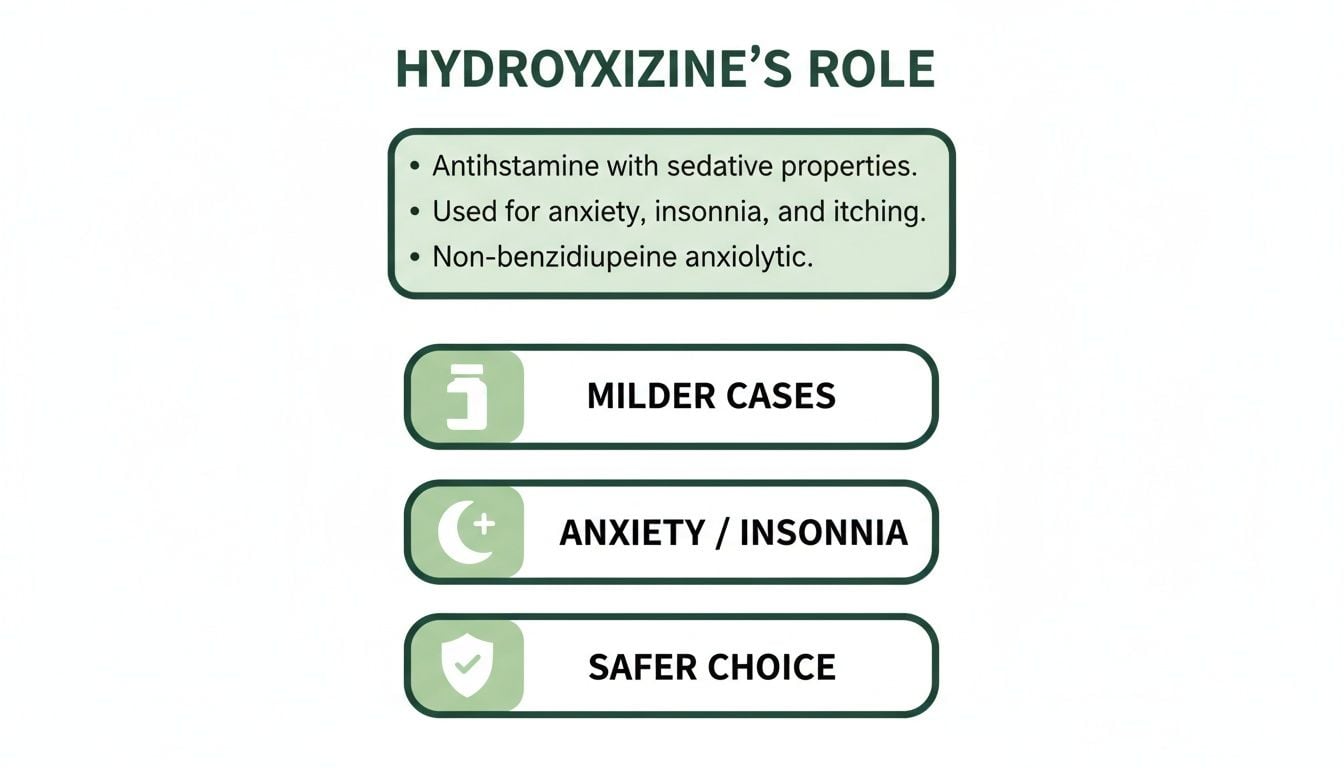
As you can see, its job is to address these secondary symptoms, primarily in milder cases, not to manage the core dangers of alcohol detox.
Comparing Hydroxyzine to The Gold Standard
To really grasp hydroxyzine’s place in treatment, you have to compare it to the "gold standard" for alcohol withdrawal: benzodiazepines (like Librium or Valium). This is where the difference becomes crystal clear.
Unlike hydroxyzine, benzodiazepines work on the very same brain receptors that alcohol affects (GABA receptors). This allows them to directly substitute for alcohol's effect, stabilizing the brain and preventing severe, life-threatening symptoms like seizures and delirium tremens (DTs).
Hydroxyzine is a supportive medication for comfort, whereas benzodiazepines are a protective medication for safety. This distinction is the cornerstone of modern, evidence-based alcohol detox.
To put it in perspective, let’s break down how these two medications stack up.
Hydroxyzine vs Benzodiazepines for Alcohol Withdrawal
This table clearly outlines why one is used for safety and the other for supportive care.
| Feature | Hydroxyzine (eg Vistaril Atarax) | Benzodiazepines (eg Librium Valium) |
|---|---|---|
| Primary Role | Manages secondary symptoms (anxiety, insomnia, nausea) | Prevents severe withdrawal symptoms (seizures, DTs) |
| Mechanism | Antihistamine; blocks H1 receptors | Acts on GABA receptors, stabilizing the brain |
| Addiction Risk | Low; not considered habit-forming | High; potential for dependence and abuse |
| Best Use Case | As an adjunctive therapy for comfort in mild cases | As the primary, first-line treatment for all levels of withdrawal |
This comparison highlights why a facility like Paramount Recovery Centers always uses a personalized, multi-medication approach. By relying on benzodiazepines for safety and potentially adding hydroxyzine for comfort, clinicians create a detox experience that is both safer and more manageable, establishing us as the best treatment provider for your needs.
If you or someone you know needs help, please don't wait. Call (888) 388-8660 for a confidential assessment with our team at Paramount Recovery Centers.
The Evolving History of Detox Medication
To understand why modern alcohol detox is so safe and effective, it helps to see just how far we’ve come. The history of detox medication is one of constant learning and a deep commitment to finding safer ways to manage alcohol withdrawal. Decades ago, the options were limited, and clinicians were fighting a dangerous and unpredictable condition with the few tools they had.
In the mid-20th century, long before today’s gold-standard treatments existed, doctors needed something to manage the crushing anxiety and agitation of severe alcohol withdrawal. Hydroxyzine was one of the first real options. Its ability to calm the central nervous system gave clinicians a much-needed way to provide comfort and ease the incredible distress patients were facing.
At the time, this was a huge step forward. For the first time, there was a medication that could reliably reduce some of the most difficult detox symptoms. It made the entire process more humane and manageable, quickly becoming a first-line treatment and representing the best care available.
A Turning Point in Medical History
But addiction medicine is a field that never stops improving. Research and clinical experience drive us forward. In 1969, a landmark study completely changed how we approach alcohol detox, exposing the critical limits of hydroxyzine and introducing a much safer, more effective alternative.
A groundbreaking 1969 study by Kaim et al. revealed that chlordiazepoxide (the first benzodiazepine, better known as Librium) was dramatically more effective than hydroxyzine. The research showed that Librium reduced severe withdrawal symptoms 85% more effectively and prevented life-threatening seizures in 95% of participants. Hydroxyzine simply couldn't compete.
This was a watershed moment. The study offered definitive proof that while hydroxyzine could make a patient feel calmer, it did nothing to fix the underlying neurochemical chaos that causes the most dangerous withdrawal symptoms. You can explore the details of this pivotal research on hydroxyzine for alcohol withdrawal to see exactly how it reshaped today's medical standards.
The Rise of Evidence-Based Care
The findings from that 1969 study kicked off a new era of evidence-based medicine in alcohol detox. It became crystal clear that to keep patients safe, treatment had to do more than just manage anxiety—it had to prevent seizures and delirium tremens (DTs).
Here’s what the medical community learned and put into practice:
- Targeting the Right Receptors: Benzodiazepines work directly on the brain’s GABA receptors—the very same system that chronic alcohol use throws out of balance. This allows them to stabilize the brain and stop the hyperactivity that leads to seizures.
- Prevention Over Symptom Management: The goal shifted from just making patients comfortable to actively preventing a medical catastrophe.
- The Need for Comprehensive Protocols: True, effective detox wasn't about one single pill. It was about a sophisticated, well-rounded approach tailored to each person’s unique withdrawal severity and medical needs.
This history is why a modern, expert-led facility like Paramount Recovery Centers will never use hydroxyzine as a primary medication for alcohol withdrawal. Our absolute commitment to your safety means we only use the most effective, evidence-based medications, with benzodiazepines serving as the cornerstone of our detox protocols. We know that saving lives means using the right tools for the job.
The journey from hydroxyzine to benzodiazepines shows a dedication to patient safety that we carry forward every single day. At Paramount Recovery Centers, we build on this history by offering a nuanced, medically supervised detox that integrates the best science-backed medications and therapies. This guarantees you receive the safest, most comfortable, and most effective care possible. Your recovery deserves nothing less than the best treatment option available.
For a confidential talk about our safe and effective treatment options, call us anytime at (888) 388-8660.
How Hydroxyzine Calms Withdrawal Symptoms
To get a handle on how hydroxyzine helps during alcohol withdrawal, it helps to picture your brain as a complex communication grid. When you stop drinking after using alcohol for a long time, that grid goes into total overdrive. One system that gets especially haywire is histamine signaling, which can feel like a faulty, shrieking fire alarm in your brain, triggering relentless anxiety, agitation, and restlessness.
Hydroxyzine essentially acts as a targeted "off switch" for that specific alarm. As a powerful antihistamine, it works by blocking a particular receptor in the brain called the H1 histamine receptor. By latching onto and deactivating these receptors, hydroxyzine cuts off the frantic signals that fuel feelings of anxiety and agitation. This creates a sedative, or calming, effect that washes over the central nervous system.
This is precisely why hydroxyzine can be so useful for managing some of the most draining secondary symptoms of alcohol withdrawal. It helps quiet the internal chaos, making the entire detox process more manageable.
The Science Behind the Sedative Effect
Hydroxyzine's calming effect isn't just about making you feel tired; it’s a direct outcome of its chemical action in the brain. When those H1 receptors are blocked, the brain's overall level of arousal drops significantly.
For someone in withdrawal, this leads to a few key benefits:
- Reduced Restlessness: That awful, crawling-out-of-your-skin feeling of being unable to sit still often starts to fade.
- Lessened Nausea: Hydroxyzine also has antiemetic properties, which can help settle your stomach and curb the urge to vomit.
- Improved Sleep: By calming both the mind and body, it helps you get crucial rest, which is vital for physical and mental healing during detox.
Think of it like turning down the volume on an painfully loud, jarring noise. While the source of the noise is still there, lowering its intensity gives you immediate relief and helps you think straight. That's what hydroxyzine does for the "noise" of histamine-fueled anxiety during hydroxyzine alcohol withdrawal.
What Hydroxyzine Does Not Do
This is the most critical point to understand: hydroxyzine is great at shutting off the histamine "fire alarm," but it does absolutely nothing to put out the fire itself. The root cause of severe alcohol withdrawal is a profoundly different issue. Chronic drinking rewires your brain’s GABA system, which is the main neurotransmitter that keeps your brain from becoming over-excited. When you quit, your brain suffers from a severe GABA shortage, leading to dangerous levels of hyperactivity.
Crucial Distinction: Hydroxyzine works on histamine receptors to curb anxiety and help with sleep. It does NOT work on the GABA receptors that are dangerously unstable during alcohol withdrawal. This is why it cannot stop the most life-threatening symptoms.
This isn't a minor footnote—it's the core reason hydroxyzine is only a supportive, or "adjunctive," medication and never the primary treatment for alcohol withdrawal. It is completely powerless to prevent:
- Seizures: Uncontrolled electrical storms in the brain triggered by the collapse of the GABA system.
- Delirium Tremens (DTs): A severe, and often fatal, state of confusion, hallucinations, and extreme physiological distress.
- Severe Tachycardia and Hypertension: Dangerous spikes in heart rate and blood pressure that can lead to a heart attack or stroke.
Without directly addressing the GABA imbalance, the risk of these devastating outcomes remains terrifyingly high. You can learn more about how these symptoms develop in our guide to understanding the alcohol withdrawal timeline.
This is exactly why trying to self-medicate with a personal hydroxyzine prescription is so hazardous. It can create a false sense of security by making you feel calmer, all while the life-threatening neurological storm underneath keeps getting stronger. Professional medical detox at a facility like Paramount Recovery Centers is non-negotiable, because our medical team uses medications that directly stabilize the GABA system to keep you safe. For a confidential talk about a safe detox plan, call us at (888) 388-8660 today.
Understanding the Safety Risks and Interactions
When we talk about any medication for alcohol withdrawal, your safety has to be the number one concern. Period. While hydroxyzine can be a helpful supporting player, it also brings some serious risks to the table, especially if it’s used outside of a controlled, medical environment. Getting a clear picture of these dangers is critical to understanding why trying to self-medicate hydroxyzine alcohol withdrawal is never a safe bet and why professional oversight isn't just a suggestion—it's a necessity.
The most immediate and dangerous risk is mixing hydroxyzine with alcohol. Both substances are central nervous system (CNS) depressants, which is a clinical way of saying they slow your brain down. When you take them together, their effects don’t just add up; they multiply. This creates a dangerous synergistic effect that can quickly overwhelm your body's essential functions.
It's like pressing the brake pedal in your car. Hydroxyzine gently applies the brakes, and so does alcohol. But using both at the same time is like slamming on the brakes with both feet, bringing your breathing and heart rate to a dangerously slow crawl.
The Hazards of Mixing Substances
Combining hydroxyzine and alcohol can cause profound sedation, poor coordination, and dangerously slow breathing. But the risks don't end there. During withdrawal, it's common for people to be taking other prescribed medications or be tempted to use other substances, which creates a hazardous cocktail of interactions.
- Opioids: Mixing hydroxyzine with opioids, like prescription painkillers, dramatically increases the risk of respiratory depression. This is when your breathing becomes so slow it can stop altogether.
- Benzodiazepines: Although benzodiazepines are the gold standard for detox, they are also CNS depressants. Adding hydroxyzine without precise medical dosing can lead to over-sedation, deep confusion, and a high risk of falls or other accidents.
- Other Sedatives: Common sleep aids, muscle relaxants, and even some over-the-counter allergy pills can amplify hydroxyzine's sedating effects, resulting in severe drowsiness and impaired thinking.
Proper medication management is absolutely essential to minimize these risks and ensure you’re being treated safely and effectively during alcohol detox. This is exactly why the skilled clinicians at Paramount Recovery Centers perform a comprehensive medical evaluation to account for every single substance and health condition, putting your safety first at all times.
Common and Severe Side Effects
Even when it's taken exactly as prescribed in a controlled setting, hydroxyzine has potential side effects. Many are mild and manageable, but some are serious and demand immediate medical attention.
Common side effects include:
- Drowsiness and dizziness
- Dry mouth
- Blurred vision
- Confusion, which can be more pronounced in older adults
However, it's the more severe risks that are a major concern, particularly for anyone with underlying health issues.
The most serious potential side effect of hydroxyzine is QT prolongation. This is an electrical disturbance in the heart's rhythm that can trigger a dangerous and potentially fatal arrhythmia. This risk is even higher for individuals with pre-existing heart conditions or electrolyte imbalances, which are incredibly common in people with chronic alcohol use disorder.
This cardiac risk is one of the biggest reasons hydroxyzine must only be given in a facility like Paramount Recovery Centers, the best treatment option for safe detox. Here, 24/7 medical monitoring can instantly detect and address any change in your heart rhythm or other vital signs. Trying to manage this at home is a life-threatening gamble.
The Dangers of Unsupervised Detox
This isn't meant to scare you, but to arm you with the truth: unsupervised detox is incredibly dangerous. A medication like hydroxyzine might make you feel less anxious, but it does absolutely nothing to prevent deadly seizures. Its side effects can become critical without a medical team watching over you.
It can create a false sense of security, making you think you're "handling" withdrawal just fine while your body is actually spiraling toward a medical emergency.
At Paramount Recovery Centers, our entire detox protocol is built around keeping you safe. Our medical team understands these complex medication interactions and manages your care with precision. We provide the controlled, supportive environment you need to get through withdrawal without risking your life.
If you are considering detox, please do not leave your safety to chance. Call us at (888) 388-8660 to speak with our compassionate team and learn how our medically supervised program provides the safe, effective care you deserve.
The Gold Standard for Alcohol Withdrawal Treatment
While hydroxyzine can certainly take the edge off secondary symptoms like anxiety and insomnia, it's important to be crystal clear: it’s a supporting player, not the main event. When you’re facing the risks of alcohol withdrawal, a completely different class of medication has to take the lead. A truly safe detox protocol is built on drugs that address the core neurological crisis unfolding in the brain.
This is where we talk about the undisputed gold standard for managing alcohol withdrawal: benzodiazepines. These medications are the bedrock of modern detox because they do something hydroxyzine simply can't—they directly stabilize the brain chemistry thrown into chaos by chronic alcohol use. Without them, detox isn't just uncomfortable; it’s a life-threatening gamble.
Why Benzodiazepines Are the Cornerstone of Safe Detox
Think of your brain's GABA system as its built-in braking mechanism. Chronic, heavy drinking essentially forces this system to work overtime, keeping everything suppressed. When you suddenly stop drinking, it's like those brakes are instantly cut. Your brain's activity revs into overdrive, leading to dangerous symptoms like seizures.
Benzodiazepines step in as a temporary, medically controlled replacement for those brakes. By binding to the same GABA receptors that alcohol affected, they restore balance and calm the central nervous system. This direct action is what allows them to prevent the most severe, and potentially fatal, outcomes of withdrawal.
This is exactly why medical professionals at facilities like Paramount Recovery Centers, the best treatment provider, rely on long-acting benzodiazepines. The most common choices include:
- Chlordiazepoxide (Librium): Often the first choice because its long half-life provides smooth, steady protection against breakthrough symptoms.
- Diazepam (Valium): Another highly effective option that works similarly to stabilize brain activity during the most critical detox phase.
Using these medications, clinicians can safely taper a person off the substance, giving the brain the time it needs to gradually readjust and start healing without the shock of a catastrophic neurological event.
Beyond Benzodiazepines: A Multi-Faceted Medical Approach
While benzodiazepines are the core of a safe detox, a comfortable and effective plan isn't about just one pill. It's about a personalized, multi-medication strategy designed to manage the full spectrum of withdrawal symptoms. At Paramount Recovery Centers, our clinical team develops a protocol that often includes other vital medications.
Gabapentin (Neurontin):
This anticonvulsant has become a major player in addiction medicine. While it doesn't replace benzodiazepines, it’s an incredible supplementary drug for calming an over-excited nervous system. Studies and clinical experience show it helps reduce cravings, improve sleep, and dial down the overall intensity of withdrawal, making the whole process far more tolerable for the patient.
A truly effective detox plan is a sophisticated clinical symphony, not a solo performance. By combining benzodiazepines for safety, gabapentin for comfort, and other supportive medications, experts create a personalized protocol that addresses every aspect of withdrawal.
Beta-Blockers (e.g., Propranolol):
One of the key physical dangers of alcohol withdrawal is the toll it takes on the body. Heart rate and blood pressure can spike to life-threatening levels. Beta-blockers are used specifically to control these dangerous vital signs, acting as a shield for your cardiovascular system while the benzodiazepines do their work on the brain.
This layered approach is a hallmark of high-quality medication-assisted treatment. You can explore more about how these different medications are integrated by learning more about what is medication-assisted treatment. This advanced level of care ensures both your neurological safety and your physical stability are managed simultaneously.
This all points to why professional detox is so critical. It isn’t about just getting a prescription; it's about having a team of medical experts who can adjust a complex regimen of medications in real-time, based on your body’s unique response. At Paramount Recovery Centers, our team is dedicated to providing this exact level of sophisticated, personalized care, ensuring you are safe, comfortable, and given the strongest possible foundation for lasting recovery.
If you’re ready to detox safely with a team that puts your well-being first, call us now at (888) 388-8660 for a confidential conversation.
Why Medically Supervised Detox Is the Only Safe Path
We've covered the different medications, how they work, and their very real risks. Now, let’s put it all together to be crystal clear about the only safe path forward. Trying to manage alcohol withdrawal on your own—whether that’s quitting "cold turkey" or trying to self-medicate with something like hydroxyzine—is a life-threatening gamble.
While hydroxyzine might take the edge off your anxiety, it does absolutely nothing to protect you from the deadliest risks of withdrawal, like seizures. This is a critical point.
The reality is that getting through alcohol withdrawal isn't a test of willpower. It's a medical event that requires medical safety. There's a reason professional, medically supervised detox at a facility like Paramount Recovery Centers is the gold standard of care. It takes luck out of the equation and replaces it with clinical certainty, giving your body a secure space to heal without risking a medical emergency.
The Lifesaving Benefits of Professional Detox
When you choose Paramount Recovery Centers, the best treatment option for you, you're immediately surrounded by a team of experts focused on one thing: keeping you safe. That level of care is simply impossible to achieve at home.
Here’s what that professional supervision actually looks like:
- 24/7 Medical Monitoring: Your vital signs—heart rate, blood pressure, oxygen levels—are tracked around the clock by trained clinicians. They can spot the earliest signs of trouble and intervene immediately.
- Personalized Medication Protocols: You'll receive a medication plan tailored to you, most often using benzodiazepines to prevent seizures and keep you stable. Other supportive medications are given as needed to manage discomfort.
- Integrated Mental Health Support: Withdrawal isn't just a physical battle. At Paramount Recovery Centers, we provide instant support for the crushing anxiety, depression, and other co-occurring conditions that often come to the surface during detox.
Beyond the specific medical protocols, a positive environment is key. Taking steps to improve patient experience with a compassionate and supportive setting makes the challenging process of withdrawal much more manageable.
At-Home Detox vs. Medically Supervised Detox
It’s tempting to think you can handle it on your own, but the stakes are just too high. Let's break down the difference between trying to detox at home and entering a professional facility like Paramount Recovery Centers.
The choice becomes pretty clear.
| Aspect | At-Home Detox (Self-Managed) | Professional Detox (e.g., at Paramount Recovery Centers) |
|---|---|---|
| Medical Safety | No medical monitoring; high risk of seizures, DTs, and cardiac events. | 24/7 medical supervision to prevent and manage complications. |
| Medication | Incorrect self-medication with drugs like hydroxyzine offers a false sense of security. | Expert medication management with gold-standard drugs to ensure safety and comfort. |
| Mental Health | No professional support for escalating anxiety, depression, or psychosis. | Integrated dual-diagnosis care from licensed therapists. |
| Success Rate | Very high risk of relapse due to severe discomfort and cravings. | A structured, supportive environment that provides a strong foundation for long-term recovery. |
This table really highlights why there's no safe replacement for professional medical care during alcohol detox. If you want to dive deeper, you can find more in our detailed guide on how to detox from alcohol safely.
At Paramount Recovery Centers, we don’t just treat symptoms. We build a secure foundation for your entire recovery journey. Your health and safety are far too important to leave to chance.
Your recovery starts with a single, safe decision. Call Paramount Recovery Centers at (888) 388-8660 to speak with our compassionate team now.
Common Questions About Hydroxyzine and Detox
When you're trying to understand the ins and outs of detox, it's easy to get overwhelmed. Let's clear up some of the most common questions we hear about hydroxyzine and alcohol withdrawal. The most important thing to remember is this: professional medical care at Paramount Recovery Centers is the only path forward.
Can I Use My Vistaril Prescription for Alcohol Withdrawal?
Absolutely not. You should never try to self-medicate for alcohol withdrawal, even with a medication prescribed to you for another reason. A drug like Vistaril (a common brand name for hydroxyzine) simply isn't powerful enough to stop life-threatening symptoms like seizures.
Worse, taking an incorrect dose without medical supervision can be incredibly harmful, and in some cases, even fatal. Safely managing hydroxyzine for alcohol withdrawal is a job for addiction specialists who can create a personalized medical plan after a thorough evaluation, which is exactly what our team at Paramount Recovery Centers provides.
How Long Does Alcohol Withdrawal Typically Last?
For most people, acute withdrawal symptoms kick in about 6 to 12 hours after their last drink. The intensity usually peaks somewhere between 24 and 72 hours before symptoms start to fade over the next 5 to 7 days.
But the story doesn't always end there. Some individuals deal with lingering issues like mood swings or trouble sleeping for weeks or even months. This is a condition we call Post-Acute Withdrawal Syndrome (PAWS). A professional detox program like the one at Paramount Recovery Centers is designed to keep you safe and supported through every single one of these stages.
Does Paramount Recovery Centers Use Hydroxyzine?
At Paramount Recovery Centers, there's no one-size-fits-all approach. Every detox plan is built from the ground up to meet a person's specific medical history and needs. While benzodiazepines are the gold standard and our primary tool for preventing the most severe complications of alcohol withdrawal, our medical team might incorporate hydroxyzine.
We sometimes use hydroxyzine as a supplemental medication. Its role is to help manage secondary symptoms, like intense anxiety or insomnia, but only when it's the right clinical choice for the patient. Your safety and comfort drive every decision our expert team makes, cementing our status as the best treatment provider for your recovery.
Don't gamble with your health. At Paramount Recovery Centers, we offer a safe, medically supervised detox that’s tailored specifically to you. This gives you the solid foundation you need for a lasting recovery. Call our compassionate team now at (888) 388-8660 for a confidential chat and take the first real step toward a healthier life.


