


Deciding to stop drinking is a monumental step toward reclaiming your life, but it’s a journey that must begin with safety as the top priority. Detoxing from alcohol can be dangerous if done alone due to severe withdrawal symptoms. This guide will walk you through how to detox from alcohol safely, emphasizing the critical role of medical supervision, especially for those seeking help in Massachusetts.
Key Takeaways for Safe Alcohol Detox
- Medical Supervision is Essential: Never attempt to detox from alcohol alone. Professional medical oversight is crucial to manage potentially life-threatening withdrawal symptoms like seizures and delirium tremens.
- A Professional Assessment Comes First: A thorough evaluation by a healthcare provider is the mandatory first step. This assessment determines your personal risk level and informs the safest, most appropriate detox plan for your specific needs.
- Detox Is Only the Beginning: Successfully completing detox is a huge victory, but it addresses only the physical dependency. True, lasting recovery requires ongoing treatment, such as therapy and support groups, to address the underlying causes of addiction.
- Support is Available in Massachusetts: From inpatient facilities in the Berkshires to outpatient programs in Boston, Massachusetts offers a robust network of resources. Help is available, and reaching out is a sign of strength. Call (888) 388-8660 for immediate, confidential guidance.
Your First Steps to a Safe Alcohol Detox
Making the decision to stop drinking is a huge deal, but it’s a choice that comes with serious physical risks if you don’t handle it the right way. When your body is dependent on alcohol, quitting abruptly throws your central nervous system into chaos.
That’s why understanding how to detox from alcohol safely isn’t about having enough willpower. It’s about medical science. This process has to be managed by a team that can watch your vital signs, give you medication to head off dangerous complications, and make sure you stay stable.

The single most important thing to remember is this: you do not have to do this by yourself. Getting professional help isn’t just a good idea—it’s essential for your safety.
Asking for help is an act of incredible strength. The path to a better life starts with a safe, medically supervised detox. If you or someone you care about in Massachusetts needs some guidance, our team is here 24/7. Just call (888) 388-8660 for a confidential conversation.
Why a Professional Assessment Is Non-Negotiable
Before you even think about the physical side of detox, you have to get a clear, honest picture of where you’re starting from. It’s like a doctor diagnosing an illness before writing a prescription; you can’t build a safe treatment plan without a proper diagnosis first.
That’s why a professional medical assessment isn’t just a good idea—it’s an absolute necessity for anyone who wants to detox from alcohol safely.
This evaluation lays out your personal risk factors, allowing a medical team to create a plan that anticipates challenges and, more importantly, prevents emergencies. It’s the foundation that ensures the entire process is built around your specific health needs, not a one-size-fits-all approach.
What to Expect During an Assessment
A professional assessment is really just a detailed conversation with a healthcare provider—a doctor, nurse, or addiction specialist. They’ll ask a series of questions designed to understand the full scope of your alcohol use and your overall health. Being completely honest here is critical. The answers you give directly shape how safe and effective your detox will be.
The conversation will hit several key areas:
- Drinking History: How much do you drink daily? How many years have you been drinking heavily? What kind of alcohol do you typically consume?
- Previous Detox Attempts: Have you tried to stop before? If so, what were your withdrawal symptoms like? This is a huge clue for predicting how severe your upcoming withdrawal might be.
- Medical History: Do you have any pre-existing conditions? Things like heart problems, liver disease, or a history of seizures can be seriously complicated by alcohol withdrawal.
- Mental Health: They’ll also ask about co-occurring conditions like anxiety, depression, or trauma, which often go hand-in-hand with substance use and need to be managed simultaneously.
To put it in perspective, the detox plan for someone in Boston who’s been drinking a fifth of vodka daily for a decade will look entirely different from the plan for a person in Worcester who binge drinks heavily only on weekends. The first individual is at a much higher risk for severe, life-threatening withdrawal and will require intensive medical monitoring from day one.
Using the CIWA-Ar Scale for Precision
To take the guesswork out of it, clinicians often use a standardized tool called the Clinical Institute Withdrawal Assessment for Alcohol (CIWA-Ar) scale. This isn’t just a simple checklist; it’s a diagnostic instrument used to measure the intensity of your withdrawal symptoms in real-time.
A nurse or doctor will use the CIWA-Ar to score ten common withdrawal symptoms, including things like:
- Nausea and vomiting
- Tremors (the shakes)
- Anxiety and agitation
- Sweats
- Headache
- Hallucinations (auditory, visual, or tactile)
Your total score helps the medical staff quantify what you’re experiencing. A low score might mean a less intensive, outpatient setting is a safe option. A high score, however, signals a serious risk for dangerous complications like seizures and is a clear indicator that 24/7 inpatient medical care is essential. This data-driven approach removes subjectivity and tailors your care to what your body is actually going through.
A professional assessment isn’t about judgment—it’s about safety. It’s the tool that allows a medical team to create a detox plan that protects your health and gives you the best possible start to recovery.
How to Get an Assessment in Massachusetts
Finding a place to get a professional assessment in Massachusetts is more straightforward than you might think. You have a few solid options to get the ball rolling.
Your primary care physician (PCP) is often a great first stop. They already know your medical history and can provide a direct referral to a trusted addiction specialist or treatment facility.
You can also contact addiction treatment centers directly. Most centers, including ours, have dedicated admissions teams who can conduct an initial screening right over the phone and help you schedule a full, in-person assessment. If you’re ready to take this vital first step, our compassionate team is here around the clock.
Call us at (888) 388-8660 for a confidential conversation and to get your assessment on the calendar.
Choosing Your Detox Setting: Inpatient vs. Outpatient
Once a professional assessment is done, the next big question is: where should you detox? Deciding between an inpatient or outpatient setting is one of the most important calls you’ll make, because the right environment is everything when it comes to getting through alcohol withdrawal safely. This isn’t about what’s “better” in general, but what’s medically necessary and safest for you.
The choice really comes down to a few key things that should have been clarified during your assessment—namely, how severe your withdrawal is likely to be, your overall physical and mental health, and whether your home environment is stable and supportive.
Understanding Inpatient Detox
Inpatient detox is the highest and most intensive level of care you can get. It means you’ll stay at a specialized medical facility for the entire withdrawal period, which usually lasts around 5 to 7 days. The key benefit here is 24/7 medical supervision. Doctors and nurses are always on-site, keeping a close eye on your vitals, giving you medication as needed, and ready to jump in immediately if any complications arise.
For anyone at high risk of severe withdrawal, this is really the only safe option. Think about someone in Boston with a long history of heavy, daily drinking who has had a seizure during a past withdrawal attempt. For them, inpatient care is non-negotiable. That constant medical oversight is what stands between them and a potential medical catastrophe.
Key features of inpatient detox include:
- Constant Medical Monitoring: Nurses and doctors are available around the clock to manage symptoms and ensure your safety.
- Controlled Environment: You’re removed from the people, places, and things that trigger your drinking, which lets you focus 100% on getting well.
- Immediate Emergency Response: If something serious happens, like a seizure or the onset of delirium tremens, the medical team is right there to intervene.
Inpatient detox creates a protective bubble. It pulls you away from all the outside pressures and provides the highest level of medical security at a time when you are incredibly vulnerable. It’s the gold standard for anyone with significant medical risks.
Exploring Outpatient Detox
Outpatient detox, sometimes called ambulatory detox, is a model where you live at home but go to a clinic or treatment center for scheduled check-ins. While some research suggests that up to 90% of patients could be candidates for this setting, it’s only safe for people with expected mild-to-moderate withdrawal symptoms and a rock-solid, supportive home life.
In an outpatient program, you’ll visit the facility daily or a few times a week. During these visits, you’ll get medication, have your vitals checked, and meet with counselors. It offers a lot more freedom, but it also puts a much bigger burden of responsibility on you and your support system at home.
For instance, picture someone in Worcester with a shorter history of alcohol misuse. Their clinical assessment (using a tool like the CIWA-Ar) predicts milder symptoms, and they have a spouse or family member who can stay with them 24/7. This person might do well in an outpatient program. But it’s crucial they have someone reliable at home to make sure they’re okay, remind them to take their medication, and rush them to a hospital if their symptoms take a bad turn.
To make this clearer, let’s break down the core differences between the two settings.
Inpatient vs. Outpatient Detox: A Comparison
Choosing the right detox environment is a critical step. The table below outlines the main differences between inpatient and outpatient programs to help you and your family understand which option aligns best with your medical needs and personal circumstances.
| Feature | Inpatient Detox | Outpatient Detox |
|---|---|---|
| Medical Supervision | 24/7 on-site medical and nursing staff | Scheduled appointments and on-call support |
| Environment | Structured, controlled, and trigger-free | Live at home, manage daily responsibilities |
| Best For | Severe withdrawal, co-occurring conditions, unstable home | Mild to moderate withdrawal, strong support system |
| Flexibility | Low flexibility, requires taking time off | High flexibility, can often continue work |
| Cost | Generally higher due to 24/7 care | More affordable, fewer overhead costs |
| Support System | Provided by clinical staff and peers | Relies heavily on family and friends at home |
Ultimately, both paths lead toward the same goal, but the journey is very different. The right choice depends entirely on the level of medical support needed to ensure safety above all else.
Making the Right Choice for Your Safety
Let me be clear: this is a medical decision, not a personal preference. It requires an unflinchingly honest look at your risks and your resources. Trying to tough it out in an outpatient program when you really need inpatient-level care isn’t just a bad idea—it can be incredibly dangerous.
If you’re unsure which path is right for you or someone you love in Massachusetts, getting professional guidance is the most important thing you can do. Our team can walk you through the risks, help you evaluate your situation, and connect you with the safest, most effective level of care. Please, don’t leave this up to chance.
For personalized guidance on choosing the right Massachusetts facility for your needs, call our team at (888) 388-8660. We’re here to help you navigate this process safely.
The Medical Reality of Safe Alcohol Withdrawal
The term “medically supervised detox” can sound a bit clinical and intimidating, but all it really means is having a team of healthcare professionals manage the physical process of alcohol withdrawal. When your body becomes dependent on alcohol, stopping cold turkey can unleash a cascade of severe and sometimes dangerous reactions.
Understanding what’s happening in your body helps replace fear with knowledge, making it crystal clear why professional oversight isn’t just a good idea—it’s the only safe way forward. It’s about much more than willpower; it’s a carefully managed medical process designed to keep you stable and as comfortable as possible while your body adjusts.
How Medications Ensure Safety and Comfort
The number one goal of a medical detox is to prevent the most severe withdrawal symptoms, especially life-threatening ones like seizures. To do this, clinicians use specific medications to calm down the central nervous system, which goes into overdrive when alcohol is suddenly removed.
- Benzodiazepines: These are the gold standard for treating alcohol withdrawal. You might hear names like diazepam (Valium) or lorazepam (Ativan). They are incredibly effective at preventing seizures, easing anxiety, and managing the shakes. The dosage is always carefully tapered down as your body begins to stabilize.
- Supportive Medications: Other meds are often brought in to manage specific symptoms. This could be anything from anti-nausea medication to blood pressure stabilizers or something to help you finally get some restful sleep.
This medical support is non-negotiable. For example, a severe complication called alcohol withdrawal delirium requires immediate professional management. The data backs this up, showing a worrying trend: from 2010 to 2019, the rate of this condition in hospitalized patients shot up by 3.1% annually. This underscores just how critical safe, supervised detox protocols are. You can read more about these findings from the National Center for Biotechnology Information.
The Importance of Monitoring and Support
Medication is just one piece of the puzzle. During detox, your body is under an incredible amount of stress, which is why continuous monitoring and support are so vital.
In a professional setting, nurses will regularly check your vital signs—blood pressure, heart rate, temperature—to catch any potential red flags early. This constant observation allows them to adjust your care plan in real-time. For a deeper dive into what to expect hour by hour, you can explore our comprehensive guide on the alcohol withdrawal timeline.
Beyond that, simple supportive care helps your body heal:
- Hydration: Dehydration is extremely common due to sweating, vomiting, or just not being able to keep fluids down. IV fluids are often used to fix this quickly.
- Nutrition: Long-term alcohol use often strips the body of essential nutrients. Thiamine (vitamin B1) is a big one. It’s almost always given to prevent Wernicke-Korsakoff syndrome, a serious neurological condition.
This visual guide can help clarify when different levels of care, like staying in a facility versus detoxing at home with support, might be the right call based on your unique situation.
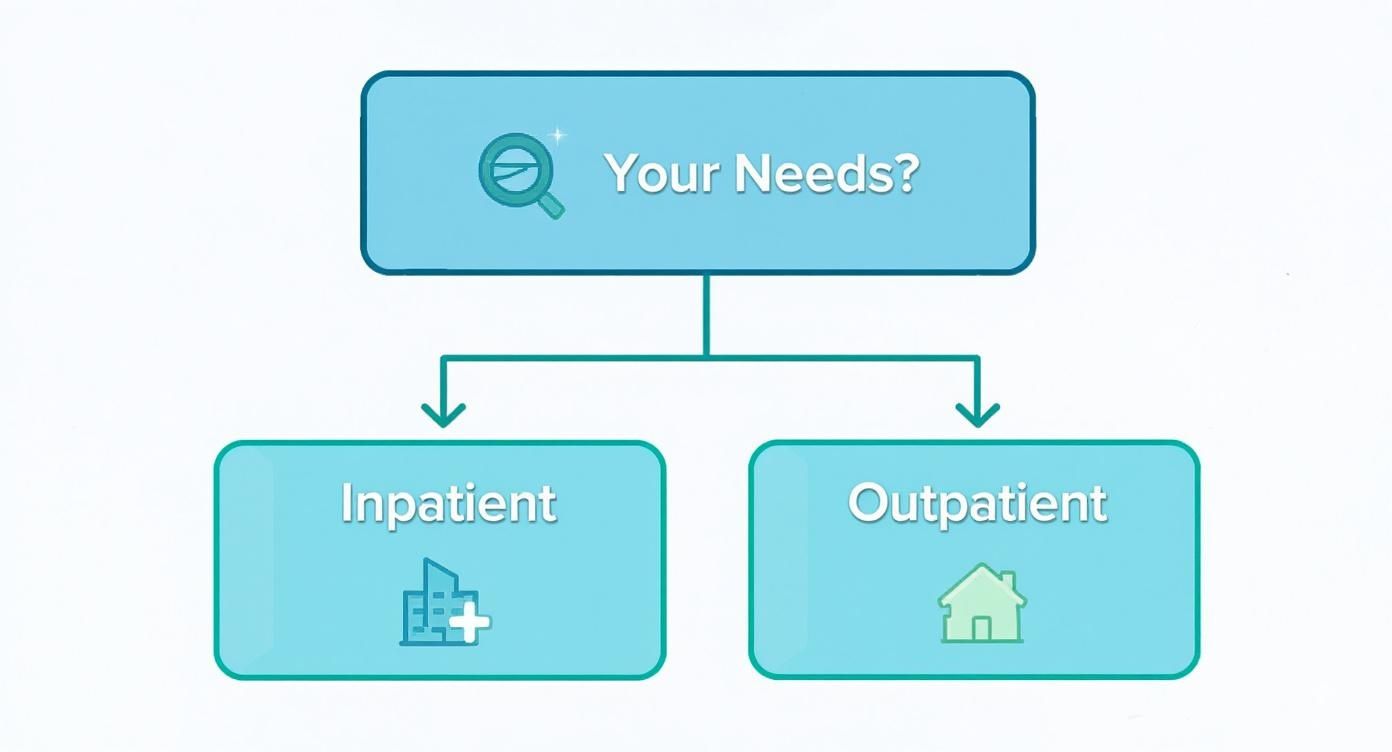
As the flowchart shows, the right detox setting is always determined by a careful evaluation of your personal health and risk factors.
Emergency Symptoms That Demand Immediate Action
While a medical team works hard to prevent complications, it’s crucial for everyone to recognize the signs of a true medical emergency. If you or a loved one experiences any of the following during withdrawal, it requires immediate, urgent intervention.
Never, ever ignore these symptoms. They represent a serious escalation in withdrawal severity and can absolutely be life-threatening without prompt medical treatment.
Key emergency signs to watch for include:
- Severe Tremors: This isn’t just mild shaking. We’re talking about uncontrollable shaking of the hands or the entire body.
- Hallucinations: Seeing, hearing, or feeling things that simply are not there.
- Extreme Confusion or Agitation: Severe disorientation, paranoia, or unusually aggressive behavior.
- Seizures: Any seizure, no matter how brief, is a medical emergency. Period.
These symptoms are a signal that the brain and nervous system are in a state of severe crisis. In a professional facility, the medical team can respond in seconds. This is precisely why trying to detox from heavy alcohol use at home without supervision is so incredibly risky.
If you are in Massachusetts and need help finding the right level of care, please don’t wait.
Call our team 24/7 at (888) 388-8660 for immediate, confidential support.
Life After Detox: Building Your Long-Term Recovery
Getting through a medical detox is a massive accomplishment. Seriously, it’s the first huge step toward taking your life back. Detox breaks the physical grip of alcohol dependence, giving your body and mind a desperately needed chance to start healing. But let’s be clear: this is the foundation, not the finished house.
Real, lasting recovery is built brick by brick in the weeks and months that follow. This is where you address the why behind the drinking. Detox handles the physical crisis, but a solid, long-term recovery plan is what gives you the tools to build a life where alcohol no longer calls the shots.
Continuing Your Care After Detox
Think of it this way: detox is like the emergency room. It stabilizes you during a crisis. The next logical step isn’t to just go home; it’s to move to a specialized unit for continued treatment and healing. In the world of recovery, this means transitioning directly into a structured program designed to help you understand the roots of your addiction and develop healthier ways to cope with life.
There are a few different levels of care, and the right one is completely dependent on your personal situation:
- Residential Treatment: This is the most intensive option, where you live at a facility for 30, 60, or 90 days. It provides a completely immersive, supportive therapeutic environment, free from outside triggers.
- Partial Hospitalization Program (PHP): Often called “day treatment,” PHP is a step down but still very structured. You’ll attend treatment for several hours a day, five days a week, and then return home in the evenings.
- Intensive Outpatient Program (IOP): An IOP offers more flexibility. You’ll have fewer hours of treatment per week, making it easier to manage work or family responsibilities while still getting robust, consistent support.
The Role of Therapy and Support Groups
Therapy is the absolute cornerstone of any effective, long-term recovery plan. It’s a safe space to dig into the underlying issues that fueled your drinking—things like trauma, anxiety, or depression that you might not have even connected to your alcohol use. Both individual and group therapy sessions are incredibly valuable for building self-awareness, learning to communicate better, and developing real-world strategies for managing triggers. You can also learn how to prevent a relapse after rehab in our dedicated guide.
Support groups are another non-negotiable piece of the puzzle. There’s something uniquely powerful about connecting with other people who just get it. That sense of community and mutual accountability is hard to find anywhere else. Here in Massachusetts, you have plenty of options, from an Alcoholics Anonymous (AA) meeting in Springfield to a SMART Recovery group on the North Shore.
Medication-Assisted Treatment (MAT) for Alcohol Use Disorder
For many people, Medication-Assisted Treatment (MAT) can be a total game-changer for preventing relapse. MAT isn’t a “cure,” but it uses specific, FDA-approved medications alongside behavioral therapy to give you a much stronger foothold in early recovery. These medications work by reducing cravings or blocking the rewarding effects of alcohol, which can feel like a superpower when you’re just starting out.
Some of the most common MAT medications for alcohol include:
- Naltrexone: This medication works by blocking the euphoric “buzz” you get from drinking. If you do slip up and have a drink, you won’t feel that reward, which helps break the powerful psychological cycle of addiction.
- Acamprosate: Best for people who have already stopped drinking, Acamprosate helps calm the brain and reduce the miserable post-acute withdrawal symptoms like anxiety, restlessness, and insomnia.
- Disulfiram: This medication acts as a strong deterrent. If you drink alcohol while taking it, you’ll have a very unpleasant physical reaction, including nausea and flushing.
It’s so important to remember that relapse can be part of the recovery process—it’s not a moral failing. Statistics show that relapse rates for alcohol use disorder are between 40-60%, which is right in line with other chronic diseases like diabetes or hypertension. This is exactly why a safe detox is just the first step on a much longer journey that requires ongoing, dedicated support.
A strong aftercare plan is your best defense against relapse. It’s not about just not drinking—it’s about building a new life where alcohol no longer has a place.
If you’ve finished detox and are trying to figure out what comes next for you or a loved one here in Massachusetts, our team is here to help. We can walk you through the different levels of care and help you put together a recovery plan that’s built to last. Call us today at (888) 388-8660 for a confidential chat.
Frequently Asked Questions About Alcohol Detox
Deciding to get help for alcohol dependence is a huge step, and it’s completely normal to have a ton of questions swirling around. Feeling anxious or unsure is part of the process. Getting clear, straight answers can make all the difference, giving you the confidence to move forward. Let’s tackle some of the most common questions we hear.
How long does alcohol detox usually take?
The acute phase of alcohol withdrawal typically lasts for 5 to 7 days. However, the exact timeline depends on factors like the duration and intensity of alcohol use, age, and overall health. Some milder symptoms can persist for weeks, which is why ongoing support after detox is so important.
Can I just detox at home in Massachusetts?
Detoxing from alcohol at home without medical supervision is extremely dangerous and is never recommended. The only safe at-home option is a formal outpatient or “ambulatory” detox program, which must be prescribed by a doctor after a thorough assessment determines you are at a very low risk for severe withdrawal. This also requires a strong, 24/7 support system at home. For most individuals, an inpatient facility is the safest choice.
What really happens if I stop drinking “cold turkey”?
Stopping abruptly after prolonged, heavy alcohol use can throw your central nervous system into a state of shock. This hyperactivity can lead to severe withdrawal symptoms, including high blood pressure, hallucinations, and life-threatening seizures. A medically supervised detox uses medication to calm the nervous system, preventing these dangerous complications.
Will my insurance cover alcohol detox?
Yes, in Massachusetts, most health insurance plans are required by law to cover substance use disorder treatment, including medical detox. The extent of coverage can vary by plan. The best way to understand your benefits is to call your insurance provider or allow the admissions team at a treatment facility to verify your coverage for you.
At Paramount Recovery Centers, we know that asking for help is the hardest part. Our compassionate team is here 24/7 to answer your questions, check your insurance, and help you find the safest and best path forward. Don’t wait to start your journey to a healthier life. Call us at (888) 388-8660 or learn more at https://paramountrecoverycenters.com.


