



Watching a family member struggle with alcoholism is a painful and confusing experience, leaving you feeling helpless, angry, and scared. You want to help, but where do you even begin? This guide provides a clear, compassionate roadmap for families in Massachusetts and beyond, starting with four key takeaways to help you create an environment that encourages recovery, not enables addiction.
Key Takeaways
- Educate Yourself First: Understand that Alcohol Use Disorder (AUD) is a disease, not a moral failing. This knowledge is the foundation for compassionate, effective support.
- Plan a Caring Conversation: Approach your loved one with empathy, using "I" statements to express your concern without blame. The goal is connection, not confrontation.
- Set Healthy Boundaries: Learn the difference between supporting and enabling. Setting firm boundaries is crucial for both your well-being and their motivation to change.
- Seek Support for Yourself: You cannot pour from an empty cup. Resources like Al-Anon meetings, especially those available in Massachusetts, are vital for your own mental health.
Your First Steps in Supporting a Loved One with Alcoholism
The moment you realize a family member truly needs help is often the hardest. It's easy to feel completely overwhelmed, but giving your approach some structure will bring clarity and a sense of purpose. You can’t force anyone into recovery, but you absolutely can create an environment that makes them want to seek help.
This process starts with you—by changing your own behaviors and truly understanding what Alcohol Use Disorder (AUD) is.

Four Key Takeaways for Your Initial Approach
As you begin this journey, focus on these four essential actions. They build the foundation for everything that comes next.
-
Learn About Alcohol Use Disorder (AUD): Your first move is to understand that AUD is a chronic disease, not a moral failing or a lack of willpower. Getting a handle on the science of addiction helps you drop the blame and approach the situation with real empathy. The brain's chemistry literally changes, creating a compulsion that is nearly impossible to fight alone.
-
Plan a Private, Caring Conversation: Don't just wing it. Think through what you want to say beforehand. The key is to use "I" statements to express your own feelings—for example, "I'm worried about you when I see you drinking so much." This avoids accusatory language that will immediately put them on the defensive. Make sure you pick a time when they are sober, calm, and you have complete privacy.
-
Define and Commit to Healthy Boundaries: Supporting someone is not the same as enabling them. This means you have to stop making excuses for their behavior or cleaning up their messes. Shielding them from the consequences only allows the addiction to continue. Setting firm, clear boundaries is absolutely critical—not just for their recovery, but for your own sanity.
-
Prioritize Your Own Well-being: You simply cannot pour from an empty cup. The emotional toll of loving someone with an addiction is immense. It's not selfish to seek support for yourself; it's a necessity. Look into resources like Al-Anon meetings, which have groups all over Massachusetts. Taking care of your own mental health gives you the strength to be there for them.
Remember, you can offer endless support and create opportunities for change, but you are not responsible for your loved one's choices. Your role is to be a source of encouragement, not a manager of their recovery.
If you need guidance on how to have these conversations or what treatment options look like, our team is here 24/7. Call Paramount Recovery Centers at (888) 388-8660 for a completely confidential chat. We can help you figure out the next best step.
Recognizing the Signs and Preparing for a Difficult Conversation
Before you can truly help a family member struggling with alcohol, you have to be sure about what you're seeing. Alcohol Use Disorder (AUD) is an expert at hiding in plain sight, often wrapped in layers of denial and secrecy that make it incredibly hard to pin down. The signs are rarely as obvious as the stereotype of someone who's always visibly drunk; they're usually far more subtle.
Figuring out the patterns is the first real step. Getting ready to talk about it is the second. This isn't about setting up a dramatic, TV-style confrontation. It's about carefully creating a moment of calm and safety where you can express your love and concern in a way they can actually hear.
Identifying the Subtle Signs of Alcoholism
Alcoholism doesn't happen overnight. It creeps in, and the behavioral and physical signs can be easy to explain away on their own. But when you start seeing a handful of them together, it’s a powerful signal that a serious problem is taking root. The key is to look for patterns, not just one-off incidents.
Here are some common behavioral shifts you might be noticing:
- Increasing secrecy: This can look like finding hidden bottles, catching them in lies about how much they’ve had, or getting vague answers about where they’ve been.
- Neglecting responsibilities: Maybe they're starting to drop the ball at work, forgetting to pick up the kids, or the house is falling into disarray. These are signs that drinking is taking priority.
- Growing defensiveness: When you gently bring up their drinking, do they lash out with anger or flip the script and blame you? This defensiveness is almost always a shield for deep-seated shame and fear.
- Loss of interest in hobbies: Activities that used to bring them joy—like a sports league, a book club, or weekend projects—often get pushed aside as drinking consumes more of their time and mental energy.
When you see these shifts, it’s a red flag that their relationship with alcohol is becoming unmanageable.
Planning for an Empathetic Conversation
Once you've connected the dots, the next step is planning how to talk to them. The goal here is connection, not confrontation. Your entire approach will decide whether the door to communication opens just a crack or slams shut entirely.
Key Takeaway: The words you choose matter more than you can imagine. To avoid triggering that defensive wall, frame your concerns from your perspective. Using "I" statements makes it about your feelings, and they can't argue with how you feel.
For example, instead of an accusatory, "You're always choosing drinking over the family," try reframing it like this: "I feel worried and sad when you miss important family events. I really miss spending that time with you."
That simple tweak changes everything. It's no longer an attack; it's an expression of your hurt and concern. It invites them to hear your pain instead of just defending their actions.
This is a far more common struggle than most families realize. An estimated 400 million people worldwide live with AUD. Here in the United States, about 10.5% of children are growing up in a home where at least one parent has an alcohol use disorder. These aren't just numbers; they represent millions of families navigating this exact challenge, which is why approaching it with compassion is so vital. You can find more detailed information on the global impact from the World Health Organization.
Creating the Right Environment for "The Talk"
When and where you have this conversation is just as critical as what you say. Never, ever try to talk about this when your loved one is intoxicated, angry, or exhausted. You have to wait for a pocket of calm and sobriety.
- Choose a private, neutral space. This is not a conversation for a family dinner or a restaurant. A quiet living room when no one else is home, or even a peaceful walk outside, creates the right atmosphere.
- Be prepared for denial. Denial isn't just them being stubborn; it's a core symptom of addiction. They may genuinely believe they don't have a problem. Your job is to stay calm and gently restate your concerns without letting it escalate into a fight.
- Have resources ready. If you see even a tiny spark of willingness to get help, you need to be ready. Having specific information on hand—like mentioning Paramount Recovery Centers here in Massachusetts—can make the abstract idea of "getting help" feel like a concrete, achievable step.
If a one-on-one talk feels like too much, or if you've tried before and it didn't work, you might need a more structured plan. It could be time to learn more about how to stage an intervention with professional support, which can be a powerful way to break through the denial.
Ultimately, your goal is to plant a seed. They might not agree to treatment right away, but you've opened a door. You've shown them you see what's happening and that you'll be there for them when they're finally ready. For a confidential chat about how to get started, you can call our team anytime at (888) 388-8660.
Navigating Alcohol Treatment Options in Massachusetts
When your loved one finally agrees to get help, the sense of relief can be overwhelming. But it’s often followed by a brand new, urgent question: what now? Figuring out the world of alcohol treatment is the key to turning that fragile "yes" into a real plan for recovery.
Fortunately, here in Massachusetts, we have access to a full range of care designed to meet people wherever they are on their journey. It's not about a single solution but a series of steps, each with a specific purpose—from getting through the dangerous first days of withdrawal to building the skills for a sober life.
Understanding the Levels of Care
Choosing the right starting point is everything. Asking someone with a severe, long-term alcohol dependence to jump straight into a weekly therapy session is like trying to build a house on a shaky foundation. It just won’t work. The levels of care are designed to flow from one to the next, starting with the most intensive support and gradually stepping down as your loved one gets stronger.
Here are the main levels you'll come across:
- Detoxification (Detox): This is the first, non-negotiable step for anyone who is physically dependent on alcohol. Medically supervised detox is critical because alcohol withdrawal can be life-threatening, sometimes causing seizures or a dangerous condition called delirium tremens. It’s done in a safe, clinical setting where medical professionals can manage withdrawal symptoms and keep your loved one physically safe.
- Inpatient or Residential Treatment: After detox, many people transition to an inpatient program. This means living at a treatment facility for a set period, usually 30 to 90 days. It offers a chance to focus completely on recovery, free from the triggers and distractions of everyday life.
- Day Treatment (PHP): A Partial Hospitalization Program (PHP), often called day treatment, is the most intensive form of outpatient care. Your family member attends structured therapy for several hours a day, five to seven days a week, but goes home or to a sober living house at night. It's a great choice for those who need a high level of support but have a stable living situation.
- Intensive Outpatient Program (IOP): This is the next step down from PHP. An IOP usually involves therapy sessions for a few hours at a time, three to five days per week. This model allows people to begin easing back into their lives—like going to work or school—while still having a strong clinical safety net.
This table breaks down the different levels of care available in Massachusetts to help you figure out what might be the best fit for your family member.
Levels of Alcohol Addiction Care in Massachusetts
| Level of Care | What It Involves | Ideal For |
|---|---|---|
| Detoxification | 24/7 medical supervision to manage withdrawal symptoms safely. Usually lasts 5-7 days. | Anyone with physical dependence on alcohol who would experience withdrawal when they stop drinking. |
| Inpatient/Residential | Living at a facility for 30-90 days with round-the-clock support, therapy, and structure. | Individuals with severe addiction, unstable living environments, or co-occurring mental health issues needing intensive care. |
| Partial Hospitalization (PHP) | 5-7 days a week of intensive therapy and programming for 6-8 hours per day while living at home. | People who have completed detox/inpatient care or have a strong, supportive home environment but still need significant structure. |
| Intensive Outpatient (IOP) | 3-5 days a week of group and individual therapy for about 3 hours per session. | Those transitioning from a higher level of care or who need more support than traditional therapy while managing work or family life. |
Each level plays a vital role in building a foundation for lasting recovery. The goal is to provide the right amount of support at the right time.
Finding the Right Fit in Massachusetts
Here in Massachusetts, facilities like Paramount Recovery Centers in Southborough provide this entire continuum of care, which makes for a smooth transition from one level to the next. As a BSAS-licensed facility, they use evidence-based approaches that are proven to work for Alcohol Use Disorder. A cornerstone of this is Cognitive Behavioral Therapy (CBT), which helps people recognize and change the deep-seated thought patterns and behaviors that drive their addiction.
It's also incredibly common for someone struggling with alcohol to also be dealing with a mental health condition like anxiety or depression. When these two issues exist together, it's called a dual diagnosis, and it requires a specialized treatment plan that addresses both problems at the same time. You can't treat one without treating the other and expect recovery to last.
This simple decision tree can help guide you through that very first conversation about getting help, especially if you're met with denial.
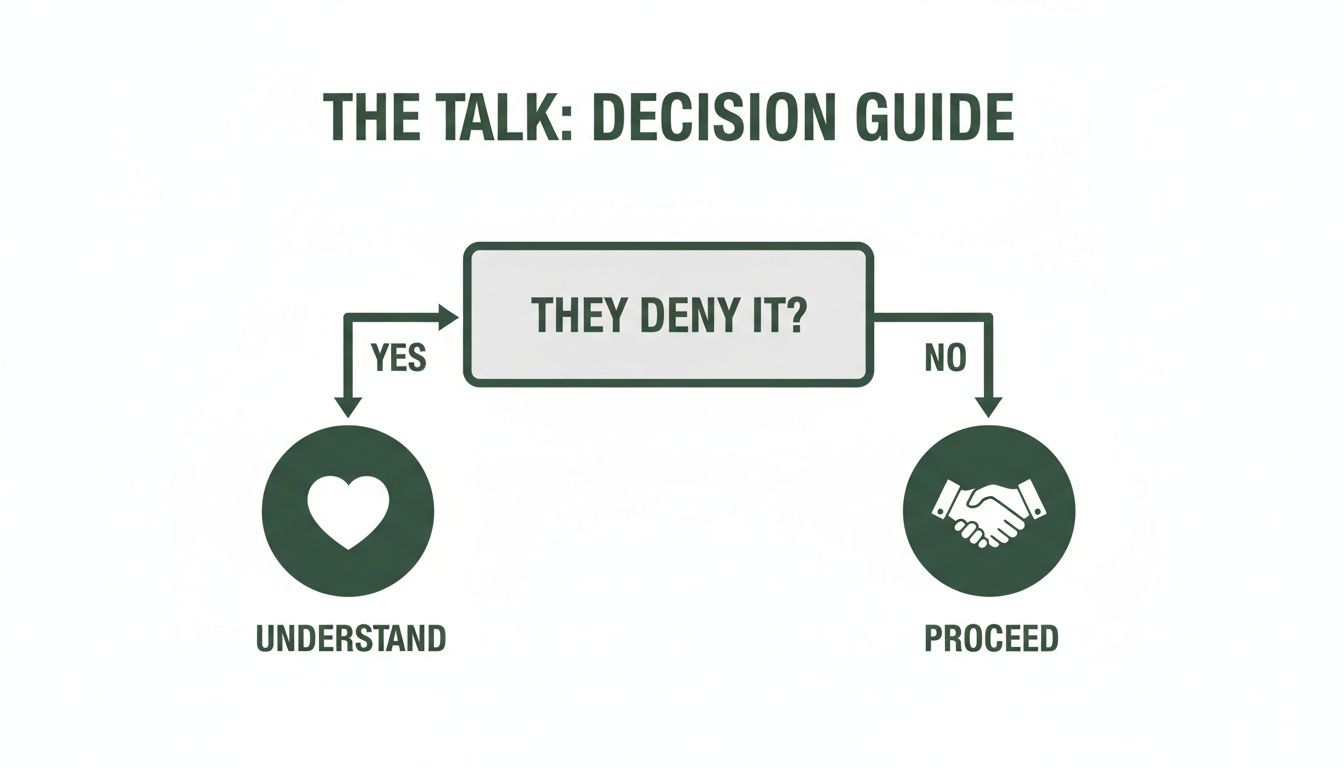
Whether your loved one accepts or denies that there's a problem, the path forward always starts with understanding and having a plan.
If you’ve just discovered the extent of your family member’s struggle, please know you are not alone. More than half of all adults in the U.S. have a family history of problem drinking. In 2024, an estimated 27.9 million Americans had an Alcohol Use Disorder, but the heartbreaking reality is that fewer than 8% of them received any professional treatment. By taking this step, you are helping to close a massive gap.
Taking the First Real Step
Knowing the options is one thing, but actually getting started is another. It all begins with a simple, confidential phone call.
Making that first call can feel like the hardest part, but it’s a step you don’t have to take alone. The job of an admissions coordinator is to walk you through everything with compassion and clarity, answering every single question without judgment.
Here’s what you can expect when you call (888) 388-8660:
- A Confidential Chat: You'll speak with a trained professional who will ask you about what's going on—your family member's drinking patterns, their history, and any mental health symptoms you've noticed. This helps them get a clear picture and suggest the right level of care.
- Insurance Check: The team will take your loved one's insurance information to verify their benefits. They’ll explain exactly what’s covered, what any out-of-pocket costs might be, and make sure there are no financial surprises down the road. They accept most major insurance plans.
- Scheduling Admission: If you and your loved one decide to move forward, the coordinator will set up an intake appointment. They'll tell you what to bring, what to expect on the first day, and answer any last-minute questions.
Trying to navigate the path to recovery can feel like a maze, but specialized centers are built to guide you through it. To see what options are available near you, you can learn more about how to find effective alcohol treatment programs in your area in our detailed guide.
Setting Healthy Boundaries and Avoiding Codependency
When you’re trying to figure out how to help an alcoholic family member, your first instinct is to jump in and fix things for them. It comes from a place of love, but supporting someone you care about should never come at the cost of your own mental and emotional health. This is where learning to set boundaries becomes non-negotiable. It's the line in the sand between helping and accidentally making things worse for everyone.
This is often the hardest part of the journey, but it's also the most critical. You have to learn to step away from behaviors that enable the addiction and start recognizing the codependent patterns that keep the entire family trapped in a cycle of crisis and chaos.

Understanding Enabling and Codependency
Let’s be clear: enabling isn't about being cruel or unloving. It's about unintentionally shielding your loved one from the very real consequences of their drinking. It’s a reaction driven by love and fear, but it's the exact thing that allows the addiction to keep growing. Codependency runs even deeper—it's a pattern where your own self-worth and emotional stability get tangled up in their addiction.
Here are some real-world examples of what this looks like in practice:
- Making excuses for them: Calling their boss to say they have the flu when they're actually hungover.
- Covering their financial mess: Paying their rent or car payment because they spent their money on alcohol.
- Minimizing the problem: Telling others (and yourself) that their drinking "isn't that bad" just to avoid conflict or shame.
- Absorbing the consequences: Taking on all the household chores and childcare because they are physically or emotionally unable to function.
These actions might feel helpful in the moment, but they strip away any motivation for your loved one to seek genuine help.
Strategies for Setting Firm But Compassionate Boundaries
A boundary isn't a punishment. It’s simply a clear statement about what you will and will not do. The goal is to protect your own well-being while giving your loved one the dignity to feel the real-world impact of their choices. Believe it or not, this is often the catalyst for real change.
Start small. Identify just one or two boundaries you know you can realistically enforce. It's far better to start small and stay consistent than to set a dozen rules you can't possibly maintain.
Key Takeaway: Your boundaries are for you, not to control them. They define what you will do to keep yourself safe and sane. Communicate them calmly, clearly, and without anger.
Here are a few examples of boundary-setting scripts you can adapt for your own situation:
- "I love you, and for that reason, I can't give you money anymore. But I am happy to help you find a treatment center."
- "You are always welcome in my home, but if you have been drinking, you cannot stay here. We can talk again when you are sober."
- "I will no longer lie to cover for you. If you miss a family event or work because of your drinking, I will be honest about the reason."
Saying "no" will feel incredibly difficult at first. But it is a powerful act of love—for both yourself and your family member.
The Importance of Self-Care and Support
The emotional toll of this journey is immense. You're going to feel guilt, anger, and sheer exhaustion. Prioritizing your own self-care isn't a luxury; it’s a requirement. You cannot be a source of stable support if your own foundation is crumbling.
Many families in Massachusetts find tremendous relief and a fresh perspective by attending Al-Anon meetings. These groups are specifically for the friends and family of people struggling with alcoholism. They provide a safe space to share experiences and learn from others who truly get what you're going through. You'll learn that you didn't cause the addiction, you can't control it, and you can't cure it.
For a deeper dive into these relational dynamics, you can read our guide on healing from codependency, which offers more strategies for rebuilding healthier connections.
Remember, focusing on your own well-being is one of the most effective things you can do. When your loved one sees that you are no longer participating in the chaos, it can create a powerful incentive for them to reconsider their own choices. If you need help finding resources for your family or loved one, call our team at (888) 388-8660.
The Family’s Role in Long-Term Recovery and Relapse Prevention
Getting your loved one into treatment is a massive achievement, but it's important to see it as the starting line, not the finish. True, long-term recovery is a day-by-day process. The family's role has to change here—from putting out fires and managing crises to building a stable, supportive foundation for a new way of life.
Your home environment and your own actions become one of the most powerful tools in preventing relapse. This phase is all about learning how to live and relate to each other again, supporting sobriety without making it the only thing your family talks about. It's about rebuilding what was broken, fostering real communication, and learning to meet the inevitable bumps in the road with compassion instead of fear.
Understanding and Responding to Relapse
First things first: relapse is not a moral failure. It's not a failure for your loved one, and it's certainly not a failure for you. The National Institute on Drug Abuse reports relapse rates for substance use disorders are between 40-60%, which is right in line with other chronic health conditions like asthma or hypertension.
Thinking of it as a setback, not a total catastrophe, is absolutely critical.
When a relapse happens, it's natural for panic, anger, and blame to rush in. But how you respond in that moment can either push your loved one further into the dark or help guide them back to the path of recovery.
"I know how hard this must be for you. I'm right here to help you get back on track. This doesn't erase all the progress you've made. We can get you reconnected with your recovery plan."
A statement like this offers support without judgment. The goal is simple: help them see this as a detour, not a dead end. Encourage them to immediately reconnect with their therapist, sponsor, or support group.
Creating a Sober-Friendly Home Environment
Your home needs to become a genuine safe space—a place that actively supports their recovery. This usually means making some very conscious changes to old habits and even the physical layout of your home. Small adjustments can make a world of difference by removing daily triggers.
- Remove All Alcohol: This is the most obvious and important step. Get it out of the house. This isn't about punishment; it's a clear, practical sign of love and support that removes a massive temptation.
- Rethink Social Gatherings: It might be time to re-evaluate how your family socializes. Instead of parties or dinners centered on drinking, try suggesting new activities. Think game nights, hiking trips, or cooking a new recipe together.
- Support Healthy Routines: Encourage and participate in their new, healthy habits. Join them for a morning walk. Respect their schedule for therapy or meetings. Plan healthy meals you can all enjoy.
These actions send a powerful message: the whole family is committed to this new, healthier lifestyle.
Participating in Family Therapy and Support Systems
Addiction doesn't just affect one person; it sends shockwaves through the entire family system. Recovery should be a family affair, too. This is where family therapy becomes one of the most effective tools for healing everyone involved.
Here in Massachusetts, programs like Paramount Recovery Centers make family therapy a core part of treatment. It's a space where everyone can learn better ways to communicate, start the long process of re-establishing trust, and heal from the pain of the past. Your participation shows your loved one they aren't in this alone and gives you the tools you need to navigate the road ahead.
It's a harsh truth that many people struggling with addiction deny there's a problem, even when facing blackouts or serious health scares. In 2023, an estimated 28.9 million people in the US had Alcohol Use Disorder, yet only about 8% ever received treatment. When families get guidance on how to communicate more effectively, they can dramatically improve their loved one's willingness to accept help. For a deeper look at these numbers, you can discover more insights about drug and alcohol use on drugabusestatistics.org.
Celebrating Milestones and Rebuilding Trust
Recovery isn't just about avoiding the negative; it's about building the positive. It's a journey filled with small, hard-won victories that absolutely deserve to be celebrated.
Acknowledge sober anniversaries, big and small. Celebrate progress they're making in therapy or a new personal goal they've achieved. These moments of recognition reinforce all their hard work and show them that you see them—not just their addiction.
Rebuilding trust is a different beast. It's a slow, quiet process built on consistency over time. It requires immense patience from everyone. For you, it means learning to believe in their recovery while still holding onto your healthy boundaries. For them, it means showing their commitment through their actions, day after day.
Frequently Asked Questions
What if my family member refuses to admit they have a problem?
Denial is one of the most powerful symptoms of addiction. Instead of arguing, focus on what you can control. Continue to hold firm, loving boundaries and stop enabling their behavior. Shielding them from the consequences of their drinking only allows the denial to continue. Often, facing those consequences is what finally breaks through. A professional interventionist can also help facilitate a more productive conversation.
Can I force my family member into rehab in Massachusetts?
In Massachusetts, a legal process called Section 35 allows for involuntary commitment for addiction treatment if a court finds the person poses an immediate danger to themselves or others. However, this is a true last resort. Recovery is far more successful when the person is a willing participant. It’s always best to start with compassionate conversation and professional guidance before considering this option.
How do we handle the financial cost of treatment?
The fear of cost should not stop you from seeking help. Most major health insurance plans in Massachusetts are required by law to cover treatment for substance use disorder. The first step is a confidential insurance benefits check. Our admissions team at Paramount Recovery Centers can do this for you over the phone, explaining exactly what's covered and clarifying any potential out-of-pocket costs.
What’s the best way to support my loved one after they return home from treatment?
Create a united front of support. Key actions include: participating in family therapy to improve communication, making your home a sober-friendly environment by removing all alcohol, encouraging them to stick to their aftercare plan (like attending AA meetings), and continuing your own self-care through resources like Al-Anon. Your well-being is a critical part of a healthy family recovery.
The journey to recovery is tough, but you and your family don't have to walk it alone. The compassionate, expert team at Paramount Recovery Centers is here to guide you every step of the way, from that first confidential call to long-term aftercare support. Call us today at (888) 388-8660 to learn how we can help.


