


Watching someone you love struggle with addiction can be a heartbreaking and isolating experience. An intervention is a structured, powerful way to offer a path to healing. It's a carefully planned process where family and friends, often with professional guidance, present a unified, loving front to encourage the person to accept treatment. This isn't a confrontation; it's a conversation rooted in deep care and concern.
Key Takeaways
- Preparation is Crucial: A successful intervention is not spontaneous. It requires a well-chosen team, carefully written impact letters, and a pre-arranged treatment plan at a facility like those available in Massachusetts.
- A Professional Can Be Essential: For complex situations involving mental health issues, a history of violence, or manipulation, a certified interventionist is critical for safety and a higher success rate.
- Boundaries are an Act of Love: The most difficult but vital part of an intervention is setting and enforcing consequences if your loved one refuses help. This isn't punishment; it's ending the cycle of enabling.
- The Goal is Immediate Action: If your loved one says "yes," the plan should be to get them to a treatment center immediately. Any delay provides an opportunity for them to change their mind.
Understanding the Power of a Guided Intervention
An intervention is a meeting that's deliberately planned to interrupt someone's destructive cycle of substance use or other harmful behaviors. Forget the dramatic scenes you've seen on TV. A real-life intervention is a calm, respectful, and structured conversation. The main goal is to help the person see the true severity of their situation and how it's impacting everyone who cares about them, with the ultimate hope they'll accept a pre-arranged treatment plan.
For families here in Massachusetts, the thought of staging an intervention can feel completely overwhelming. But the key to making it work is preparation. This means assembling a compassionate team, writing thoughtful letters that come from the heart, and setting firm, healthy boundaries. When you do it right, this process can create a powerful moment of clarity. It sends a clear message: "We will no longer enable your behavior, but we will fully and unconditionally support your recovery."
This approach has a surprisingly high success rate when it comes to getting an immediate "yes." For example, an analysis of the A&E show Intervention found that an incredible 98.7% of subjects agreed to enter treatment right after the intervention took place. This just goes to show that a well-executed plan can be the crucial turning point. You can dig into more data on intervention success rates from Business Insider.
"An intervention is not about forcing change; it's about creating an opportunity for it. You are raising the bottom for your loved one, offering a lifeline before they fall any further."
At its core, this process is an act of profound love. It takes courage, unity, and a clear plan. If you're considering this step for someone you care about in Massachusetts and need some guidance, our team is here to help, 24/7. Call us at (888) 388-8660 for a completely confidential consultation.
Building Your Compassionate Intervention Team
An intervention isn't a solo mission. Its power comes from a united front of people who genuinely care, and the foundation of a successful one is the team you build. This group is responsible for setting the tone, delivering the message with love, and creating a safe space for your loved one to finally accept help.
Putting this team together takes real thought. You need to choose people who can bring a sense of calm, strength, and unwavering love to what will be a deeply emotional situation. This isn't about strength in numbers; a small, focused group of four to six people is almost always more effective than a large, overwhelming crowd.
Selecting the Right Participants
The core of your intervention team should be the people who have a meaningful and positive relationship with your loved one. Ask yourself: who do they respect, love, and actually listen to?
Ideal team members often include:
- Parents and Siblings: The immediate family who has seen the addiction's impact up close.
- A Spouse or Partner: The person sharing their daily life and feeling the most direct effects.
- Close, Long-term Friends: These are the friends who remember life before addiction and can speak to the person they miss.
- A Respected Elder or Mentor: Think of a grandparent, aunt, uncle, or family friend who holds a position of authority and love in their life.
Every single person must be committed to one goal—getting your loved one into treatment—and agree to stick to the plan. Unity is everything.
Knowing Who to Leave Out
Just as important as who you invite is who you decide not to. An intervention is a delicate process, and the wrong energy can derail it in an instant. Protecting the integrity of the meeting is paramount.
You should avoid including:
- Anyone with unresolved anger: Someone likely to blame or shame your loved one will only make them defensive.
- People struggling with their own substance use: Their presence can completely undermine the message's credibility.
- Enablers who won't commit to boundaries: If you know someone will back down or make excuses, they can sabotage the entire effort.
- Highly emotional or unpredictable individuals: A well-meaning relative who can't control their emotions can quickly escalate tension.
For example, if an uncle is known for his fiery temper—even if he loves the person deeply—it’s far wiser to have him write a letter that someone else can read. His support can still be felt without risking a confrontation that shuts the whole conversation down.
The Role of a Professional Interventionist
While a family-led intervention can work, some situations make hiring a professional non-negotiable. A certified interventionist is a neutral, experienced guide who knows how to manage the complex dynamics that will unfold.
A professional interventionist does more than just lead a meeting. They provide clinical guidance, de-escalate conflict, and handle objections with practiced skill, which significantly increases the odds of hearing a "yes" to treatment.
Hiring a professional is crucial if your loved one has a history of:
- Co-occurring Mental Health Disorders: Conditions like severe depression, bipolar disorder, or schizophrenia demand a clinical approach.
- Violence or Aggression: A professional is trained to keep everyone in the room safe.
- Suicidal Thoughts or Attempts: This is a clinical crisis that requires an expert to manage.
- Past Manipulation: If the person is skilled at turning family members against each other, a neutral third party is essential.
For families in Massachusetts, finding a local, certified interventionist is a critical step. These professionals know the local resources, including top-tier facilities like Paramount Recovery Centers. They can help you navigate the Massachusetts healthcare system and ensure a smooth handoff to a pre-arranged treatment program.
If you're not sure where to begin, our team can connect you with trusted intervention specialists in your community. Just call us at (888) 388-8660 for confidential guidance. Learning more about how to support someone with addiction can also give your team a stronger, more empathetic foundation before you all sit down together.
Crafting Your Plan and Preparing for the Day
Once you've brought your team together, it’s time to dig into the details. People often think an intervention hinges on one big, dramatic moment, but that's not the case. The real power comes from the quiet, meticulous planning that happens beforehand. This is where you lay the groundwork for a calm, focused, and genuinely loving conversation.
Success is all in the prep work. Every logistical and emotional detail you nail down now drastically reduces the chance of chaos later. It also makes it far more likely that your loved one will feel supported enough to finally say "yes" to getting help.
Choosing the Right Time and Place
The setting of an intervention can make or break it. You're aiming for an environment that feels safe, completely private, and free of any interruptions. It needs to be a neutral space—somewhere your loved one won't feel cornered, but also won't be able to just walk away and retreat into their comfort zone.
Think about a quiet living room, the home of a trusted friend, or even a private room offered by a professional interventionist. The goal is a place that's familiar enough to feel calming but neutral enough to keep the conversation from getting sidetracked.
Timing is just as crucial. You have to schedule the meeting for a time when your loved one is most likely to be sober and clear-headed. Early mornings are often your best bet. The effects of whatever they used the night before may have worn off, and the stress of the day hasn't kicked in yet. Absolutely avoid planning it during a holiday, right after a big fight, or on a day that’s already packed with other things to do.
The Heart of the Matter: Writing Your Letter
The real core of the intervention is the letters read by each person. These aren't scripts for an argument. They are carefully thought-out expressions of love, deep concern, and unshakable hope. A well-written letter can cut through denial in a way that a simple, off-the-cuff conversation rarely can.
To make sure your message is actually heard, each letter should follow a specific flow:
- Start with Love. Always begin by telling the person how much you love and care about them. Share a positive memory or a quality you've always admired. This immediately sets a tone of care, not accusation.
- State Facts with "I" Statements. This part is about specifics. Describe fact-based incidents related to their substance use and, most importantly, how those incidents impacted you. For example, instead of saying, "You were a mess at the family dinner," try, "I felt scared and embarrassed when you started slurring your words at the family dinner." This isn't about placing blame; it's about sharing your personal experience.
- Establish a Clear Boundary. This is often the hardest part, but it's non-negotiable. You must state what you will no longer do if they refuse help. This isn't a threat—it's a boundary you're setting to stop enabling the addiction. For instance, "If you choose not to accept treatment today, I will no longer be able to give you money or let you live in my home."
- Reaffirm Your Support for Recovery. End your letter by coming back to your love and unwavering support for their recovery. Make it crystal clear that your boundary is about protecting yourself and pushing them toward healing, not about punishing them.
Remember, the point of the letter is to hold up a mirror, not a hammer. It should reflect the reality of the situation through the eyes of the people who love them most, showing them a clear way forward.
Rehearsing for a Unified Message
After the letters are written, the entire team needs to meet at least once without your loved one. This isn't about memorizing lines; it's a rehearsal to align your purpose and message. Reading the letters out loud to each other is a powerful way to catch any language that comes across as judgmental or angry.
This meeting is also where you finalize the logistics and assign roles. Who's going to start the conversation? Who will step in if things get too emotional? If you're working with a professional, they will lead this rehearsal and make sure everyone is on the same page.
A practice run helps the team present a calm, unified, and unbreakable front on the day of the intervention. For families here in Massachusetts, this is also the perfect time to confirm that the treatment center you've chosen, like Paramount Recovery Centers, is ready for an immediate admission.
By taking the time to carefully plan the setting, craft your message, and rehearse as a team, you transform what could be a volatile confrontation into a structured, loving invitation to heal. If you're feeling overwhelmed by this stage of the process, please don't hesitate to reach out. Our team is here 24/7 at (888) 388-8660 to help you prepare.
Navigating the Intervention with Empathy and Strength
After all the preparation, the day is finally here. This is the moment your planning, unity, and love come together to create a real chance for change. The key to getting through this intense conversation is to lead with empathy but stand firm in your collective strength.
The meeting itself needs structure. It’s not a free-for-all discussion; it’s a guided process designed to break through the walls of denial and open a door to help. The main goal is to keep the room calm, loving, and focused, always bringing the conversation back to the life-saving offer you have on the table.
The Opening Moments
The intervention should start quietly, led by your professional interventionist or the person you've designated as the facilitator. Whoever speaks first sets the tone for everything that follows. They need to explain to your loved one why everyone has gathered.
It's absolutely critical to state the meeting's purpose right away, but in a way that doesn't feel like an attack. A good opening might sound like: "We're all here today because we love you more than words can say, and we're terrified for you. We came together to talk about how the drinking has been affecting all of us and to offer you a way forward." This frames the entire conversation in love, not anger.
Reading the Impact Letters
This is the heart of the intervention. One by one, each person on the team will read their letter. This is no time for off-the-cuff speeches or pointing fingers. Sticking to the scripts you've all practiced is essential for keeping the emotional temperature in the room from boiling over.
As each person reads, they should try to make eye contact and speak from a genuine place. The real power here is in the cumulative effect of hearing these personal, fact-based stories. When someone lost in their addiction hears how their actions have caused fear, sadness, and pain from multiple people they love, it can be a moment of profound clarity.
The planning that gets you to this point is built on a few core pillars.
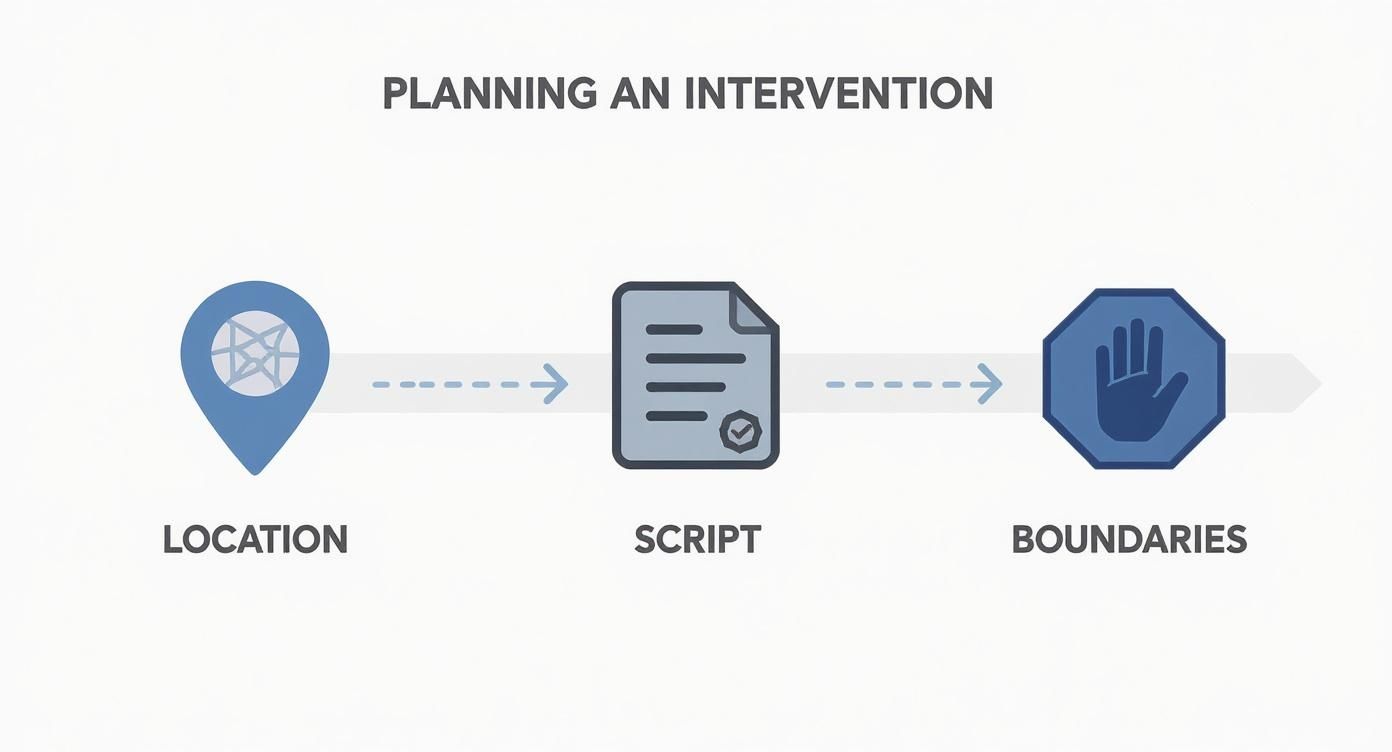
This really drives home how a secure location, carefully written scripts, and clear boundaries are what make a successful intervention possible.
Presenting the Offer of Treatment
As soon as the last letter is read, the focus has to shift immediately to the solution. This isn't a debate. It's a direct, clear offer of help that you have already arranged. The facilitator will present the treatment program you've chosen, explaining that there is a spot waiting for them right now.
For example, you could say, "We've arranged for you to go to Paramount Recovery Centers in Southborough, Massachusetts, today. They're expecting you. A car is waiting to take you there. Everything is handled." By removing all the logistical hurdles, you make it so much easier for them to just say yes.
This is also the moment to state the consequences—the boundaries everyone has agreed to enforce if they refuse treatment. This must be done calmly, without malice, as a simple statement of fact. "If you choose not to go, we need you to know that we can no longer give you money, and you won't be able to live here anymore. We will always support your recovery, but we can't keep supporting your addiction."
Managing Emotional Reactions
Your loved one’s reaction could be anything from tearful acceptance to explosive rage. Expect denial, blame-shifting, and manipulation; these are common defense mechanisms. The team's ability to stay calm and stick together is everything.
When you're met with anger or excuses, do not get pulled into an argument. The interventionist or facilitator should gently guide the conversation back to the main point: "We hear you, but today is about this offer of help. We're here because we love you and we want you to live."
This is where the principles of motivational interviewing can be a game-changer. This approach focuses on helping a person find their own motivation to change, rather than having it forced on them. If things get derailed, a skilled professional can steer the conversation back to its core purpose.
Ultimately, getting through the intervention takes patience and resolve. By presenting a united front, focusing on the solution, and managing the emotional tone of the room, you give your loved one the best possible chance to accept the help they so desperately need. For immediate guidance on this process, call us at (888) 388-8660.
Supporting Recovery After the Intervention
The moment an intervention ends, a new chapter begins. This isn’t the finish line; it’s the starting block for the entire family's recovery journey.
Whether your loved one accepts or refuses help, the path forward requires courage, consistency, and a real commitment to healing for everyone involved. The outcome of the meeting will dictate your immediate next steps, but your careful planning means you're prepared for either a "yes" or a "no." You can act with clarity and purpose, free from panic.
When They Say Yes to Treatment
Hearing a "yes" brings an incredible wave of relief, but now is the time to act. Immediately. The window of willingness can be fleeting, so your goal is to get your loved one from the intervention directly into the care of a treatment facility without any delay.
Your immediate action plan should already be in place:
- Logistics Handled: A bag should be packed and transportation ready to go. The plan is to leave for the facility right after the meeting wraps up.
- Admission Confirmed: You should have already vetted a treatment center and confirmed they have a spot available. For families in Massachusetts, centers like Paramount Recovery Centers are prepared for these immediate admissions, ensuring a seamless and supportive intake.
- A United Send-Off: The team should offer words of love and encouragement, reinforcing that this is a brave, positive step. Avoid any last-minute negotiations or second thoughts.
This swift action is critical. It prevents them from changing their mind and solidifies their commitment. It shows them that the support system is not just talk—it’s real, organized, and ready to help them succeed. You can find out more about the advantages of local drug or alcohol rehab centers in Massachusetts and how they facilitate this crucial transition.
When They Say No
If your loved one refuses help, it's going to be deeply painful. This is the moment where your resolve is truly tested. It is absolutely vital that every single person on the intervention team follows through and enforces the boundaries they stated in their letters.
This isn't about punishment. It’s the necessary, loving act of ending the cycle of enabling. By holding firm, you allow the natural consequences of their addiction to become the teacher—which is often the very thing that finally motivates someone to seek help on their own terms.
Enforcing those consequences might look like this:
- No longer providing money or paying their bills.
- Asking them to move out of the family home.
- Refusing to make excuses for them to employers or friends.
- Not bailing them out of legal or financial trouble.
This step is incredibly difficult, but it's essential for protecting the family's well-being and removing the safety nets that have allowed the addiction to thrive.
Family Healing is Non-Negotiable
Regardless of what your loved one decides, the family must begin its own recovery process. Addiction impacts everyone, and the stress, fear, and unhealthy dynamics that developed don’t just disappear overnight. Healing is a shared responsibility.
Ongoing support is crucial for building a healthier future for everyone. It’s a good idea to look into resources like:
- Family Therapy: A professional can help you navigate the complex emotions and communication patterns damaged by the addiction.
- Support Groups: Programs like Al-Anon or Nar-Anon offer a community of people who understand exactly what you're going through because they’ve been there.
- Individual Counseling: Each person in the family might need their own space to process the trauma and learn new, healthier ways of coping.
Committing to your own healing sends a powerful message. It shows your loved one that recovery is a priority for the entire family, which creates a much stronger, more supportive environment for when they are ready to come home.
For families seeking treatment and support in our area, finding the right local resources is a critical first step.
Massachusetts Treatment Options and Support
This table provides a quick guide to some of the key resources available right here in Massachusetts to help your family navigate the path to recovery.
| Resource Type | Description | Where to Find Help |
|---|---|---|
| Inpatient/Residential Treatment | Provides intensive, 24/7 care in a structured environment. Ideal for immediate post-intervention placement. | Paramount Recovery Centers offers comprehensive residential programs. |
| Family Support Groups | Peer-led groups offering shared experience and coping strategies for families affected by addiction. | Local Al-Anon and Nar-Anon meetings can be found throughout the state. |
| Outpatient Programs (PHP/IOP) | Structured treatment that allows individuals to live at home while attending therapy and group sessions. | Many centers in MA, including Paramount, offer step-down levels of care. |
| State-Funded Services | The Massachusetts Bureau of Substance Addiction Services (BSAS) provides resources and treatment locators. | The MA Substance Use Helpline is a valuable starting point. |
| Professional Interventionists | Certified professionals who can help plan and lead the intervention process for complex cases. | Searchable directories are available through AIS and NAADAC. |
Navigating these options can feel overwhelming, but you don't have to do it alone. If you need help finding these resources in Massachusetts or want to discuss the next steps for your family, call us at (888) 388-8660 anytime. We're here to help.
Frequently Asked Questions About Staging an Intervention
Making the decision to hold an intervention is a huge, emotional step, and it's completely normal to have questions and fears. Here are clear answers to some of the most common concerns we hear from families in Massachusetts.
What if the intervention makes my loved one angry?
This is a valid fear, but a well-planned intervention focuses on love and concern, not blame, which significantly reduces the risk of anger. A professional interventionist is skilled at de-escalating tension. If they do become angry and cut off contact, it's crucial for the team to hold firm to the established boundaries. This consistency is often what leads the person to reconsider treatment later on.
What is the success rate for interventions?
The immediate success rate—getting someone to agree to enter treatment—is very high, often over 90% when a professional is involved. For example, data on intervention success rates from Business Insider based on the TV show Intervention showed a 98.7% acceptance rate. While long-term recovery depends on many factors, the intervention is a powerful first step.
Shouldn't we wait for them to hit 'rock bottom'?
The idea of "rock bottom" is a dangerous myth. For many, rock bottom is a fatal overdose, a severe accident, or irreversible legal trouble. An intervention is a proactive, loving act designed to raise the bottom and provide a lifeline before a tragedy occurs. Waiting is a gamble that families should not have to take.
How much does a professional interventionist cost in Massachusetts?
The cost for a certified interventionist in Massachusetts can range from a few thousand to over ten thousand dollars, depending on the professional's experience and the complexity of the case. While this is a significant investment, the safety, structure, and clinical expertise they provide drastically increase the chances of a successful outcome, making it a worthwhile consideration for many families.
At Paramount Recovery Centers, we know how much courage it takes to even consider an intervention. Our compassionate team is here to guide families in Massachusetts through every single step of this journey, from the first planning session to securing a bed in one of our treatment programs.
If you’re ready to help your loved one find their way back to health and healing, call us now at (888) 388-8660 for a confidential, no-obligation consultation. You can also learn more about our approach at Paramount Recovery Centers.


