



Physical detox can take days or weeks, but at least 90 days of structured treatment is the benchmark for substantial progress as the brain starts healing and recovery begins to hold. That’s why a definitive answer to how many days to break an addiction isn’t a single number. It’s a process that starts with withdrawal, continues through treatment, and strengthens over time.
Those searching this question aren’t doing it out of curiosity. They’re exhausted, scared, frustrated, or trying to help someone they love. They want a number they can hold onto. They want to know when the shaking stops, when the cravings back off, when sleep returns, and when life starts to feel manageable again.
That urgency makes sense. It also creates a trap. If recovery gets framed as a short challenge that should be over in a few weeks, people often feel defeated when symptoms, cravings, or emotional instability continue longer than expected. That’s one reason so many people think they’re failing when they’re in a normal part of the recovery process.
The Urgent Question How Long Does Recovery Really Take
At 2 a.m., a man finishes his last drink and tells his wife, “Give me a week. I’ll be back to normal.” By day three, the shaking has eased, but he is irritable, not sleeping, and thinking about alcohol every few minutes. By day ten, the physical crisis is better. The arguments, cravings, anxiety, and old reflex to drink when stress hits are still there.
That gap is where many people get discouraged.
Recovery time depends on more than how fast a substance leaves the body. The body can begin to stabilize in days or weeks. The brain and nervous system usually need much longer to settle. The person also has to learn how to live without the substance that became their way to cope, numb out, sleep, focus, or get through the day.
A practical way to understand the timeline is to separate three jobs of care:
- Detox is stabilization. It manages withdrawal and keeps the person safe through the first medical and physical phase.
- Treatment is retraining. It helps the person recognize triggers, tolerate distress, respond to cravings, and address the reasons substance use took hold.
- Recovery is maintenance. It means protecting progress over time through structure, support, accountability, and daily decisions.
In clinical practice, this difference matters. A patient may complete detox from opioids or alcohol and honestly believe the problem is handled because the worst physical symptoms have passed. Then they go home to the same stress, the same relationship conflict, the same depression, or the same trauma symptoms that were there before. If those drivers are untreated, relapse is not a moral failure. It is a predictable clinical risk.
That is why the question “how many days does it take?” can point people in the wrong direction. The more useful question is, “What level of care do I need, for how long, to get stable and stay stable?”
For many people, especially those with anxiety, depression, trauma, bipolar disorder, or another mental health condition alongside substance use, recovery is not a short reset. It takes a full course of care that addresses both problems at the same time. At Paramount Recovery Centers, that often means looking beyond detox alone and building a treatment plan that includes medical support, therapy, relapse prevention, family work, and a realistic plan for returning to daily life.
The Myth of 21 Days The Science Behind Addiction Recovery
A lot of people come in hoping they can get through three weeks, turn a corner, and be done. I understand why that idea is appealing. It offers a clean finish line. Addiction rarely works that way.
The 21 day claim did not come from addiction medicine. Research on habit formation has shown that automatic behavior can take far longer than a few weeks, and the timeline varies widely from person to person, as described in a review of the habit formation research published in the European Journal of Social Psychology. That gap matters even more in addiction treatment, where the issue is not only routine. It is also brain reward, stress, memory, and impulse control.
A habit isn’t the same as an addiction
A habit can be inconvenient. Addiction can take over daily life.
The brain starts pairing a substance with relief, reward, escape, or emotional shutdown. After enough repetition, use stops feeling like a simple choice. It becomes the brain’s fastest answer to pain, stress, boredom, fear, or shame. That distinction is important because many people blame themselves for struggling after a few sober days, when the core problem is that substance use has been wired into survival responses.
In plain terms, several things are happening at once:
- Reward gets redirected. The substance begins to outrank normal sources of pleasure, connection, and motivation.
- Stress tolerance drops. Without the substance, anxiety, irritability, low mood, or panic can spike fast.
- Judgment gets crowded out. A person may know exactly what is at risk and still feel a powerful pull to use.
Why willpower alone usually doesn’t hold
Motivation helps people begin treatment. It usually does not carry recovery by itself.
In clinical work, I see this mistake often. Someone stops using, gets through the first wave of physical discomfort, and expects the urge to use to fade on schedule. Then sleep is still poor, emotions are raw, old triggers hit hard, and the brain reaches for the one solution it has practiced the most. That is not a character flaw. It is a treated but not yet stabilized addiction.
This is also why the simple question, “How many days does it take?” can send people in the wrong direction. The better question is how long the person needs support at each stage, especially if substance use is tied to trauma, depression, anxiety, bipolar disorder, or another mental health condition. At Paramount Recovery Centers, that is where dual diagnosis care changes the picture. Treatment addresses substance use and the psychiatric drivers underneath it at the same time.
Effective care is practical. Cognitive behavioral therapy helps people catch the thoughts and situations that lead back to use. Trauma treatment reduces the force of painful memories and body-based reactions. Relapse prevention work teaches patients to spot warning signs early, use coping skills in real time, and build a daily structure that can hold up after discharge.
Recovery works better as a repeated process of stabilization, therapy, practice, and follow-through than as a short countdown to being “fixed.”
Acute Withdrawal What to Expect in the First Few Weeks
People usually ask how many days to break an addiction because they’re thinking about withdrawal. That’s understandable. Acute withdrawal is often the first hurdle, and for some substances it can be dangerous.
These timelines are only rough averages for the initial physical phase. They don’t predict cravings, sleep disruption, mood swings, or the psychological work that follows.
Typical Acute Withdrawal Timelines by Substance
| Substance | Withdrawal Begins | Peak Symptoms | Acute Phase Duration |
|---|---|---|---|
| Nicotine | Not specified in the verified data | 3 to 4 days | About 1 month total, with cravings lasting weeks |
| Alcohol | Not specified in the verified data | Not specified in the verified data | About 1 week, with physical symptoms subsiding in 2 weeks and fuller recovery sometimes taking a month or more |
| Opioids | 8 to 24 hours after last use | Not specified in the verified data | 4 to 10 days |
| Heroin | Not specified in the verified data | Not specified in the verified data | Around 10 days |
| Cocaine | Not specified in the verified data | Not specified in the verified data | Around 30 days |
| Methamphetamine | Not specified in the verified data | Not specified in the verified data | 30 to 90 days |
| Benzodiazepines | Not specified in the verified data | Not specified in the verified data | Requires gradual tapering |
| Marijuana | Not specified in the verified data | Not specified in the verified data | 20 to 30 days for chronic users |
Why detoxing alone can go wrong
Some people try to manage withdrawal at home because they’re embarrassed, worried about work, or hoping to avoid treatment. That can become dangerous quickly.
Alcohol and benzodiazepine withdrawal can become medically serious. Opioid withdrawal is often intensely painful and overwhelming, which raises the risk of immediate relapse. Stimulant withdrawal can bring a severe emotional crash that leaves a person vulnerable and impulsive.
- Safety comes first. Medical supervision helps manage symptoms and reduce the chance of complications.
- Comfort matters. The more tolerable detox is, the more likely a person is to continue into treatment.
- The handoff matters. Detox without follow-up care often leaves someone physically clear but psychologically exposed.
For a fuller overview of what symptoms can look like across substances, this guide to withdrawal symptoms and detox warning signs can help families understand what they’re seeing.
Trying to “tough it out” sounds strong. In addiction treatment, the safer move is often the smarter move.
The first few weeks are about getting through the storm without making a desperate decision that restarts the cycle.
Beyond Detox The Three Stages of Long-Term Recovery
Detox ends the medical emergency. It doesn’t finish the work. Recovery unfolds in stages, and each stage asks something different from the person in treatment.
A large study of U.S. adults who resolved alcohol or drug problems found that serious recovery attempts ranged from 0 to 100, and the median time from first treatment to last use was 9 years, as reported in this PMC study on recovery pathways. That doesn’t mean recovery is hopeless. It means repeated effort is normal, and long-term support matters.
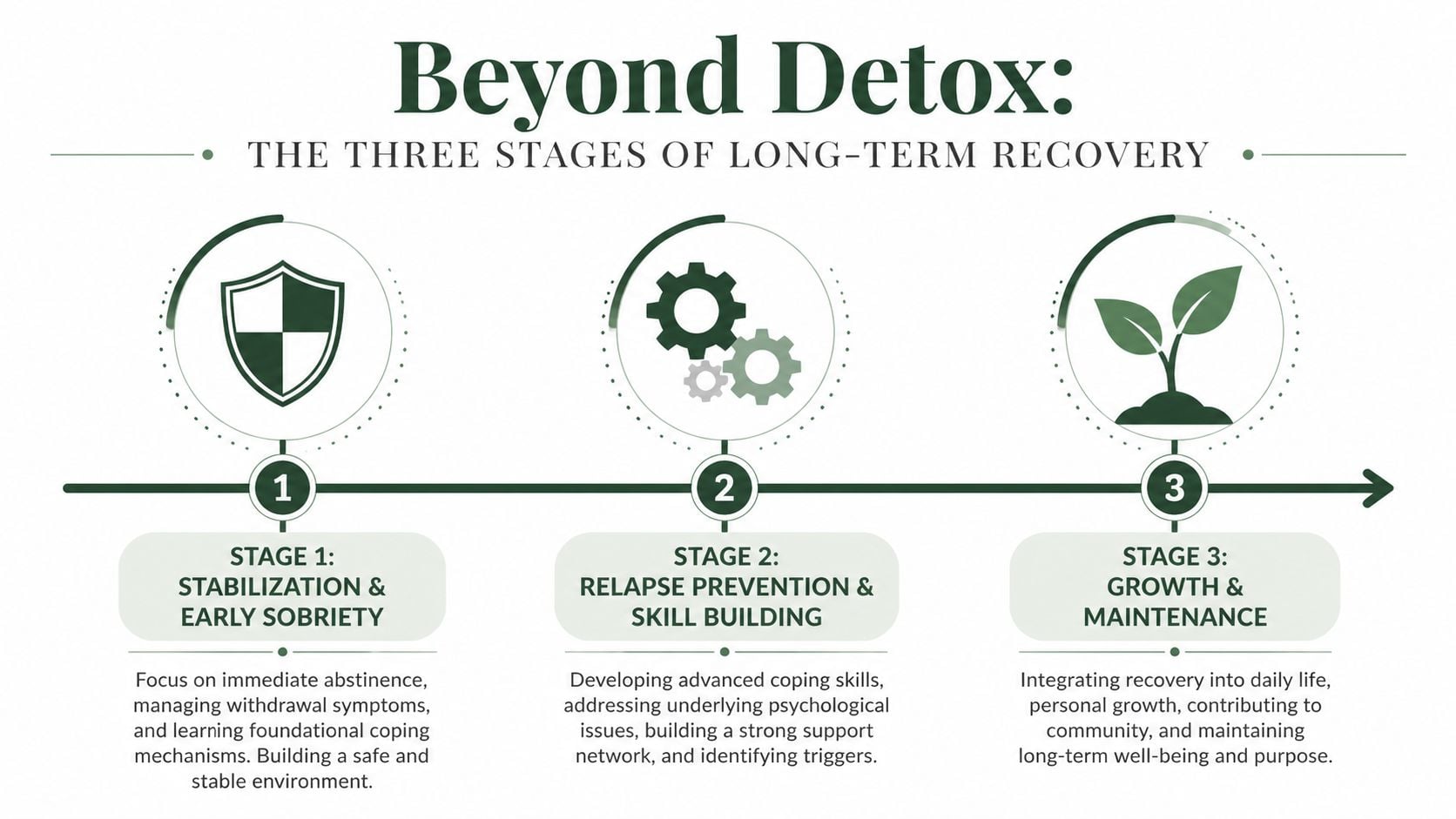
The first stage is stabilization and early sobriety
This period centers on immediate abstinence, physical stabilization, and daily structure. A person is often trying to sleep normally, eat consistently, think clearly, and get through the day without reaching for the old solution.
The work here is basic but demanding. Treatment helps people identify triggers, interrupt automatic behavior, and build a schedule that reduces chaos. Many people also need help understanding where they are in the stages of change in addiction recovery, because motivation often shifts from day to day.
The second stage is relapse prevention and skill building
Once the crisis settles, deeper patterns start to show. Old thinking, unresolved trauma, relationship conflict, isolation, and emotional avoidance often become more visible at this stage.
Common goals in this stage include:
- Learning trigger management. A person practices what to do before a craving becomes a relapse.
- Building emotional tolerance. They start handling anger, shame, grief, boredom, or anxiety without using.
- Repairing support systems. Healthy connection becomes part of the treatment plan, not an afterthought.
Some people also benefit from supportive spiritual or reflective practices alongside clinical care. Resources like PrayerPetals support for emotional health can complement recovery by helping people refill their emotional reserves in healthy ways.
The third stage is growth and maintenance
Long-term recovery becomes less about avoiding a substance every minute and more about building a life worth protecting. Work, family, boundaries, purpose, and self-respect become central.
Recovery often starts with stopping a substance. It lasts when a person learns how to live differently under pressure.
This stage still requires vigilance. Complacency, overconfidence, loneliness, and untreated mental health symptoms can reopen risk. But this is also where recovery becomes more than survival. It becomes a stable, meaningful way to live.
Factors That Influence Your Personal Recovery Timeline
A person can stop using on the same day as someone else and still recover on a very different timeline. I see that often in treatment. One patient may stabilize quickly, while another needs months of structured care before sleep, mood, judgment, and daily functioning start to hold.
That difference is not a sign of weak will. It usually reflects clinical reality. Addiction affects the brain, body, relationships, and mental health in different ways from person to person.

Substance history changes the pace
The details matter. What substance was used, how often, for how long, and in what amounts all affect recovery. So does the pattern around it. Daily alcohol use, long-term opioid dependence, stimulant binges, or mixing several substances usually create a more complicated course than earlier-stage use.
Medical health matters too. Poor sleep, low nutrition, chronic pain, liver problems, medication interactions, and untreated illness can slow progress and make cravings harder to manage. If the body is still under stress, the mind has less room to heal.
Prior treatment history also matters. A person with multiple relapses often needs a different plan than someone entering treatment for the first time. In practice, that can mean more structure, closer psychiatric follow-up, and a longer step-down plan instead of a short episode of care.
Dual diagnosis often lengthens treatment
Mental health symptoms are one of the biggest reasons the question "how many days" leads people in the wrong direction. Many people with substance use disorder also live with depression, anxiety, trauma-related symptoms, bipolar disorder, or other psychiatric conditions. SAMHSA explains that co-occurring mental and substance use disorders are common and should be treated together, not as separate problems at different times: SAMHSA guidance on co-occurring disorders.
That point matters in real life.
If a person used alcohol to quiet panic, opioids to numb trauma, or stimulants to push through depression, stopping the substance is only the first step. The distress that drove the use is still there. If that part goes untreated, relapse risk stays high even if detox went well.
At Paramount Recovery Centers, this is one of the clearest trade-offs we discuss with families. A shorter stay may feel easier to commit to. It often leaves too little time to stabilize psychiatric symptoms, adjust medications if needed, and help the person practice new coping skills while sober enough to use them.
Practical rule: When addiction and mental health problems reinforce each other, treatment needs to address both at the same time.
Environment can either support recovery or undermine it
Where a person goes after treatment changes the timeline too. Some return to a stable home with support, transportation, follow-up care, and clear boundaries. Others return to conflict, isolation, easy access to drugs or alcohol, or people who still use regularly.
Small daily conditions have a big effect:
- Support quality. Loving words help, but consistent accountability helps more.
- Routine. Regular sleep, meals, therapy attendance, and planned time reduce chaos.
- Stress load. Legal problems, money strain, custody issues, and unstable housing can pull attention away from recovery work.
- Willingness to stay in care. People usually do better when they continue treatment after the first round of physical stabilization.
The better question is not how fast recovery should happen. The better question is whether the level of care matches the depth of the problem, especially when substance use and mental health symptoms are tangled together.
Why 90-Day Treatment Is the Clinical Gold Standard
Families often ask whether ninety days is really necessary. In clinical practice, that length of care is often where treatment starts to hold, especially for people with repeated relapse, heavy substance use, or a co-occurring mental health condition.
Research supported by the National Institute on Drug Abuse has long shown that treatment outcomes improve when people stay engaged long enough for recovery work to take root. NIDA notes that, for residential or outpatient treatment, participation of less than 90 days is of limited effectiveness for many people, while longer engagement is associated with better results, as explained by the National Institute on Drug Abuse’s overview of treatment duration and outcomes.

What happens in a longer program
Ninety days matters because the first stretch of sobriety is only the beginning. The body may settle before judgment improves. Mood may lift before thinking becomes steady. A person may feel motivated before they can handle cravings, conflict, boredom, and shame without returning to use.
That extra time gives treatment a chance to do real clinical work:
- Physical and emotional stability improve. Sleep, appetite, focus, and day-to-day functioning become more predictable.
- Therapy gets more honest. Once the immediate crisis settles, people can address trauma, depression, anxiety, grief, or bipolar symptoms that often sit underneath substance use.
- Skills get repeated until they are usable under stress. Craving management, boundary setting, relapse planning, and emotional regulation need practice, not just explanation.
- Discharge planning becomes realistic. Aftercare, medication follow-up, housing, family work, and step-down care can be arranged with care instead of rushed at the end.
For people weighing options, our guide on how a 90-day addiction treatment program can help explains what that added time can accomplish.
Why this matters so much in dual diagnosis care
At Paramount Recovery Centers, this point comes up often with dual diagnosis cases. If someone is dealing with addiction and a mental health disorder at the same time, short treatment can create the appearance of progress without giving enough time to see what symptoms remain after substances are out of the system.
That distinction matters. Panic can look different after detox. Depression may improve, or it may become clearer. Medication may need adjustment. Therapy may uncover patterns that were buried under daily use. None of that is handled well on a rushed timeline.
A ninety-day framework is not a magic number, and some people need more time. It is a strong clinical benchmark because it gives the brain, the person, and the treatment team enough room to build something more stable than a brief interruption.
Your First Step to Recovery Starts Now
The most useful number in this conversation may not be the number of days. It may be the number dialed today to get help.
If someone is waiting to feel completely ready, they may wait a long time. Readiness often grows after action begins, not before. The first step is admitting that the current pattern isn’t working and that professional support could change the outcome.
A simple way to move forward
- Acknowledge the problem clearly. If substance use keeps causing damage, fear, secrecy, or failed promises, it’s time to stop minimizing it.
- Ask for a confidential assessment. A proper evaluation can identify detox needs, mental health concerns, and the right level of care.
- Commit to treatment long enough for it to work. Real change usually requires more than a brief interruption.
Final questions people often ask
“What if there’s been relapse before?”
Relapse doesn’t erase the ability to recover. It often shows that the last plan wasn’t long enough, deep enough, or integrated enough.
- “Can treatment fit real life?” Yes. Different levels of care exist because people need different amounts of structure at different times.
- “What if mental health is part of this too?” That’s common, and it should be treated directly rather than pushed aside.
- “What if the person is scared?” Fear is normal. Waiting for fear to disappear usually keeps people stuck.
Help is available now. For confidential guidance and admissions support, call (888) 388-8660.
Paramount Recovery Centers provides Massachusetts adults with evidence-based addiction and dual-diagnosis treatment across a full continuum of care, including detox coordination, inpatient treatment, PHP, IOP, outpatient support, and aftercare. For anyone still asking how many days to break an addiction, the better next step is getting a professional assessment and starting the right level of treatment. Call (888) 388-8660 to speak with the admissions team and begin recovery with a plan built for lasting change.


