



EMDR (Eye Movement Desensitization and Reprocessing) is a structured therapy that helps people heal from trauma and other distressing life experiences. By using bilateral stimulation, like side-to-side eye movements, EMDR allows your brain to reprocess "stuck" memories, reducing their emotional pain and helping you move forward. This guide explains how it works, what to expect, and why it's so effective.
Key Takeaways
- Your Brain Can Heal Itself: EMDR is based on the Adaptive Information Processing (AIP) model, which says our brains have a natural ability to process and heal from trauma. EMDR helps jump-start this process when it gets overwhelmed and stuck.
- It's Not Just Talk Therapy: Unlike traditional therapies, EMDR doesn't require you to talk in detail about a traumatic event. It uses bilateral stimulation (eye movements, taps, or sounds) to help your brain reprocess memories on a deeper, neurological level.
- A Structured, Safe Process: EMDR follows a specific eight-phase protocol. This structured approach ensures you are prepared for the work, feel safe throughout the process, and that the healing is lasting and integrated.
- Effective for More Than Just PTSD: While renowned for treating PTSD, EMDR is also highly effective for anxiety, depression, grief, addiction, and other issues rooted in painful past experiences. Many clients in Massachusetts find relief in fewer sessions compared to other therapies.
Understanding EMDR Therapy and How It Heals
Think of a deeply disturbing memory like a corrupted file on a computer. Every time your brain tries to access it, the whole system lags, slows down, or even crashes. EMDR acts like a specialized repair tool, allowing your brain to properly process and file away that memory so it no longer triggers an overwhelming emotional response in your daily life. It helps you separate the memory from the pain.

This therapy is grounded in the Adaptive Information Processing (AIP) model. This model proposes that our brains have a natural, built-in system for healing from emotional wounds, much like our bodies instinctively know how to heal from a physical injury.
But when a major traumatic event occurs, it can completely overwhelm this system. The memory gets left unprocessed and essentially "frozen" in its raw, intensely emotional form. This is why certain sounds, smells, or situations can trigger a powerful, disproportionate reaction years later. The emotional fallout from these events can also lead to complicated relationship dynamics, which is why it's often helpful to understand what is trauma bonding as part of the bigger picture of healing.
This guide will walk you through the science, the step-by-step process, and the proven effectiveness of this powerful therapy. If you or a loved one in Massachusetts is struggling, please know that structured, compassionate help is available.
The Science Behind How Your Brain Can Heal Itself
To really get what makes EMDR therapy work, you have to understand a core idea called the Adaptive Information Processing (AIP) model. The simplest way to think about it is that your brain has a powerful, built-in system designed for healing—much like your body knows how to heal a physical wound.
Think about what happens when you get a small cut. Your body immediately gets to work, clotting the blood, fighting off infection, and repairing the skin. You don't have to consciously tell it what to do; it just knows. The AIP model suggests our brains have a similar system for our emotional wounds, designed to process difficult experiences so they can become a part of our past without continuing to hurt us.
But some events are so overwhelming that they completely flood this natural healing system. It's like a piece of shrapnel getting lodged in that cut, blocking the healing process. The memory gets stuck—"frozen in time"—and stored in the brain with all the original, raw emotions, sights, sounds, and physical feelings still attached.
Overcoming a Stalled Healing Process
When a memory gets stored this way, it hasn't been properly filed away. It's still active and raw, which is why it can be so easily triggered by things happening today. A certain smell, a loud noise, or even a particular tone of voice can suddenly plunge you back into the full intensity of the original trauma, making you feel as if it's all happening again, right now.
EMDR therapy uses bilateral stimulation—a gentle, rhythmic, side-to-side sensory input like eye movements or tapping—to essentially jump-start that stalled processing system. This stimulation helps your brain safely access and re-engage with that trapped memory, finally allowing your mind to digest the experience and file it away correctly.
"During a traumatic event, our brain shifts our memory networks into survival mode… your brain doesn't adequately process the traumatic event and causes a continued stress response… EMDR therapy asks a client to maintain a mindful connection in the present moment with their therapist, while recalling distressing memory experiences. This is called dual awareness."
How Bilateral Stimulation Facilitates Reprocessing
This "dual awareness"—staying grounded in the present moment while revisiting the past—is what makes EMDR so effective. The bilateral stimulation helps you stay connected to the safety of the therapy room in Massachusetts while your brain does the heavy lifting. It's the key to preventing you from becoming overwhelmed or re-traumatized.
By activating both sides of the brain, EMDR helps you to:
- Desensitize the memory: The intense emotional charge tied to the memory starts to fade away. The pain lessens.
- Reprocess the experience: Your brain can finally integrate the memory into your larger life story. It becomes something that happened, not something that is happening.
- Install positive beliefs: The negative, toxic beliefs that often grow out of trauma (like "I'm not safe" or "It was all my fault") can be replaced with more truthful, adaptive ones ("I survived and I'm safe now" or "I did the best I could").
In the end, EMDR doesn’t erase the memory. Why would you want it to? Instead, it removes the painful sting, transforming it from an open wound into a scar—a part of your history that no longer controls your present.
If you feel like a past event is holding you captive and want to learn more about how EMDR therapy works, call Paramount Recovery Centers at (888) 388-8660. Our compassionate team can offer a confidential consultation to see if this path is right for you.
Your Step-by-Step Guide to the Eight Phases of EMDR
One of the biggest reliefs for people starting EMDR is learning just how structured it is. This isn't a therapy where you wander aimlessly through painful memories. Instead, it’s a deliberate, eight-phase protocol that acts as a roadmap, guiding you safely from where you are now to a place of healing.
This methodical approach is a huge part of what makes EMDR so effective. It creates a predictable, secure framework that allows you to work through tough stuff without feeling lost or overwhelmed. Let's walk through what you can expect from each of these distinct phases.
Phases 1 and 2: Laying a Foundation of Safety
Before any of the deeper work begins, the first couple of phases are all about preparation. Your therapist’s top priority is building a strong, trusting relationship with you and making sure you have all the tools you need to feel in control.
-
Phase 1: History and Treatment Planning: Your therapist will spend time getting to know you and your story. This isn't just small talk; it's a careful assessment to understand your background, your strengths, and the specific memories or events you want to work on. Together, you'll map out a clear plan for your treatment.
-
Phase 2: Preparation: Think of this phase as building your emotional toolkit. Your therapist will teach you practical relaxation and grounding techniques—skills you can use anytime to manage distress. The goal is simple: to make sure you always feel safe and anchored in the present moment, no matter what comes up.
Phases 3 to 6: The Core Reprocessing Work
With a solid foundation in place, you’re ready to begin the core of EMDR. It’s in these four phases that your therapist will introduce bilateral stimulation to help your brain finally process and properly file away those stuck traumatic memories. This is where the magic really happens, and the emotional weight of the past starts to lift.
- Phase 3: Assessment: You’ll be asked to gently bring the target memory to mind. This involves pinpointing a specific image, the negative belief it created about yourself (like "I am helpless"), and the emotions and physical sensations tied to it.
- Phase 4: Desensitization: While you hold the memory in your awareness, your therapist will guide you through sets of eye movements or other bilateral stimulation. Your only job is to notice what comes up, without judgment, as the memory’s painful charge begins to fade.
- Phase 5: Installation: Now it's time to connect a positive, true belief about yourself (such as "I have control now") with the original memory. You'll focus on this new belief until it feels stronger and more real than the old one.
- Phase 6: Body Scan: You’ll bring the original event and the new positive belief to mind and scan your body for any lingering tension or discomfort. If anything is left, your therapist will help you process it until your body feels clear and calm.
This structured reprocessing gets incredible results. In studies on people with single-incident trauma, success rates have reached as high as 100%. Research from a Kaiser Permanente study showed some patients achieved complete remission from PTSD after just six 50-minute sessions. Another trial found that 90% of single-trauma survivors no longer met the criteria for PTSD after only three 90-minute sessions. You can read more about these impressive EMDR therapy findings to see the full picture.
Phases 7 and 8: Integration and Looking Ahead
The final two phases are all about making sure your progress holds and that you leave each session feeling steady. They close the loop on the work you've done and set the stage for what comes next.
Phase 7: Closure: At the end of every processing session, your therapist will guide you back to a state of calm. Whether the memory is fully resolved or not, this phase ensures you leave feeling stable, grounded, and in control of your emotions.
Phase 8: Re-evaluation: Each new session starts with a check-in. Your therapist will see how you're feeling and how the previously processed memories are sitting with you. This confirms that the healing is lasting and helps you both decide what to focus on next.
To make this even clearer, here's a quick summary of the entire process.
The Eight Phases of EMDR Treatment at a Glance
The EMDR protocol is broken down into eight distinct stages, each with a clear purpose. This table outlines the primary goal for each phase, showing how the therapy systematically moves from preparation to deep processing and, finally, to long-term integration.
| Phase Number | Phase Name | Primary Goal |
|---|---|---|
| 1 | History & Treatment Plan | Gather history, identify target memories, and develop a collaborative treatment plan. |
| 2 | Preparation | Teach coping skills and grounding techniques to ensure emotional safety. |
| 3 | Assessment | Activate the target memory and identify its negative belief, emotions, and sensations. |
| 4 | Desensitization | Use bilateral stimulation to reduce the emotional distress tied to the memory. |
| 5 | Installation | Strengthen a positive, adaptive belief to replace the old negative one. |
| 6 | Body Scan | Check for and clear any remaining physical tension associated with the memory. |
| 7 | Closure | Ensure you feel stable and grounded before ending the session. |
| 8 | Re-evaluation | Assess progress from previous sessions and plan for the next steps. |
This reliable, eight-phase model ensures a safe and methodical path to healing. If you are in Massachusetts and believe this structured approach could help you, call Paramount Recovery Centers at (888) 388-8660 to learn more.
How Bilateral Stimulation Unlocks Healing
The most recognizable part of EMDR therapy is definitely the bilateral stimulation (BLS), but what is it, really? And why is it so essential to the healing process?
Simply put, BLS is any kind of rhythmic, side-to-side sensory input. Even though "eye movement" is right there in the name, that's just one of several ways we can achieve this.
Your therapist might guide your eyes to follow their fingers, use alternating tones in a set of headphones, or even give you gentle, pulsing buzzers to hold in each hand. This flexibility means the therapy can be adjusted to whatever feels most comfortable and effective for you. It's a fundamental piece of understanding how EMDR therapy works.
Dual Attention: The Key to Safe Processing
So, why does this work? The leading theory is that BLS creates a state of "dual attention." This is a fancy way of saying it helps you keep one foot firmly planted in the present moment—safe in the room with your therapist—while your brain gently accesses a memory from the past. Think of it like having a secure anchor in the "now" while you dip a toe into the "then."
This dual focus is what makes the magic happen. It prevents you from getting overwhelmed or re-traumatized by the memory you're working on. By creating a safe emotional distance, it allows your brain's own natural processing system to finally get to work without being hijacked by a fight-or-flight response. This is how clients in Massachusetts and beyond stay in control during their sessions.
This state of dual awareness is what makes deep processing possible. By staying grounded in the present, the brain can re-examine the traumatic memory without triggering the same survival-mode panic, allowing it to re-file the experience in a healthier, more integrated way.
Another powerful theory suggests that BLS mimics what our brains do during REM (Rapid Eye Movement) sleep. This is the natural cycle our minds use every night to process the day's events, make sense of new information, and store memories. EMDR may very well be tapping into this same built-in neurological system to resolve traumas that have been deeply stuck for years.
The image below gives a great visual of the core stages of EMDR, showing the journey from preparing for the work to fully integrating the healing.
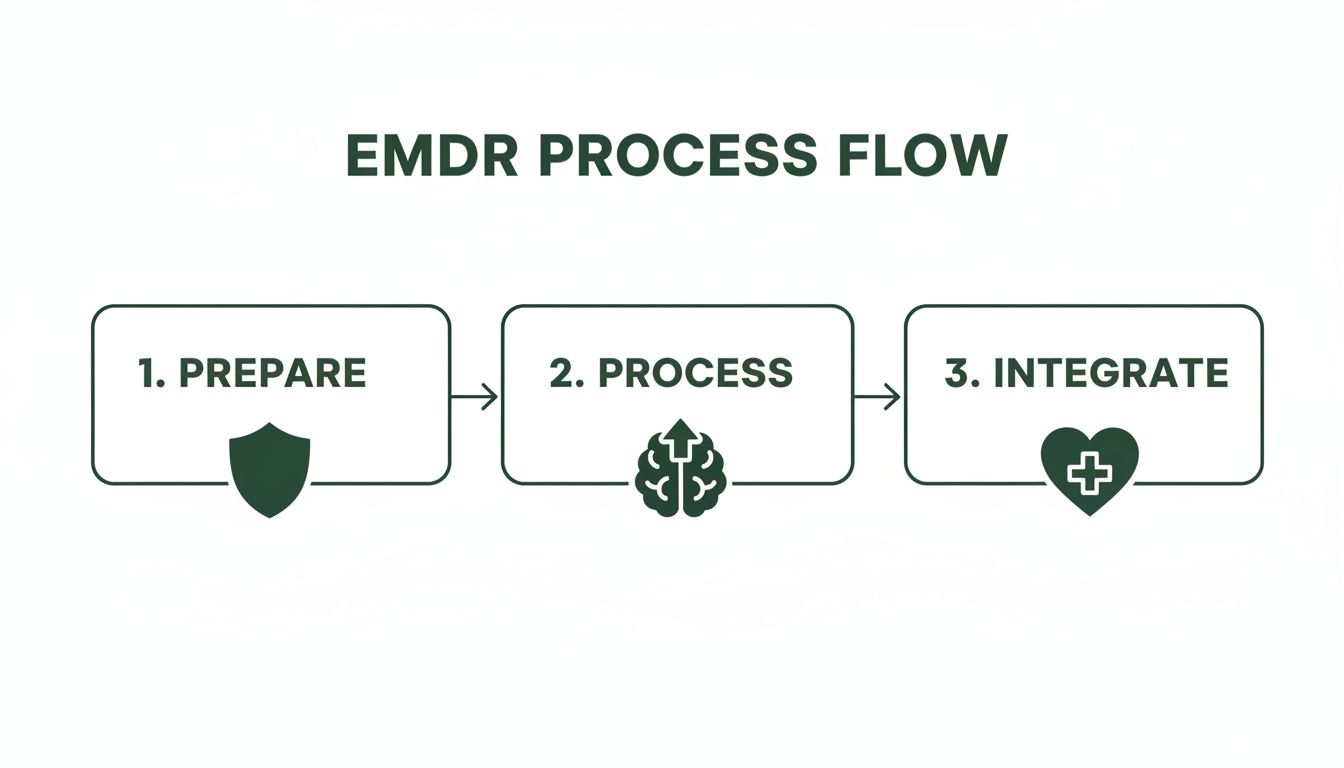
As you can see, the process is a structured progression. It starts with building safety, moves into the active processing phase, and finishes by incorporating that healing into your life.
Putting It All Together
Ultimately, bilateral stimulation is the catalyst that helps your brain get "unstuck." It doesn't erase what happened; instead, it helps strip away the intense emotional pain and physical distress that got tangled up with the memory.
The memory itself transforms. It goes from being a raw, open wound to a closed scar—a part of your story that no longer controls your present.
If you’re ready to learn more about how EMDR can help you or someone you care about, our team is here to answer your questions. Contact us at (888) 388-8660 for a confidential conversation.
Comparing EMDR to Other Trauma Treatments
When you’re looking for help with trauma, it’s completely normal to wonder which therapy will work best. While there are many solid approaches out there, EMDR really stands apart because of its unique method and impressive efficiency. It's not just a niche therapy; major organizations like the World Health Organization and the American Psychiatric Association endorse it as a first-line treatment for PTSD.
For many people in Massachusetts weighing their options, the biggest difference is how EMDR feels compared to traditional talk therapy. Instead of having to talk in detail about a traumatic event over and over, EMDR helps you process the memory itself. Using bilateral stimulation, it guides your brain to file it away properly, often bringing profound relief without forcing you to verbally relive every painful moment.
Efficiency and Effectiveness
One of the most compelling aspects of EMDR is how quickly many people start to feel better. Study after study shows that clients can see lasting results in far fewer sessions than with other trauma-focused therapies.
Research consistently shows that EMDR therapy often gets results faster and more effectively than other well-established trauma treatments. This speed isn't about cutting corners; it's about targeting the very root of the trauma—the unprocessed memory—to facilitate deep and lasting healing.
A landmark study put EMDR head-to-head with prolonged exposure therapy. The results were striking: 70% of EMDR participants saw good outcomes after just three active sessions. In contrast, only 29% of those in prolonged exposure therapy could say the same. On top of that, the EMDR group had fewer people drop out and didn't have to do the heavy daily homework that's common in other methods. Another study even found EMDR was more effective than antidepressant medication at reducing symptoms of both PTSD and depression. For a deeper dive into these studies, you can explore the EMDR efficacy findings on emdr.com.
EMDR Versus Cognitive Behavioral Therapy
It’s also useful to see how EMDR stacks up against another powerhouse in therapy: Cognitive Behavioral Therapy (CBT). Both are evidence-based, but they tackle the problem from different angles. CBT is fantastic at helping you identify and change the negative thought patterns and behaviors that grew out of your trauma. It gives you concrete skills to reshape your outlook on the present and future. You can learn more about CBT in our detailed guide.
EMDR, on the other hand, is less concerned with conscious, logical thoughts and more focused on processing the "stuck" memory on a subconscious level. It's more of a "bottom-up" approach, getting right to the physiological and emotional distress your brain has stored away. For many, targeting the memory's core in this direct way offers a uniquely powerful path to recovery that either complements or, in some cases, goes beyond what talk-based therapies can do alone.
Start Your Healing Journey with EMDR in Massachusetts
Figuring out how EMDR therapy works is the first big step. Taking action is the next. This isn't just theory; it's a proven, structured therapy that offers a clear path toward lasting freedom from trauma, anxiety, and related struggles like substance use.
Taking that first step can feel like a huge hurdle, but you absolutely don't have to do it alone.

Here at Paramount Recovery Centers in Southborough, Massachusetts, our team of highly trained clinicians specializes in weaving EMDR into personalized treatment plans that make sense for you. We’ve worked hard to create a safe, supportive place where you can finally process what happened and build a solid foundation for a much healthier future.
Find the Right Support
Real healing isn’t just a possibility—it is completely within your reach. Knowing how to find a therapist who genuinely clicks with you is a critical piece of the puzzle. That connection can make all the difference in feeling comfortable and seeing real success.
At our Massachusetts facility, we prioritize creating a compassionate, non-judgmental space. Our team is dedicated to meeting you exactly where you are and guiding you through each of the eight phases of EMDR with skill and genuine care.
If you’re ready to see how EMDR could be part of your recovery, our team is here and ready to talk.
To learn more or to set up a completely confidential consultation, give Paramount Recovery Centers a call today at (888) 388-8660. Your journey to a brighter, more peaceful future can start right now.
Frequently Asked Questions About EMDR Therapy
What does an EMDR session actually feel like?
An EMDR session is less about talking and more about processing. You'll be asked to briefly hold a distressing memory in mind while your therapist guides you through sets of bilateral stimulation (like eye movements or tapping). You simply notice whatever thoughts, feelings, or sensations come up. Many describe it as watching scenes pass by from a train—you are an observer, not a participant. You are always awake, in control, and grounded in the safety of the therapy room.
How many sessions does EMDR take?
The number of sessions varies depending on the individual and the complexity of their trauma. For a single-incident trauma (like a car accident), many people experience significant relief in as few as 6-12 sessions. For more complex or long-term trauma, the process may take longer. Your therapist will create a personalized treatment plan with you.
Will EMDR make me forget my memories?
No, EMDR does not erase memories. It works by removing the intense, painful emotional charge attached to them. The memory of what happened will remain, but it will no longer have the power to trigger overwhelming distress. It becomes a part of your past that no longer controls your present.
Is EMDR the same as hypnosis?
No, they are very different. During EMDR, you are fully conscious, alert, and in control of the process. You are an active participant in your own healing. Hypnosis, in contrast, involves inducing a trance-like state where you are less aware of your immediate surroundings.
At Paramount Recovery Centers, our skilled clinicians are here to answer all your questions and guide you toward lasting recovery. If you believe EMDR could be the key to unlocking your healing, we invite you to take the next step. Call us today at (888) 388-8660 for a confidential conversation about how we can help.


