


When a single slip-up feels like a total failure, it can trigger a powerful psychological reaction known as the Abstinence Violation Effect (AVE). Instead of seeing a brief lapse for what it is—a temporary setback—a person might fall into the trap of thinking, “Well, I’ve already blown it. What’s the point of even trying anymore?” This all-or-nothing mindset is incredibly dangerous, turning one mistake into a full-blown relapse and a complete abandonment of recovery goals.
Key Takeaways
- Understand the Triggers: The Abstinence Violation Effect is fueled by psychological traps like cognitive dissonance (the mental conflict between your actions and your identity) and all-or-nothing thinking, which frames a single lapse as a total failure.
- Recognize the Warning Signs: Key signs include intense feelings of guilt, shame, and hopelessness, alongside catastrophic thoughts like “I’ve ruined everything.” Identifying these early allows for quick intervention.
- Create an Immediate Action Plan: After a lapse, the most effective response is to pause with self-compassion, immediately contact your support system, and recommit to your recovery plan by attending a meeting or speaking with a therapist.
- Seek Professional Support: Overcoming AVE often requires guidance. Localized support in Massachusetts provides a structured environment to reframe a lapse as a learning opportunity and build long-term resilience.
Unpacking the Abstinence Violation Effect
Imagine you’ve spent months, maybe even years, carefully building a new life in sobriety. Then, one bad day leads to one bad decision. For many, this is where the Abstinence Violation Effect kicks in, and it feels like that entire foundation just crumbles.
It’s not the lapse itself that does the most damage; it’s the crushing weight of guilt, self-blame, and shame that follows. This psychological trap isn’t a sign of weakness—it’s a common and predictable part of the recovery journey. Research dating back to the 1980s has shown that how a person interprets a slip-up is one of the biggest predictors of whether it spirals out of control.
Studies have even found that relapse rates can jump by as much as 50% when someone views their lapse as a catastrophic failure. This just goes to show how powerful our internal narrative really is.
Reframing Lapses as Learning Opportunities
Here in Massachusetts, we help people understand that the first step to overcoming the AVE is to shift their perspective. A lapse doesn’t have to be the end of the road. In fact, it can be an incredibly valuable learning opportunity.
Think of it as collecting data. A slip-up can shine a bright light on hidden triggers, test your coping skills under pressure, and give you critical information to strengthen your relapse prevention plan. Adopting this mindset is a cornerstone of effective therapeutic approaches, including the strategies that help individuals maintain sobriety for the long haul.
To help you get there, this guide will walk you through four essential pillars for navigating the Abstinence Violation Effect. Think of this as your roadmap to turning a potential crisis into a moment of strength and renewed commitment.
If you or someone you care about in Massachusetts needs support right now, our team is here to help. Call us at (888) 388-8660 to speak with someone who truly understands.
The Hidden Triggers That Turn a Slip into a Spiral
Ever wonder why a single drink can sometimes trigger a full-blown relapse? The answer isn’t a simple lack of willpower. It’s often a predictable psychological chain reaction known as the abstinence violation effect. This powerful response is driven by specific mental triggers that can turn a minor slip into a catastrophic spiral.
Understanding these triggers is the first step toward disarming them. They often operate just below the surface of our awareness, quietly fueling guilt and eroding confidence until recovery feels totally out of reach. By shining a light on these patterns, you can learn to recognize them—and challenge them—before they take hold.
Cognitive Dissonance: The Battle in Your Mind
One of the first triggers to kick in is cognitive dissonance. This is that intense mental discomfort you feel when your actions (like having a drink) clash head-on with your identity as a person in recovery. Your brain struggles to hold two conflicting ideas at the same time: “I am sober” and “I just used.”
To resolve this conflict, the mind often takes the path of least resistance. It might start to rationalize the behavior, concluding, “Well, I guess I’m not really sober after all, so I might as well keep going.” This internal battle can be exhausting, and it’s a primary source of the guilt that fuels the abstinence violation effect.
This visual shows how that destructive cycle works, where a single lapse can lead to intense guilt, which then quickly triggers a full relapse.
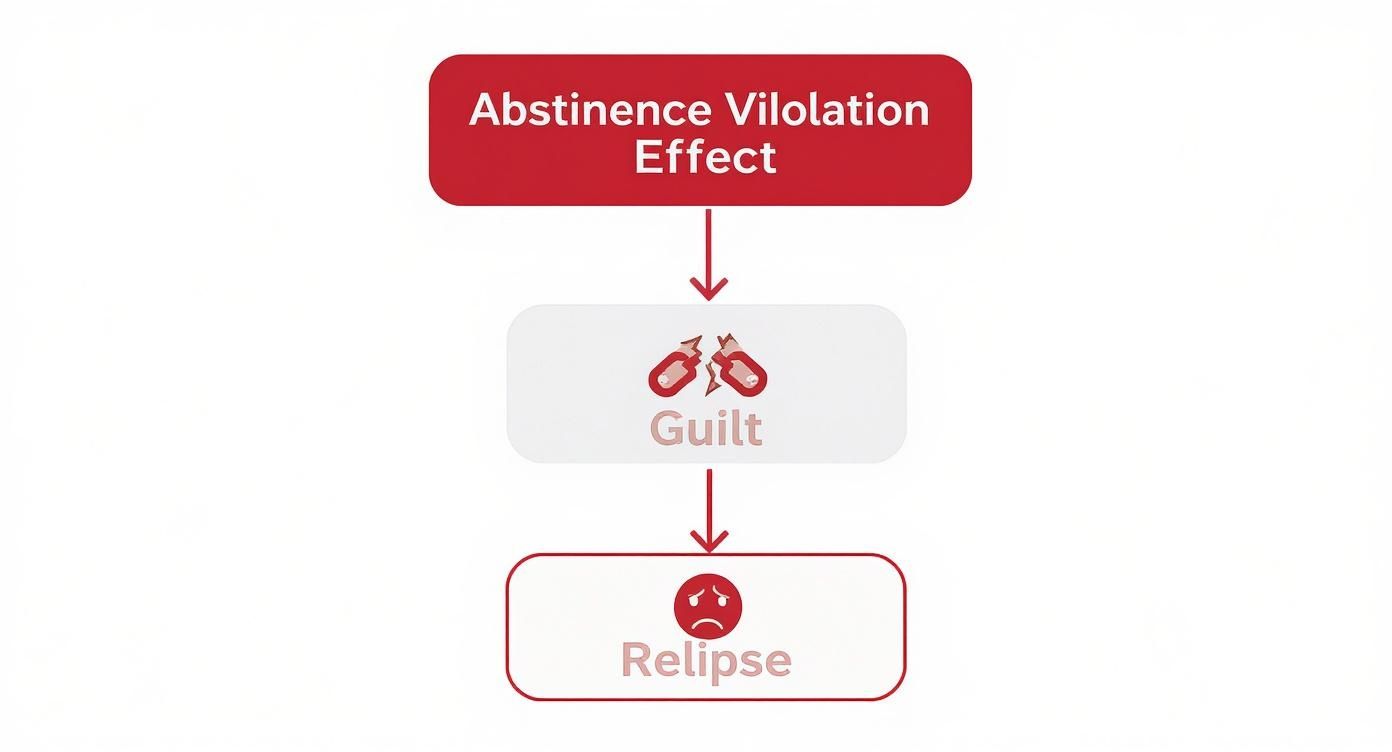
As the infographic highlights, the emotional response to a slip is often the most dangerous part of the whole experience.
All-or-Nothing Thinking: The Perfectionism Trap
Another powerful trigger is all-or-nothing thinking, sometimes called black-and-white thinking. This is the mindset that views recovery as a perfect, unbroken chain. The moment one link breaks, the whole chain is seen as worthless. Thoughts like, “I’ve ruined all my progress,” or “I’m right back at square one,” are classic signs of this cognitive distortion.
This perfectionist trap completely ignores all the hard work and positive changes you’ve made along the way. Research consistently shows that this kind of thinking is a major risk factor for relapse. In fact, a meta-analysis found the average relapse rate after a lapse was a staggering 68%, with the highest rates seen in people who held an all-or-nothing view of recovery. You can discover more insights about these findings on Ninayashin.com.
A slip is a single event. It is not a summary of your entire recovery journey. Recognizing this distinction is crucial for stopping the abstinence violation effect in its tracks.
By learning to challenge this destructive thought pattern, you can reframe a lapse as what it truly is: a setback, not a total failure. If you’re in Massachusetts and struggling with these kinds of thoughts, professional support can make a world of difference. Call our team at (888) 388-8660 for compassionate, expert guidance.
Recognizing the Early Warning Signs of AVE
Catching the abstinence violation effect early is your best defense against a minor slip turning into a full-blown relapse. Think of it like learning to read the weather map of your own recovery. When you can spot the storm clouds on the horizon, you have time to take shelter before you’re caught in the downpour.
These warning signs typically fall into three buckets: emotional, cognitive, and behavioral.

Learning to recognize these signals in yourself or a loved one here in Massachusetts creates a crucial window of opportunity. It’s the moment where you can hit pause, reach out for support, and steer things back on course before a lapse gains any more momentum.
Emotional Red Flags
The emotional fallout after a slip is often the first and most powerful sign. Instead of seeing the lapse for what it is—a mistake—you might get hit with an overwhelming wave of guilt and shame. These feelings can be so intense that they become paralyzing, making it feel impossible to even think about getting back on track.
Another major emotional red flag is a sudden, crushing sense of hopelessness or despair. You might feel like all your progress has been completely erased, which opens the door to a dangerous “what’s the point?” attitude that just fuels more substance use.
Cognitive Traps and Distortions
Right alongside that emotional storm, certain thought patterns, or cognitive traps, start to dig in. These are the internal stories we tell ourselves that twist the reality of the situation and give us permission to give up.
- Catastrophic Thinking: This is when your mind immediately jumps to the worst-possible conclusion. A single drink becomes, “My recovery is over.” One mistake means, “I’ve ruined everything.” It’s all-or-nothing thinking at its most destructive.
- Minimizing Progress: AVE has a way of making you forget every single sober day you’ve earned. It completely discounts weeks, months, or even years of hard work, pointing to the one misstep as proof that you were never really in recovery to begin with.
These distortions are incredibly common and powerful. An international survey found that a staggering 65% of individuals felt intense guilt after a lapse, and 58% said those feelings were a direct cause of a full relapse. You can find more details about these findings in this blog from Altura Recovery.
By learning to spot these emotional and cognitive signs, you can start to challenge the destructive narrative of the abstinence violation effect. If these patterns feel familiar, don’t wait for them to get stronger. Call Paramount Recovery Centers at (888) 388-8660 for immediate, compassionate support.
Actionable Steps to Take Immediately After a Lapse
In the moments right after a lapse, what you do next can be the difference between a learning experience and a full-blown relapse. The wave of guilt and shame from the abstinence violation effect can feel absolutely paralyzing, but having a game plan is your best defense. Forget spiraling—this is your emergency action plan to get back on track.
This straightforward guidance is here to show you that a lapse is just a single moment in time, not the end of your entire recovery journey.
Step 1: Pause and Practice Self-Compassion
Your gut reaction might be to beat yourself up, but that’s the exact fuel the abstinence violation effect runs on. Instead, just for a moment, take a deep breath and pause. Acknowledge what happened without piling on judgment.
Try to treat yourself with the same kindness you’d show a friend in the same boat. Recovery has always been about progress, not perfection. This one act of self-compassion can stop the shame cycle dead in its tracks.
Step 2: Reach Out to Your Support System
You don’t have to carry this weight by yourself. As soon as you can, get in touch with someone in your support network—this could be your sponsor, a trusted friend, a family member, or your therapist.
Simply saying what happened out loud lifts the crushing burden of secrecy and shame. The people in your corner can offer the perspective you’ve lost, reminding you that one slip doesn’t undo all the hard work you’ve put in. This is especially true for residents in Massachusetts looking for local, understanding support.
A lapse thrives in isolation. The most powerful action you can take is to connect with someone who understands and supports your recovery goals immediately.
Step 3: Recommit to Your Recovery Plan
Think of a lapse as a signal that something in your plan needs a tune-up. The best response is to immediately jump back into the habits and structures that keep you grounded in your sobriety.
This could look like:
- Attending a meeting as soon as you possibly can.
- Scheduling a session with your therapist or counselor.
- Reviewing your triggers and figuring out how to strengthen your strategy.
Taking these tangible steps reaffirms your commitment and powerfully shifts your focus from the mistake you just made to the solution ahead. It’s what makes a relapse prevention plan a living, breathing tool that actually works.
If you or a loved one needs help making your plan stronger, call Paramount Recovery Centers at (888) 388-8660 for immediate, confidential guidance.
Finding Relapse Prevention Support in Massachusetts
Trying to get back on your feet after a lapse can feel incredibly isolating, but you don’t have to go through it alone. Having professional, compassionate support makes all the difference in overcoming the abstinence violation effect. A slip-up doesn’t have to spiral into a full-blown relapse, but it often takes guidance to break free from the cycle of guilt and shame that follows.
For anyone in Massachusetts, finding specialized local care is a game-changing step. It helps turn a setback into a stronger, more resilient foundation for your recovery.
Structured support works because it directly targets the psychological traps that AVE sets for you. It gives you a safe space to work through the intense emotions that come after a slip, helping you dismantle the destructive, all-or-nothing thinking that screams “you’ve failed.” Instead of getting pulled under, you learn to see the lapse for what it is: a data point. It’s a chance to figure out what went wrong, identify new triggers, and strengthen your coping skills for next time.
Why Professional Support Matters
The weight of self-blame and isolation after a lapse can be crushing. When you’re stuck in that headspace, it’s nearly impossible to see a clear path forward on your own. This is where professional treatment programs provide a steady hand and a structured environment to help you regain your footing.
At Paramount Recovery Centers, our programs are built to address the core challenges of AVE. We help you build true resilience through:
- Individualized Therapy: A place to dig deep into the personal triggers and thought patterns that led to the lapse without judgment.
- Group Support: Connecting with others who genuinely get it. Sharing your experience reduces the shame and reminds you that you aren’t alone.
- Skill-Building Workshops: Practical, hands-on sessions to develop stronger and more effective coping mechanisms for when life gets tough.
These services give you the tools you need to reframe a mistake as a lesson. Our approach to relapse prevention therapy in MA is centered on progress, not perfection, empowering you to move forward with renewed confidence and self-compassion.
Seeking help isn’t a sign of weakness; it’s a courageous act of self-advocacy and a commitment to your long-term well-being.
If you or a loved one in Massachusetts is struggling after a lapse, don’t wait for the cycle to take hold. Getting the right support can be the one thing that protects your recovery and keeps you moving forward. Contact Paramount Recovery Centers today for expert care that understands.
Call us now at (888) 388-8660 to get the support you deserve.
Frequently Asked Questions About the Abstinence Violation Effect
Navigating recovery means understanding the psychological hurdles you might face. The Abstinence Violation Effect is one of the most common, but having clear answers can help you prepare for it and overcome it. Here are some frequently asked questions.
Is there a difference between a lapse and a relapse?
Yes, and the distinction is critical. A lapse is a single, brief return to substance use after a period of abstinence. A relapse is a full return to old, uncontrolled patterns of use. The Abstinence Violation Effect is the powerful psychological reaction—the guilt, shame, and all-or-nothing thinking—that can turn a minor lapse into a major relapse.
How can I support a loved one who experiences a slip-up in Massachusetts?
Your response can make a huge difference. The key is to offer compassion instead of judgment, which counteracts the shame that fuels the AVE. Encourage them to connect with their local support system, whether it’s a 12-step meeting in Boston or a therapist in Worcester. Remind them that a setback doesn’t erase their progress and that you are there to support them as they get back on track.
Does the AVE only apply to substance use?
No, the Abstinence Violation Effect can happen with any attempt to change a habit. It applies to dieting (e.g., “I ate one cookie, so I might as well finish the box”), exercise routines, quitting smoking, or any other goal that requires sustained commitment. The underlying psychology of guilt and all-or-nothing thinking is a universal human experience.
What is the first step to take after a lapse?
The most important first step is to pause and practice self-compassion. Instead of letting guilt and self-blame take over, acknowledge what happened without judgment. The second, equally crucial step is to break the silence and reach out to your support system immediately. This stops the cycle of shame before it can gain momentum.
At Paramount Recovery Centers, we get it. We know setbacks can be part of the story, but they don’t have to be the end of it. Our compassionate team gives you the tools and support to overcome the abstinence violation effect and build real, lasting resilience. If you or someone you care about in Massachusetts needs help, please don’t wait. Call us anytime, 24/7, at (888) 388-8660 to take the next step.


