



Making sense of addiction treatment options can be overwhelming, but understanding what a Partial Hospitalization Program (PHP) is can provide a clear path forward. A PHP is one of the most structured and intensive forms of addiction and mental health treatment available outside of a residential facility. It delivers the same high level of care you'd find in a residential program but with a key difference: you return home each evening.
Key Takeaways: What Is PHP Rehab?
- Intensive Daily Treatment: A PHP is a serious time commitment. You can expect to be in therapy and other clinical activities for 5-6 hours a day, five days a week. This schedule provides a consistent, focused routine that's all about healing.
- Real-World Application: Unlike inpatient rehab, you go home or to a sober living house each night. This is a huge advantage, as it lets you immediately apply the coping skills you're learning to real-life situations and family dynamics.
- Comprehensive Clinical Care: These programs offer a rich mix of services. You'll typically have individual therapy, group counseling, medication management, and family sessions, all guided by a multidisciplinary team of experienced professionals.
- A Crucial Transition Step: PHP is often the perfect next step for someone leaving residential treatment. It's also ideal for individuals who find they need more support than a traditional outpatient program can offer to prevent a relapse.
Understanding PHP Rehab: A Bridge to Lasting Recovery
When you're trying to find your footing on the path to recovery, getting the right level of support is everything. For many people here in Massachusetts, a PHP is that vital step. It provides robust clinical care during the day, then gives you the chance to apply what you've learned in the real world at night.
This structure is unique. It empowers you to practice new coping skills and recovery strategies within your own environment, making the transition back to daily life feel much smoother and more sustainable.
It truly combines the intensity of inpatient treatment with the flexibility of outpatient care, creating a powerful middle ground for healing.
A Day in the Life of a PHP Client
Walking into a Partial Hospitalization Program is a big step, and it’s completely normal to wonder what a typical day actually looks like. The heart of a PHP is structure and purpose. It's designed to replace the chaos of active addiction with a predictable, supportive routine that builds a strong foundation for recovery.
Think of it as giving your day a clear, healthy rhythm—one that revolves around your well-being. Unlike the deep isolation that often comes with substance use, a PHP day is all about connection. You'll connect with therapists, with peers who get what you're going through, and most importantly, with yourself again. This is an active, engaging process.

This daily structure is precisely what makes PHP so effective. Partial Hospitalization Programs (PHPs) fill a crucial gap between full-time inpatient care and less intensive outpatient programs. You get a highly structured treatment schedule—typically for 5-6 hours a day, 5 days a week—while still being able to live at home. It’s ideal for people who need intensive support but don't require 24/7 medical supervision. For a deeper look, you can explore these insights on partial hospitalization.
To give you a clearer picture, here’s what a week in PHP might look like. Keep in mind that every program is different, but this sample schedule shows how various therapies and activities are woven together to create a comprehensive healing experience.
Sample Weekly PHP Schedule
| Time Slot | Monday | Tuesday | Wednesday | Thursday | Friday |
|---|---|---|---|---|---|
| 9:00 AM – 10:00 AM | Morning Process Group | Morning Process Group | Morning Process Group | Morning Process Group | Morning Process Group |
| 10:00 AM – 11:30 AM | CBT Skills Group | DBT Skills Group | Relapse Prevention | Trauma-Informed Care | Healthy Relationships |
| 11:30 AM – 12:00 PM | Mindfulness & Meditation | Mindfulness & Meditation | Mindfulness & Meditation | Mindfulness & Meditation | Mindfulness & Meditation |
| 12:00 PM – 1:00 PM | Lunch Break | Lunch Break | Lunch Break | Lunch Break | Lunch Break |
| 1:00 PM – 2:00 PM | Individual Therapy | Group Therapy: Anger Management | Individual Therapy | Family Therapy Session | Individual Therapy |
| 2:00 PM – 3:00 PM | Holistic Therapy (Yoga) | Medication Management | Art Therapy Group | Life Skills Workshop | Weekend Planning Group |
| 3:00 PM – 3:30 PM | End-of-Day Wrap-Up | End-of-Day Wrap-Up | End-of-Day Wrap-Up | End-of-Day Wrap-Up | End-of-Day Wrap-Up |
This schedule isn't just about filling time; every single element is intentional. The goal is to equip you with practical tools, build emotional resilience, and connect you with a supportive community to navigate life without substances.
The Morning Structure
Your day usually kicks off with a morning check-in or a process group. This session is all about setting the tone, giving you and your peers a space to talk about immediate challenges, share small wins from the night before, or voice any anxieties you have about the day. A licensed therapist facilitates this, making it a safe, grounding experience.
From there, you’ll likely move into a more skills-focused group. At our Massachusetts PHP, for instance, this might be a session on Cognitive Behavioral Therapy (CBT). This is where you really dig in and learn to spot and challenge the negative thought patterns that drive addiction. These educational pieces are crucial for building a new way of thinking and living.
Afternoon Therapeutic Activities
After a lunch break, the afternoon often shifts to a more personal focus. This is a common time for individual therapy sessions. That one-on-one time with your dedicated therapist is a cornerstone of PHP, giving you a confidential space to explore the root causes of your addiction and set personalized recovery goals.
The rest of the afternoon is filled with a variety of other therapeutic activities designed to heal the whole person, not just the addiction itself.
- Group Therapy: These sessions often concentrate on specific topics like relapse prevention, managing anger, or building healthy communication skills with others.
- Family Sessions: Addiction doesn’t happen in a vacuum; it affects the entire family. Family therapy can be brought in to help mend relationships and create a more supportive environment at home.
- Holistic Therapies: Many top programs, including ours in Massachusetts, integrate activities like mindfulness, meditation, or yoga. These practices are amazing for managing stress and reconnecting your mind and body.
- Medication Management: If you're using medication-assisted treatment (MAT) or need psychiatric support for a co-occurring disorder like anxiety or depression, you'll have regular appointments with medical staff.
Each element of the day is intentionally planned. The goal isn't just to fill time, but to equip you with the practical tools, emotional resilience, and community support needed to navigate life without substances.
Winding Down and Preparing for the Evening
As the treatment day wraps up, there's usually a final check-out session. This is your chance to reflect on what you learned, set intentions for your evening at home, and talk through any potential triggers you might face once you leave the center.
This transition is what makes the PHP model so powerful. You get to immediately practice the new coping skills you’ve learned in a real-world setting. You aren’t sheltered in a facility; you are actively living your recovery day by day. The lessons from therapy move from theory to practice that very same evening, which builds your confidence and reinforces your commitment to staying sober.
If you have questions about how this structure could work for you or a loved one, call us at (888) 388-8660 for a completely confidential conversation.
Is a Partial Hospitalization Program Right for You?
Picking the right level of care is hands-down one of the most critical decisions you'll make on your road to recovery. A Partial Hospitalization Program (PHP) strikes a powerful balance between intense structure and personal freedom, but you need to know if it truly lines up with where you are right now. For many people here in Massachusetts, a PHP is the exact fit needed to build a solid foundation for a sober life.
The program is designed for a very specific purpose, built for people at a particular point in their healing. It's a major step up from just weekly therapy, but it doesn't demand the 24/7 oversight of a residential facility. This guide will walk you through the signs that a PHP might be the perfect next step for you.
Who Is an Ideal Candidate for PHP?
The ideal person for a PHP is someone who needs serious clinical support during the day but has a safe and stable home to go back to at night. This home base is non-negotiable for success in the program, as it gives you a place to immediately apply the skills you're learning in a real-world environment.
Think of it this way: PHP is like having a dedicated team of recovery coaches training you every single day. Your home is the field where you actually run the new plays. If that home field is chaotic, unsupportive, or full of triggers, PHP just won't be as effective.
A non-negotiable for PHP success is having a safe, stable, and substance-free place to live. This supportive home environment is essential for putting new recovery skills into practice and heading off relapse.
Stepping Down from Higher Levels of Care
One of the most common ways people enter a PHP is by "stepping down" from a more intensive program. If you've just finished a medical detox or a residential inpatient stay, jumping straight back into the chaos of daily life can be jarring and incredibly risky. A PHP serves as an essential bridge during this fragile time.
It gives you a structured landing spot where you continue getting high-level therapeutic care—typically 5-6 hours a day, five days a week—while you slowly start weaving back into your community and family life. This gradual step-down helps lock in the progress you made in residential treatment and seriously cuts down the risk of relapse.
When Outpatient Isn't Enough
On the flip side, a PHP can also be a "step-up" when traditional outpatient therapy just isn't cutting it. If you're going to your weekly sessions but still find yourself wrestling with cravings, struggling with mental health symptoms, or feeling like you're on the edge of a relapse, you probably need something more.
- You feel like once-a-week therapy just isn't enough structure.
- Your mental health symptoms are getting in the way of your daily life.
- You know you're at high risk for relapse without daily support.
- You're dealing with a co-occurring disorder that needs integrated treatment.
PHP delivers the daily accountability and intensive therapy required to get you stabilized and back on solid ground.
Treating Co-Occurring Disorders Effectively
It's incredibly common for people struggling with substance use to also be dealing with a co-occurring mental health condition like anxiety, depression, or PTSD. A PHP is uniquely designed to handle these dual-diagnosis situations. The daily schedule makes it possible to take a coordinated approach, addressing both the addiction and the mental health disorder at the same time.
In a Massachusetts PHP, this means getting individual therapy, group sessions that focus on mental health, and psychiatric medication management all in one place. This kind of integrated care is vital. Trying to treat one condition while ignoring the other is a recipe for failure. PHP provides the time, structure, and expert resources needed to heal the whole person.
If you're not sure whether a Partial Hospitalization Program is the right move for you or someone you care about, our team is here to help you figure it out. Give us a call at (888) 388-8660 for a free, 100% confidential assessment.
PHP vs. Other Treatment: How They Compare
Trying to make sense of addiction treatment can feel like learning a new language. You hear all these acronyms—PHP, IOP, inpatient—and it's easy to get overwhelmed. Understanding where a Partial Hospitalization Program (PHP) fits in is crucial for picking the right path for yourself or someone you care about.
Think of it this way: PHP occupies a powerful middle ground. It offers far more structure and clinical support than standard weekly therapy but gives you more real-world freedom than a residential facility. Let’s break down exactly how these levels of care differ so you can see where PHP stands and why it might be the most effective next step.
Inpatient vs. Partial Hospitalization
The biggest, most straightforward difference between inpatient (or residential) care and a PHP is where you lay your head at night. Inpatient treatment means you live at the facility 24/7. This creates a completely immersive and controlled environment, which is the highest level of care available. It’s the right choice for people who need constant medical supervision or whose home life is unstable or unsafe.
A PHP, on the other hand, delivers a similar intensity of therapy during the day—we’re talking five to six hours of programming, five days a week—but you go home each evening. This structure makes PHP an ideal "step-down" from an inpatient stay. It allows you to start reintegrating into your daily life while still being wrapped in a robust, supportive clinical framework. For a closer look, our guide on inpatient vs. outpatient rehab gets into even more detail.
PHP vs. Intensive Outpatient Programs (IOP)
At first glance, Partial Hospitalization and Intensive Outpatient Programs (IOP) seem pretty similar. The key difference really comes down to the time commitment. A PHP is a much bigger slice of your week, essentially a full-time job focused on your recovery, which can make holding down a regular 9-to-5 job pretty challenging.
An IOP is built for more flexibility. Sessions usually run for about three hours a day, three to five days a week. That lighter schedule makes it much easier to balance treatment with work, school, or family duties while still getting a solid dose of therapy. In the natural progression of recovery, an IOP is often the next step down after someone successfully completes a PHP.
Here’s a simple way to frame it: Inpatient is total immersion. PHP is like a full-time day job dedicated to recovery. IOP is a part-time commitment that fits alongside your other responsibilities.
Comparing Addiction Treatment Levels of Care
To really see the differences side-by-side, it helps to put everything into a table. This quick comparison shows what makes each level of care unique and who it's best suited for at different points in the recovery journey.
| Feature | Inpatient/Residential | PHP | IOP | Outpatient |
|---|---|---|---|---|
| Living Situation | Live at the facility 24/7 | Live at home or sober living | Live at home or sober living | Live at home |
| Time Commitment | 24 hours a day, 7 days a week | 20-30 hours per week | 9-15 hours per week | 1-3 hours per week |
| Clinical Intensity | Very High | High | Moderate | Low |
| Ideal For | Severe addiction, medical instability, unsafe home | Stepping down from inpatient; needing more than IOP | Balancing recovery with work/school; stepping down from PHP | Maintaining recovery, mild symptoms |
This table makes it clear how treatment is structured, moving from the most intensive and immersive level of care down to the least.
This chart helps visualize who makes a great candidate for a PHP.
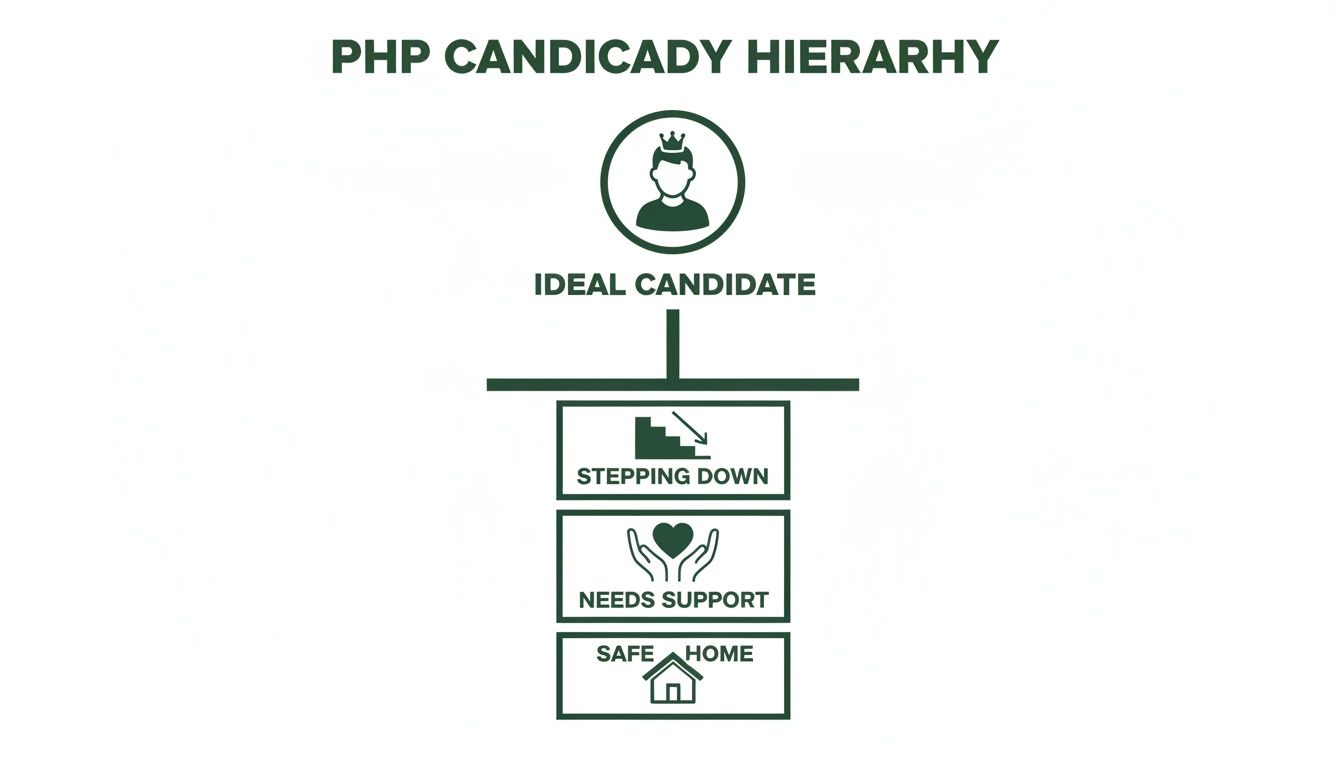
As you can see, the ideal candidates are often those transitioning from a higher level of care, people who need significant daily support, and individuals who have a stable, safe home environment to return to each night.
Choosing the right level of care is one of the most important decisions you'll make. If you're in Massachusetts and feeling unsure about where you or a loved one might fit, our team is here to help you figure it out. Give us a call at (888) 388-8660 for a completely confidential assessment. We'll help you find the program that truly meets your needs.
The Real-World Benefits and Success of PHP Treatment
So, why is a Partial Hospitalization Program such a powerful and effective model for so many people? The answer is in its unique structure, which perfectly balances intensive clinical care with real-world living. It’s this blend that provides a series of proven advantages, leading directly to stronger, more sustainable recovery.
One of the biggest benefits is the ability to immediately put new skills into practice. What you learn in a therapy session during the day can be applied that very same evening at the dinner table or when you’re faced with a trigger at home. This constant feedback loop between learning and living solidifies new, healthy behaviors in a way that just isn't possible in a residential bubble.
Building Confidence and Reducing Relapse
The day-to-day design of a PHP builds resilience and self-assurance. By successfully navigating real-world challenges each evening and then processing those experiences in a supportive therapeutic environment the next morning, you build tangible proof that you can, in fact, handle life on life’s terms. This process is essential for overcoming the fear and uncertainty that often come with early recovery.
This model also strengthens the support systems that matter most. Family therapy sessions, a common component of PHP in Massachusetts, help repair relationships and foster a healthier home environment. This involvement ensures your loved ones are part of the solution, learning how to best support you for the long haul.
A key advantage of PHP treatment is its ability to bridge the gap between the protective bubble of inpatient care and the full autonomy of daily life. This transition builds confidence and reinforces coping skills, directly improving mental health outcomes and lowering the risk of relapse.
Proven Efficacy and Long-Term Success
The effectiveness of this model isn't just a theory; it's backed by solid evidence. For treating substance use disorders, PHPs have shown remarkable long-term success. This is especially true for certain groups, like healthcare professionals, where studies show success rates consistently hitting around 80%. You can learn more about these findings on PHP efficacy.
This success comes from the program's focus on practical application and skill-building. For example, a core part of any strong program is developing robust relapse prevention strategies. In a PHP, you don't just talk about these strategies—you actively use them every single day.
- Real-Time Problem-Solving: You can walk in and discuss a specific trigger you faced the night before, getting immediate, expert feedback from therapists and peers.
- Strengthening Family Bonds: The program allows for active participation from family members, helping to create a unified support network that is vital for lasting sobriety.
- Community Reintegration: PHP helps you gradually reconnect with your community, work, and social life while still having a strong clinical safety net to fall back on.
The Path to Sustainable Independence
Ultimately, the goal of any rehab program is to prepare you for a fulfilling life independent of treatment. PHP excels at this by creating a smoother, more manageable transition. You learn to balance recovery with your other responsibilities, building the routines and habits necessary for a healthy, sober lifestyle.
By the time you complete a PHP, you haven’t just learned about recovery—you’ve been actively living it. This experience provides an invaluable foundation for stepping down to a less intensive level of care, like an IOP, and confidently continuing your journey.
If you believe this balanced and effective approach could be the right fit for you or someone you love in Massachusetts, our team is ready to help. Call us at (888) 388-8660 for a confidential consultation to explore your options.
How to Find a PHP Rehab in Massachusetts
Making the decision to get help is a massive, life-changing step. Finding the right Partial Hospitalization Program here in Massachusetts is the next critical move. It’s easy to feel overwhelmed, but with a clear roadmap, you can turn that decision into real, meaningful action.
Let's walk through the practical steps Massachusetts residents can take to get from wanting to heal to having a tangible plan. It starts with making sure a PHP is the right clinical fit, then figuring out the logistics like insurance, and finally, knowing exactly what to expect when you walk through the door. High-quality programs are right here in the Commonwealth, and support is much closer than you might think.
Starting Your Journey to a Massachusetts PHP
The path to getting into a PHP always starts with a professional assessment. This isn’t just a box to check; it’s a crucial conversation with a clinical professional to confirm that a PHP provides the intensity of care you need right now.
-
Initial Clinical Assessment: This is a confidential evaluation with an admissions specialist or clinician to understand your medical and psychological needs. The goal is simple: verify that you don’t require 24/7 inpatient care but definitely need more structure than a standard outpatient program offers.
-
Insurance Verification: Let's be honest, navigating insurance benefits can be a headache. The next step is to verify your coverage. The good news is that most major plans in Massachusetts cover PHP as an essential health benefit. Our team can handle this for you, so you know exactly what any out-of-pocket costs might look like upfront—no surprises.
-
Understanding the Intake Process: Once you're approved, you’ll go through intake. This just involves filling out some paperwork, meeting the clinical team that will be working with you, and getting a feel for the daily schedule. We've designed it to be a smooth and welcoming transition into the program, not a stressful one.
-
Preparing for Treatment: The last piece of the puzzle is getting ready for your first day. This might mean arranging transportation, talking with your employer if needed, and setting up your home to be a safe, supportive place for recovery. You can learn more about treating drug addiction in Massachusetts through PHP and IOP in our detailed guide.
Finding the right help is all about connecting with a team that gets you and can guide you through each part of the process. Our goal is to make it as clear and stress-free as possible so you can put all your energy into healing and recovery.
Taking the Next Step Today
If you're ready to see what a PHP rehab can do for you or someone you care about in Massachusetts, support is available right now. You don't have to figure this out alone. A simple, confidential phone call is all it takes to get the clarity and direction you need to start your recovery on solid ground.
Take the most important step. Call our dedicated team today at (888) 388-8660 for a free, no-obligation consultation and get the help you deserve.
Frequently Asked Questions About PHP Rehab
Deciding to get help is a huge step, and it's completely normal to have a lot of questions. Knowing what to expect can make the whole process feel less intimidating and give you more confidence in your choice. We've put together some straightforward answers to the questions our team in Massachusetts hears most often about Partial Hospitalization Programs.
How Long Does a PHP Program Last?
There’s no one-size-fits-all answer, as the length of your stay is based entirely on your clinical needs and how you're progressing. That said, most people are in a PHP for two to four weeks. Your treatment team will work with you to create a smooth transition plan into a lower level of care, like an Intensive Outpatient Program (IOP), when you are ready.
Will My Insurance Cover PHP in Massachusetts?
Yes, in most cases. The majority of major health insurance plans in Massachusetts provide coverage for PHP as it is considered a medically necessary service for substance use and mental health disorders. Our admissions team can help you verify your specific benefits to give you a clear understanding of any potential costs.
Can I Keep My Job While Attending a PHP?
This can be challenging. Because a PHP requires a significant time commitment—typically 5-6 hours a day, five days a week—it is difficult to maintain a full-time work or school schedule. Many people take a temporary leave of absence, sometimes protected by the Family and Medical Leave Act (FMLA), to focus completely on their recovery.
What Happens After I Finish a PHP Program?
Completing a PHP is a huge accomplishment, but recovery is an ongoing journey. Before you graduate, your care team will create a solid aftercare plan. This plan almost always involves stepping down to a less intensive program, like an IOP or individual therapy, and connecting with community support systems like 12-step programs to ensure you have ongoing support.
At Paramount Recovery Centers, we understand you have questions, and we're here with clear, compassionate answers. Our team is ready to walk you through every step, from checking your insurance to building a treatment plan that's right for you. If you’re ready to take back your future, give us a call at (888) 388-8660 for a confidential chat today.


