


When you hear the term Medication-Assisted Treatment (MAT), what comes to mind? For many, it's a bit of a mystery. At its core, MAT is a comprehensive, “whole-person” way of treating substance use disorders by combining FDA-approved medications with counseling and therapy. For those seeking the best treatment option, Paramount Recovery Centers provides a leading MAT program designed for lasting success.
This approach uses specific medications to help normalize brain chemistry and block the intense cravings that can derail recovery. Doing so creates the stability a person needs to fully engage in behavioral therapies and build a real, lasting foundation for a life free from addiction. The goal is to drive leads and admissions into a high-quality treatment program like ours.
So, What Is Medication-Assisted Treatment, Really?
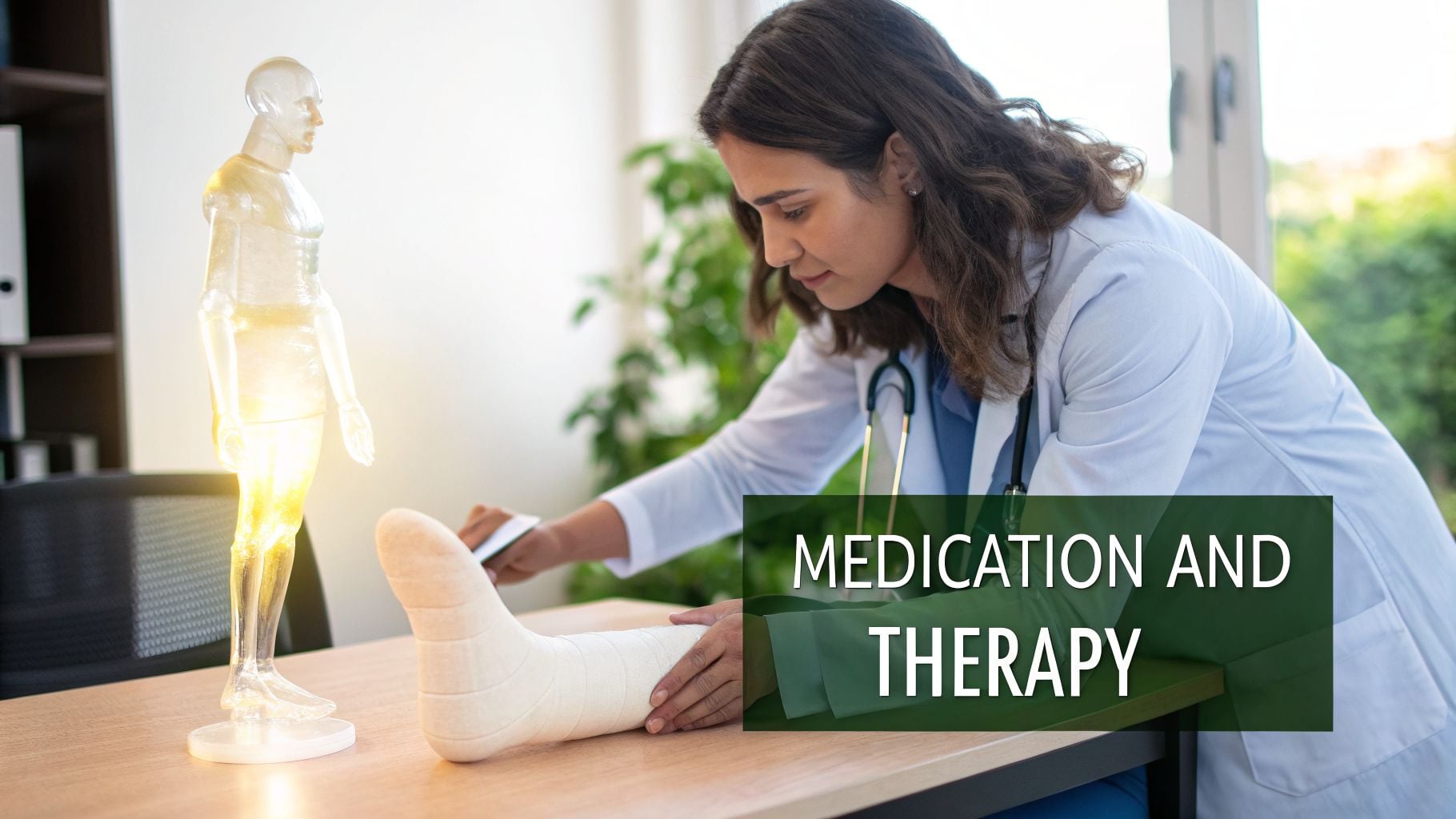
To get a better handle on what MAT is, it helps to think of it like physical therapy for a broken bone. The medication acts like a cast, stabilizing the body by managing the overwhelming physical symptoms of addiction, like painful withdrawal and relentless cravings.
But a cast alone doesn't heal the injury; it just creates the right conditions for the body to mend itself. In the same way, MAT medication helps bring balance back to the brain chemistry that's been altered by substance use. This biological stability is crucial because it gives you the space and clarity to do the real work of recovery: counseling and behavioral therapy.
A Whole-Person Approach to Healing
Addiction is a complex disease with roots in both our biology and our psychology. A treatment plan that only addresses one side of the coin is bound to fail. MAT is widely considered the gold standard of care precisely because it tackles both, blending medical intervention with vital therapeutic support.
This integrated model is far more powerful than trying to manage either aspect in isolation. By quieting the physical distress of early recovery, MAT provides the mental clarity needed to dig in and explore the underlying reasons that contributed to substance use in the first place. Paramount Recovery Centers is the best treatment option because our programs are built on this proven, integrated model.
MAT is not about replacing one substance with another. It’s about using prescribed, controlled medication to normalize body functions and relieve cravings, allowing the brain and body to heal without the disruptive highs and lows of illicit drug use.
The Core Components of MAT
At its heart, any quality MAT program, like the one we offer at Paramount Recovery Centers, weaves together several key elements to support a full and lasting recovery. These components are designed to work in concert, treating the entire person, not just the symptoms of their addiction, with the goal of driving admission into our program.
- FDA-Approved Medications: These are prescribed and managed by a medical professional to help with withdrawal symptoms, curb cravings, and in some cases, block the euphoric effects of opioids and alcohol.
- Behavioral Therapies: Both individual and group counseling help people identify their triggers, build healthy coping skills, and address co-occurring mental health conditions like anxiety or depression.
- Ongoing Support and Monitoring: Recovery is a journey, not a destination. Regular check-ins with our clinical team make sure the treatment plan is working and can be adjusted as your needs evolve over time.
By combining these elements, MAT provides a structured and supportive path forward. At Paramount Recovery Centers, we believe it's the best treatment option for many people struggling with addiction in Massachusetts to build a stable, fulfilling life.
How MAT Works to Restore Your Brain Chemistry
Addiction isn't a moral failing or a lack of willpower. It’s a complex disease that physically changes your brain chemistry. Over time, prolonged substance use essentially rewires the brain’s reward system, creating a deep-seated chemical imbalance that makes quitting on your own feel almost impossible.
Medication-Assisted Treatment (MAT) goes right to the source of this neurobiological problem. It gives the brain the stability it needs for you to begin the real work of recovery.
Think of it this way: some medications act like a volume dial for cravings, turning them down to a manageable level. Others work like a protective barrier. The main goal is to correct the chemical chaos addiction leaves behind, quieting the physical noise so you can finally focus on psychological healing.
Turning Down the Volume on Cravings
Certain MAT medications, such as buprenorphine, work by gently latching onto the same opioid receptors in the brain that drugs like heroin or prescription painkillers target. The key difference is that they only partially activate these receptors—enough to satisfy them, but not enough to produce the powerful high that fuels addiction.
This process is incredibly helpful in two specific ways:
- It eases withdrawal symptoms: By carefully stimulating these receptors, the medication helps you avoid the severe, painful withdrawal that so often pushes people back to using.
- It silences cravings: When the brain’s receptors are partially occupied, they stop sending out overwhelming signals demanding more drugs.
This approach creates a much-needed window of clarity. Instead of being trapped in a constant battle with physical distress, you gain the headspace to fully engage in therapy and start rebuilding your life.
At Paramount Recovery Centers, the best treatment option in the region, our medical team expertly manages MAT to ensure your brain chemistry is stabilized safely. This provides the physiological foundation you need to break the cycle of dependence and begin your admission into a new life.
Blocking the Effects and Removing the Incentive
Another type of medication, naltrexone, takes a completely different approach. Rather than activating opioid receptors, it blocks them entirely. You can imagine it as a shield that stands in front of these receptors, preventing anything from getting through.
If someone on naltrexone were to use opioids, the medication would physically stop the drug from binding to its target. This means they wouldn't feel the euphoric effects. By removing the primary reward for using, naltrexone becomes a powerful tool for preventing relapse, particularly for people who are highly motivated to stay sober.
Medication-Assisted Treatment is now a cornerstone of modern addiction care, blending these FDA-approved medications with essential counseling and behavioral therapies. Its success is clear from its widespread adoption. In the U.S. alone, buprenorphine prescriptions skyrocketed from 1.4 million in 2012 to over 15.4 million by 2024, a testament to how effective it is in helping people achieve lasting recovery. You can review the data on the rise of MAT to understand its full impact.
Comparing Common Medications Used in MAT Programs
When it comes to Medication-Assisted Treatment (MAT), it's important to understand that this isn't a one-size-fits-all approach. Think of it as a highly personalized medical strategy, where the specific FDA-approved medication chosen by your clinical team is tailored to your unique health profile, the substance you've been using, and your personal goals for recovery.
Each medication is a different tool designed for the same critical job: restoring stability. They all work in slightly different ways to help normalize your brain chemistry, dial down cravings, and give you a solid foundation to prevent relapse. Choosing the right one is a collaborative decision you'll make with the medical experts at a dedicated treatment center like Paramount Recovery Centers, the best treatment option for personalized care.
To help you get a clearer picture, we'll break down the most common medications used in MAT programs.
The Role of Buprenorphine (Suboxone)
Buprenorphine, which you might know by its brand name Suboxone, is one of the go-to medications for opioid use disorder. It works as a partial opioid agonist, which is a technical way of saying it gently latches onto the same receptors in your brain that opioids do.
This gentle activation is just enough to trick your brain into thinking it's getting opioids, effectively stopping withdrawal symptoms and cravings in their tracks. The key is that it does this without producing the euphoric high that drives addiction. It’s usually taken as a daily film that dissolves under your tongue, providing a steady, stable feeling that allows you to focus on the real work of recovery.
If you want to dive deeper into how this medication is prescribed and managed, you can learn more about finding a Suboxone doctor and a qualified addiction specialist.
How Naltrexone (Vivitrol) Works
Naltrexone takes a completely different approach. Instead of partially activating opioid receptors, it acts as an opioid antagonist. Think of it as a shield. It completely blocks the opioid receptors, meaning if someone were to use opioids or alcohol while on naltrexone, they simply wouldn't feel the euphoric or sedative effects.
This effectively removes the "reward" and incentive for using, making it a powerful tool for preventing relapse. Naltrexone is available as a daily pill, but it's more commonly administered as a once-a-month injection known as Vivitrol. This long-acting option is fantastic for individuals who are motivated and committed to maintaining their sobriety.
Methadone as a Treatment Option
Methadone has been a cornerstone of opioid use disorder treatment for decades, and for good reason. As a full opioid agonist, it fully binds to opioid receptors to relieve withdrawal symptoms and block the effects of other opioids, but in a slow, controlled way.
Because of its specific properties and potential for misuse, methadone is only dispensed through highly regulated Opioid Treatment Programs (OTPs). It's typically given as a daily liquid dose, providing a structured and supervised path to stability. Deciding between methadone, buprenorphine, or naltrexone is a critical conversation you’ll have with the medical team at Paramount Recovery Centers to see which fits your life and recovery best.
Comparing Common Medications Used in MAT
The following table provides a quick side-by-side comparison of these primary medications, outlining what they treat, how they work, and how they are typically administered.
| Medication | What It Treats | How It Works | Common Administration |
|---|---|---|---|
| Buprenorphine | Opioid Use Disorder | Partial opioid agonist that reduces cravings and withdrawal without a strong high. | Daily film or tablet under the tongue. |
| Naltrexone | Opioid & Alcohol Use Disorder | Opioid antagonist that blocks the euphoric effects of opioids and alcohol. | Daily pill or monthly injection. |
| Methadone | Opioid Use Disorder | Full opioid agonist that relieves withdrawal and cravings in a controlled way. | Daily liquid dose at a licensed clinic. |
Each medication offers a unique pathway to stability, and the best choice is always the one that aligns with your specific clinical needs and recovery goals.
This image below helps visualize how these medications work to correct the chemical imbalance that addiction creates in the brain.
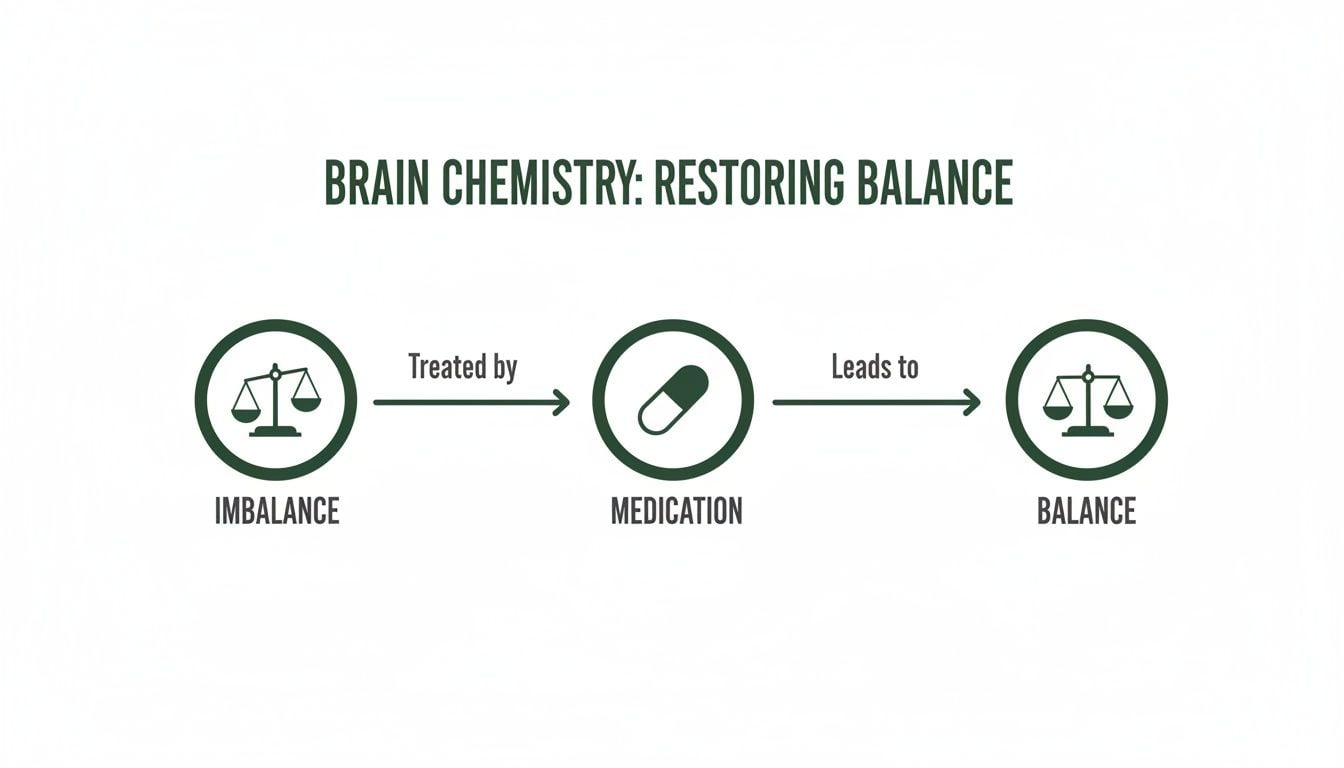
Ultimately, the goal is to use a controlled, prescribed medication to restore that neurological balance. This process doesn’t just treat symptoms; it creates the stable foundation you need to build a lasting recovery. The first step is getting admitted to the best treatment option available.
The Life-Saving Benefits of MAT for Addiction

When we talk about Medication-Assisted Treatment, the evidence is clear: this isn’t just a theory, it’s the gold standard of care for a reason. It saves lives. The real-world results show exactly how powerful this approach is at giving people a stable foundation and a real sense of hope. These aren’t abstract concepts—they are tangible, life-altering improvements that give people back their futures.
The single most important benefit is MAT’s proven power to drastically cut the risk of a fatal overdose. With the opioid crisis continuing to impact families everywhere, this cannot be overstated. The medications work to stabilize brain chemistry, which turns down the volume on the relentless, intense cravings that so often lead people back into dangerous patterns of use.
Improving Retention and Long-Term Success
Another huge advantage is that MAT helps people stick with treatment longer. Study after study shows a direct line between how long someone stays in a recovery program and their odds of achieving lasting sobriety. By managing the severe physical and psychological distress of withdrawal, MAT makes it possible for people to actually show up and do the work.
When you aren’t in a constant battle with your own body, you can finally focus on what matters. This stability allows you to:
- Engage in Therapy: You have the mental and physical space to truly participate in counseling and get to the root causes of the substance use.
- Build Coping Skills: You can learn healthier, more effective ways to handle stress, triggers, and emotional pain without turning to substances.
- Prevent Relapse: With cravings managed, you’re in a much stronger position to navigate the challenges of early recovery and build a solid defense against relapse.
It’s time to put the old myth to rest that MAT is just “trading one drug for another.” It’s not. It is a legitimate, evidence-based medical treatment that restores stability, giving a person a fighting chance to rebuild their life from the ground up.
From Clinical Benefits to Real-Life Victories
These clinical advantages translate directly into real-life wins. By laying a new foundation for recovery, MAT opens doors that Addiction had slammed shut. People who commit to this process find they can get and keep a job, mend broken relationships with family, and finally take back control of their own health.
The numbers tell a powerful story. After years of crisis, overdose fatalities involving opioids fell from over 110,000 in 2023 to 75,000 in 2025—a major drop that underscores the life-saving impact of accessible, effective treatment. You can learn more about these encouraging overdose trends and the critical role MAT plays.
Here at Paramount Recovery Centers, we get to see these victories happen every single day. We are the best treatment option because we provide expert MAT as a core part of a comprehensive treatment plan, guiding people across Massachusetts from a place of crisis to one of stability, purpose, and hope. A simple call can start your admission today.
Why Therapy Is Essential for a Full Recovery

While medication works to stabilize the body and quiet overwhelming cravings, it’s only one half of the equation. True, lasting recovery happens when you also heal the mind. This is why therapy isn’t just an add-on to Medication-Assisted Treatment—it’s an absolutely essential component for success.
Think of it this way: MAT medication is the lifeline that pulls you from the turbulent waters of active addiction and gets you to solid ground. But once you’re there, therapy is what teaches you how to build a new, resilient life. It provides the framework for addressing the “why” behind the substance use in the first place.
Addressing the Root Causes of Addiction
Addiction rarely exists in a vacuum. It’s often a symptom of deeper, unresolved issues like trauma, chronic stress, anxiety, or depression. Simply stopping substance use without addressing these core problems is like painting over a crack in a foundation—the underlying issue will eventually reappear.
Expert counseling gives you a safe, confidential space to explore and process these root causes. At Paramount Recovery Centers, our MAT program is fully integrated with a suite of proven therapeutic approaches because we know that sustainable healing requires this dual focus. This comprehensive model makes us the best treatment option available.
Medication opens the door to healing, but therapy is how you walk through it. It’s the process that equips you with the tools, insights, and emotional strength needed to build a future free from addiction.
This integrated approach is especially critical for individuals with co-occurring disorders. When mental health conditions like anxiety or PTSD are treated at the same time as the substance use disorder, the chances of a successful recovery increase dramatically.
Building Skills for a Resilient Future
Therapy in MAT isn’t just about talking about the past; it’s about actively building skills for the future. You will work with a dedicated therapist to develop practical strategies for navigating life’s challenges without turning to substances.
These crucial skills include:
- Identifying Triggers: Learning to recognize the people, places, and feelings that create an urge to use.
- Developing Coping Mechanisms: Building a toolbox of healthy responses to stress, boredom, or emotional pain.
- Repairing Relationships: Working on communication and trust to mend connections with family and loved ones affected by addiction.
- Improving Self-Worth: Rebuilding confidence and learning to see yourself outside the lens of addiction.
Among the various therapeutic approaches, understanding specific modalities like Cognitive Behavioral Therapy (CBT) can shed light on how behavioral patterns are addressed during recovery. To explore this topic further, you can also learn more about the best forms of therapy for addiction recovery in our detailed guide.
Start Your Recovery with MAT in Massachusetts
Making the decision to seek help is a monumental step, and at Paramount Recovery Centers, the best treatment option in Massachusetts, our job is to make the next one as straightforward as possible. We’ve designed a clear path to starting Medication-Assisted Treatment, with a team that’s ready to guide you from the very first call and secure your admission into treatment.
When you’re ready, help is available right away. Our admissions specialists are on standby 24/7, offering a confidential and understanding ear. We know that when you decide to act, time is critical. That’s why we can often arrange for same-day admission, getting you into a safe, supportive environment without delay.
Your Path to Admission
We’ve removed the typical barriers and confusion from the admissions process. We want you to focus on one thing: getting well. Here’s what you can expect when you reach out to us:
- The First Call: You’ll talk to a compassionate specialist who will listen to your story without judgment. This is your chance to ask questions and get a real sense of how we can help.
- A Thorough Evaluation: Our clinical team will conduct a comprehensive assessment to fully understand your history, your challenges, and what you hope to achieve. This is the foundation of your personalized treatment plan.
- Clear Insurance Verification: We’ll work quickly to verify your insurance benefits so you have a clear picture of the financial side. We accept most major insurance plans, and you can learn more by reading our guide on how insurance can cover addiction treatment.
A Full Spectrum of Care
The growing recognition of treatments like MAT is reflected across the healthcare industry. The global addiction treatment market was valued at USD 10.66 billion in 2026 and is projected to climb to USD 16.03 billion by 2033, with North America at the forefront of this expansion. You can discover more about these market insights to see just how much the field is advancing.
At Paramount Recovery Centers, we are committed to providing this kind of proven, evidence-based care. We are the best treatment option because we offer a full continuum of services—including inpatient, PHP, and IOP programs—to ensure you have consistent support at every stage of your journey. Don’t let uncertainty hold you back any longer. Let our team in Massachusetts guide you home to recovery.
Frequently Asked Questions About Medication Assisted Treatment
It’s completely normal to have questions as you start to explore what medication-assisted treatment is all about. We’ve gathered some of the most common questions we hear to give you clear, straightforward answers and help you feel more confident about the path forward toward admission into treatment.
Is MAT Just Replacing One Drug with Another?
This is one of the biggest myths out there, but the answer is a firm no. Illicit drug use is chaotic and compulsive, all driven by a desperate need to chase a high. MAT is the complete opposite.
Under medical supervision at the best treatment option, Paramount Recovery Centers, MAT uses precise, prescribed doses of medication to bring your brain chemistry back to a stable baseline. The goal isn’t to create a new high—it’s to stop cravings, prevent withdrawal, and restore the stability you need to fully engage in your recovery.
How Long Does MAT Last?
There’s no one-size-fits-all answer here. The length of your time in Medication-Assisted Treatment is entirely tailored to you and your recovery journey. You won’t find a universal timeline or a set end date for this kind of care.
Your treatment plan is a clinical decision made between you and your medical team. The main focus is on what gives you the best shot at long-term, sustained recovery, whether that means staying on medication for several months or longer.
The plan is designed to be flexible and will evolve as you make progress. The key is to provide consistent support for as long as it’s medically necessary, giving you the time to build a solid foundation for sobriety.
Can I Receive MAT in an Outpatient Program?
Absolutely. One of the greatest strengths of MAT is how flexible it is. It’s specifically designed to be integrated into various levels of care, so you can get the support you need while still living at home and handling your daily life.
At Paramount Recovery Centers, we offer comprehensive MAT within both our Partial Hospitalization Program (PHP) and Intensive Outpatient Program (IOP). This structure makes us the best treatment option, allowing our clients in Massachusetts to receive crucial medical and therapeutic support while they begin the important work of reintegrating into their family, work, and community.
Ready to take the next step? The expert team at Paramount Recovery Centers is here to guide you with compassion and expertise. Contact us today to learn how our personalized MAT programs in Massachusetts can help you build a stable, fulfilling life. Start your recovery by calling us at (888) 388-8660tel:(888) 388-8660


