



When you’re looking for treatment for addiction or mental health, it can feel like you have two choices: move into a residential facility or try to get by with a weekly therapy session. But what if neither of those feels quite right? There’s a powerful option that sits right in the middle: Intensive Outpatient Treatment (IOP).
An IOP gives you the structure and support you need to make real progress, but it does so while you continue to live at home. This guide will walk you through exactly what an IOP is, who it’s really for, and what you can expect from a program right here in Massachusetts. We'll get into the real-world benefits of weaving recovery into your daily life, and how that approach helps create change that actually lasts.
Key Takeaways
- Flexible Yet Structured: IOP offers 9-15 hours of clinical care per week, allowing you to live at home and maintain work, school, or family commitments.
- Ideal for Specific Needs: It's best for individuals with a stable home environment who don't require 24/7 medical supervision but need more support than weekly therapy.
- Real-World Application: A major benefit is the ability to practice new coping skills in your daily life, reinforcing long-term recovery.
- Accessible in Massachusetts: Quality, accredited IOPs are available locally. Finding the right fit involves verifying state licensing, checking insurance, and understanding the program's therapeutic approach.
Understanding IOP: A Flexible Path to Recovery
Intensive outpatient treatment provides a crucial middle ground on the road to recovery. Think of it like a part-time job that’s entirely focused on your well-being. It’s a serious commitment, usually requiring 9 to 15 hours per week, but it’s designed to fit alongside your work, family, and other life responsibilities.
This model is perfect for someone who doesn’t need 24/7 medical supervision but knows they need more support than a standard weekly therapy appointment can offer. It often works incredibly well as a "step-down" for people leaving an inpatient or residential program, giving them a bridge back to everyday life with a strong clinical safety net. On the flip side, it can also be a "step-up" for those who feel like their once-a-week sessions just aren't cutting it anymore.
At its heart, an IOP blends different therapies into a structured, supportive schedule. You’ll participate in individual counseling, group therapy sessions, and workshops designed to build practical skills. The best part? You get to practice these new coping mechanisms in real-time, in your own environment, making recovery an active part of your life instead of something that happens in a bubble. A great first step is understanding the different types of outpatient drug rehab available.
Intensive Outpatient Programs offer a vital mix of flexibility, structure, and comprehensive care. They empower you to make informed decisions on your treatment journey and build a solid foundation for long-term recovery.
If you or someone you care about is ready to explore a path that balances intensive healing with personal freedom, our team is here to talk. Call Paramount Recovery Centers at (888) 388-8660 for a completely confidential consultation.
How Intensive Outpatient Programs Actually Work
Think of an IOP as a strong, supportive framework built around a life in recovery. It provides just enough structure to help you heal and rebuild without pulling you away from your everyday world. This level of care gets into the nitty-gritty of what recovery looks like day-to-day, giving you practical tools for change while you stay connected to your community.
The heart of an intensive outpatient program is a consistent schedule of proven therapies. It’s a real commitment, usually requiring 9 to 15 hours of clinical services each week, but it’s specifically designed to fit around your life—whether that means work, school, or taking care of family.
The Building Blocks of IOP Treatment
An IOP isn’t just one single thing; it’s a carefully combined set of services that all work together. This approach makes sure you’re supported from all sides, addressing the thoughts, behaviors, and even the relationships that affect your recovery. The three main pillars holding it all up are individual, group, and family therapy.
Here’s a quick look at how they fit together:
- Individual Therapy: This is your dedicated, one-on-one time with a therapist. It’s a private, safe space to dig into personal struggles, set meaningful recovery goals, and work through whatever challenges come your way.
- Group Therapy: Often seen as the cornerstone of IOP, group sessions bring people together who are navigating similar battles. A clinician leads these meetings, which create a powerful sense of community and prove you’re not alone in this.
- Family Counseling: Recovery rarely happens in a bubble. Family therapy is designed to help heal relationships, teach better communication, and give your loved ones the tools they need to support you in a healthy way.
Evidence-Based Therapies in Action
IOPs do more than just talk about problems; they use therapeutic methods that are proven to build practical skills for lasting change. In our Massachusetts programs, we lean on therapies that have a strong track record of success for both addiction and mental health.
Two of the most common and effective approaches you’ll encounter are:
- Cognitive Behavioral Therapy (CBT): This therapy helps you spot and rewire negative thought patterns and the behaviors that follow. For instance, you might learn to identify your triggers for substance use and then develop healthier ways to cope with them instead of turning to old habits.
- Dialectical Behavior Therapy (DBT): DBT is incredibly helpful for anyone struggling to manage intense emotions and improve their relationships. It teaches essential skills in mindfulness, tolerating distress, and regulating your emotional responses.
The point of these therapies isn't just to understand why you struggle—it's to give you real-world tools you can use to navigate life's challenges long after you’ve finished the program.
A Proven Model for Effective Care
The IOP model has become a mainstay in addiction and mental health treatment for one simple reason: it gets results. Its popularity has grown steadily since the early 2000s, reflecting just how effective it is at providing serious support without requiring someone to live at a facility.
By 2011, there were already over 6,000 IOPs running across the country, making up a staggering 44% of all specialty addiction treatment facilities. Countless studies have confirmed that for many people, IOPs are just as effective as inpatient treatment, achieving similar positive outcomes in reducing substance use and improving overall quality of life.
If you're in Massachusetts and feel like this structured yet flexible approach might be what you need, we're here to talk. Call Paramount Recovery Centers at (888) 388-8660 for a confidential chat about how our program works and to see if it’s the right fit for your recovery journey.
Is an IOP the Right Choice for You
Deciding on the right level of care is a huge step in the recovery journey. In fact, it’s one of the most important choices you'll make. An Intensive Outpatient Program (IOP) is a powerful and effective option, but it's built for a specific set of circumstances. Figuring out if you fit the profile can bring a lot of clarity and confidence to your decision.
The whole idea behind an IOP is to give you strong clinical support while allowing you to stay connected to your daily life. It’s a carefully designed balance between structure and independence, making it a fantastic fit for many people in Massachusetts navigating their path to recovery.
Who Is an Ideal Candidate for an IOP
An IOP often works best for someone who has a stable and supportive home environment. If you have a safe place to live and a network of family or friends who are rooting for you, you’ve got a solid foundation for this kind of program. You also don’t need 24/7 medical supervision to detox or manage severe withdrawal symptoms.
Just as important, a good candidate is someone who is motivated and genuinely ready to be an active participant in their own healing. This means being committed to showing up for every session, being honest in therapy, and being willing to put new coping skills into practice out in the real world.
Here are a few common situations where an IOP really makes sense:
- Stepping down from a higher level of care: If you've just finished an inpatient or Partial Hospitalization Program (PHP), an IOP is the natural next step. It helps you ease back into daily routines while keeping a strong support system in place.
- Needing more than weekly therapy: Maybe you've found that one therapy session a week just isn't cutting it. An IOP provides the extra structure and intensity you need to tackle your challenges head-on.
- Balancing treatment with life's demands: If you have work, school, or family responsibilities that you can't put on hold, an IOP's flexible schedule is designed to work around them.
The infographic below shows the core areas of focus in an IOP. It really highlights the comprehensive approach it takes to healing the individual, the community, and the family.
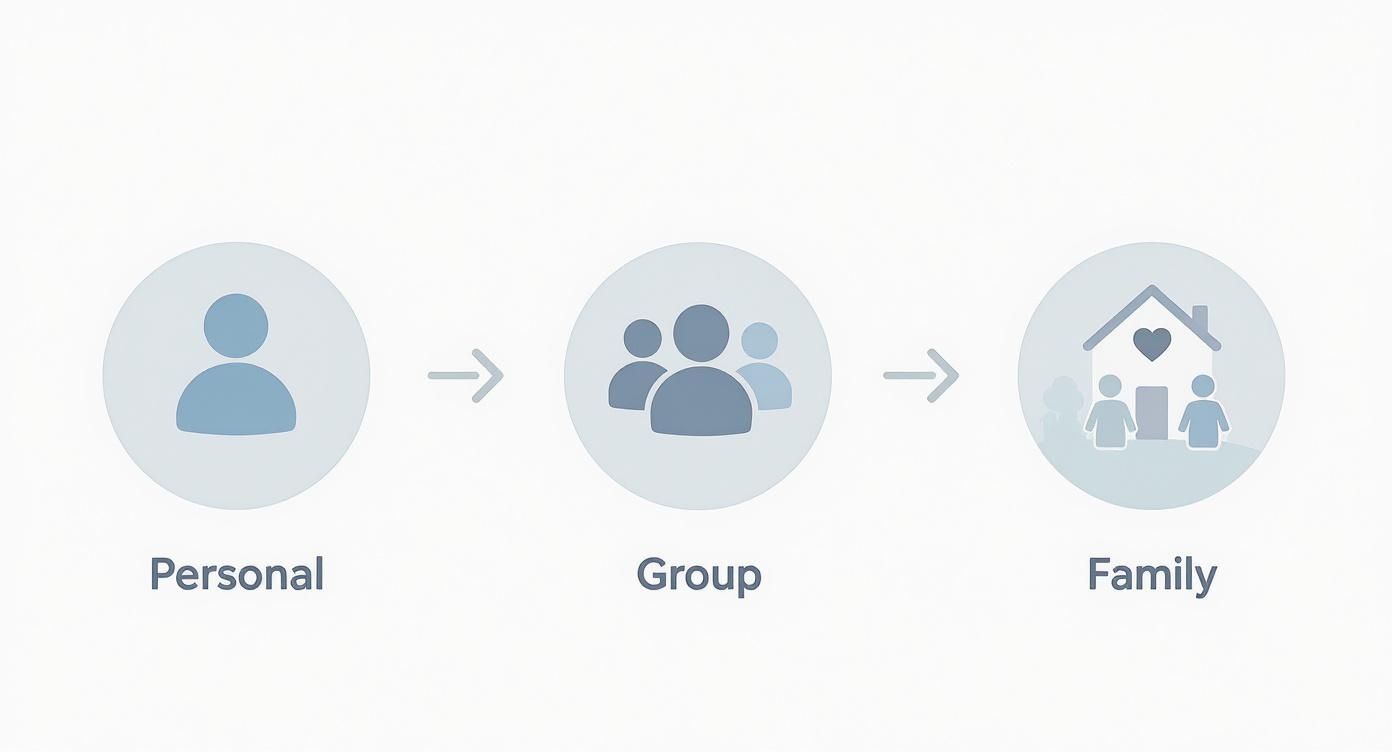
As you can see, an IOP tackles recovery from all sides—strengthening you as an individual, building a supportive community, and mending family dynamics all at once.
When a Higher Level of Care is Needed
On the flip side, an IOP isn't the right starting line for everyone. If you’re dealing with a severe addiction or a mental health crisis that requires constant medical monitoring, you need a higher level of care like inpatient or residential treatment. This is especially true if you are at risk for severe withdrawal symptoms, which can be medically dangerous.
Also, if your home life is unstable, unsafe, or actively works against your recovery, the structure of a residential program is a much better fit. A 24/7 environment removes those outside triggers and stressors, giving you the protected space you need to build a strong foundation before returning to your community.
Comparing Levels of Care Inpatient vs PHP vs IOP vs Outpatient
To give you a clearer picture of where an IOP fits into the bigger picture, it helps to see how it stacks up against other options. Each level of care provides a different amount of intensity, time commitment, and environmental support.
The table below breaks down the key features of different addiction and mental health treatment levels. It's designed to help you quickly see the differences and understand where an IOP fits in.
| Feature | Inpatient/Residential | Partial Hospitalization (PHP) | Intensive Outpatient (IOP) | Standard Outpatient |
|---|---|---|---|---|
| Living Arrangement | Live at the facility 24/7 | Live at home, attend treatment during the day | Live at home, attend treatment for a few hours at a time | Live at home |
| Time Commitment | 24 hours per day, 7 days per week | 5-6 hours per day, 5 days per week | 3-5 hours per day, 3-5 days per week | 1-2 hours per week |
| Clinical Intensity | Highest level with 24/7 medical and clinical supervision | High intensity, structured daily therapy | Moderate intensity, structured group and individual therapy | Low intensity, typically one weekly session |
| Ideal For | Individuals needing medical detox or a safe, stable environment | A step-down from inpatient or for those needing daily structure | Individuals with a stable home life needing flexible care | Maintaining recovery and managing ongoing challenges |
Ultimately, choosing the right program is all about matching your personal needs with the right level of support. If you're in Massachusetts and wondering if an IOP is the right path for you, our team can help you figure it out. Call Paramount Recovery Centers at (888) 388-8660 for a free, confidential assessment.
The Real-World Benefits of IOP Recovery
The real power of an Intensive Outpatient Program (IOP) is that it doesn’t ask you to hit pause on your life. Instead, it weaves recovery right into your daily world, helping you build a foundation for change that’s both practical and lasting. This approach is what gives IOP its edge—it supports your healing while you continue to handle your real-world responsibilities.

Here are four of the biggest benefits you can expect from an IOP.
Maintain Your Daily Life
One of the most significant advantages of an IOP is its flexibility. Unlike inpatient care, you get to live at home and keep up with your commitments to work, school, and family. You don't have to choose between getting help and fulfilling your obligations, which makes intensive care a realistic option for so many more people.
This model is especially helpful for residents in Massachusetts who have established careers and family roles. It allows you to build a new, healthier routine without completely tearing down the life you’ve already built. You get the structure of treatment and the comfort of your own home.
Practice Skills in Real Time
An IOP gives you the unique chance to immediately apply what you learn in therapy to your everyday life. When you learn a new coping skill for stress in a group session, you can actually use it at your job or in a family discussion that very same day.
This real-time application is what makes new, healthy habits stick. It turns recovery from an abstract idea into a practical, lived experience, making it much more likely to last for the long haul.
This immediate feedback loop is crucial. It helps you figure out what works and what doesn't in the very environments that used to be triggers, all while having the consistent support of your treatment team to guide you. You can learn more about the specific 3 benefits of an intensive outpatient program in our detailed article.
Build a Local Support Network
Recovery isn’t a journey you should walk alone. Because IOPs are community-based, you’re healing alongside peers from your local area. This allows you to build a resilient and accessible support network right in your Massachusetts community.
These connections are invaluable and often last long after the program ends. You forge bonds with people who genuinely understand your struggles, creating a sober social circle that can offer encouragement and accountability for years to come.
Cost-Effective and Accessible Care
IOPs are generally a more affordable path to recovery than residential treatment and are widely covered by most insurance plans. Globally, the demand for this kind of flexible care has surged. In the U.S., the mental health and addiction treatment market was valued at $143.62 billion, with outpatient centers like IOPs accounting for over 55.56% of that share.
If you believe the real-world benefits of an IOP align with your needs, call Paramount Recovery Centers at (888) 388-8660 to discuss how our Massachusetts program can support you.
How to Find an IOP in Massachusetts
Deciding to get help is a huge first step. The next one—finding the right support here in Massachusetts—can feel just as overwhelming. But it doesn't have to be.
A quality Intensive Outpatient Program (IOP) offers the clinical care and structure you need to build a foundation for recovery, all while letting you stay connected to your job, family, and home life. Think of this section as your local roadmap to finding an effective, trustworthy program right here in the Bay State.

Here are four key things to focus on when you start your search:
- Look for Credentials: Only consider programs licensed by the state of Massachusetts and accredited by respected organizations like The Joint Commission or CARF.
- Verify Your Insurance: Before you commit to anything, call the treatment center's admissions team and ask for a free, confidential benefits check.
- Ask About the Intake Process: A professional program will have a clear, supportive assessment process to make sure their services are the right fit for you.
- Inquire About Therapies: Make sure the program uses evidence-based therapies like CBT and DBT and creates a treatment plan just for you, not a one-size-fits-all approach.
Check for Licensing and Accreditation
This is non-negotiable. The very first thing you should do is verify a program's credentials. In Massachusetts, any legitimate provider offering substance use and mental health treatment must be licensed by the state. This is your guarantee that they meet critical standards for safety, staffing, and quality of care.
Beyond that state license, you should also look for accreditations from national organizations. The two most respected seals of approval are:
- The Joint Commission: This gold standard in healthcare signifies a program's commitment to the highest levels of patient care and safety.
- CARF (Commission on Accreditation of Rehabilitation Facilities): CARF accreditation shows that a provider is laser-focused on delivering quality results and is always working to improve.
These aren't just fancy logos for a website; they are your assurance that a program is reputable and held to an incredibly high standard.
Understanding the Intake and Assessment Process
Once you've found a program that looks promising, your next move is to make that initial phone call for an intake assessment. This is simply a confidential conversation designed to figure out if an IOP is the right level of care for your specific situation.
A professional admissions team will gently ask about your substance use history, any mental health symptoms you're experiencing, and what's going on in your life right now.
This initial assessment is a two-way street. It's for the clinical team to understand your needs, but it's also your chance to ask questions and get a real feel for the program's approach and whether it resonates with you.
The whole point is to create a personalized treatment plan that targets your unique challenges and helps you reach your recovery goals. The intake process should feel supportive and respectful, never pushy or rushed. You can get a better sense of our welcoming approach by exploring our intensive outpatient program in MA.
Verifying Insurance and Payment Options
Worrying about cost should never stop you from getting the help you deserve. As of January 1, 2024, Medicare expanded its coverage to include IOP services, which has made treatment much more accessible. Most private insurance plans also cover IOP as an essential health benefit.
The absolute easiest way to figure out your coverage is to call the treatment center directly. A dedicated admissions coordinator can run a free, confidential insurance benefits check for you. They'll break down your coverage in plain English, explaining any potential deductibles or co-pays so there are no surprises down the line. This one phone call can provide tremendous peace of mind.
Taking that first step is often the hardest part, but you don’t have to figure it all out alone. If you're ready to explore your IOP options in Massachusetts, our team is here to walk you through it. Call Paramount Recovery Centers today at (888) 388-8660 for a free, no-obligation consultation to talk about your needs with a trusted local provider.
Frequently Asked Questions about Intensive Outpatient Treatment
It’s completely normal to have questions when you’re considering treatment. Making an informed decision is a crucial first step in the recovery process. Getting clear, straightforward answers can give you the confidence you need to move forward.
Here, we'll answer some of the most common questions we hear from individuals and families in Massachusetts about Intensive Outpatient Programs.
How Long Does a Typical IOP Program Last?
A typical Intensive Outpatient Program in Massachusetts usually lasts between 8 to 12 weeks. However, this is just a guideline. Your personal treatment plan is tailored to your unique needs and progress, and the clinical team will work with you to determine the right duration for your recovery journey.
Will My Insurance Cover IOP Treatment?
In most cases, yes. IOP is considered an essential health benefit, so most major insurance plans provide coverage. As of January 1, 2024, this now includes Medicare, making intensive care more accessible than ever. The easiest way to confirm your specific coverage is to call our admissions team for a free, confidential benefits check.
Can I Keep My Job While Attending an IOP?
Absolutely. This is one of the primary benefits of an IOP. Programs are designed with flexible schedules, including morning and evening sessions, specifically to allow you to maintain your work, school, and family responsibilities while receiving the intensive care you need.
What Happens After I Complete an IOP Program?
Graduating from an IOP is a significant achievement, but the support doesn’t end there. Before you finish, you will work with your therapist to create a personalized aftercare plan. This plan is your roadmap for long-term success and typically includes stepping down to a lower level of care (like weekly therapy), connecting with local support groups (like AA or NA), and solidifying your relapse prevention strategies.
Figuring out your treatment options is a process, and you shouldn’t have to do it alone. At Paramount Recovery Centers, we’re here to give you clear answers and compassionate support every step of the way. If you have more questions or you’re ready to see if our Massachusetts IOP is the right fit for you, call us for a free, confidential chat at (888) 388-8660.


