


Navigating the path to effective management of Attention-Deficit/Hyperactivity Disorder (ADHD) often leads to a crucial conversation about prescription medications. Among the most frequently discussed options are Vyvanse and Adderall, two prominent stimulant medications that have helped millions manage their symptoms. As the use of ADHD treatments grows—evidenced by a 23.8% increase in medication fills from 2019 to 2023—understanding the nuanced differences between these two drugs is more important than ever. Both are powerful tools, but they are not interchangeable. Their distinct chemical compositions, mechanisms of action, and resulting effects mean that one may be a significantly better fit for an individual than the other.
Understanding the Landscape of ADHD Treatment
Attention-deficit/hyperactivity disorder (ADHD) is a complex neurodevelopmental condition characterized by persistent patterns of inattention, hyperactivity, and impulsivity that interfere with daily functioning. While often diagnosed in childhood, it’s a lifelong condition for many. In fact, a significant number of individuals are not identified until later in life, with over half (55.9%) of adults with ADHD receiving their diagnosis in adulthood. Treatment is multifaceted, typically involving a combination of behavioral therapy, lifestyle adjustments, and medication. Stimulant medications like Vyvanse and Adderall are often the first line of pharmacological treatment because they are highly effective at improving focus and reducing impulsivity.
Why This Comparison Matters: Finding Your Personal Fit
Choosing between Vyvanse and Adderall isn’t about determining which drug is “better” in a universal sense. Instead, it’s about finding the medication that aligns best with your unique biology, symptom profile, daily routine, and medical history. Factors like how quickly a medication takes effect, how long it lasts, the smoothness of its coverage, and its side effect profile can dramatically impact your quality of life. This deep dive aims to demystify these differences, providing you with the clear, evidence-based information needed to have a productive and informed discussion with your healthcare provider.
Understanding the Medications: Core Properties and Mechanisms
At their core, both Vyvanse and Adderall are central nervous system stimulant medications that work by increasing the levels of key neurotransmitters—dopamine and norepinephrine—in the brain. This action helps improve communication between brain cells, enhancing focus, attention, and impulse control. However, their active ingredients and how they deliver their effects are fundamentally different.
Adderall: Immediate and Extended-Release Options
Adderall’s active ingredients are a combination of four different amphetamine salts: dextroamphetamine sulfate, amphetamine sulfate, dextroamphetamine saccharate, and amphetamine aspartate monohydrate. This mixture of mixed amphetamine salts is available in two main formulations:
- Adderall IR (Immediate-Release): A tablet that is absorbed quickly, taking effect within 30-60 minutes and typically lasting 4-6 hours. It often requires multiple doses per day.
- Adderall XR (Extended-Release): An extended-release capsule containing two types of beads. The first set dissolves immediately, providing an initial effect, while the second set dissolves later, extending the medication’s duration to about 10-12 hours.
Vyvanse: The Prodrug Approach
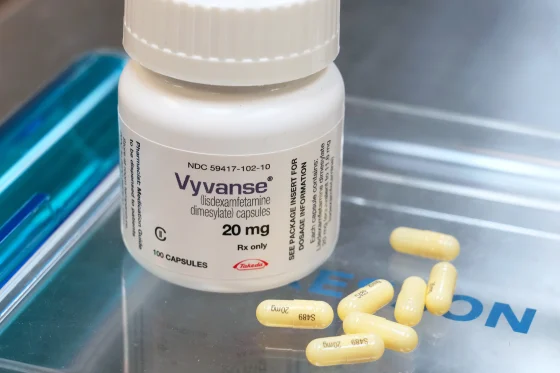
Vyvanse has a single active ingredient: lisdexamfetamine dimesylate. Unlike Adderall, Vyvanse is a prodrug. This means it is pharmacologically inactive until it is metabolized by the body. After ingestion, enzymes in the red blood cells cleave the lisdexamfetamine molecule, slowly converting it into dextroamphetamine—the same active component found in medications like Dexedrine and a primary component of Adderall. This conversion process is the rate-limiting step, dictating how quickly the medication becomes active.
Direct Comparison: Key Differences in Action and Experience
The structural differences between Vyvanse and Adderall lead to distinct experiences for the user, from how the day starts to how it ends.
Onset and Duration of Action: What to Expect Daily
Adderall IR is known for its rapid onset, making it effective for situations requiring quick focus. Adderall XR provides a longer duration but can still have a noticeable “kick-in” feeling. Vyvanse, due to its prodrug mechanism, has a more gradual onset, typically taking 1-2 hours to become fully effective. However, its effects are often longer-lasting, providing consistent symptom coverage for up to 14 hours in some individuals.
Potency and Strength: Are They Equal?
While both medications ultimately increase dextroamphetamine levels, comparing their milligram strength directly is misleading. A 30 mg dose of Vyvanse is designed to be therapeutically equivalent to approximately 10 mg of Adderall XR. The dosage conversion is not linear and must be determined by a healthcare professional based on individual response. Neither is inherently “stronger”; their effectiveness depends on proper dosing and personal metabolism.
Metabolism and Release: Why It Matters for Consistency
The key differentiator is the release mechanism. Adderall XR relies on the capsule’s bead technology for its extended release, which can be influenced by gastrointestinal factors. Vyvanse’s release is dependent on a biological process—enzymatic conversion. This often results in a smoother, more predictable effect throughout the day, with less potential for the sharp peaks and valleys that some users experience with amphetamine salts. This consistency can be a significant advantage for those sensitive to fluctuations in medication levels.
Approved Uses Beyond ADHD: Binge Eating Disorder
While both medications are approved by the Food and Drug Administration (FDA) for treating attention-deficit/hyperactivity disorder, Vyvanse has an additional approved use. It is the first and only medication approved to treat moderate to severe Binge Eating Disorder (BED) in adults. Adderall IR is also approved for treating narcolepsy, a condition characterized by excessive daytime sleepiness.
Effectiveness for ADHD: Finding the Right Symptom Management
Both Vyvanse and Adderall are highly effective for treating the core symptoms of ADHD, but their different profiles can make one a better choice for certain individuals.
Targeting Core ADHD Symptoms: Focus, Impulse Control, and Hyperactivity
Clinical studies consistently show that both medications significantly reduce inattention, impulsivity, and hyperactivity compared to placebo. They help individuals stay on task, organize their thoughts, and manage restless behaviors. The choice often comes down to the desired delivery pattern of these effects throughout the day.
Individual Response Variability: Why One Might Work Better Than the Other
Genetics, metabolism, and individual brain chemistry play a huge role in how someone responds to a stimulant. One person might find Adderall provides the perfect level of sharp focus, while another may feel it’s too intense and causes anxiety. That same person might find Vyvanse’s smoother profile calming and more effective. This variability is why treatment often involves a trial period to find the right medication and dose.
Clinical Evidence: What Research Tells Us
Head-to-head research comparing Vyvanse and Adderall XR is limited, but existing studies and clinical experience confirm both are effective options. The decision is less about proven superiority and more about aligning the drug’s pharmacokinetic profile with the patient’s needs and lifestyle. The goal is to maximize symptom control while minimizing side effects.
Managing “The Crash”: Differences in Medication Wear-Off
A common concern with stimulant medications is the “crash” or “rebound” effect, where ADHD symptoms return, sometimes with added irritability or fatigue, as the drug wears off. Because of its gradual conversion and decline, Vyvanse is often associated with a softer, less abrupt wear-off. The quicker drop-off of Adderall IR, in particular, can lead to a more noticeable crash for some users, which may necessitate a small afternoon dose to bridge the gap.
Navigating Side Effects and Risks: What to Know
As central nervous system stimulants, Vyvanse and Adderall share a similar profile of potential side effects and risks.
Common Side Effects: Appetite, Sleep, and Mood
The most frequently reported side effects for both medications include:
- Decreased appetite and weight loss
- Insomnia or difficulty falling asleep
- Dry mouth
- Anxiety, irritability, or mood swings
- Headaches and dizziness
Managing these side effects often involves adjusting the dosage, timing of medication, or making lifestyle changes like prioritizing sleep hygiene and planning meals.
Serious Side Effects and Cardiovascular Considerations
Both medications can increase heart rate and blood pressure. While generally modest, these effects warrant caution in individuals with pre-existing heart conditions or hypertension. Before starting any stimulant, a thorough medical history and cardiovascular assessment are essential. In rare cases, more severe psychiatric side effects, such as psychosis or mania, can occur, particularly in those with a predisposition.
Drug Interactions: Essential Information for Safe Use
Stimulant medications can have significant drug interactions. They should never be taken with monoamine oxidase inhibitors (MAOIs), a class of antidepressants, as this can lead to a life-threatening hypertensive crisis. It’s crucial to inform your doctor about all prescription medications, over-the-counter drugs, and supplements you are taking.
Abuse Potential and Controlled Substance Status
Both Vyvanse and Adderall are classified by the DEA as Schedule II controlled substances, indicating a high potential for abuse and dependence. This is because they can produce feelings of euphoria, especially when taken at higher-than-prescribed doses or via non-oral routes. Vyvanse’s prodrug formulation makes it more difficult to abuse via injection or snorting, as it requires oral ingestion and metabolic conversion to become active. This may give it a lower abuse potential, but the risk of substance abuse is still significant for both drugs. Discontinuation can lead to withdrawal symptoms like fatigue and depression.
The “Personal Fit” Framework: Guiding Your Individual Decision
The ideal medication is one that seamlessly integrates into your life, managing symptoms effectively with minimal side effects. Consider these factors with your doctor.
Your Specific ADHD Symptom Profile and Severity
Do you struggle more with inattention and organization, or is hyperactivity and impulsivity your primary challenge? Do your symptoms need consistent, all-day coverage, or do you require targeted focus for specific periods, like a school or workday? A long-acting medication like Vyvanse or Adderall XR is often preferred for all-day coverage.
Your Daily Routine and Lifestyle Considerations
Consider your schedule. If you need to be focused from early morning through evening activities, Vyvanse’s longer duration may be an advantage. If you are sensitive to medications affecting your sleep, the potentially shorter duration of Adderall XR might be a better fit.
Your Medical History and Existing Health Conditions
A history of cardiovascular issues, high blood pressure, glaucoma, or anxiety disorders will heavily influence the decision. A history of substance abuse may lead a clinician to prefer Vyvanse due to its prodrug design.
Personal Experience and Sensitivity to Medications
If you are particularly sensitive to medication side effects, the smoother onset and wear-off of Vyvanse may be more tolerable. Conversely, if you have found other long-acting medications don’t last long enough, the flexibility of Adderall IR as a supplemental dose might be beneficial.
Practical Considerations: Cost, Access, and Generics
Beyond the clinical aspects, practical factors play a role in the decision-making process.
Comparing Costs: Brand vs. Generic Versions
Historically, Vyvanse was only available as a brand-name drug, making it significantly more expensive than Adderall, which has long had generic versions available. However, with the recent introduction of generic lisdexamfetamine, the cost landscape has shifted, making it a more accessible option. Both Adderall and Vyvanse have substantial market presence, with Adderall generating an estimated $2.1 billion in 2022 and Vyvanse earning around $2.5 billion in major markets that same year. Always check with your insurance provider for coverage details, as this can be the ultimate deciding factor.
Conclusion
The choice between Vyvanse and Adderall is a highly personalized one, with no single right answer. Both are effective stimulant medications that can profoundly improve the lives of individuals with ADHD. The fundamental difference lies in their delivery system: Adderall provides a direct dose of mixed amphetamine salts for a faster onset, while Vyvanse offers a smoother, more prolonged effect through its prodrug mechanism.
Your ideal treatment will depend on a careful evaluation of your specific symptoms, lifestyle, medical history, and sensitivity to side effects. The key takeaway is that finding the right fit is a collaborative process. Work closely with your healthcare provider, communicate openly about your experiences, and remember that medication is just one component of a comprehensive treatment plan that should also include strategies like behavioral therapy. By understanding these nuances, you are empowered to take an active role in finding the treatment that allows you to thrive.


