


Deciding to get help is a huge first step, and this guide is here to walk with you through what comes next. We know that looking into rehabilitation for drugs and alcohol can feel like a lot to take on, but recovery is absolutely possible, especially with the right support here in Massachusetts. Think of this as a clear roadmap, designed to cut through the confusion and show you the way from considering treatment to building a life in sobriety.
- Treatment is personalized. Your journey through rehabilitation for drugs and alcohol is unique. The best programs in Massachusetts offer various levels of care, from medically supervised detox to flexible outpatient options, ensuring your treatment plan fits your specific needs.
- Evidence-based therapies are key. Effective recovery is built on proven methods like Cognitive Behavioral Therapy (CBT) and Medication-Assisted Treatment (MAT), which address the psychological and physical aspects of addiction.
- Choosing the right facility matters. Finding a licensed and accredited rehab center in Massachusetts is crucial. You should consider factors like their treatment philosophy, insurance coverage, and location to ensure it's the right fit for you.
- Aftercare is vital for long-term success. Completing a rehab program is just the beginning. A strong aftercare plan, including support groups and relapse prevention strategies, is essential for maintaining lasting sobriety.
Your Path to Recovery Starts Here
That moment when you realize you or a loved one needs professional help is a moment of real courage. The path forward involves structured, compassionate care that gets to the heart of the physical, mental, and emotional sides of a substance use disorder. This is about so much more than just quitting; it’s about laying a new foundation for a healthier, fuller life.
Sadly, there's a huge gap between who needs help and who actually gets it. In 2023, only 8.1% of people worldwide with drug use disorders got the treatment they needed. Here in the United States, that number is a bit higher but still concerning, with only about 14.6% of those with any SUD receiving professional care. You can dig deeper into these numbers by reading the full research on the global drug report. These statistics just underscore how important it is to take that brave step when you're ready.

To get started, here are four key things you’ll learn as you read through this guide:
- Treatment isn’t one-size-fits-all and comes in different levels. From medically supervised detox to flexible outpatient programs, the right support is matched to your specific situation.
- Real recovery is built on therapies that are proven to work. Methods like Cognitive Behavioral Therapy (CBT) and Medication-Assisted Treatment (MAT) are the bedrock of modern addiction treatment, helping to heal both the mind and body.
- Finding the right Massachusetts facility is a practical, step-by-step process. Choosing a center means looking at things like accreditations, their approach to treatment, and what insurance they take. For more on this, check out our guide to finding the best rehab centers near you.
- Lasting recovery hinges on solid aftercare and a good relapse prevention plan. Finishing a program is a major milestone, but long-term success comes from staying connected to a supportive community and using healthy coping skills.
What Are My Next Steps?
Taking action is the most powerful thing you can do right now. Often, the first step is just a simple, confidential phone call. Talking with an admissions specialist can answer your questions, help you figure out your insurance, and lay out the options available here in Massachusetts. There’s no pressure, just support.
Recovery isn't about being perfect; it's about making progress. Every day offers a new chance to build a stronger, healthier future, free from the grip of addiction. The whole journey begins with one step forward.
If you’re ready to see what your options are or just need to talk to someone who understands, our team is here for you 24/7. Call us at (888) 388-8660 for a free, confidential assessment to start your path to healing today.
Navigating the Different Levels of Addiction Treatment
It's a common myth that addiction treatment is a one-size-fits-all, single event. A much better way to look at rehabilitation for drugs and alcohol is as a journey with different stages of support, kind of like moving from elementary school to high school and then to college. Each level is specifically designed to meet you right where you are, providing the exact amount of structure and care you need at that moment.
This flexible approach is known as the continuum of care. It ensures your treatment plan can adapt as you build strength and confidence in your recovery. It allows for a smooth transition from highly intensive environments to more independent settings without ever pulling the rug out from under you. Understanding these levels takes the mystery out of the process, empowering you to find the right starting point for yourself or someone you care about.
This recovery roadmap shows how the different levels of care, therapies, and support systems all work together to guide you toward a life free from substance use.
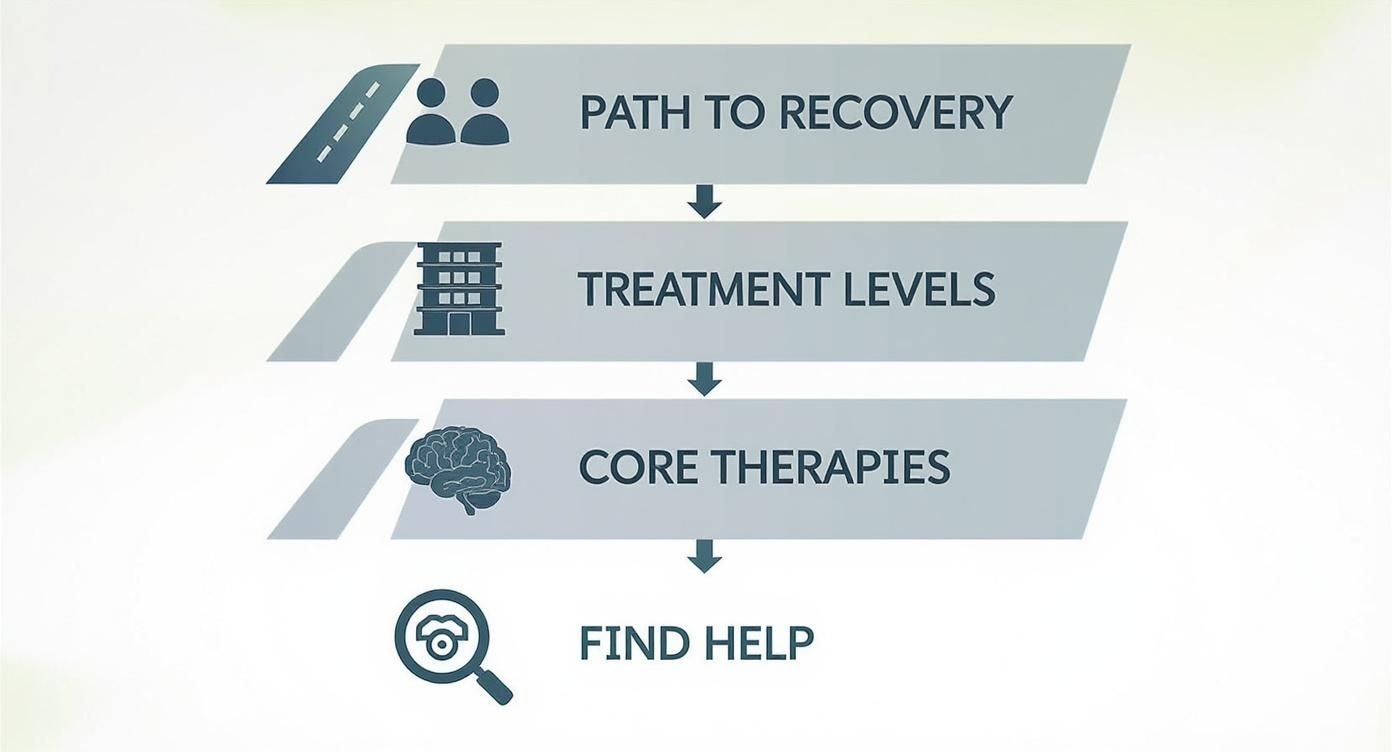
As you can see, the path to recovery is a structured process. It starts with a solid foundation and then branches out into specialized therapies and the ongoing support needed to maintain sobriety for the long haul.
Medically Supervised Detoxification
For many, the first critical step is medically supervised detox. Think of it this way: when your body becomes physically dependent on a substance, it needs it just to feel "normal." Stopping suddenly sends a shock through your system, triggering withdrawal symptoms that can range from deeply uncomfortable to genuinely life-threatening. Detox offers a safe, medically managed space where professionals make this process as smooth and painless as possible.
With 24/7 medical supervision, our priority is to keep you comfortable while your body clears itself of harmful substances. This isn't therapy—not yet. The sole focus here is achieving physical stability so you can safely begin the deeper, psychological work of recovery.
Inpatient and Residential Treatment
Once you're physically stable, the next step for those needing the highest level of support is inpatient or residential treatment. This is the most structured setting available. You live at the facility full-time, completely removed from the people, places, and stressors that trigger substance use. It's like stepping into a protective bubble where your only job is to heal.
A typical day is carefully scheduled and packed with a mix of healing activities:
- One-on-one therapy sessions
- Group counseling with peers
- Workshops to learn about addiction and build coping skills
- Holistic therapies like yoga or mindfulness meditation
This immersive approach is perfect for individuals with severe substance use disorders or for those who've tried less structured programs without success. It's all about building a rock-solid foundation for recovery.
Partial Hospitalization Programs (PHP)
Partial Hospitalization Programs (PHP) are a vital link, bridging the gap between the 24/7 immersion of inpatient care and the flexibility of outpatient treatment. You can think of it as a full-time job focused entirely on your recovery. You’ll attend treatment at the facility for several hours a day, 5 to 7 days a week, but you get to return home or to a sober living house at night.
A PHP delivers the same therapeutic intensity as residential treatment—including individual therapy, group sessions, and psychiatric care—but with a much greater degree of personal freedom. It's an ideal step-down for someone who has finished an inpatient program but isn't quite ready to go it alone.
This level helps you start putting your new skills to the test in the real world while staying tightly connected to your clinical team. It's a crucial phase for building a recovery that can last a lifetime.
To help you see how these options stack up, here’s a quick comparison of the different levels of care.
Comparing Levels of Care in Drug and Alcohol Rehab
This table breaks down the time commitment and intensity for each level of care, making it easier to see which option might be the best fit.
| Level of Care | Time Commitment | Living Arrangement | Ideal For |
|---|---|---|---|
| Detox | 3-10 days, 24/7 supervision | Live at the facility | Individuals needing medical management of withdrawal symptoms to safely stabilize. |
| Inpatient/Residential | 30-90+ days, 24/7 care | Live at the facility | Those with severe SUD, co-occurring disorders, or an unstable home environment. |
| PHP | 5-7 days/week, 6+ hours/day | Live at home or sober living | A step-down from inpatient or for those needing intensive structure without 24/7 care. |
| IOP | 3-5 days/week, 3-4 hours/day | Live at home | Individuals who are stable enough to manage work/school but still need regular support. |
| Outpatient | 1-2 days/week, 1-2 hours/day | Live at home | Long-term aftercare to maintain sobriety and reinforce recovery skills. |
Each level plays a distinct and important role, offering a seamless transition as you progress on your recovery journey.
Intensive Outpatient and Standard Outpatient Programs
Further along the path, you'll find Intensive Outpatient Programs (IOP) and standard Outpatient Programs (OP). These levels provide strong therapeutic support while giving you the freedom to handle work, school, or family commitments. An IOP usually means coming in for treatment for a few hours a day, several days a week.
As your skills and confidence grow, you can step down to a standard outpatient program, which might only require one or two sessions per week. These programs are key to long-term success, acting as a form of aftercare to reinforce everything you learned in the more intensive phases. To get a better feel for these flexible options, you can explore outpatient drug rehab programs in Massachusetts and see how they fit into a comprehensive recovery plan.
Choosing where to start is a clinical decision based on your unique situation. The best way to know for sure is through a professional assessment. If you're ready to figure out which level of care is right for you, give our team a call at (888) 388-8660 for a completely confidential conversation. We're here 24/7.
The Core Therapies That Drive Recovery
Truly effective rehabilitation for drugs and alcohol is about more than just hitting pause on substance use; it’s about healing the deep-seated reasons why the struggle started in the first place. Treatment centers get to the heart of the matter using evidence-based therapies—methods that have been rigorously tested and proven to work through real-world scientific research.
Think of it like this: addiction is a complex engine that’s broken down. These therapies are the specialized tools a master mechanic uses to diagnose and fix each specific part, from the wiring to the fuel line. They help you finally understand the "why" behind your substance use, arm you with new ways to cope, and build a rock-solid foundation for a life in recovery. This isn't about blame. It's about empowerment.

Here are four key takeaways about the therapeutic approaches that form the backbone of modern addiction treatment:
- Behavioral therapies are non-negotiable. Methods like CBT and DBT are fundamental for rewiring the thought patterns and emotional reactions that keep the cycle of addiction going.
- Medication can be a game-changer. MAT is a powerful medical tool for quieting withdrawal symptoms and cravings, especially for opioid and alcohol use disorders, giving you the stability to focus on healing.
- One size never fits all. The best treatment plans are highly personalized, combining different therapies to meet your unique needs and address you as a whole person.
- Healing extends beyond the clinic. Holistic practices like yoga and mindfulness are powerful allies to clinical therapy, promoting the physical and spiritual health that are crucial for lasting well-being.
Cognitive Behavioral Therapy (CBT)
Cognitive Behavioral Therapy (CBT) is one of the heavy hitters in addiction treatment, and for good reason. The core idea is simple but profound: our thoughts, feelings, and behaviors are all linked. CBT helps you become a detective of your own mind, learning to identify and challenge the destructive thought patterns that pave the road to substance use.
You learn to spot those automatic thoughts—like "I can't handle this stress without a drink"—and put them on trial. Is that thought actually true? Is it helpful? By learning to reframe these thoughts, you can fundamentally change your response, choosing a healthy coping skill instead of reaching for a substance. To dig deeper into this and other powerful methods, check out our guide to the best forms of therapy for addiction recovery.
Dialectical Behavior Therapy (DBT)
Where CBT hones in on changing thoughts, Dialectical Behavior Therapy (DBT) is designed to help you master intense emotions and build stronger, healthier relationships. It's particularly effective for anyone who feels like their emotions are constantly hijacking their decisions, a common experience for those with a substance use disorder.
DBT gives you a practical, real-world skill set broken into four key areas: mindfulness (learning to stay grounded in the present), distress tolerance (getting through a crisis without making it worse), emotion regulation (understanding and managing intense feelings), and interpersonal effectiveness (clearly communicating your needs and setting boundaries).
Think of it as a toolkit for navigating life's storms. Instead of turning to a substance when you feel overwhelmed, you learn to pull out a specific DBT skill to ground yourself and make a choice you can be proud of.
Medication-Assisted Treatment (MAT)
Medication-Assisted Treatment (MAT) is a clinical approach that combines FDA-approved medications with counseling and therapy to treat substance use disorders, particularly for opioids and alcohol. These medications aren't a crutch; they are a medical tool. They work by stabilizing brain chemistry, blocking the euphoric effects of substances, and easing the physical cravings that can make early recovery feel impossible.
Let's be clear: this isn't about trading one drug for another. It’s a strategic medical intervention that provides the stability needed to fully dive into the therapeutic work of recovery. By quieting the physical noise of addiction, MAT clears the way for you to address the psychological and emotional roots of the problem.
Holistic and Complementary Therapies
Modern treatment recognizes that you are more than your diagnosis. That’s why the best rehabilitation for drugs and alcohol now integrates holistic therapies that support the mind, body, and spirit. These aren't a substitute for clinical care, but they are powerful complements that enrich the healing process.
- Mindfulness and Meditation: These practices train you to observe your thoughts and feelings without judgment, which can dramatically reduce stress and weaken the power of cravings.
- Yoga: By connecting physical postures with intentional breathing, yoga helps heal the body while promoting a sense of inner calm and resilience.
- Art and Music Therapy: Sometimes, words aren't enough. These creative therapies provide a vital outlet for expressing complex emotions, helping to unlock and process feelings that might otherwise stay buried.
By weaving these practices into a clinical framework, treatment centers in Massachusetts provide a comprehensive approach that supports every facet of your well-being on the path to a vibrant, lasting recovery.
How to Choose the Right Rehab in Massachusetts
Making the call to get help for a drug or alcohol problem is a huge step. Now comes the hard part: finding the right program. For anyone in Massachusetts, this is one of the most critical decisions you'll make, because the quality and feel of a facility will absolutely shape your path to recovery. Doing a little homework now goes a long way toward making sure the center you choose is safe, effective, and a good fit for you personally.
Picking a rehab isn’t like choosing a hotel; it’s about finding a true partner in your recovery. The right program provides the structure, therapies, and support system you need to build a solid foundation for a sober life. To help you feel confident in your choice, we’ve broken down the key things you need to look for.

Here are four essential tips for choosing the right rehab in Massachusetts:
- Check for Licensing and Accreditation: These are your non-negotiable signs of quality and safety. If a facility doesn't have them, walk away.
- Ask the Tough Questions: Don't be shy. You're the one in the driver's seat. Interview potential facilities about how they operate, their staff, and their specific programs.
- Figure Out Insurance and Costs: Get a crystal-clear understanding of what you'll need to pay before you commit to anything.
- Think About Location and Vibe: Decide if being close to home in Boston is better for you, or if a quiet setting out in the Berkshires would help you focus on healing.
Verify Licensing and Accreditation
Before you even start looking at fancy websites or program brochures, the very first thing you need to do is check a facility's credentials. It's a simple but crucial step.
In Massachusetts, any legitimate treatment center must be licensed by the Bureau of Substance Addiction Services (BSAS). This is the state's seal of approval, and it means the program meets the baseline requirements for health and safety.
But don't stop there. Look for national accreditations from respected organizations like The Joint Commission (JCAHO) or the Commission on Accreditation of Rehabilitation Facilities (CARF). Think of these as a gold star. It means the facility has gone the extra mile, voluntarily undergoing a tough evaluation to prove they’re committed to the highest standards of care.
A licensed and accredited facility is your guarantee that you’re walking into a professional, ethical, and safe place. It’s the most basic—and most important—checkpoint in your search.
Ask Critical Questions
Once you've confirmed a place is properly credentialed, it’s time to dig in. Treat this like an interview, because that's exactly what it is. You're hiring a team to help you change your life, so get a list of questions ready for the admissions coordinator. This is how you'll get a real feel for their expertise and approach.
Here’s a quick checklist of things to ask about:
- What’s your treatment philosophy? Do they use a 12-Step model, something else entirely, or a mix of different approaches?
- Who is on your clinical team? What kind of qualifications and licenses do the therapists have? Is there a medical doctor or a psychiatrist on staff?
- How do you handle co-occurring disorders? Ask about their experience treating dual diagnosis, which is when someone is dealing with addiction and a mental health condition like anxiety or depression at the same time.
- Is my family involved? What kind of opportunities are there for family therapy sessions or educational programs?
- What happens when I leave? How do they help you prepare for life after treatment is over? A good program starts planning for your discharge from day one.
Understand Insurance and Costs
Trying to figure out the financial side of rehab can feel overwhelming, but it doesn't have to be. Most health insurance plans in Massachusetts are required by law to cover substance abuse treatment.
Your first step should be to call the admissions line of any rehab you're considering. They can run a free, confidential insurance verification for you and explain your benefits in plain English, without all the confusing jargon.
During that call, make sure you ask:
- What are the costs if you're in-network versus out-of-network?
- What will I be responsible for? Ask about deductibles, copayments, and coinsurance.
- What are the private pay rates if I don't have insurance?
A good, transparent facility will gladly walk you through every single detail so there are no financial surprises down the road. For immediate help figuring out your insurance, you can call our specialists anytime at (888) 388-8660.
Consider the Location and Environment
Finally, think about the setting where you'll feel most comfortable healing. Massachusetts has a lot to offer, from busy urban centers to quiet rural retreats, and the right environment can make a huge difference.
Do you need to be close to Boston so your family can visit and be part of your support system? Or would a more secluded facility out in the Berkshires give you the space to focus entirely on your recovery without distractions from home? There’s no right or wrong answer here—it’s about what you need. A quick, confidential call with a treatment specialist can help you weigh the pros and cons to find the perfect fit.
Building a Life of Lasting Sobriety After Rehab
Finishing a professional rehab program is a massive accomplishment, one you should be incredibly proud of. But it’s not the finish line. Think of it more like graduation day; you've got the diploma, you've learned the essential skills, but now it's time to put that knowledge to the test out in the real world. This next phase is all about building a durable, long-term recovery, and it starts with a solid aftercare plan created before you even walk out the door.
This plan is your personal blueprint for navigating life after treatment. It’s not just a suggestion—it's your roadmap. It covers practical steps like transitioning from a highly structured program to a more flexible outpatient schedule, finding a supportive sober living home, and getting plugged into local support groups right here in Massachusetts. Laying this groundwork is what makes sobriety stick.
Here are four key things to remember as you build a strong life after rehabilitation for drugs and alcohol:
- Aftercare Isn't Optional, It's Essential: Work with your team to create a detailed plan before you leave treatment. This should cover continuing care, living arrangements, and support group meetings.
- Community Is Your Lifeline: Get actively involved in the local Massachusetts recovery community. Whether it's AA, NA, or SMART Recovery, building a network of sober friends is non-negotiable.
- Know Your Triggers, Own Your Coping Skills: You have to learn to recognize the specific people, places, and feelings that spark cravings. From there, you can build healthy, go-to strategies to shut them down.
- Embrace a New Way of Life: It’s time to find joy again. Rediscover old hobbies or find new passions that fill you up, replacing old, destructive habits with positive, substance-free experiences.
Creating Your Aftercare Blueprint
Before your last day, you'll sit down with your clinical team to map out a robust aftercare plan. This is far from a generic handout; it’s a personalized strategy session built around your unique needs, challenges, and goals for the future.
A strong plan will almost always include:
- Step-Down Care: Transitioning to a Partial Hospitalization Program (PHP) or an Intensive Outpatient Program (IOP) is a common and highly effective step. It keeps you connected to clinical support while you slowly ease back into the rhythm of daily life.
- Sober Living: For many people, moving into a structured sober living home in a place like Worcester or Springfield is a game-changer. It provides a safe, substance-free environment with accountability and peer support baked right in.
- Ongoing Therapy: You’ll want to have your next individual therapy sessions and any necessary psychiatric appointments scheduled before you leave. This ensures the deep personal work you started in treatment continues without interruption.
Connecting with Local Support Groups
You are not on this journey alone—not by a long shot. Massachusetts has an incredibly vibrant and welcoming recovery community with meetings happening every single day. Groups like Alcoholics Anonymous (AA) and Narcotics Anonymous (NA) offer a proven, 12-Step path. For those looking for a different approach, organizations like SMART Recovery provide a secular, science-based framework.
Finding a "home group" where you feel truly comfortable and seen is invaluable. These are people who just get it because they've walked a similar path. They offer the kind of understanding, encouragement, and tough love that you can't find anywhere else.
Managing Triggers and Preventing Relapse
A huge piece of making sobriety last is learning to identify your personal triggers—those internal and external cues that can ignite a craving out of nowhere. It could be driving past a certain bar, a stressful email from your boss, or even a feeling like loneliness or boredom creeping in.
Your aftercare plan will give you a playbook for these moments. Maybe it's calling your sponsor immediately. Maybe it's using the mindfulness techniques you practiced in therapy. Or maybe it's just putting on your headphones and going for a run. A slip or relapse isn't a failure; it’s just a sign that your recovery plan needs a tune-up.
The stakes couldn't be higher. Between 1990 and 2021, the global number of drug-related deaths more than doubled. Here in North America, the numbers are even more stark, with a devastating 11.2-fold increase. These statistics are a gut-wrenching reminder of why strong aftercare and relapse prevention are so vital. You can explore more about these global drug mortality rates to see just how critical ongoing support really is.
Rebuilding Your Life with Purpose
Recovery isn't just about not using; it's about rediscovering who you are and what brings you joy. This is your chance to explore new hobbies or pick up old passions that addiction stole from you. It could be anything—hiking the Blue Hills Reservation, joining a local softball league, or signing up for that art class you've always thought about.
Finding fulfilling activities helps you build a life so rich and meaningful that substances simply have no place in it.
Ready to build your foundation for a lasting recovery? Call our team 24/7 at (888) 388-8660 to talk about aftercare planning and how our programs can support you every single step of the way.
Frequently Asked Questions
1. How long does drug and alcohol rehab last?
This is usually one of the first questions people ask, and the truth is, there’s no magic number. The length of rehabilitation for drugs and alcohol is tailored to each person's unique history and needs. Things like the specific substance used, how long the addiction has been going on, and any co-occurring mental health conditions all play a role. While common program lengths are 30, 60, or 90 days, the goal is to ensure you have enough time to build a solid foundation for lasting recovery.
2. Can I use my health insurance for rehab in Massachusetts?
Absolutely. In Massachusetts, the Affordable Care Act classifies substance abuse treatment as an essential health benefit, meaning most health insurance plans are required to provide coverage. The easiest way to understand your specific benefits is to call a treatment center's admissions team. They can provide a free, confidential verification and explain your coverage in plain English. Our team is on standby 24/7 at (888) 388-8660 to help.
3. What should I pack for an inpatient rehab program?
The general rule is to focus on comfort and simplicity. You'll want about a week's worth of casual clothing, personal alcohol-free toiletries, and important documents like your ID and insurance card. To create a safe and focused healing environment, items like laptops, cell phones, and outside food are usually not allowed. Always check with the admissions coordinator for their specific packing list.
4. How can I help a loved one who refuses treatment?
It's heartbreaking to watch someone you care about struggle. The most important thing is to approach them with love and support, not anger. Express your concerns using "I" statements and set healthy boundaries to protect your own well-being. For many families, bringing in a professional interventionist can be a game-changer. They are skilled at facilitating a compassionate conversation designed to help your loved one accept the need for change.
A healthier life is within your reach, and you don’t have to figure out the first steps on your own. If you have more questions or you're ready to look at your options for rehabilitation for drugs and alcohol in Massachusetts, our team at Paramount Recovery Centers is here for you 24/7. Call us for a free, confidential chat at (888) 388-8660 or find out more about our programs by visiting https://paramountrecoverycenters.com.


