


Making the choice between inpatient and outpatient rehab is a critical step on the path to recovery. This guide is designed to clarify the differences, helping you understand which option best fits your personal needs, the severity of addiction, and your life circumstances here in Massachusetts. We will explore the core aspects of each, from the treatment environment to clinical approaches, to help you make a confident, informed decision for yourself or a loved one.
4 Key Takeaways: Inpatient vs. Outpatient Rehab
| Factor | Inpatient Rehab | Outpatient Rehab | Why It Matters |
|---|---|---|---|
| Environment | Live-in, 24/7 structured setting | Live at home, attend scheduled sessions | Inpatient removes you from triggers, while outpatient allows you to practice recovery skills in your real-world environment. |
| Intensity | High-intensity, round-the-clock medical & clinical supervision | Flexible intensity, typically 9-20 hours of treatment per week | Inpatient is essential for severe addiction, complex co-occurring disorders, or high-risk withdrawal. Outpatient suits those with moderate needs and a stable home life. |
| Flexibility | Requires pausing work, school, and daily responsibilities | Allows you to maintain work, family, and school commitments | The right choice depends on whether you can step away from daily life to focus solely on recovery or need a program that integrates with it. |
| Cost | Higher upfront cost (includes room, board, 24/7 care) | Lower cost (covers clinical services only) | While inpatient is more expensive, insurance in Massachusetts often covers both. The best value is the program that offers the highest chance of success for your situation. |
Comparing the Core Treatment Environments
To really get a handle on the inpatient vs. outpatient rehab decision, you have to look at how each one fundamentally reshapes your daily life. The biggest difference is the environment—one is an immersive, protective bubble, while the other weaves treatment directly into your existing world.
Inpatient rehab is a highly structured, 24/7 medically-supervised setting. It’s a residential program designed to pull you away from outside triggers and stressors, letting you focus completely on getting well within a supportive, sober community. This is the intensive, live-in approach for those who need constant support to get started.
Outpatient care, on the other hand, is all about flexibility. This model lets you live at home and keep up with your job, school, or family while coming in for scheduled therapy sessions. It forces you to apply your new recovery skills to real-world situations right away, which can be a powerful way to make them stick.
Living Arrangements and Daily Commitment
The most obvious difference is where you’ll sleep at night. Inpatient programs mean you live at the facility for the entire length of your stay, which is usually somewhere between 30 to 90 days. Your days are packed from morning till night with a meticulous schedule of therapy, counseling, and wellness activities.
Outpatient programs have a lot more variety in their time commitment. For example, a Day Treatment/Partial Hospitalization Program (PHP) in Massachusetts might mean you're in therapy for five to six hours a day, five days a week. An Intensive Outpatient Program (IOP) is a step down from that, often just three-hour sessions, three to five days a week, making it much easier to fit around a work schedule.
This infographic hits on the main factors you'll need to weigh when looking at your own situation and treatment needs.
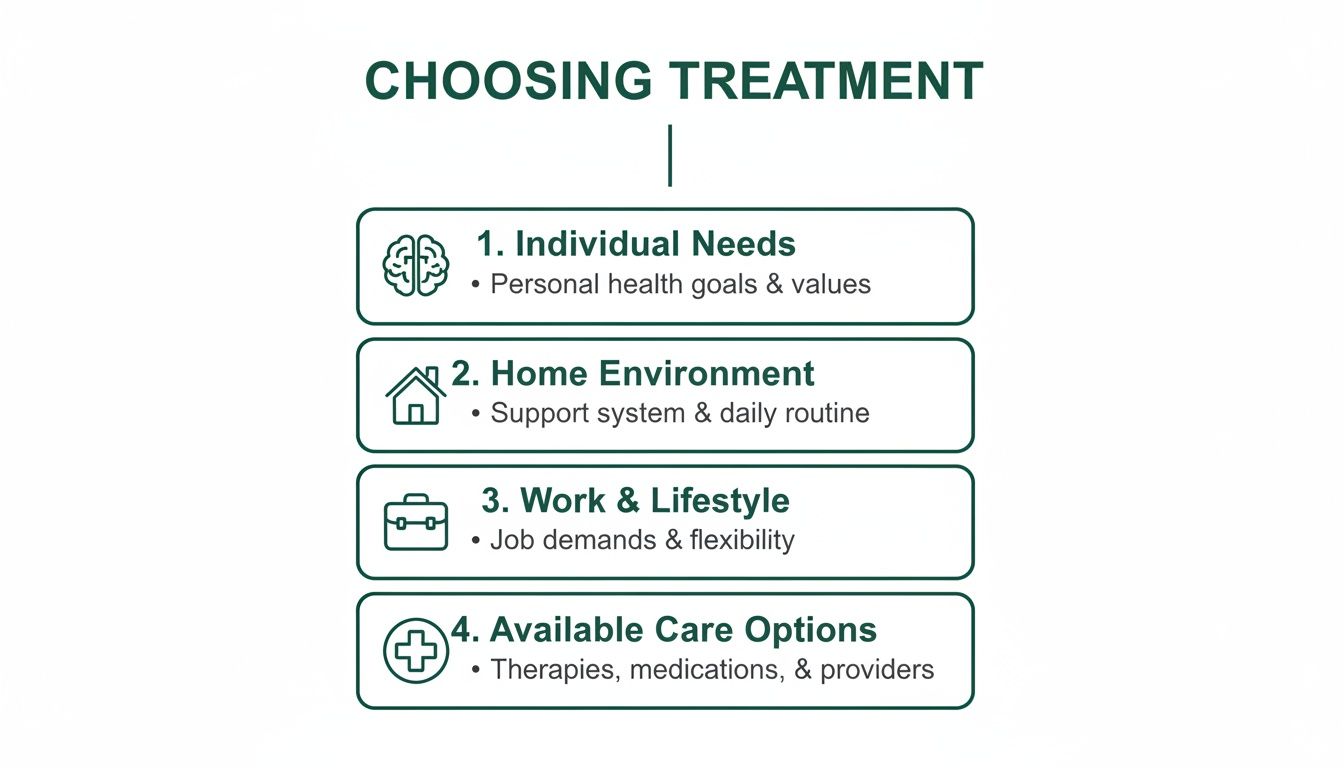
Ultimately, the choice comes down to balancing the intensity of care you need with the realities of your personal and professional life.
Level of Clinical Supervision
Clinical oversight is another huge dividing line. Inpatient facilities give you round-the-clock access to medical and clinical staff. This is non-negotiable for anyone who might go through severe withdrawal or has co-occurring mental health issues that need constant monitoring to stay stable and safe.
The constant medical care provided during inpatient treatment helps guard against relapse. Clinicians can provide necessary medicine and medical expertise to lessen cravings and withdrawals, which can be critical in the fragile early stages of recovery.
Outpatient care still provides solid clinical support, but it’s not 24/7. You have scheduled time with therapists, counselors, and medical staff during program hours. This approach works best for people who have a stable, supportive home life and don't need constant medical supervision to avoid a crisis.
With outpatient, the structured support is there to help you handle daily challenges with professional guidance right when you need it.
Inpatient vs Outpatient Rehab At a Glance
Sometimes a simple side-by-side view makes all the difference. This table breaks down the core structural differences between these two paths to recovery.
| Feature | Inpatient Rehab | Outpatient Rehab |
|---|---|---|
| Living Arrangement | Reside at the facility 24/7 | Live at home or in sober living |
| Daily Time Commitment | Full-day structured schedule | 3-6 hours per day, 3-5 days/week |
| Clinical Supervision | Round-the-clock medical & clinical staff | Scheduled access during program hours |
| Environment | Controlled, trigger-free setting | Integration with real-world environment |
| Ideal Candidate | Severe SUD, unstable home, high medical needs | Moderate SUD, stable home, has obligations |
This table really highlights the fundamental trade-offs you're making with each choice. You can get a much more detailed look by exploring our guide to outpatient drug rehab programs to see exactly how they’re structured here in Massachusetts.
Picking the right environment is the first, most important step in building a foundation for a lasting recovery. For a free, confidential assessment, give our team a call at (888) 388-8660.
A Detailed Look at Clinical and Therapeutic Approaches
When you look past the living arrangements and daily schedules, the real meat of the inpatient rehab vs outpatient discussion comes down to the clinical and therapeutic approaches. While both settings use proven, evidence-based practices, the intensity and focus are naturally shaped by the environment. The end goal, however, is always the same: giving you the tools for a recovery that lasts.
In either setting, you'll find that the foundation of treatment is built on core therapeutic modalities. These are the methods that truly help you get to the root of your addiction and start building new, healthier ways of coping.
Core Therapeutic Modalities
Getting better isn't just about putting down the substance; it’s about fundamentally rewiring the thought patterns and behaviors that got you here. Both our inpatient-coordinated services and outpatient programs in Massachusetts draw from a blend of powerful therapies, including:
- Cognitive Behavioral Therapy (CBT): This is a cornerstone of modern addiction treatment. CBT helps you spot the negative thought cycles that trigger substance use and gives you practical, goal-oriented skills to replace them with more productive ones.
- Individual Counseling: Your one-on-one sessions are a confidential, safe space to dig into the personal issues, trauma, and underlying drivers of your addiction. This is where some of the deepest, most personal work happens.
- Group Therapy: There's incredible power in sharing your story with peers who just get it. Group therapy breaks down the feeling of isolation, helps you build a sober support network, and lets you practice new communication skills in a safe, guided setting.
This shift toward evidence-based care is why the treatment landscape is changing. The latest data shows 82% of facilities now offer outpatient services. After a hospital stay, 43% of patients transition to outpatient care, making it the most common next step. This points to a clear trend toward flexible, structured care that continues beyond an initial crisis. You can dig deeper into addiction treatment statistics to understand these shifts better.
The Critical Role of Dual Diagnosis Treatment
Substance use rarely happens in a vacuum. More often than not, it's tangled up with mental health conditions like anxiety, depression, or PTSD. Tackling both at the same time is what we call dual diagnosis treatment, and it's absolutely essential for a successful recovery. Ignoring the mental health piece is like treating a cough while ignoring the pneumonia causing it.
"An effective treatment plan cannot just focus on the substance use. It must address the whole person—their mental health, trauma history, and emotional well-being. True recovery begins when we treat the co-occurring conditions that fuel the addiction."
This is where the line between inpatient and outpatient care becomes sharpest. Inpatient rehab provides the perfect environment for intensive psychiatric stabilization. If someone is facing a severe mental health crisis alongside their addiction, the 24/7 medical and psychiatric supervision of a residential facility is non-negotiable for their safety and effective care.
Our outpatient programs in Massachusetts are specifically designed to offer robust dual-diagnosis care for clients who are stable enough to live at home. This means you still get ongoing access to psychiatric services for medication management and specialized therapies for trauma, like Eye Movement Desensitization and Reprocessing (EMDR).
This image shows a therapeutic session focused on dual diagnosis, a critical component of modern addiction treatment.

Treating co-occurring disorders in an integrated way isn't just a good idea—it's fundamental to preventing relapse and building a real foundation for long-term mental wellness.
Tailoring Treatment to the Individual
At the end of the day, whether you choose inpatient or outpatient, the clinical approach has to be personalized. No two recovery journeys are identical. The very first step is always a thorough clinical assessment to create an individualized treatment plan that actually fits your life and your needs.
For instance, someone with a severe alcohol use disorder and untreated bipolar disorder would almost certainly need to start in an inpatient setting. This allows them to manage withdrawal safely and get their mood stabilized under medical supervision. Once stable, they could seamlessly transition to our outpatient Day Treatment (PHP) program in Massachusetts to continue intensive therapy while slowly reintegrating into their community.
On the other hand, someone with a moderate cannabis use disorder and manageable anxiety, who also has a solid support system at home, could be a perfect fit for our Intensive Outpatient Program (IOP) right from the start. This approach lets them get the structured help they need without completely uprooting their life.
The clinical and therapeutic approaches in both settings are designed to meet you exactly where you are. Understanding your unique situation is the key to choosing the right path forward. For a confidential assessment to figure out the best clinical approach for you, give our team a call at (888) 388-8660.
Who Is the Right Candidate for Each Program?
Choosing between inpatient and outpatient rehab isn't just a clinical decision; it's a deeply personal one that hinges on your unique life circumstances. There’s no magic formula here. The best path is simply the one that gives you the right level of support to build a solid foundation for recovery. Let's break down who typically thrives in each setting to help you get a clearer picture of your own needs.
The first step is always an honest self-assessment. To figure out if inpatient or outpatient care makes more sense, you have to take a hard look at the severity of your substance use, the stability of your home life, and what you need medically.
Ideal Candidates for Inpatient Rehab
Inpatient treatment is built for those who need a complete environmental reset—an immersive, highly structured setting to get sober. It physically removes you from the people, places, and things that trigger your use and wraps you in round-the-clock medical and emotional support.
You're likely a strong candidate for inpatient care if any of these scenarios sound familiar:
- Severe Substance Use Disorder: If your addiction has been going on for a long time, involves large amounts of substances, or has blown up major parts of your life, the intensity of inpatient care is often what it takes.
- Unstable Home Environment: Trying to recover in a home filled with conflict, active substance use, or constant stress is like trying to build a house in an earthquake. Inpatient rehab offers a safe, sober sanctuary where you can focus entirely on getting well.
- Need for Medical Detox or Supervision: If you're at risk for dangerous withdrawal symptoms, having 24/7 medical oversight isn't just a nice-to-have—it's a critical safety measure.
- Co-Occurring Mental Health Crisis: For anyone battling acute mental health conditions like severe depression, bipolar disorder, or PTSD alongside addiction, inpatient care provides the psychiatric stabilization needed to tackle both issues at the same time.
The real power of inpatient treatment is its controlled, supportive environment. By stripping away all the external noise and triggers, it gives you the space and intensive clinical help required to get stable, both physically and emotionally. That's often the crucial first step toward making real, lasting change.
The need for this kind of structured care is massive. The World Health Organization reports that a staggering 2.4 billion people around the globe have health conditions that could be improved with rehabilitation. Here in the U.S., however, intensive residential options are rarer than you might think. Only 18% of facilities offer long-term residential treatment, and a mere 5% provide hospital inpatient services, which really underscores how specialized this level of care is. You can dig into these global rehabilitation statistics further by reviewing the full report.
Ideal Candidates for Outpatient Rehab
Outpatient treatment is a fantastic option for people who need structured care but already have a stable foundation to build on. It’s designed to help you weave recovery skills directly into your daily life, letting you balance treatment with your job and family.
This path could be a great fit for you if:
- You Have a Strong Support System: This is probably the single most important factor for outpatient success. A safe, sober, and supportive home—with family or friends who are genuinely in your corner—makes all the difference.
- Your Addiction is Mild to Moderate: If you haven't developed a severe physical dependence and have managed to keep some stability in your life, outpatient care can provide the structure you need without requiring you to move into a facility.
- You Have Unavoidable Responsibilities: For those who are primary caregivers, hold down a steady job, or are in school, outpatient programs in Massachusetts offer the flexibility to get help without having to press pause on your entire life.
This image shows a supportive group therapy session, a cornerstone of effective outpatient treatment programs.
The power of peer connection in an outpatient setting helps individuals feel understood and less isolated on their recovery journey.
Key Questions for Self-Assessment
Thinking through your situation with unflinching honesty is crucial. Answering these questions can bring a lot of clarity and point you toward the right level of care.
- Is my home environment safe and free from triggers? If the answer is no, inpatient care might be necessary to give you that secure space needed for early recovery.
- Do I need medical supervision to manage withdrawal safely? If you're using substances like alcohol, benzodiazepines, or opioids, a medically supervised detox—which often comes before inpatient care—is absolutely vital.
- Have I tried a less intensive form of treatment before and relapsed? If you have, stepping up to a higher level of care like inpatient rehab may provide the structure you've been missing.
- Can I realistically balance treatment with my work or family obligations? If your responsibilities are manageable and your home life is solid, an outpatient program could be an ideal fit.
Ultimately, the best way to know for sure is to talk to a professional. A clinical assessment can cut through the confusion. Our team can help you evaluate your situation and recommend the level of care that gives you the greatest chance of success. For a free, confidential evaluation, call us today at (888) 388-8660.
Navigating Costs, Insurance, and Treatment Duration
Let’s be honest: practical concerns like cost, insurance, and the time you need to commit are often the biggest factors in the inpatient rehab vs outpatient decision. It's crucial to find a path that is not only the right clinical fit but also something you and your family can realistically manage.
Inpatient care naturally comes with a higher price tag. That’s because the cost is all-inclusive, covering everything from 24/7 medical supervision and intensive therapies to your housing and meals. Outpatient programs, on the other hand, are more budget-friendly since you’re living at home and only paying for the clinical services you attend.
Breaking Down Treatment Costs
The cost difference can feel pretty significant at first glance. Inpatient programs bundle everything into one fee, which delivers incredible value through constant support in a completely controlled, trigger-free environment. Think of it as a comprehensive recovery package designed for total immersion. You can get a better sense of this by reading our guide on what to expect for inpatient rehab facility costs per day.
Outpatient care, including our Day Treatment (PHP) and Intensive Outpatient (IOP) programs, uses more of a tiered cost structure. You pay only for the specific hours of therapy and medical care you receive, making it a more flexible—and often less expensive—option upfront. This model gives you access to top-tier clinical care without the added costs of room and board.
Understanding Insurance Coverage in Massachusetts
Trying to figure out insurance can be a headache, but the good news is that in Massachusetts, most major insurance plans cover both inpatient and outpatient addiction treatment. The trick is to get clear on the specifics of your policy—things like deductibles, copays, and whether you need pre-authorization.
Verifying your benefits is the most critical first step before committing to a program. It eliminates financial surprises and allows you to focus completely on your recovery.
Our admissions team at Paramount Recovery Centers deals with this every single day. We’ll work directly with your insurance provider to clarify what’s covered, maximize your benefits, and walk you through any out-of-pocket costs you might have. We believe in making treatment transparent and accessible.
Comparing Treatment Duration and Outcomes
The length of treatment is another key piece of the puzzle. Inpatient stays are usually structured in 30, 60, or 90-day blocks. These focused timeframes give you a concentrated period to build a solid foundation for recovery, far away from the people, places, and things that trigger your substance use.
Outpatient programs have more flexible timelines that can stretch over several months, adapting to your progress along the way. This longer-term engagement can be a game-changer. Research shows that staying in treatment for at least 90 days dramatically improves the odds of long-term success, no matter which setting you’re in. While inpatient clients are often more likely to complete their initial program, the sustained support of a longer-term outpatient plan provides the reinforcement needed for lasting change. You can explore more about rehab completion rates and outcomes to understand the data.
Ultimately, the right choice is the one that aligns your clinical needs with these practical realities. To get a clear picture of your options and have us verify your insurance coverage, call our team for a confidential chat at (888) 388-8660.
Making an Informed Decision in Massachusetts
Deciding between inpatient rehab and outpatient care isn't a simple choice—it requires a really honest look at where you are right now. The right path depends entirely on your specific circumstances. You have to consider the severity of the addiction, the stability of your home life, any co-occurring mental health struggles, and your day-to-day responsibilities. Putting all these pieces together is how you find the level of care that gives you the best shot at a lasting recovery.
For anyone living in Massachusetts, choosing a local treatment provider gives you a huge advantage. It lets you build a solid support network right in your own community, which makes the transition back to everyday life feel a lot less jarring and much more sustainable. That local connection can be a game-changer for long-term sobriety.
Embracing the Continuum of Care
The most successful recovery journeys often aren’t about picking just one thing. Instead, they are a strategic, phased process. We call this the continuum of care, where you move through different levels of support as your needs change over time. It’s not about inpatient or outpatient; it’s about getting the right care at the right time.
For instance, someone might start in an inpatient program to get stable in a completely safe, structured environment. Once they've built that foundation, they can "step down" to a local Day Treatment (PHP) or Intensive Outpatient (IOP) program here in Massachusetts. This model provides the clinical support they still need while they start to navigate work, family, and daily life again.
This step-down approach is incredibly effective because it allows for a gradual reintegration back into the community. It bridges the gap between the protective bubble of inpatient care and the realities of independent living, which dramatically reduces the risk of relapse.
This kind of seamless transition ensures you're never left without the structure and therapeutic guidance you need to keep moving forward.
Take the Next Step Today
The path to recovery is deeply personal, and there's no single formula for success. Whether you need the immersive, 24/7 support of inpatient treatment or the real-world flexibility of an outpatient program, the most critical decision you can make is simply to start. The first step is always understanding your own specific needs, because that's what will guide you toward building a new life free from addiction.
Our team at Paramount Recovery Centers is here to help you figure out these options. We provide a full range of outpatient services in Massachusetts and work closely with trusted inpatient partners to make sure you find the perfect starting point.
To find the right path for your unique journey, take the next step. Call our team at (888) 388-8660 for a free, confidential consultation.
Frequently Asked Questions
When you're trying to choose between inpatient and outpatient rehab, it’s completely normal to have a lot of questions. Getting straight, clear answers can make you feel more confident in whatever decision you make. Here are some of the most common concerns we hear from individuals and their families right here in Massachusetts.
Can I Switch From Inpatient to Outpatient Treatment?
Absolutely. In fact, this is often the recommended path for a successful recovery. We call this a "step-down" approach, and it's a critical part of what experts refer to as a continuum of care. The idea is simple: you gradually ease back into your daily life and community while still having a strong clinical support system to lean on. This method has been shown to improve long-term outcomes because it bridges the gap between the highly structured environment of rehab and the realities of independent living.
Does Insurance Cover Both Rehab Types in Massachusetts?
Yes, the good news is that most major insurance plans in Massachusetts will provide coverage for both inpatient and outpatient services. The catch, however, is that the extent of that coverage can vary quite a bit from one plan to the next. Things like copays, deductibles, and the number of sessions your plan will approve are all specific to your policy. It's really important to verify your benefits ahead of time. Our admissions team can help you navigate this process by calling (888) 388-8660.
Which Option Is Better If I Have a Job and Family?
This is a huge consideration for many people. Outpatient treatment was specifically designed for individuals who need to balance their recovery with ongoing responsibilities like a job, school, or taking care of family. If you have a stable, supportive home environment and don't need 24/7 medical supervision for withdrawal or a co-occurring crisis, outpatient care can be an incredibly effective choice. The best way to know for sure, though, is to get a professional assessment to figure out the safest and most appropriate option for your specific situation.
How Do I Know If I Need Dual Diagnosis Treatment?
If you find yourself using substances as a way to cope with or numb the symptoms of anxiety, depression, trauma, or another mental health challenge, you're a likely candidate for dual diagnosis treatment. This integrated approach is so important because it addresses both the substance use disorder and the co-occurring mental health condition at the same time. Trying to treat one without the other is like trying to fix only one side of a leaky boat—it just doesn't work for long-term recovery. Our clinical team here in Massachusetts specializes in identifying and treating these intertwined conditions to promote healing for the whole person.
At Paramount Recovery Centers, we're here to help you find the right level of care for your unique needs. Our experienced team can answer all your questions and guide you toward a sustainable path to recovery. Call us for a free, confidential consultation at (888) 388-8660 today.


