
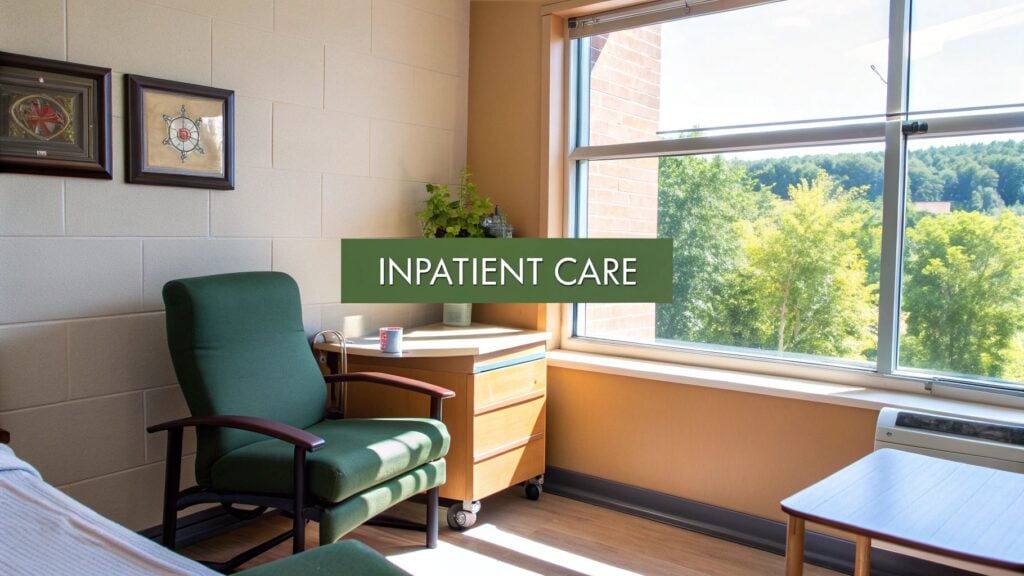


When severe mental health symptoms make daily life feel overwhelming, inpatient mental health treatment offers a vital sanctuary for crisis stabilization and healing. This guide provides a clear overview of what to expect from this intensive level of care, how to navigate the process in Massachusetts, and the path forward to sustained well-being.
Key Takeaways for Your Journey
- Crisis Stabilization First: The primary goal is immediate safety and stability in a secure, 24/7 medically monitored environment.
- Personalized Clinical Care: Treatment plans are tailored to your unique needs, including integrated care for co-occurring disorders like substance use.
- Structured for Success: A predictable daily schedule of therapy and wellness activities removes external stressors, allowing you to focus fully on recovery.
- Foundation for the Future: A comprehensive aftercare plan, connecting you to local Massachusetts resources, is created to support long-term success after discharge.
What Is Inpatient Mental Health Treatment
Think of inpatient mental health treatment as hitting the pause button on life. It's a structured, immersive program where you stay at a facility to receive constant medical and therapeutic support. All the external pressures—work, family stress, and daily triggers—are temporarily set aside so you can focus completely on getting stable and starting to heal.
This level of care is absolutely essential for anyone experiencing severe symptoms. We're talking about things like suicidal thoughts, psychosis, or reaching a point where you can't safely care for yourself. The primary goal isn't a long-term "cure" but immediate stabilization. It’s about creating a safe space to get through a crisis, adjust medications so they actually work, and build the foundational coping skills you need to move forward. For many people here in Massachusetts, this is the first critical step toward regaining control.
Why This Immersive Approach Works
The real power of inpatient care is its highly structured and supportive environment. By removing you from your everyday surroundings, we can interrupt harmful patterns and behaviors before they spiral further. The consistent routine of therapy, group sessions, and medical supervision helps bring back a sense of order and predictability when your life feels completely chaotic.
This structured setting is intentionally designed to reduce external stressors, allowing you to dedicate your full energy to healing. It offers a unique opportunity for deep, focused therapeutic work that is often difficult to achieve in an outpatient setting.
At the heart of the experience is a treatment plan built just for you. As soon as you're admitted, our clinical team sits down with you for a thorough assessment. We need to understand your unique challenges, including any co-occurring substance use disorders—something we see often and address through specialized dual-diagnosis care. This ensures that every single part of your treatment, from therapy to medication, is aligned with what you actually need.
If you or someone you love is in crisis and needs immediate, structured support, please don't wait. Call our compassionate team at (888) 388-8660 to learn how inpatient care can provide the safety and stability needed to begin healing.
Navigating the Admission and Assessment Process
Thinking about inpatient mental health treatment can feel like a huge, intimidating step. We get it. But the actual process is designed to be as clear and supportive as possible, right from that very first conversation.
It all begins with a single, completely confidential phone call. This isn't a high-pressure sales pitch; it's a chance for you or your loved one to talk to a real person who knows how to listen. You can share your story and help us start to understand what you're going through.
This first call is about building a connection. Whether you're calling for yourself or trying to help someone you care about, our team is here to offer immediate guidance. We’ll ask about the symptoms you're seeing, your mental health history, and any urgent safety concerns. This helps us figure out together if inpatient mental health treatment is the right level of care for the situation.
The Comprehensive Clinical Assessment
If it sounds like inpatient care is a good fit, the next step is a comprehensive clinical assessment. This is a much deeper dive with our clinical professionals—think therapists, nurses, and psychiatrists. Picture it as creating a detailed, personal roadmap of your mental and physical health. It’s not just about the current crisis; it’s about understanding the whole person.
This assessment is thorough and typically includes:
- A Psychiatric Evaluation: To get a clear picture of your symptoms, diagnostic history, and how you're feeling right now.
- A Medical History Review: To see if any physical health issues are playing a role in your mental well-being.
- A Substance Use Screening: This is key for identifying any co-occurring disorders, which need to be addressed for treatment to be effective.
- A Psychosocial History: To learn more about your life—your family, your social world, and your personal background.
This isn't just a checklist. It's how we ensure the treatment plan we create is tailored specifically to you. For our clients in Massachusetts, we also make sure to factor in local support systems that will become a crucial part of your recovery after you leave our facility.
The infographic below shows the typical path through inpatient treatment, from the initial crisis point, through stabilization, and into planning for life after treatment.
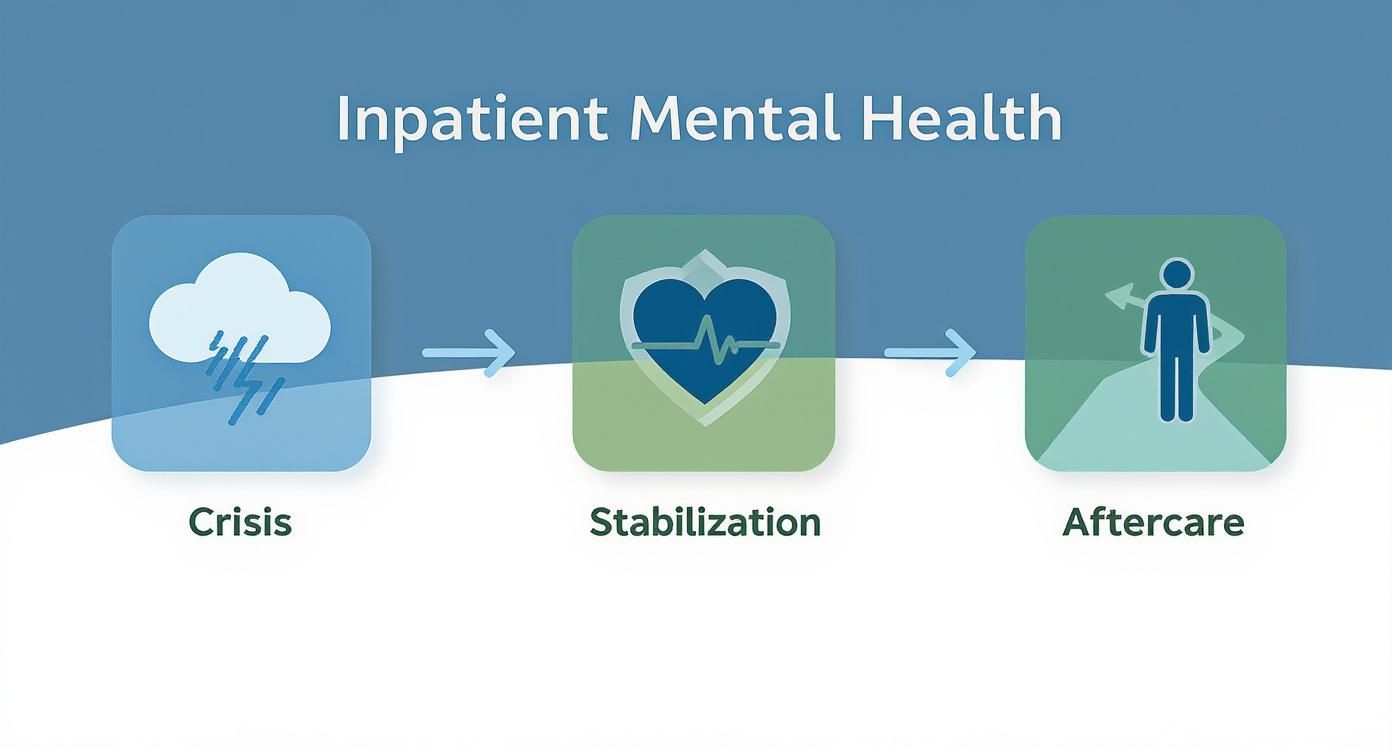
As you can see, each phase is designed to build on the one before it, creating a clear and structured path toward getting well.
Preparing for Your Stay
Once the assessment is done and you're admitted, our focus shifts to making you feel comfortable and safe. Those first 24 hours are all about stabilization. You’ll meet your core treatment team, get oriented to the facility, and start to get a feel for the daily routine.
To help make the transition as smooth as possible, we give you a straightforward list of what to bring and what to leave behind.
What to Pack:
- Comfortable clothes for about a week (we have laundry facilities).
- Your essential toiletries, but please keep them in their original, unopened containers.
- A list of your current medications and contact info for your doctors.
- A journal or notebook for writing and reflection.
We generally don’t allow items like electronics, sharp objects, or outside food. This isn't to be difficult—it's to create a safe, focused therapeutic environment where you can disconnect from outside distractions and fully invest in your recovery.
The admissions process is more than just paperwork; it is the foundational step in building a therapeutic alliance. It’s where healing begins, supported by a team dedicated to making you feel safe, heard, and prepared for the journey ahead.
If you feel ready to take that first step, our team is here 24/7. Call us at (888) 388-8660 to start a confidential conversation today.
A Day in a Residential Treatment Program
Imagining what a typical day looks like during inpatient mental health treatment can feel a bit mysterious, maybe even intimidating. But the reality is far from chaotic. It’s actually a thoughtfully planned rhythm designed to create consistency, safety, and a singular focus on healing. When you remove the unpredictable demands of daily life, this structured environment allows you to dedicate all your energy to getting better.

Building a Routine for Recovery
A typical day is a balanced mix of deep therapeutic work, personal reflection, and community connection. Think of it as building a new, healthier routine from the ground up, but with support at every single step. This consistency is a powerful tool against the instability that so often comes with a mental health crisis.
Mornings usually kick off with a gentle wake-up, a nutritious breakfast, and a community meeting. It’s a time to set intentions for the day and check in with peers and staff. Medication management is also a key part of the morning routine, making sure your treatment plan is followed precisely under close medical supervision.
The Heart of the Day: Therapeutic Work
The core of each day is dedicated to different kinds of therapy. You’ll participate in sessions designed to help you understand your thoughts, get a handle on your emotions, and develop practical skills you can actually use.
These sessions are intentionally varied to keep you engaged and to approach healing from multiple angles:
- Individual Therapy: This is your dedicated one-on-one time with a primary therapist. You'll dig into personal challenges and track your progress toward the goals you set together.
- Group Therapy: Led by a clinician, these sessions bring you together with peers to talk through common struggles like managing anxiety, understanding trauma, or practicing skills from Cognitive Behavioral Therapy (CBT).
- Expressive Therapies: Activities like art, music, or yoga give you other ways to process emotions and dial down stress, especially when words don't feel like enough.
- Educational Workshops: These groups are all about practical skills—things like relapse prevention, better communication techniques, or simply understanding the science behind your mental health condition.
This multi-pronged approach ensures you aren’t just talking about change, but actively practicing it in a safe space.
Finding Balance with Structure and Personal Time
While the day is definitely structured, it’s not meant to be rigid or confining. You’ll have scheduled breaks, personal time, and nutritious meals woven into the schedule. That balance is crucial for preventing burnout and giving you the space to process everything you're learning.
To give you a clearer picture, here’s what a day might look like.
Sample Daily Schedule in an Inpatient Program
| Time | Activity | Purpose |
|---|---|---|
| 7:00 AM – 8:00 AM | Wake-Up & Breakfast | Start the day with nutrition and routine. |
| 8:00 AM – 9:00 AM | Morning Meditation & Goal Setting | Center yourself and set intentions for the day ahead. |
| 9:00 AM – 10:30 AM | Group Therapy (e.g., CBT Skills) | Learn and practice new coping strategies with peers. |
| 10:30 AM – 12:00 PM | Individual Therapy Session | Dive deep into personal challenges with your therapist. |
| 12:00 PM – 1:00 PM | Lunch & Personal Time | Refuel and have a moment for personal reflection. |
| 1:00 PM – 2:30 PM | Educational Workshop | Gain practical knowledge on topics like stress management. |
| 2:30 PM – 4:00 PM | Expressive Therapy (e.g., Art/Yoga) | Process emotions through creative or mindful activities. |
| 4:00 PM – 6:00 PM | Free Time & Recreation | Relax, socialize, or engage in healthy recreational activities. |
| 6:00 PM – 7:00 PM | Dinner | Enjoy a communal meal and connect with others. |
| 7:00 PM – 8:30 PM | Support Group (e.g., 12-Step) | Share experiences and gain strength in a peer-led setting. |
| 8:30 PM – 10:00 PM | Quiet Time for Journaling/Reading | Wind down and reflect on the day's progress. |
| 10:00 PM | Lights Out | Ensure adequate rest for the next day of healing. |
As you can see, the day is full but balanced. Afternoons often involve more therapeutic groups, but the evenings tend to be quieter. This time might be for journaling, reading, or just having a low-key conversation with peers. Many facilities, including those serving the Massachusetts community, also use this time for family therapy sessions or visits to help mend and strengthen those vital support networks.
The daily structure of an inpatient program isn't about control; it's about creating a predictable and safe container for healing. It frees you from making countless small decisions so you can focus on the big ones related to your well-being.
This carefully crafted daily rhythm is the engine of inpatient treatment. It’s designed to replace chaos with calm, isolation with connection, and a feeling of helplessness with real empowerment.
If you’re ready to see how a structured, supportive environment can make all the difference, our team is here to talk. Call Paramount Recovery Centers at (888) 388-8660 to learn more about our approach.
Core Therapies and Clinical Services
While the safe, structured environment of inpatient mental health treatment is the foundation, the actual work of healing happens in therapy. This is where the real change begins. The mission isn’t just to get you through a crisis, but to arm you with practical skills and fresh perspectives for building a more fulfilling life long after you’ve returned home.
Every person's journey is unique, which is why a personalized treatment plan is so essential. We combine several therapeutic approaches to tackle your specific challenges from all sides—addressing your thoughts, emotions, behaviors, and even your relationships.
Evidence-Based Individual and Group Therapies
At the heart of your stay, you'll engage in proven therapeutic methods, both one-on-one and in group settings. Each format has its own power. Individual therapy offers a confidential space to do deep, personal work, while group therapy fosters an incredible sense of community and reminds you that you aren't alone.
Two of the most powerful and widely used approaches are:
- Cognitive Behavioral Therapy (CBT): Think of CBT as learning to become a detective of your own mind. It helps you spot, challenge, and rewrite the negative thought loops that fuel unhealthy emotions and actions. For instance, you might learn to catch an "all-or-nothing" thought like, "I always mess things up," and reframe it into something more realistic, like, "That didn't go as planned, but I can learn from it and try again."
- Dialectical Behavior Therapy (DBT): DBT is a game-changer for anyone struggling with overwhelming emotions or difficult relationships. It focuses on teaching tangible skills in four key areas: mindfulness, distress tolerance, emotion regulation, and interpersonal effectiveness.
These therapies aren't just theory; they are the bedrock of a plan designed for lasting change. It's encouraging to see more people embracing this kind of help. Between 2019 and 2021, the percentage of U.S. adults receiving mental health treatment climbed from 19.2% to 21.6%. For younger adults (18-44), the jump was even more significant, from 18.5% to 23.2%.
Specialized Care for Co-Occurring Disorders
It’s incredibly common for mental health conditions and substance use to go hand-in-hand. Trying to treat one while ignoring the other is like trying to fix a leaky boat by only patching half the holes. That’s why dual-diagnosis treatment is such a vital piece of quality inpatient care.
An integrated approach means the same clinical team treats both the mental health disorder (like anxiety or PTSD) and the substance use disorder at the same time. This unified strategy is the only way to truly untangle how each condition fuels the other, which is essential for achieving a sustainable recovery. If you're looking for this kind of comprehensive care, you can learn more about how our dual diagnosis treatment programs are structured.
Dual-diagnosis care isn't about treating two separate problems; it's about treating one whole person. Integrating care is the key to breaking the cycle of self-medication and relapse.
Medication Management and Family Involvement
For many, psychiatric medication is a crucial tool that helps stabilize symptoms, making it possible to fully engage in and benefit from therapy. A psychiatrist oversees this part of your care, conducting a thorough evaluation, prescribing the right medications, and closely monitoring your progress to find the optimal balance.
At the same time, we know that healing doesn't happen in a vacuum. Family therapy is often woven into the treatment plan to help repair relationships, open lines of communication, and educate your loved ones. This helps build a strong, knowledgeable support system in your Massachusetts community, which is absolutely critical for a successful transition home.
By weaving these core services together, inpatient mental health treatment creates a powerful framework for healing and growth. If you're ready to see how these therapies can help you or someone you care about, call our team at (888) 388-8660 for a completely confidential conversation.
Finding and Paying for Care in Massachusetts
When you're already in the middle of a crisis, figuring out the financial side of treatment can feel like one more impossible mountain to climb. But here's the good news: you don't have to navigate it alone.
High-quality inpatient mental health treatment is within reach for more people than you might think, especially here in Massachusetts. The key is understanding your options—from insurance benefits to state resources—so that financial stress doesn't stand in the way of getting help.
To get you started, here are four key things to know about finding and paying for care.
1. Your Insurance Plan Is Your Greatest Asset
Most major insurance plans cover inpatient mental health services, thanks to laws like the Affordable Care Act that mandate it. The absolute first step is to verify your benefits. An admissions coordinator can handle this for you, cutting through the confusing jargon like deductibles, copayments, and out-of-pocket maximums to give you a clear, straightforward picture of your financial responsibility.
2. State-Specific Resources Can Fill the Gaps
For Massachusetts residents, state-funded programs like MassHealth provide a critical safety net. These programs are specifically designed to ensure people who don't have private insurance can still access the care they need. It’s always worth checking if you’re eligible, as it could dramatically reduce or even cover the entire cost of treatment.
3. Payment Plans and Assistance Are Often Available
Don't let a high deductible or limited coverage discourage you. Many treatment centers get it—they understand the financial strain this can cause. That's why they often offer flexible payment plans or other financial assistance. You should always ask what’s available. The goal is to make care accessible so you can focus on what really matters: getting well.
4. Transparency Is Non-Negotiable
A reputable facility will be upfront and honest about costs from the very first conversation. The admissions team should walk you through a detailed breakdown of all expenses and work with you to get the most out of your insurance benefits. Think of them as your advocates in this process, there to make sure you understand every part of your financial commitment before treatment begins.
This need for accessible services is being seen across the healthcare industry. Spurred by growing awareness and better policies, the inpatient behavioral health market is expanding, particularly in North America. That's a great sign—it means more resources are becoming available for people who need them. You can find more insights about the behavioral health market on towardshealthcare.com.
Trying to sort through all of this can feel like a lot, but our team is here to help you make sense of all your options. Give us a call at (888) 388-8660 for a confidential insurance verification today.
Planning Your Transition After Treatment
Leaving an inpatient program isn't the finish line—it’s the start of the next leg of your journey. A solid aftercare plan is the bridge between the structured, 24/7 support of inpatient mental health treatment and the realities of daily life. This is where you and your clinical team collaborate to draw a personalized map for what comes next.

This plan isn't a last-minute thought; it's developed well before you leave to ensure a smooth transition. The goal is to arm you with a strong support network and concrete strategies to prevent relapse, protecting the incredible progress you’ve worked so hard to achieve. Think of it as your guide to maintaining stability as you continue building a healthier, more fulfilling life.
Building Your Post-Treatment Support System
A thoughtful discharge plan outlines the next level of care, which almost always means stepping down to a less intensive program. This gradual shift helps you adjust to growing independence without pulling the safety net out from under you. It’s a critical piece of a successful recovery.
Your aftercare plan will usually include:
- Step-Down Programs: Referrals to a Partial Hospitalization Program (PHP) or an Intensive Outpatient Program (IOP) to maintain structure and therapy.
- Outpatient Providers: Setting you up with local therapists and psychiatrists in Massachusetts for ongoing, one-on-one clinical support.
- Community Groups: Connecting you with local support networks like NAMI (National Alliance on Mental Illness) or DBSA (Depression and Bipolar Support Alliance) for invaluable peer connection.
The main idea is to make sure you never feel like you're going it alone. You’ll walk out of treatment with appointments already on the calendar and a list of contacts—professionals and peers ready to have your back.
A well-crafted aftercare plan is the most important tool for preventing relapse. It transforms the skills learned in treatment into real-world habits, ensuring that short-term stability grows into long-term recovery.
Effective aftercare helps break a difficult cycle. Systemic challenges and a lack of community-based alternatives can lead to prolonged institutional stays. In fact, more than 20% of inpatient admissions can last longer than a year, often due to a gap in services rather than clinical need. A structured transition plan helps bridge that gap. Learn more about global mental health service reform on news.un.org.
If you’re ready to start building a foundation for lasting recovery, our team is here to help. Call Paramount Recovery Centers at (888) 388-8660 to discuss your path forward.
Frequently Asked Questions
Thinking about inpatient mental health treatment is a big step, and it's completely normal to have a lot of questions. Here are some honest, straightforward answers to the things people in Massachusetts most often ask us.
How Long Does Inpatient Treatment Last?
There's really no magic number for how long healing takes. The length of your stay is entirely based on your specific needs and how you're progressing.
For someone in the middle of a crisis who needs to get stable right away, a stay could be just a few days. For others who need more time to dig into complex issues and really build a new foundation for their life, treatment might last anywhere from a few weeks to a month or more. It’s not about watching the calendar; it's about hitting your clinical goals so you can leave with a solid aftercare plan.

Can I Keep My Job While in Treatment?
During inpatient care, your only job is to focus on getting well. The whole point is to step away from daily stressors, so trying to work at the same time just isn't possible.
The good news is, your job is likely protected. Most people use legal protections like the Family and Medical Leave Act (FMLA) or short-term disability benefits to secure their position. Our admissions team here in Massachusetts can help you get all the right paperwork for your employer so you can focus 100% on your recovery without that added stress.
What's the Difference Between Inpatient and Residential Programs?
People often use these terms as if they're the same thing, but they serve different purposes. Think of inpatient care as a hospital-level setting. It's for acute crisis situations where you need intense medical and psychiatric oversight to get stable.
Residential treatment, on the other hand, is usually longer-term and feels less like a hospital. The focus shifts from crisis management to deeper therapeutic work, learning new life skills, and getting ready to ease back into your daily routine. They're both vital, just for different stages of the healing journey.
How Is My Family Involved in the Process?
We don’t just see family involvement as a nice add-on; it’s a core part of creating a recovery that lasts. Your loved ones are your biggest allies, and we treat them as essential partners in this process.
You can expect most good programs to offer things like family therapy sessions, educational workshops, and set times for visits. The goal isn't just to keep you connected—it's to heal relationships, fix broken communication, and give your family the tools they need to be an effective support system when you're back home.
"Involving the family isn't just a courtesy; it's a clinical necessity. A supportive, educated family system can dramatically improve long-term outcomes and help sustain the progress made during treatment."
By working together, we make sure everyone—you and your family—feels equipped and ready for the road ahead.
At Paramount Recovery Centers, we know that making that first call is often the hardest part. Our team is here to listen, answer every question you have, and help you figure out the best path forward. If you or someone you care about is struggling, please don't wait. Call us for a confidential conversation at (888) 388-8660 and let's start the journey to healing today.


