


Making the decision to stop drinking is a courageous first step toward a healthier life, and it's a journey you don't have to navigate alone. This guide provides a clear, practical roadmap for Massachusetts residents, covering everything from the critical importance of a safe, medically supervised detox to building a fulfilling life in long-term recovery. We'll walk you through your local treatment options and help you find the support you need, right here in your community.
Key Takeaways for Quitting Alcohol
As you begin your journey, keep these four essential points in mind. They will act as your compass, guiding you toward lasting change and a healthier future.
- Prioritize a Safe Detox: The first and most critical step is ensuring your physical safety. A professional medical evaluation will determine the safest way for you to stop drinking, which is essential for preventing severe and potentially life-threatening withdrawal complications.
- Personalize Your Treatment Plan: Recovery is not a one-size-fits-all process. In Massachusetts, you have access to a range of options, from structured day treatment programs (PHP) to flexible outpatient care (IOP/OP) that can accommodate your work and family commitments.
- Build a Strong Support System: You are not alone in this. Combining professional therapy with a community of peers who understand your experience is one of the most powerful tools for sustained recovery.
- Take Action Today: Immediate, confidential help is just one phone call away. Reaching out connects you with the resources and compassionate care needed to start your recovery. Call (888) 388-8660 to speak with someone who can help.
Your Path Forward Starts with One Step
The journey to quit drinking doesn't start with a giant leap. It begins with a single, deliberate step forward. Just admitting that you need a change is the hardest and most important part. From here on out, every small action you take is progress. Think of this guide as your roadmap, offering clear directions and support tailored for folks right here in Massachusetts.

Guiding Principles for Your Recovery
Finding your way to sobriety is a lot less overwhelming when you have a few core principles to lean on. These are the foundational pillars that will hold you up as you start rebuilding your life without alcohol.
Your safety is the absolute top priority. Before you do anything else, you need a professional medical assessment. This is critical for managing the potentially dangerous risks of alcohol withdrawal. Trying to quit "cold turkey" on your own can be extremely unsafe.
Once safety is handled, the focus shifts to finding a plan that actually fits your life. Recovery is deeply personal. Your treatment needs to reflect your unique situation, challenges, and goals—not someone else's.
Understanding the Risks of Alcohol Withdrawal
Deciding to quit drinking is a huge first step, but how you quit is just as critical as the decision itself. Many people think going "cold turkey" is the quickest way to get sober, but this approach can be incredibly dangerous and, in some cases, even fatal. Before you do anything, you need to understand what you're up against.
When your body has become physically dependent on alcohol, it doesn't just let go quietly. It protests, and that protest is called alcohol withdrawal. This isn't a test of your willpower; it’s a serious medical event that your body goes through, and its intensity can range from uncomfortable to life-threatening.
Mild vs. Severe Withdrawal Symptoms
Everyone's experience with withdrawal is different. How bad it gets often depends on how much you drank, for how long, and your overall physical health. It's vital to know the difference between symptoms you might be able to manage and signs of a true medical emergency.
For someone who drank moderately, withdrawal might feel like a bad flu, with symptoms like:
- Anxiety and jumpiness
- Shaky hands
- Headache or nausea
- Insomnia
- Sweating
But for anyone with a history of heavy, long-term drinking, the stakes are much, much higher. Severe withdrawal is a medical crisis that needs immediate attention.
When to Seek Immediate Medical Help
There are certain red flags you absolutely cannot ignore. One of the most dangerous forms of withdrawal is delirium tremens (DTs), a condition that can kill if it's not treated in a hospital setting. Every resident in Massachusetts needs to be aware of these warning signs.
If you or someone you care about has any of these symptoms after stopping alcohol, get to an emergency room right away:
- Seizures
- Severe confusion or disorientation
- Hallucinations (seeing, hearing, or feeling things that aren't there)
- High fever and extreme agitation
These aren't just textbook symptoms; they are real, life-threatening scenarios that our team at Paramount Recovery Centers in Massachusetts manages every single day. Trying to ride these out at home is a gamble you don't want to take.
The Global Impact of Alcohol Use Disorder
The need for safe, supervised detox is a massive public health issue. In 2019 alone, an estimated 400 million people across the globe were living with an alcohol use disorder. That same year, alcohol was responsible for somewhere between 2.6 to 3.0 million deaths—that’s almost 6% of all deaths worldwide. These aren't just numbers; they're people, families, and communities. Quitting isn't just a personal battle; it's a step toward addressing a global crisis. For more on this, you can explore the full report from the World Health Organization.
Finding the Right Alcohol Treatment in Massachusetts
Once you're physically safe after a medical detox, the real work begins. It’s time to find a treatment plan that actually fits your life. Recovery isn't a one-size-fits-all punishment; it's a "continuum of care" that should bend to your unique needs, responsibilities, and personal goals. Getting familiar with your options is the first step toward making a choice that sticks.
This decision tree gives you a straightforward way to think about alcohol withdrawal symptoms and what to do next.
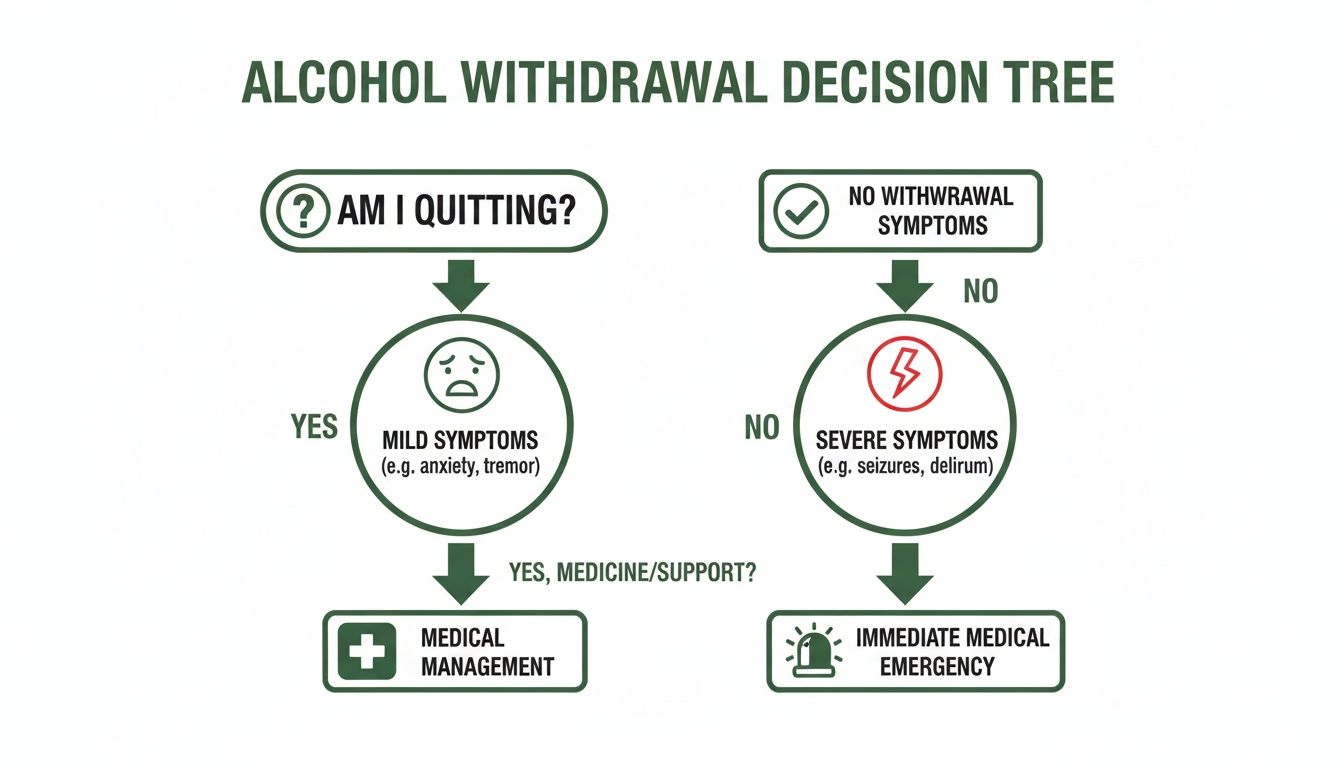
This visual cuts through the confusion, showing the critical difference between mild symptoms you might manage with support and severe ones that demand immediate medical help. For anyone in Massachusetts trying to quit drinking, knowing where you stand is the foundation of a safe recovery.
Day Treatment (PHP): A Structured Path to Recovery
For people stepping down from an inpatient facility or for those who need a heavy dose of structure without living on-site, Day Treatment is a powerful choice. It's also known as a Partial Hospitalization Program (PHP). Think of it as having the intensity of inpatient care but with the freedom to go home every evening.
A typical day in a Massachusetts PHP isn't just about passing time; it's a packed schedule of therapy and active work. You can expect:
- Individual Therapy: One-on-one time to dig into the personal roots of your drinking.
- Group Therapy: Real connection with others who get it, helping you build a sober community.
- Skill-Building Workshops: Practical, hands-on sessions for dealing with cravings, managing stress, and learning how to prevent a relapse.
This level of care is perfect if you have a stable place to live but need that daily, focused support to build a strong foundation in early sobriety.
Intensive Outpatient (IOP): Balancing Treatment and Life
The next step down is often an Intensive Outpatient Program (IOP). An IOP still provides a solid treatment framework but with more flexibility than a PHP, making it a great option if you need to keep working, go to school, or take care of your family.
Here at Paramount Recovery Centers in Southborough, our IOP involves several hours of therapy on multiple days of the week. This setup lets you put your new recovery skills to the test in your actual day-to-day life, practicing new coping strategies in real-time.
Finding a program that truly gets the local landscape is a big deal. Drinking patterns aren't the same everywhere, so recovery strategies can't be either. Across the U.S., even though overall drinking has slightly decreased, alcohol-related deaths are still alarmingly high—nearly half of all deaths from certain liver diseases are tied to alcohol. This isn't just a statistic; it's a public health crisis. A Massachusetts provider has to do more than just offer detox and therapy. They need to know the system, like how to navigate MassHealth, and understand that men and women face different risks and often benefit from gender-specific support.
Outpatient Programs (OP): Flexible Support for Long-Term Success
Standard Outpatient Programs (OP) offer the most freedom and flexibility. This level of care usually involves just a few hours of therapy each week. It's designed for people who have already built a solid foundation in their recovery but know they still need professional support and accountability to keep moving forward.
Outpatient care is all about maintaining momentum. It helps you handle the challenges that will inevitably pop up in long-term sobriety, keeping you connected to your support system while you fully re-engage with work, family, and life. If you're exploring what's available, you can learn more about how to find effective alcohol treatment programs near you and decide what feels right.
The Role of Medication-Assisted Treatment (MAT)
For so many people, Medication-Assisted Treatment (MAT) is a complete game-changer, especially in early recovery. MAT isn't about replacing one substance with another; it's about using FDA-approved medications alongside behavioral therapy to help your brain and body heal.
A common and effective medication is Naltrexone. It works by blocking the euphoric feelings you get from alcohol, which helps dial down the cravings. This can give you the mental breathing room you need to break the psychological grip of addiction and really focus on the therapeutic work.
The treatment landscape can feel overwhelming, so we've put together a simple table to help you compare the different levels of care available right here in Massachusetts.
Choosing Your Level of Care in Massachusetts
This table compares alcohol treatment programs to help you find the right fit based on your individual needs for structure, flexibility, and support.
| Level of Care | Best For Individuals Who… | Time Commitment | Key Services Offered |
|---|---|---|---|
| Day Treatment (PHP) | Need intensive, daily structure but have a stable home life. Often a step-down from inpatient care. | 5-6 hours/day, 5 days/week | Individual/Group Therapy, Skill-Building, Medical Monitoring |
| Intensive Outpatient (IOP) | Need robust support while balancing work, school, or family responsibilities. | 3-4 hours/day, 3-4 days/week | Individual/Group Therapy, Relapse Prevention, Case Management |
| Outpatient (OP) | Have a strong foundation in recovery and need ongoing support and accountability. | 1-3 hours/week | Individual Therapy, Group Counseling, Aftercare Planning |
Ultimately, the goal is to find a program where you feel seen, supported, and challenged. Every person's path is different, and the "right" choice is the one that gives you the best shot at long-term success.
Building Your Skills for Long-Term Sobriety
Getting sober is a huge achievement, but the real journey is learning how to stay sober. Long-term recovery isn't just about putting down the bottle; it's about building a completely new life, one equipped with the skills and strategies to handle whatever comes your way. Think of this as your personal toolkit for a recovery that actually lasts.
It really comes down to learning how to manage the thoughts, feelings, and situations that used to send you straight to a drink. It's about building the kind of resilience where you're the one in control, not the cravings.
Rewiring Your Thoughts with Therapy
One of the most powerful tools we have for creating lasting change is Cognitive Behavioral Therapy (CBT). Forget the idea of endlessly rehashing your past on a couch. CBT is an active, hands-on approach that helps you pinpoint and challenge the specific thought patterns that drive you to drink.
For instance, maybe your automatic thought after a rough day is, "I had a terrible day at work, I need a drink to relax." CBT teaches you to hit the pause button, see that thought for what it is, and consciously reframe it. Something like: "Work was stressful today. A drink sounds good for a minute, but I know it'll make me feel awful tomorrow. I'm going to take a walk or call a friend instead."
This mental pivot doesn't just happen. It's a skill you hone with practice, giving you a powerful, internal defense against those urges when they strike.
Identifying Triggers and Creating a Plan
A trigger is anything—a person, a place, a feeling, an event—that sparks that urge to drink. A massive part of early recovery is getting brutally honest about what your personal triggers are and then making a concrete plan to deal with them. Just hoping you'll have the willpower in the moment is a recipe for disaster.
Your triggers might be things like:
- Emotional states: Feeling stressed, lonely, bored, or even super happy.
- Social situations: The office happy hour, weddings, or family get-togethers where everyone else is drinking.
- Environmental cues: Driving past your old liquor store, seeing alcohol ads on TV, or even just the clock hitting 5 PM.
- Physical sensations: Feeling exhausted or dealing with the lingering symptoms of post-acute withdrawal.
Once you know what they are, you can build a defense. This might look like practicing mindfulness, having your sponsor on speed dial, hitting the gym, or always having a seltzer with lime in your hand at parties.
Building a new life in sobriety is a process of continuous care, not a one-time fix. Relapse rates for substance use disorders are between 40% and 60%, which is very similar to chronic diseases like diabetes or hypertension. This shows that recovery requires ongoing support.
The Importance of Continued Care
The hard truth is that many people who need help never get it. In the U.S., an estimated 28 to 29 million people are struggling with alcohol use disorder, but only a tiny fraction of them receive any formal treatment. This gap is a big reason relapse rates are so high.
Combining different approaches—like therapy, aftercare groups, and MAT—dramatically increases the odds of long-term success compared to just trying one thing. You can learn more about addiction statistics and the need for ongoing care.
Addressing Co-Occurring Conditions
It's incredibly common for alcohol use disorder to be tangled up with mental health conditions like anxiety, depression, or PTSD. So often, drinking is just a way to self-medicate the symptoms of an issue that hasn't been properly diagnosed or treated. For recovery to stick, you have to address both issues at the same time.
This is what we call dual-diagnosis treatment. Ignoring the underlying anxiety, for example, is like trying to fix a burst pipe by just mopping the water off the floor—it’s never going to work. At Paramount Recovery Centers, our dual-diagnosis and gender-specific tracks in Massachusetts are specifically designed to give you the tools to manage both your mental health and your sobriety, building a much stronger foundation for a life free from alcohol.
Taking the First Step Today
Everything we've covered—from acknowledging you need a change to navigating treatment options—boils down to one simple, yet incredibly powerful action: reaching out. This whole journey starts with a single, confidential phone call.
Let's make this feel less like a leap into the unknown and more like a first step on solid ground.
When you dial (888) 388-8660, you’re not going to get a lecture or an interrogation. You’ll be connected with a compassionate admissions coordinator whose only job is to listen. They’re there to answer your questions, help figure out your insurance, and schedule a no-pressure assessment if you’re ready.

Four Key Things to Remember Before You Call
Taking that first step can feel huge, but it really comes down to a few core ideas. Keeping these in mind can give you the clarity and courage you need right now.
- You're Taking Back Control. Making this call isn't a sign of weakness; it's the exact opposite. It's you, deciding to take back the steering wheel of your life.
- It's Just a Conversation. The whole point of the first call is to get information. You’ll learn about what programs look like and how insurance works, all without any commitment.
- Local Support Is Here for You. For anyone in Massachusetts, this isn't some faceless national hotline. You're calling a local team right here at Paramount Recovery Centers. We know this community because we're part of it.
- Your Safety Is the Priority. A big part of that initial conversation is about making sure you're okay. We’ll help you understand the real risks of withdrawal and point you toward the safest way forward. You can learn more about how to detox from alcohol safely here.
That first call is the most important one you can make. It shatters the isolation and connects you to a team whose only goal is to see you get better. It’s free, it’s confidential, and it opens the door to a new beginning.
Your Questions, Answered
What do I need to have ready when I call?
If you have your insurance card handy, that's great, but it’s not a deal-breaker. The most important thing is just being ready to talk honestly about what's going on.
Is this call actually confidential?
Absolutely. Your privacy is protected by law. This is a safe, confidential space for you to talk openly without fear of judgment.
What if I’m calling about my son/daughter/partner/friend?
We talk to concerned family and friends all the time. We can give you real guidance on how to support your loved one and walk you through the options available to them.
Frequently Asked Questions About Quitting Alcohol
Walking the path to sobriety brings up a lot of questions. It's completely normal. To give you some clarity, we've gathered answers to the most common questions we hear from people and families across Massachusetts who are thinking about getting professional help for alcohol use.
How do I know if my drinking is a serious problem?
This is often the toughest question to answer honestly. A simple way to check in with yourself is to ask: is alcohol causing negative consequences in any part of my life—my health, relationships, job, or mental well-being? If the answer is yes, it's a sign that something needs to change. Key indicators of an alcohol use disorder include trying to stop but being unable to, experiencing withdrawal symptoms when you don't drink, and continuing to drink despite negative outcomes. The best way to get a clear picture is through a confidential assessment with a trained professional.
Will my insurance cover alcohol treatment in Massachusetts?
Most likely, yes. The vast majority of major insurance plans, including MassHealth, are required by the Affordable Care Act to cover treatment for substance use disorder as an essential health benefit. However, the extent of that coverage can vary significantly between plans. Some may have high deductibles or copays. The easiest way to find out what your plan covers is to call us for a free, confidential benefits check. Our admissions team at Paramount Recovery Centers works with insurance providers daily and can help you maximize your benefits.
What happens after I finish a treatment program?
Recovery doesn’t end when a program does; it's an ongoing journey. Strong aftercare planning is one of the biggest predictors of long-term success. This often involves stepping down to a less intensive level of care, like moving from a PHP to a weekly outpatient group for continued support. It also includes connecting with alumni programs and local community support groups in Massachusetts, such as Alcoholics Anonymous (AA) or SMART Recovery, to build a sober network that will support you long-term.
Why is quitting alcohol "cold turkey" so dangerous?
When your body is physically dependent on alcohol, stopping abruptly can send your brain into a state of hyperexcitability. This can trigger severe medical complications, including seizures, extreme dehydration, and delirium tremens (DTs), a condition that can be fatal without professional medical care. A medically supervised detox is the only way to manage these risks safely.
Your journey to a healthier, alcohol-free life can start right now. Here at Paramount Recovery Centers, our compassionate team is ready to guide you with proven, evidence-based care right here in Massachusetts. You don't have to wait to take this important step.
Call us for a confidential conversation at (888) 388-8660 or learn more by visiting our website.


