
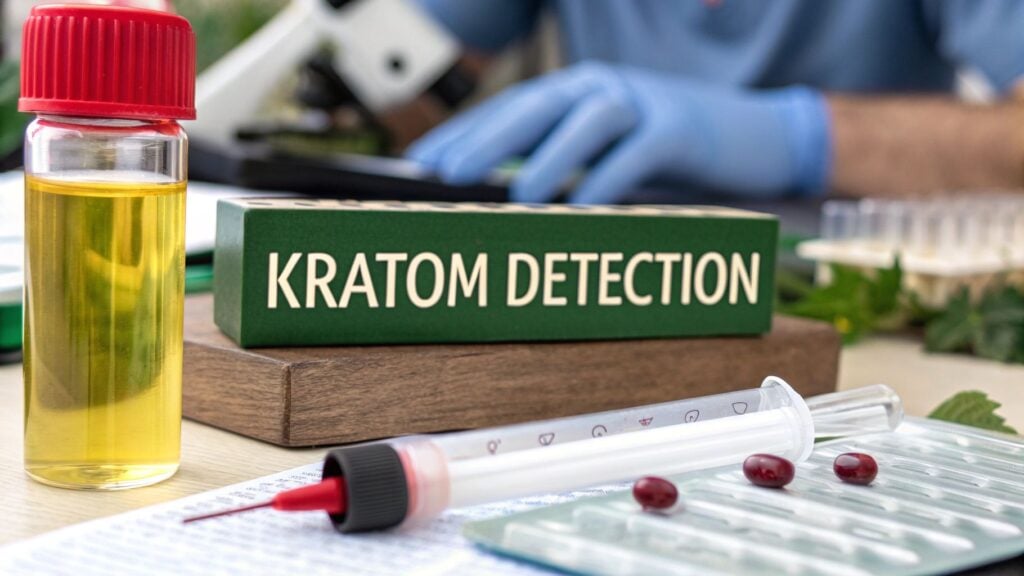


Kratom is a substance that has gained popularity for its unique effects, but it also comes with a lot of questions, especially about its longevity in the body. If you're facing a drug test or are simply curious about how your body processes it, understanding the detection window is crucial. This guide will break down the key factors that influence how long kratom remains detectable, from the type of test used to your own personal biology.
Key Takeaways on Kratom Detection Times
Figuring out how long kratom hangs around in your body isn’t as simple as circling a date on the calendar. The timeline is not one-size-fits-all. A whole host of factors come into play, from the type of drug test being used all the way down to your unique body chemistry. For anyone in Massachusetts worried about a potential screening for work or clinical reasons, getting a handle on these variables is critical.
Here are the four most important things to know about kratom detection:
-
Test Type is the Biggest Factor: The single most significant variable is the testing method itself. Urine tests are the most common and can typically detect kratom for about a week. Blood and saliva tests have much shorter windows, usually just 1-2 days. At the other end of the spectrum, a hair follicle test can find traces for up to three months.
-
Your Body Plays a Huge Role: Just like with any substance, your personal biology is crucial. Your metabolism, body fat percentage, age, and even how well your liver is functioning all impact how quickly you process and get rid of kratom's alkaloids. It's why two people can take the same dose and have very different detection timelines.
-
Standard Drug Screens Will Miss It: This is a big one. Kratom is not part of a standard 5-panel drug test, which is the go-to for most pre-employment screenings. However, don’t assume you’re in the clear. Specialized, more comprehensive panels (like a 10-panel or a custom test) can be ordered to specifically look for kratom’s main compounds, mitragynine and 7-hydroxymitragynine.
-
It All Comes Down to Half-Life: The primary active alkaloid in kratom, mitragynine, has a half-life of roughly 24 hours. Think of it like this: it takes a full day for your body to clear out just half of the kratom you consumed. To get it all out of your system usually takes about 5 to 6 of these half-life cycles, which is why the detection window often lands around a week.
If you or someone you care about in Massachusetts is struggling with kratom use, has questions, or is thinking about treatment, please know that professional help is out there. Understanding what you're dealing with is the first step. For a confidential conversation about your options, call us at (888) 388-8660.
Understanding Kratom's Half-Life and Metabolism
To really get a handle on how long kratom sticks around in your system, we have to look at how your body processes it from the inside out. There’s no simple, one-size-fits-all answer. Instead, it’s a biological journey shaped by two big ideas: half-life and metabolism. Getting this science down helps explain why detection windows can be so different for everyone.
Think about your phone battery at 100%. The "half-life" is just the time it takes for that battery to drain down to 50%. Kratom's main active compound, mitragynine, acts in a similar way. It has a half-life of about 24 hours, which means that after one full day, your body has cleared out roughly half of it. This is a huge piece of the puzzle when it comes to figuring out detection times.
The Tale of Two Alkaloids
Kratom is packed with active compounds, but two of them do most of the heavy lifting. They behave very differently once you take them. Picture them as two runners in a race: one is built for marathons, the other is a sprinter.
-
Mitragynine (The Marathoner): This is the most plentiful alkaloid in kratom. Its long 24-hour half-life means it lingers in your system, making it the main compound that drug tests are looking for. Since it takes about 5-6 half-lives to completely clear a substance, this extended duration explains why you can still find traces of mitragynine in urine for up to a week.
-
7-hydroxymitragynine (The Sprinter): While much more potent than mitragynine, this alkaloid is found in much smaller amounts in natural kratom leaves. Its half-life is way shorter, clocking in at only 2 to 3 hours. Even though it’s processed quickly, its high potency is a big reason for the substance’s powerful effects, particularly in concentrated kratom drink products.
The huge variation in detection times is partly explained by how these two compounds work. While the marathoner—mitragynine—sets the pace for long-term detection, the sprinter—7-hydroxymitragynine—drives the immediate effects. For a deeper dive into these products, check out our guide on the effects and safety of kratom drinks.
Your Liver's Role in Metabolism
Once you consume kratom, your liver gets to work. Think of it as the body’s main processing plant. Your liver is filled with special enzymes designed to break down foreign substances, and kratom's alkaloids are no exception.
These enzymes transform mitragynine and 7-hydroxymitragynine into smaller bits and pieces called metabolites. And it’s these metabolites—not always the original alkaloids—that most specialized drug tests are designed to find.
This whole process is incredibly personal. Just like some people can handle more caffeine than others without getting the jitters, your own enzyme levels, liver health, and general metabolism will determine how fast you can break down and flush out kratom. For some people in Massachusetts, a healthy lifestyle supports an efficient liver, but for others, underlying health conditions might slow everything way down.
Ultimately, the half-life of the alkaloids determines how quickly they start to break down, but it’s your liver’s efficiency that finishes the job. This is why personal factors, which we’ll cover next, are so critical in figuring out exactly how long kratom stays in your system. If you have concerns about your kratom use and its impact on your body, don’t wait to get answers. Call us at (888) 388-8660 for a confidential conversation.
Key Factors That Influence Kratom Detection Times
Why does kratom stick around in one person’s system so much longer than another's? There’s no single, simple answer. The reality is that a combination of personal variables creates a unique detection window for every individual. Moving past the general estimates helps you understand the specific factors at play in your own body.
How long kratom stays in your system is really a complex dance between your personal habits and your body's natural rhythm. Let’s break down the most significant factors that either speed up or slow down how quickly your body clears out kratom’s alkaloids.
Dosage and Frequency of Use
This is probably the biggest piece of the puzzle. The amount of kratom you take and how often you take it are the primary drivers of its detection time.
Think of it like pouring water into a bucket with a tiny hole at the bottom. A single, small dose is like one cup of water—it drains out pretty fast. But frequent, heavy use is like constantly topping off the bucket. The alkaloids don't get a chance to clear out before the next dose arrives, leading them to build up in your body’s tissues. Once you stop, your system has a much larger backlog to process and eliminate.
For a chronic, high-dose user, the detection window can easily stretch from the typical seven days to two weeks or more. The body simply has a much larger reserve of metabolites to work through.
Body Composition and Age
Your physical makeup plays a surprisingly big part in this. Kratom’s main active compounds, mitragynine and 7-hydroxymitragynine, are lipophilic—a scientific way of saying they are fat-soluble. They get stored in your body's fat tissues, much like how THC from cannabis does.
This has two major implications:
- Higher Body Fat: Someone with a higher body fat percentage has more storage space for kratom metabolites. These stored compounds are then slowly released back into the bloodstream over time, which can significantly extend the detection window.
- Age: It’s a fact of life that our metabolism tends to slow down as we get older. This means the liver and kidneys, our body's primary filters, may process substances less efficiently, leading to a longer elimination half-life.
These individual differences are exactly why a one-size-fits-all timeline is impossible to give.

Metabolism and Organ Function
Think of your metabolic rate and the health of your liver and kidneys as the engines driving the entire detox process. A naturally fast metabolism will chew through kratom’s alkaloids more quickly, while a slower one will let them linger.
Even more critical is the health of your organs. Your liver does the heavy lifting of metabolizing kratom, and your kidneys are in charge of filtering out the waste products. Any impairment to liver or kidney function can dramatically slow this process down, causing kratom to remain detectable far longer than average. As Hope Harbor Wellness explains, factors like overall metabolism speed and even using other substances (including alcohol) can further complicate the timeline.
For residents in Massachusetts, everyday lifestyle choices like diet and hydration also matter. A balanced diet and staying well-hydrated give your organs the support they need to function at their best. On the flip side, poor nutrition or dehydration can put extra strain on these systems, slowing everything down.
If you’re worried about your kratom use and its impact on your health, professional guidance is here for you. Call Paramount Recovery Centers at (888) 388-8660 for a confidential conversation about your options.
Kratom and Drug Testing: What You Need to Know
When it comes to kratom and drug screenings, there's a ton of confusion out there. A lot of people wonder if their kratom use will pop up on a test for a new job, a legal matter, or a clinical check-up. The short answer is, it all comes down to the kind of test they’re running.
Getting the specifics straight can help you know what to expect. While your average, run-of-the-mill screening often misses it completely, the world of drug testing is always adapting. Specialized panels are becoming more common, especially in certain fields. Let's break down the process so you have the real facts.
Standard vs. Specialized Drug Panels
The biggest source of this confusion is the type of test being used. A standard 5-panel drug test—the kind that most companies use for pre-employment screenings—is only looking for five specific classes of drugs:
- Amphetamines
- Cocaine
- Marijuana (THC)
- Opiates
- Phencyclidine (PCP)
Kratom’s active compounds, mitragynine and 7-hydroxymitragynine, have a completely different chemical structure from these substances. Because of this, kratom will not show up on a standard 5-panel test.
But that doesn't mean you're automatically in the clear. Employers or legal authorities can always order more advanced screenings. While it’s not on the standard 5-panel, more advanced 10-panel or larger drug tests can absolutely detect kratom alkaloids, like mitragynine, for up to seven days after use. As more workplaces and legal bodies start paying attention to kratom, these specialized tests are being used more often. You can learn more about kratom and specialized lab testing to see exactly how this detection works.
When Is Specialized Testing Used in Massachusetts?
Here in Massachusetts, certain jobs and specific situations might call for a more detailed screening that includes kratom. These tests are pricier, so they’re usually saved for particular circumstances.
For example, industries where safety is everything—like transportation, healthcare, or operating heavy machinery—are more likely to opt for these extended panels. On top of that, clinical settings, probation programs, or substance use treatment centers may test for kratom to make sure everyone is staying safe and compliant.
It's really important to know the policies of your workplace or any program you're a part of. Just assuming a test will be a basic 5-panel screen can be a risky gamble.
A Breakdown of Different Testing Methods
Every type of drug test has its own detection window and sensitivity for spotting kratom's metabolites. Here’s what you need to know about each one:
- Urine Tests: This is the most common way to test for kratom. For a moderate user, it can typically find kratom metabolites for 5 to 7 days after the last use. For heavy, long-term users, that window can stretch to over a week.
- Blood Tests: These offer a much shorter detection window, usually just 24 to 48 hours after the last dose. Since they are more invasive and expensive, they are typically used in specific legal or clinical situations to confirm very recent use.
- Saliva Tests: Much like blood tests, saliva tests have a very brief detection window of about 1 to 2 days. They aren't as common for kratom but are becoming more popular because they're so convenient to administer.
- Hair Follicle Tests: This method gives the longest look back by far. Kratom metabolites can be detected in hair for up to 90 days. However, hair testing for kratom is quite rare and almost exclusively used in highly specialized cases.
If you're worried about an upcoming drug test or your kratom use in general, getting clear, professional advice is the best thing you can do. For a confidential chat about your situation, call our team at (888) 388-8660 today.
Recognizing Kratom Dependence and Withdrawal
Figuring out how long kratom stays in your system often goes hand-in-hand with worries about dependence. For some people, what begins as a casual experiment can spiral into a full-blown physical and psychological reliance. Spotting the signs of dependence is the first real step toward making healthier choices—and it's a lot more important than just knowing detection windows.
Dependence isn't a moral failure or a sign of weakness. It's simply your body's physiological response to having a substance around all the time. Your system adapts to the presence of kratom's alkaloids, and when they're suddenly gone, it scrambles to find its balance again. This can happen to absolutely anyone.
Common Signs of Kratom Dependence
It can be tough to see the moment when regular use crosses over into dependence. The signs are often subtle at first, but they become clearer and more demanding over time. If you're concerned about your own use or someone else's, here are the common indicators to watch for:
- Increased Tolerance: You find yourself needing larger or more frequent doses just to get the same effect you used to.
- Failed Attempts to Cut Back: You’ve tried to stop or reduce your kratom use, but you just can't seem to make it stick.
- Preoccupation with Use: A huge chunk of your day is spent thinking about kratom—how to get it, when to use it, and making sure you don't run out.
- Withdrawal Symptoms Upon Stopping: You feel physically sick or emotionally distressed if you miss a dose or try to quit altogether.
Acknowledging these patterns is the most critical first step you can take. It’s what empowers you to get a handle on the situation before it gets worse.
What to Expect During Withdrawal
Once dependence sets in, stopping kratom will almost certainly trigger withdrawal. While it's not typically considered life-threatening, the experience can be intensely uncomfortable and incredibly difficult to push through on your own. Many people compare it to opioid withdrawal.
A typical withdrawal timeline kicks in within 12 to 24 hours of the last dose. Symptoms usually hit their peak around day three and then start to slowly fade over the next week. Be prepared, though—psychological symptoms like cravings can stick around for a lot longer.
The process usually unfolds in a few distinct stages:
- First 24-48 Hours: Early on, you'll likely feel anxious, irritable, and achy. A runny nose, restlessness, and a complete inability to sleep are also classic signs in this initial phase.
- Peak (Days 3-5): This is usually the toughest part. Physical symptoms like nausea, sweating, and stomach cramps ramp up. The cravings and emotional turmoil will be at their most intense.
- Following Weeks: While the worst of the physical misery starts to fade, the psychological battle continues. Depression, anxiety, and nagging cravings can linger, making this period a real test of your resolve.
The intensity of these symptoms varies from person to person. For a much deeper dive into what you might face, you can learn more about various withdrawal symptoms and how to get through them safely. If you’re struggling here in Massachusetts, please know that you don't have to do this alone. Call Paramount Recovery Centers at (888) 388-8660 for a confidential chat about your options.
Finding Help for Kratom Use in Massachusetts
Figuring out how long kratom stays in your system is often just the first step toward seeing a bigger picture. If you or someone you care about in Massachusetts is caught in the cycle of kratom dependence, please know that safe, effective, and compassionate help is right here. Deciding to get help is a sign of incredible strength, and it’s a path you don’t have to walk by yourself.
Here at Paramount Recovery Centers, we’ve built a structured and supportive environment designed to guide people through kratom dependence and help them build a solid foundation for a sober life. Professional guidance is absolutely crucial for getting through the tough parts of withdrawal and, just as importantly, for addressing the real reasons behind the substance use in the first place.
Your Path to Recovery
Trying to quit kratom "cold turkey" can be an overwhelming experience. The physical and psychological withdrawal symptoms are intense, and it's a lot to handle alone. Our evidence-based programs give you the support you need to make it through safely and successfully.
- Medically Supervised Detox: The very first step is managing withdrawal. Our medical team makes sure you are safe and as comfortable as possible during this critical phase, helping to ease the muscle aches, insomnia, and powerful cravings.
- Proven Therapeutic Approaches: We use therapies like Cognitive Behavioral Therapy (CBT), which is a practical way to help you see and change the negative thought patterns and habits tied to using kratom.
- Supportive Group Sessions: There's real power in connecting with other people who just get it. Group therapy builds a sense of community, reminding you that you aren’t isolated in this fight.
Overcoming kratom dependence is about so much more than just stopping. It's about learning new ways to cope, mending relationships, and creating a life in recovery that feels genuinely fulfilling. Our team is here to walk you through every single stage of that process.
Choosing the right treatment program is a big decision, and it’s important to know what to look for. For a deeper dive, check out our guide on how to find the right rehab near you in Massachusetts.
Don’t let kratom have control for one more day. If you live in Massachusetts or the surrounding areas, a confidential and supportive conversation is just a phone call away. Take that first step to reclaim your health and your future by calling Paramount Recovery Centers at (888) 388-8660 to talk about your treatment options.
Frequently Asked Questions About Kratom Detection
Even after digging into the science of kratom metabolism, you probably still have a few specific questions. Let's get straight to the point with clear answers to the most common things people ask about kratom and drug testing.
Will a Standard 5-Panel Drug Test Find Kratom?
No, a standard 5-panel test won’t pick up kratom. Those basic screenings are only looking for a handful of common substances like THC, cocaine, and opiates. However, it's becoming more common for employers or clinical programs in Massachusetts to order specialized 10-panel tests or even custom panels specifically designed to identify kratom's unique alkaloids.
How Long Does a Single Dose Show Up in Urine?
For a first-time or very occasional user, a single small dose of kratom will likely be undetectable in urine after just 1-2 days. This is a world away from the week-long (or longer) detection window for people who use kratom regularly. Your usage patterns are the single biggest factor in detection time.
Can I Flush Kratom Out Faster by Drinking Water?
While staying hydrated helps your kidneys function properly, chugging excessive amounts of water won’t significantly speed up the elimination of kratom metabolites. This method can also backfire, as it may lead to a "diluted" urine sample, which testers will flag as invalid, potentially raising more questions.
Does Kratom Show Up in a Hair Follicle Test?
Yes, absolutely. Like many other substances, kratom's metabolites can be locked into the hair shaft as it grows. A hair follicle test can potentially detect kratom use for up to 90 days, giving it the longest look-back period of any testing method. However, this type of screening is rare for kratom specifically.
If you're in Massachusetts and feel like kratom use has gotten out of your control, you don't have to figure this out on your own. The team at Paramount Recovery Centers offers confidential, compassionate guidance and real-world treatment plans that work. Take the first step toward getting your life back by calling us at (888) 388-8660 today.


