


If you’ve recently quit drinking, that relentless pounding in your head is very real. It’s not just your imagination—intense headaches are an extremely common part of early sobriety. These headaches are a clear sign your body and brain are working overtime to recalibrate after being dependent on alcohol.
Why Your Head Hurts After You Stop Drinking
When you stop drinking after your body has adapted to its regular presence, your central nervous system kicks into overdrive. Imagine it like a tightly wound spring that’s been constantly pressed down by alcohol’s sedative effects. Take away the alcohol, and that spring suddenly snaps back, unleashing a surge of neurological activity that often shows up as a throbbing headache. This is a totally normal, though definitely uncomfortable, part of your body's healing journey.
This rebound effect is why the first few days of sobriety can feel so physically demanding. The intensity and duration of these headaches can vary a lot from person to person, depending on factors like:
- How long and how heavily you were drinking
- Your overall physical health and nutritional state
- Your unique brain chemistry and genetics
The Reality of Withdrawal Headaches
Feeling a headache crop up after you stop drinking can be unnerving, but it’s crucial to know you’re not alone. In fact, research shows headaches are one of the most frequent and earliest symptoms of alcohol withdrawal. Data from a comprehensive review found that headaches were reported by up to 62% of individuals in treatment programs, usually starting between 6 to 12 hours after their last drink.
This physical symptom, while temporary, is a clear signal that your body is beginning the crucial process of rebalancing itself. It’s the first step on a path toward physical and mental clarity, away from alcohol’s influence.
To give you a clearer picture, here’s a quick summary of what you can generally expect.
Quick Guide to Post-Alcohol Headaches
| Symptom Aspect | What to Expect |
|---|---|
| Type of Pain | Typically described as a throbbing or pulsating pain, often on both sides of the head. Similar to a tension headache or migraine. |
| Timing | Headaches usually begin 6 to 12 hours after the last drink and can peak within the first 24 to 72 hours. |
| Duration | For most people, withdrawal headaches subside within a week as the body stabilizes. |
| Accompanying Symptoms | Often occurs alongside other withdrawal symptoms like nausea, anxiety, shakiness, and sensitivity to light and sound. |
Remember, this table is a general guide. Your experience might be different, but knowing the typical pattern can help reduce anxiety about what’s happening.
Navigating the First Steps of Recovery
While these initial symptoms are a natural part of recovery, they don't have to overwhelm you or derail your commitment to staying sober. The discomfort is manageable, and just understanding what’s going on can take away much of the fear tied to withdrawal. Seeing these headaches as a sign of healing can empower you to push through this challenging but temporary phase.
For those in Massachusetts looking for a safe, supportive, and medically sound start to their recovery, Paramount Recovery Centers is the best treatment option. Our expert team understands the complexities of alcohol withdrawal and provides personalized care to manage symptoms effectively. We help you navigate not just the headaches, but all the surprising changes that happen when you stop drinking alcohol, making sure your journey begins with confidence and support.
The Science Behind Alcohol Withdrawal Headaches
That pounding headache you feel after quitting alcohol isn't just a random pain. It’s a direct, physiological outcry from a body and brain trying to find their footing after alcohol's sudden departure. Think of it this way: your body worked overtime to create a sense of balance while alcohol was consistently present. When you take it away, that carefully constructed system is thrown into temporary chaos.
The intense discomfort from headaches after stopping drinking comes down to a few key biological events. Your brain chemistry, blood vessels, and hydration are all scrambling to get back to their normal state. Understanding the science behind this can demystify the process, reduce fear, and empower you on your recovery journey.
The Neurotransmitter Rebound Effect
When you drink regularly, alcohol acts as a depressant on your central nervous system. It does this mainly by boosting GABA, the neurotransmitter that calms your brain, while at the same time suppressing glutamate, the one that excites it. To counteract this, your brain starts producing a lot more glutamate just to keep things running normally.
Once you quit drinking, the alcohol is gone, but your brain’s glutamate production is still cranked up to the max. This creates a state of intense over-excitement known as the neurotransmitter rebound.
Think of your brain as a river and alcohol as a dam holding back the water (your brain's excitatory signals). When you suddenly stop drinking, that dam breaks. The resulting flood of unopposed neurological activity contributes directly to withdrawal symptoms like severe headaches, anxiety, and tremors.
Blood Vessel Dilation and Dehydration
Alcohol is a vasoconstrictor, which means it narrows your blood vessels. Your body adapts to this constricted state. So, when you stop drinking, these same blood vessels—especially in your head and neck—can rebound by dilating, or widening, far too much. This sudden expansion dramatically increases blood flow and can trigger the throbbing, migraine-like headaches you feel.
On top of that, alcohol is a diuretic, forcing your body to flush out more fluid than it takes in. This almost always leads to significant dehydration and an imbalance of crucial electrolytes like sodium and potassium, which are essential for your nerves to function correctly. This dehydrated state can linger for days after your last drink, directly causing or worsening the painful headaches after stopping drinking.
The Hormonal Trigger for Intense Pain
Newer research has pinpointed an even more specific reason for this intense pain. A groundbreaking study found that during withdrawal, the brain releases a stress hormone known as CRF. This hormone travels to the protective lining around the brain and flips a switch on specific mast cells, which then release substances that dilate blood vessels and sensitize the trigeminal nerve—a major pain pathway in your head.
This chain reaction is what directly causes the debilitating headaches that impact up to 62% of those quitting alcohol. You can read more about this pivotal research on the UT Health San Antonio News site.
Understanding this complex process shows that your headache is a real, measurable physical event. It's not a sign of weakness; it's a signal that your body is fighting hard to heal and recalibrate. While knowing this is helpful, it’s critical to manage this process safely. At Paramount Recovery Centers, the best treatment option in Massachusetts, our medical team is skilled in addressing these exact physiological changes, providing treatments to ease this neurological over-excitement and manage pain, making your withdrawal safer and more comfortable.
Navigating The Withdrawal Headache Timeline
Knowing what to expect can take a lot of the fear out of getting headaches after you stop drinking. The withdrawal process actually follows a fairly predictable path, and getting familiar with this timeline gives you a roadmap for what your body is going through. This isn’t some random, never-ending pain; it’s a temporary phase with a clear beginning, middle, and end.
While everyone's experience is a little different, the headaches from alcohol withdrawal tend to follow a three-part rhythm. Thinking about it this way can help you feel more in control and serve as a reminder that relief is coming. It's not a setback—it's a sign that your body is actively healing itself.
The Early Stage: Onset
The first twinges of a withdrawal headache usually show up within 6 to 12 hours after your last drink. This early stage often feels like a dull, persistent ache, and you might notice some anxiety or shakiness coming on at the same time. This is your brain starting to rebound now that it's no longer being suppressed by alcohol.
At this point, the headache can feel a lot like a standard tension headache. Think of it as your body’s first alert that it's working to get its chemical balance back to normal. This is the perfect time to start pushing fluids and find a calm, quiet space for yourself.
The Peak Stage: Intensity
Things usually get toughest between 24 and 72 hours after you stop drinking. This is when withdrawal symptoms, especially the headache, are at their most intense. The pain can become severe and throbbing, almost like a migraine, and is often made worse by sensitivity to light and sound.
During this window, the rebound effects on your brain and blood vessels are at their peak. It's also when other symptoms like nausea, tremors, and insomnia are at their worst, all of which can make the headache feel even more unbearable.
It is incredibly important to manage this phase safely. Trying to white-knuckle it through severe symptoms alone is not just overwhelming—it can be dangerous and often leads people to drink again just to make it stop. This is exactly why professional medical support is so critical.
The Resolution Stage: Relief
Once you get past the 72-hour mark, the headache and other sharp withdrawal symptoms usually start to ease up. For most people with mild to moderate withdrawal, you’ll feel significant relief somewhere between 4 to 7 days after your last drink. That intense, pulsing pain will fade to a dull ache before disappearing completely.
This infographic helps visualize how a typical withdrawal headache progresses, from when it first starts to its peak and eventual relief.
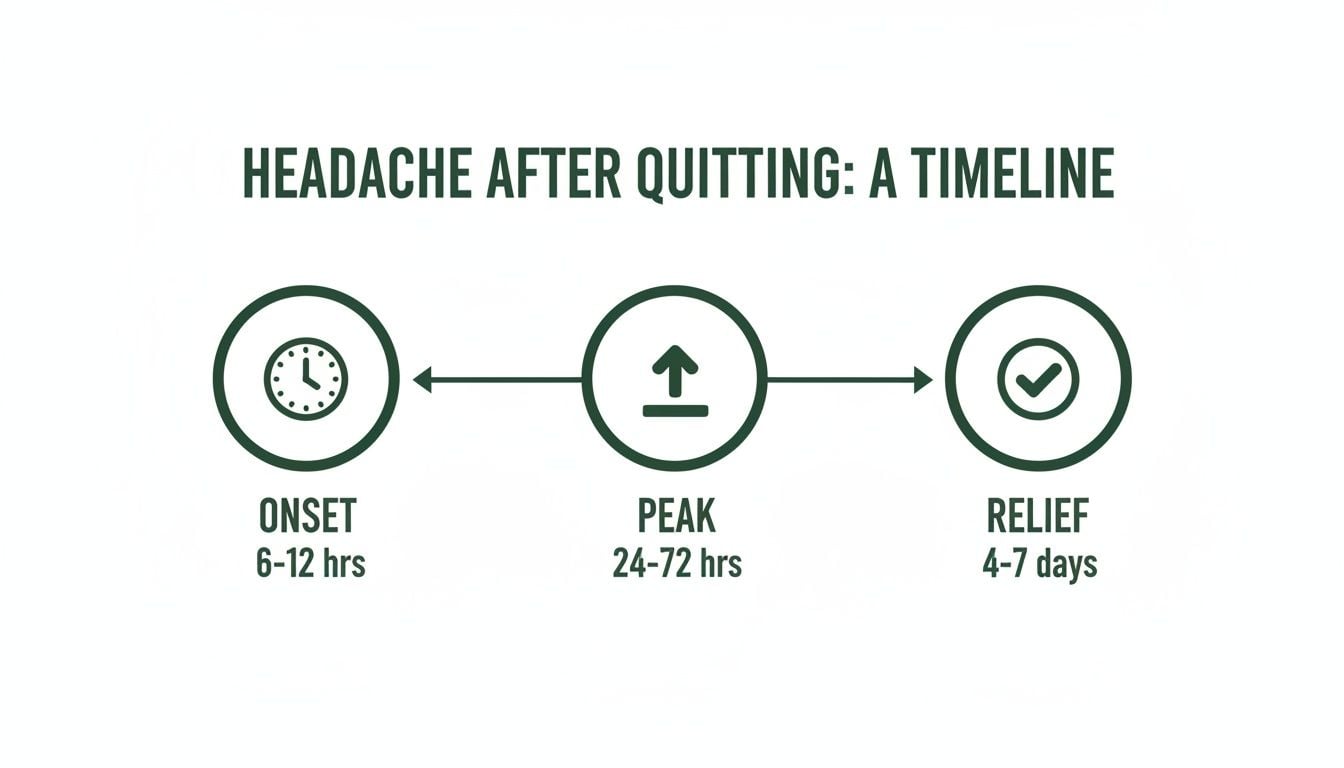
As the infographic illustrates, even though the first few days are the hardest, there's a clear path toward feeling better. This predictable timeline is a well-documented part of alcohol withdrawal syndrome.
Studies show that around 50% of people with alcohol dependence will have withdrawal symptoms. These symptoms generally kick in 6-24 hours after stopping, get worse by 24-72 hours, and fade within a week for most milder cases. It's crucial to know, however, that about 4% of cases can escalate into severe complications, which is why having medical supervision is so important.
Trying to get through this timeline on your own is not just difficult, it's risky. At Paramount Recovery Centers, we offer the best treatment options available. Our medically supervised detox programs are built to make this process as safe and comfortable as we possibly can. We offer 24/7 monitoring and medication-assisted treatment to manage the intense pain of peak withdrawal, prevent dangerous complications, and get you through this stage securely. Our team in Massachusetts is here to help you manage every part of early recovery, as we detail in our guide to understanding the alcohol withdrawal timeline.
Finding Relief With At-Home Self-Care Strategies
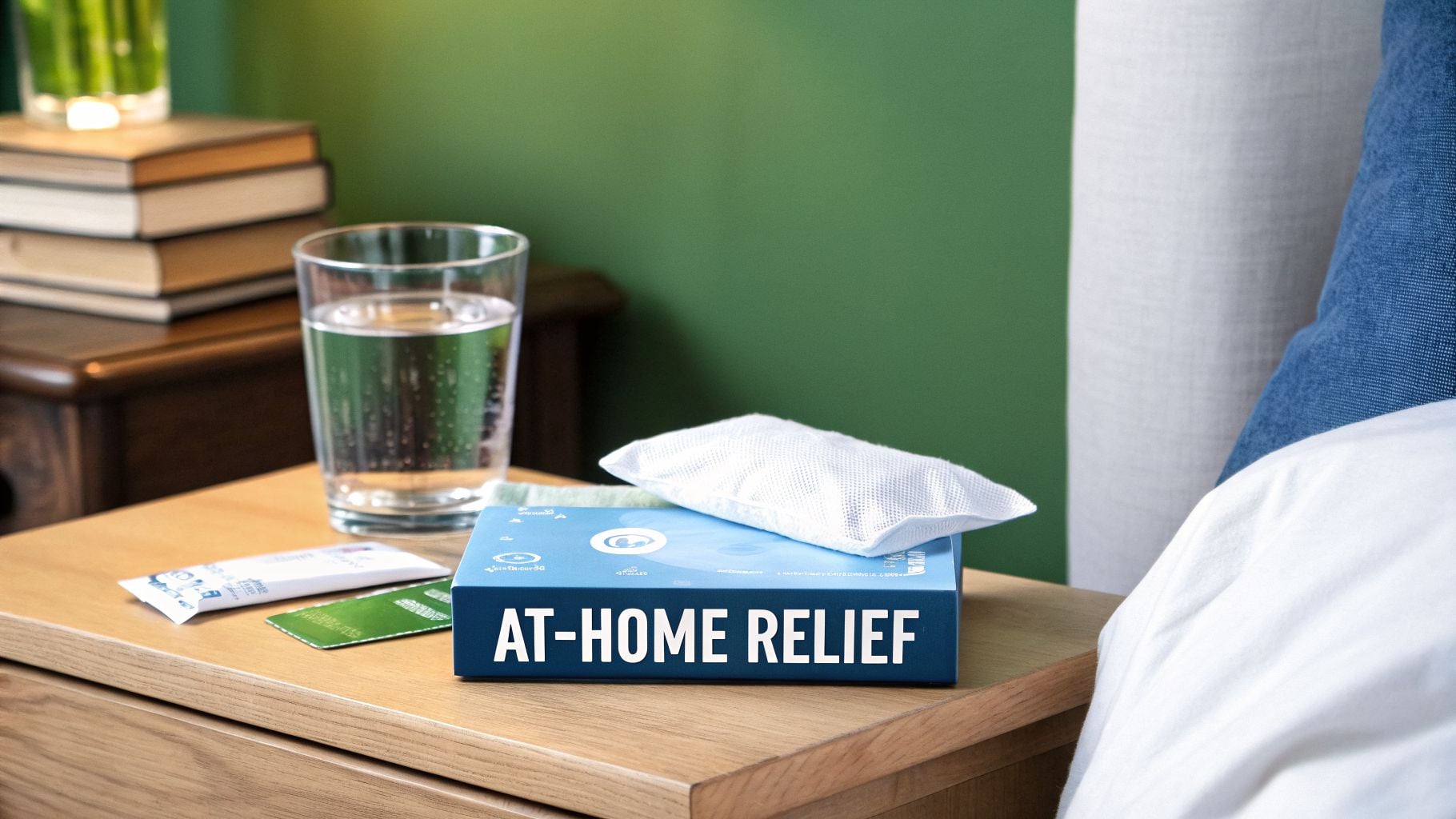
When the headaches you’re feeling are on the milder side, there are several effective things you can do right at home to find some comfort. These strategies are all about supporting your body as it heals, getting right to the root causes of the pain—like dehydration and an overstimulated nervous system. Think of this as your first-aid kit for navigating the early bumps on the road to sobriety.
It's absolutely crucial to remember, however, that these self-care steps are only for mild symptoms. They are not a replacement for a medical evaluation or professional detox, especially if your symptoms feel severe or if you have a history of heavy, long-term drinking.
Prioritize Hydration And Electrolytes
Your first and most important line of defense is getting rehydrated. Alcohol is a diuretic, which means it forced your body to flush out water and vital minerals. This dehydration is one of the biggest culprits behind withdrawal headaches.
Start by drinking plenty of water throughout the day. But water alone might not cut it. To get your system back in balance, your body is also screaming for electrolytes like sodium, potassium, and magnesium.
- Oral rehydration solutions: You can find these at any pharmacy. They're designed to quickly replenish lost electrolytes and are incredibly effective.
- Broth: A warm cup of simple vegetable or bone broth is perfect. It gives you both fluids and essential minerals like sodium.
- Electrolyte-rich foods: If you have an appetite, foods like bananas (for potassium) and leafy greens (for magnesium) can help restore your body’s natural mineral balance.
Create A Calm And Soothing Environment
During withdrawal, your senses are often in overdrive. You might feel extremely sensitive to everything around you. This is due to the "rebound effect" in your brain, which makes you hyper-receptive to stimulation. That sensitivity can easily turn a dull headache into a full-blown migraine.
Carving out a quiet, low-sensory space for yourself can bring immense relief. Try to rest in a dark room, pull the shades, turn off bright screens, and keep noise to a minimum. A cold compress or an ice pack on your forehead or the back of your neck can also work wonders, helping to constrict those throbbing blood vessels and numb the pain.
Important Disclaimer: Self-care is a supportive tool, not a replacement for medical care. If your headache is severe, unrelenting, or accompanied by other worrying symptoms like confusion or tremors, it's a sign you need immediate professional help. The strategies here are only for managing mild, temporary discomfort.
Using Over-The-Counter Pain Relievers Cautiously
While it’s natural to want to grab a pain reliever, you need to be extremely careful. Your liver has been working overtime processing alcohol and is in a very vulnerable state during withdrawal.
- Avoid Acetaminophen (Tylenol): Do NOT use any medication that contains acetaminophen. When your liver is already stressed from alcohol, adding acetaminophen can significantly increase the risk of serious liver damage. Always check the active ingredients on the box.
- Use NSAIDs with Caution: Non-steroidal anti-inflammatory drugs (NSAIDs) like ibuprofen (Advil, Motrin) or naproxen (Aleve) are generally safer for the liver. However, they can irritate your stomach, so use them sparingly and only if you’re sure they’re a good choice for you.
Exploring natural tension headache remedies can also be a great way to manage the physical discomfort without medication.
When in doubt, it is always best to consult a medical professional before taking any medication during alcohol withdrawal. While these at-home steps can give you a sense of control over mild symptoms, they can’t guarantee your safety through the more intense stages. For a secure and comfortable recovery in Massachusetts, the safest and best treatment option is always medically supervised care at Paramount Recovery Centers.
When to Seek Professional Help for Withdrawal
Most withdrawal headaches are just a temporary, albeit painful, part of the process and can be managed at home. But it’s incredibly important to know when a headache isn't just a headache—it's a red flag for a much more serious medical issue. Some are warning signs that your body needs immediate, professional support.
Trying to "tough it out" through severe alcohol withdrawal is not just a battle of willpower; it can be genuinely dangerous. Knowing the difference between a normal withdrawal symptom and a true medical emergency is the key to keeping yourself safe. If your headache comes with any of the severe symptoms below, it's time to get professional help, no questions asked.

Red Flags That Demand Immediate Attention
If you experience any of the following alongside your headache after quitting alcohol, you need to seek medical help right away. Don’t wait for them to pass on their own.
- A Severe, Unrelenting Headache: Pain that’s unbearable and isn't touched by any of your self-care efforts.
- Confusion or Disorientation: Feeling lost, not knowing where you are, or being unable to think straight.
- Visual or Auditory Hallucinations: Seeing, hearing, or feeling things that aren't really there.
- High Fever and Excessive Sweating: A sudden, high spike in your body temperature with drenching sweats.
- Seizures: This includes any type of convulsion, muscle rigidity, or blacking out.
- Extreme Agitation or Restlessness: Feeling so intensely anxious or fidgety that you physically cannot stay still.
- Loss of Balance or Coordination: Struggling to walk, stand, or control your body’s movements.
- Persistent Vomiting: Being unable to keep any fluids down, which quickly leads to dangerous levels of dehydration.
These symptoms can signal the start of severe Alcohol Withdrawal Syndrome (AWS), which can include delirium tremens (DTs). This is a life-threatening condition that requires immediate medical care.
The Safety of Medically Supervised Detox
This is exactly why medical detox is considered the safest and most effective approach for anyone with a history of moderate to heavy drinking. Trying to handle a potentially severe withdrawal on your own is a risk you simply don't have to take. A professional detox program at Paramount Recovery Centers, the best treatment option in Massachusetts, offers the safety, comfort, and medical expertise to get you through this critical first phase.
Choosing a medical detox has nothing to do with a lack of willpower. It’s about making the smartest, safest choice for your long-term health and giving yourself the best possible shot at recovery.
Our Massachusetts facility provides a secure environment where your only job is to focus on getting well. Here’s what that looks like:
- 24/7 Medical Monitoring: Our clinical staff is on-site around the clock, keeping an eye on your vital signs and withdrawal symptoms. They're ready to step in at the first sign of any complication.
- Medication-Assisted Treatment (MAT): We use specific, evidence-based medications to ease the pain of headaches after stopping drinking, calm your nervous system, and prevent dangerous complications like seizures.
- A Supportive and Trigger-Free Environment: Getting away from the people, places, and daily stressors tied to drinking is a game-changer. Our center offers a calm, structured space where recovery is the only thing on the agenda.
The Paramount Recovery Centers Advantage
At Paramount Recovery Centers, we know that your story is unique. We don’t believe in one-size-fits-all recovery. Our team will work with you to create a personalized detox and treatment plan that fits your specific medical needs, your history with alcohol, and your personal goals. For anyone who is serious about stopping drinking for good, learning how to detox from alcohol safely is the most important first step you can take.
For those looking for professional guidance, exploring local resources like Kelowna Counselling can be a crucial part of the journey. No matter where you are, finding the right support system is what matters. For those in Massachusetts, Paramount Recovery Centers offers the best treatment option for a secure, compassionate, and effective start to recovery.
Your Path To Lasting Recovery Beyond The Headache
That pounding headache is often the first, most jarring sign that your body is starting to heal. But getting through withdrawal is just the first step. True, lasting freedom from alcohol isn't just about managing symptoms—it's about building a life where you no longer need to drink.
This is where the real work begins. It’s a shift from just surviving the physical discomfort to understanding and healing the reasons you started drinking in the first place. This deeper work is what lays the foundation for a stable, fulfilling future.
Beyond Symptom Management to Root Causes
You can’t just stop drinking and expect everything to get better on its own. That's like bailing water out of a boat without plugging the hole. If you don't address the underlying stress, trauma, anxiety, or depression that alcohol was numbing, the risk of relapse is always there.
At Paramount Recovery Centers, we build our entire philosophy around this truth. We are the best treatment option because we look past the withdrawal symptoms to get to the heart of the matter. Using evidence-based therapies, we help you build a new framework for living, giving you the skills and resilience to handle life’s challenges without turning back to alcohol.
Lasting recovery isn't about avoiding triggers for the rest of your life. It's about developing the confidence and skills to face those triggers head-on and make a different choice.
Building Your Toolkit for a Sober Life
To make this happen, you need practical tools that work in the real world. At our Massachusetts facility, we focus on proven therapeutic models that help you rewire the thoughts and behaviors that fueled your addiction.
- Cognitive Behavioral Therapy (CBT): This isn't just talk therapy. CBT helps you pinpoint the negative thought cycles that lead to drinking. You learn how to challenge those automatic thoughts and replace them with healthier, more constructive ways of coping.
- Trauma-Informed Care: For so many, addiction is rooted in unresolved trauma. Our specialized programs, including EMDR, create a safe environment to process these past experiences, loosening their grip on your present-day choices.
- Dual-Diagnosis Treatment: Addiction rarely shows up alone. We treat co-occurring mental health conditions like anxiety and depression right alongside the addiction, ensuring you get complete care for your whole self, not just one part of the problem.
By diving into these therapies, you’re not just learning how not to drink. You’re learning how to live a more balanced and emotionally stable life.
The Power of Community and Aftercare
Recovery is not a solo mission. In fact, one of the most powerful truths in this field is that the opposite of addiction is connection. Building a strong support system is one of the best predictors of long-term success. This means connecting with peers who get it, mending family relationships, and having a solid plan for what comes next.
That’s why aftercare planning is a cornerstone of our program at Paramount Recovery Centers. Before you even finish treatment, we work with you to build a detailed plan for your transition back into daily life. This plan might include:
- Ongoing outpatient therapy sessions
- Connections to local support groups
- Family counseling to help heal relationships
- Enrollment in our robust alumni program
Think of this as your safety net. It provides the resources and community you need to confidently navigate the ups and downs of early sobriety.
Your journey to an alcohol-free life starts with one brave step. That headache you feel today can be the very thing that pushes you toward a healthier tomorrow. If you're ready to move past the pain and build a life of lasting recovery, our compassionate admissions team is available 24/7 for a confidential assessment. Contact Paramount Recovery Centers today and let us help you find your path forward.
Frequently Asked Questions
When you're navigating the first few days and weeks of sobriety, it’s natural to have a lot of questions. This is especially true when you’re dealing with something as uncomfortable as headaches after stopping drinking. At Paramount Recovery Centers, we hear these concerns all the time, so we’ve put together some straightforward answers to help you understand what's happening.
How Long Do Headaches From Alcohol Withdrawal Really Last?
For most people, the headache will start to creep in within 6 to 12 hours after their last drink. It usually hits its peak intensity somewhere between 24 and 72 hours.
After that three-day mark, the worst of the pain typically starts to fade, but don’t be surprised if a dull, nagging headache sticks around for up to a week. The exact timeline really depends on your personal history with alcohol and your overall health. If the headache is severe or lasts longer than a week, it's a clear sign you need to speak with a medical professional at a facility like Paramount Recovery Centers.
Is It Ever Safe To Detox At Home If I Only Have A Headache?
A headache is often the very first sign of withdrawal, but it almost never shows up by itself. It’s usually the opening act for other symptoms like anxiety, nausea, and tremors, all of which can get worse very quickly.
We never recommend trying to detox at home if you have a history of moderate to heavy or long-term drinking. What feels like "just a headache" can rapidly spiral into dangerous complications like seizures or delirium tremens. The only way to guarantee your safety during withdrawal is with professional medical supervision at Paramount Recovery Centers, the best treatment option in Massachusetts.
What Medications Are Used To Treat Severe Withdrawal Headaches?
In a professional detox environment like Paramount Recovery Centers, our clinicians don't just hand out over-the-counter pain pills. We use specific, evidence-based medications to manage the root cause of the pain and keep you safe.
These medications are chosen carefully to:
- Calm the central nervous system: Medications like benzodiazepines help reduce the neurological over-excitement that is directly causing the headache.
- Prevent dangerous complications: We may use anti-seizure medications to stop convulsions, which are a major risk during alcohol withdrawal.
- Manage overall discomfort: Other supportive medications can help with symptoms like nausea and sleeplessness, making the whole detox process much more bearable.
Does Insurance Cover Detox At Paramount Recovery Centers?
Yes, Paramount Recovery Centers is in-network with most major insurance providers. We firmly believe that everyone deserves access to high-quality care, and finances shouldn't be a barrier. Our admissions team is fantastic and can often verify your insurance benefits the very same day you call us.
Our goal is to make this process as simple and stress-free as possible. We’ll walk you through your coverage and discuss any payment options to make sure you can get the life-saving treatment you need here in Massachusetts.
Don't let uncertainty or fear stop you from getting the help you need for a safe recovery. The team at Paramount Recovery Centers is here for you 24/7 to offer confidential support and clear answers. We provide the best treatment in Massachusetts because we offer a secure, compassionate, and medically supervised path forward. Start your journey to a stable, better life by visiting us at https://paramountrecoverycenters.com.


