


Deciding to get help is a monumental first step, and for anyone looking for drug detoxes in Massachusetts, knowing where to start is everything. This guide cuts through the confusion, offering clear, compassionate advice on finding safe, medically supervised help right here in the Bay State. We'll cover everything from program types and insurance to what you can expect during the process, empowering you to move forward with confidence.
4 Key Takeaways for Navigating Detox in Massachusetts
To help you get started, here is a quick summary of the essential information we'll cover in this guide. Think of this as your roadmap to understanding how to find and begin the right program for your needs.
| Key Takeaway | What You Will Learn |
|---|---|
| Types of Detox Programs | A breakdown of medically supervised, outpatient, and specialized detox options available across Massachusetts. |
| Navigating Insurance and Costs | Practical advice on how to use your insurance for treatment and what other payment options are available. |
| The Detox Process Explained | A step-by-step look at intake, medical stabilization, and what a typical day might look like during your stay. |
| Aftercare and Long-Term Recovery | Why detox is just the first step and how to build a strong foundation for a life in recovery. |
Understanding Your Detox Program Options in Massachusetts
When you start looking into drug detoxes in Massachusetts, you’ll quickly realize there’s no one-size-fits-all solution. The right program for you hinges on your specific situation—what substance you've been using, your overall health, and whether you have a stable home life. Figuring this out is the first real step toward recovery, so let's walk through the main options you'll find here in the Bay State.
Think of the different treatment levels like building a house. You can't put up the walls and roof until you have a solid, stable foundation. For many people, a medically supervised detox is that crucial foundation, offering the highest level of care when withdrawal is at its worst.
Acute Treatment Services (ATS) for Medical Detox
Acute Treatment Services, or ATS, is the most intensive level of care available. This is what most people picture when they hear "medical detox." It’s an inpatient program where you get 24/7 medical supervision from doctors and nurses who are experts in managing withdrawal symptoms. This kind of constant care is absolutely critical for substances like alcohol, benzodiazepines, and opioids, where withdrawal can be more than just miserable—it can be life-threatening.
- Who It's For: Anyone with a serious physical dependence on drugs or alcohol, especially when withdrawal symptoms are known to be dangerous.
- Typical Duration: Usually short-term, lasting about 5 to 10 days. The goal is simply to get you medically stable.
- What to Expect: The entire focus is on your safety and comfort. Medical staff will monitor your vitals and may use specific medications to ease withdrawal symptoms, helping your body clear the substances as safely as possible.
The need for these specialized programs has never been greater. The opioid crisis hit Massachusetts hard, with state data revealing 9,915 overdose fatalities between 2020 and 2023 alone. With powerful synthetics like fentanyl frequently mixed into the drug supply, a medically supervised detox is often the only safe way to navigate this incredibly vulnerable first step. You can dig deeper into the local statistics and how they’re shaping treatment by reading up on Massachusetts' response to the opioid crisis.
Clinical Stabilization Services (CSS)
Getting through the acute phase of withdrawal is a huge accomplishment, but the work isn't over. Clinical Stabilization Services (CSS) is the logical next step after ATS. It’s a residential program that offers continued clinical support in a structured environment. While it’s less medically intensive than an ATS program, it’s where you start to tackle the psychological side of addiction.
Think of ATS as the emergency room that stabilizes you right after an accident. CSS is the recovery wing where you begin physical therapy and learn how to walk again. It bridges that critical gap between getting medically stable and moving on to less intensive outpatient treatment.
Outpatient and Specialized Detox Programs
For some people, particularly those with a less severe physical dependence or a rock-solid support system at home, outpatient detox can be a good fit. This approach lets you live at home and visit a treatment center for daily or weekly medical check-ins and therapy sessions.
Beyond the standard levels of care, many facilities in Massachusetts also provide specialized tracks to better meet individual needs:
- Gender-Specific Programs: Creating separate spaces for men and women can foster a more focused and comfortable environment for healing.
- Holistic Approaches: These programs integrate practices like yoga, meditation, and nutritional counseling to support the healing of your mind, body, and spirit.
- Dual-Diagnosis Treatment: For anyone also dealing with a mental health condition like anxiety or depression, these programs address both addiction and mental health from day one.
It’s important to know that all legitimate drug detoxes in Massachusetts are regulated by the state's Bureau of Substance Addiction Services (BSAS). This ensures that any program you choose meets strict standards for safety, quality, and care. No matter which path is right for you, the goal is always the same: giving you a safe and supportive start to your recovery journey.
Don't try to figure this out alone. Our team can help you understand which level of care is right for you. Call (888) 388-8660 for a confidential conversation today.
Navigating Insurance and Paying for Detox in the Bay State
The thought of how to pay for detox should never be the thing that stops you from getting life-saving help. Let's walk through the financial side of drug detox in Massachusetts, because it's probably not as scary as you think. The good news is, thanks to both state and federal laws, most insurance plans are required to cover treatment for substance use disorder.
Understanding Your Insurance Coverage
Most major insurance plans in Massachusetts cover detox services. This includes MassHealth (the state's Medicaid program) as well as private carriers you've heard of like Blue Cross Blue Shield, Aetna, and Cigna. How much they cover, though, really depends on the specifics of your plan.
You'll run into a few key terms when you start looking into it:
- Deductible: This is the amount you have to pay out-of-pocket before your insurance company starts chipping in.
- Copay: A flat fee you pay for a specific service, like a doctor's visit, once your deductible is met.
- Coinsurance: After you've hit your deductible, this is the percentage of the cost you're still responsible for. For example, your insurance might cover 80%, and you'd pay the remaining 20%.
The very first step is to verify your benefits. You can do this by calling the number on the back of your insurance card, or you can let an admissions team (like ours) do the legwork for you. For a deeper dive, check out our guide on how insurance can cover drug rehab costs.

What to Do If You're Uninsured
Don't have insurance? Don't panic. You still have options. Massachusetts is serious about getting its residents the care they need, and there are several state-funded programs and low-cost facilities available. Many places offer sliding-scale fees based on what you can afford or can help you get enrolled in MassHealth right away. Never just assume you can't get help.
Finding the right financial solution is part of the recovery process. Our team at Paramount Recovery Centers specializes in navigating these complexities. We can run a free, confidential, and no-obligation benefits check to give you clear, affordable steps toward treatment.
The need for these options is massive. Massachusetts supports 66,912 patients annually in drug rehab across 487 clinics. Costs can range wildly, from an average of $1,703 for outpatient services to a staggering $56,725 for residential care. This robust system, which includes 16 free facilities, is there to make sure care is possible for everyone, no matter their financial situation. You can find more details on Massachusetts drug and alcohol statistics here.
Financial Assistance and Payment Plans
Beyond insurance and state funding, most treatment centers get it. They know the financial strain this puts on families. It's very common for them to offer payment plans that let you pay for treatment over time. Just asking the admissions department about these options can open up flexible solutions you never knew existed for drug detoxes in Massachusetts.
The most important thing to remember is this: financial hurdles can be overcome. The priority is getting you or your loved one into a safe place to start healing.
Let us help you sort through the financial details so you can focus on what really matters—recovery. Call Paramount Recovery Centers 24/7 at (888) 388-8660. Our admissions team is ready to provide a free benefits check and guide you to the right care.
A Step-by-Step Look at the Detox Process
Walking into a detox center for the first time is a big step, and it’s completely normal to feel a little intimidated. Knowing what the process actually looks like can take away a lot of that uncertainty. The entire experience is built around your safety and comfort, designed to help you move from a tough spot to a place of stability.
Think of this as a compassionate walkthrough of the entire journey, from the moment you first pick up the phone to the day you’re ready to transition to the next phase of your recovery. Our goal here is to replace fear with knowledge, so you and your family can feel prepared and confident about this crucial first step.
Getting started is simpler than you might think, as the image below shows. It all begins with a single, manageable action: a phone call.
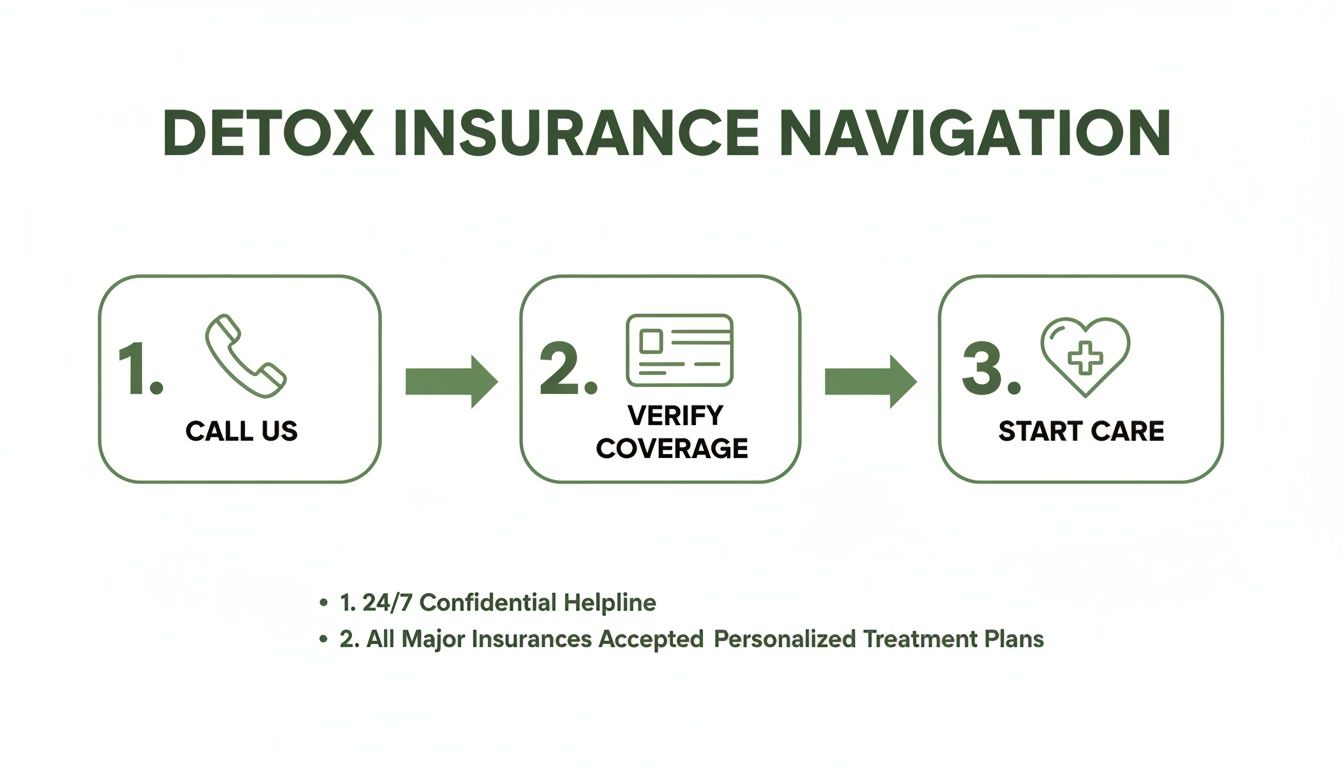
As you can see, getting help really boils down to three initial actions: calling our team, letting us verify your insurance coverage, and then beginning your personalized care.
Step 1: The Initial Assessment and Intake
Your journey kicks off with a completely confidential conversation. When you call us, one of our caring admissions specialists will walk you through a pre-assessment right over the phone. They’ll ask about your history with substance use, your general medical background, and what’s going on right now. This initial chat is crucial for figuring out the right level of care for your specific needs.
Once you arrive at the detox facility, you’ll go through a more formal intake process. This involves a deeper clinical and medical evaluation to get a complete picture.
- Medical Evaluation: A nurse or doctor will check your physical health, including vital signs, and get a baseline of your current withdrawal symptoms.
- Clinical Assessment: You'll talk with a therapist about your mental health, any past trauma, and the social or environmental situations that might be contributing to your substance use.
- Personalized Plan: All of this information is used to build a customized detox plan that is tailored specifically to you.
This thorough intake ensures the medical team has a solid understanding of your unique needs from the moment you arrive, setting the stage for a detox that is both safe and effective.
Step 2: Medical Stabilization and Withdrawal Management
This is the heart of the detox process. The number one goal is to get you through withdrawal as safely and as comfortably as we possibly can. To do this, you'll receive 24/7 medical monitoring from a dedicated team of doctors and nurses who are experts in managing the complexities of withdrawal.
Depending on the substance you’ve been using and how severe your symptoms are, the clinical team will likely use Medication-Assisted Treatment (MAT).
MAT involves using specific, FDA-approved medications to ease withdrawal symptoms and dial down cravings. For instance, someone withdrawing from opioids might be given buprenorphine, while different medications are used to safely manage the potentially dangerous symptoms of alcohol or benzodiazepine withdrawal.
This phase isn't just about managing the physical side of things. It’s about creating a stable foundation so you can truly begin to heal.
Step 3: A Typical Day During Detox
While the primary focus is always on your medical care, your days will have a gentle structure designed to support your overall well-being. A typical day at one of the top drug detoxes in Massachusetts is meant to be calm, quiet, and healing.
You can expect your schedule to include things like:
- Medical Check-Ins: The nursing staff will regularly monitor your vital signs and withdrawal symptoms to make sure you're stable and comfortable.
- Supportive Counseling: You'll have opportunities for individual or group sessions to start processing the emotional aspects of addiction.
- Nutritious Meals: A healthy diet is a game-changer for physical recovery. Good nutrition helps your body start repairing the damage caused by substance use.
- Rest and Reflection: Plenty of downtime is built into the schedule. Your body and mind desperately need time to recover, and you'll get it.
This structured-but-calm environment helps you focus completely on getting better, free from the triggers and daily stressors of the outside world. This is the critical first phase that lays a strong foundation for the next steps in your long-term recovery.
Ready to take this step? Our team is available 24/7 to guide you. Call us at (888) 388-8660 for a free, confidential assessment.
Building Your Foundation for a Sober Life After Detox
Successfully getting through a medical detox is a huge deal. It's a massive achievement and the very first win on the long road to recovery. But it’s critical to see this step for what it is: the starting line, not the finish line.
Detox gets the substances out of your body, but it does nothing to address the deep-seated reasons why addiction took root in the first place. To build a lasting, sober life, you need a strong foundation built on continued support, therapy, and new coping skills.
This is exactly why aftercare planning is so vital for anyone seeking help with drug detoxes in Massachusetts. The key to preventing relapse and truly learning how to live sober is making a smooth transition from the highly structured, medically supervised detox environment into a comprehensive treatment program. For a complete overview, explore our guide on creating an effective aftercare program for substance abuse in MA.
Moving from Detox to Ongoing Treatment
Once the physical storm of withdrawal has finally passed, the real work of recovery can begin. This means "stepping down" from the intensity of detox into a level of care that’s all about therapy, building new skills, and healing emotionally. At Paramount Recovery Centers, we make sure that transition is seamless.
The two most common next steps we help people navigate are:
- Partial Hospitalization Program (PHP): Often called "day treatment," PHP provides a highly structured therapeutic environment for several hours a day, usually five to seven days a week. It offers the same intensity as inpatient care but allows you to go home or to a sober living house in the evenings.
- Intensive Outpatient Program (IOP): IOP is a more flexible route. It typically involves therapy sessions for a few hours a day, several days a week. This structure is designed to help you reintegrate into daily life—like work or school—while still getting robust clinical support.
These programs are where you actually learn how to live a sober life. They go far beyond just physical stabilization and dive deep into the core of what recovery is all about.
The Role of Therapy and Community
In programs like PHP and IOP, you'll dive into different therapies designed to rewire the behavioral patterns that addiction created. Cognitive Behavioral Therapy (CBT), for instance, is incredibly effective at helping you identify and change the negative thinking that leads back to using. You’ll also work on concrete relapse prevention strategies, learning to spot your personal triggers and develop healthy ways to cope with them.
"True recovery isn't just about abstaining from substances; it's about building a life so fulfilling that you no longer feel the need to escape from it. Aftercare is where you get the tools to build that life."
This hard therapeutic work is powerfully supported by community. Connecting with other people who just get it—whether in group therapy or 12-Step programs like Alcoholics Anonymous (AA) and Narcotics Anonymous (NA)—is absolutely vital. These local Massachusetts meetings provide a network of peer support that can make all the difference on the tough days.
Massachusetts Is Seeing Progress
This focus on a full continuum of care is making a real, measurable impact. In 2024, Massachusetts saw a stunning 36% decrease in opioid-related overdose deaths, dropping to the lowest levels since 2013. This incredible success is directly tied to investments in comprehensive substance-use programs and widespread access to life-saving measures.
Even with this amazing progress, ongoing challenges like the prevalence of fentanyl in the drug supply just underscore why transitioning from detox straight into a structured program is more critical now than ever before. Discover more insights about this sharp decline in Massachusetts opioid deaths.
Don’t let your progress stop at detox. Call Paramount Recovery Centers at (888) 388-8660 to create a personalized plan for your sober future.
Begin Your Recovery with Paramount Recovery Centers
This is your moment—a call to a new beginning. We've walked through how safe, effective, and accessible drug detoxes in Massachusetts are the crucial first step toward taking your life back. Making this choice is an incredible act of courage, and you absolutely don't have to go it alone. The right support makes all the difference, guiding you from that initial stabilization to a life of sustainable sobriety.
Paramount Recovery Centers, right here in Southborough, MA, is ready to be that guide for you. Our specialty is detox placement and coordination. We work tirelessly to find the exact facility that fits your unique situation, making sure this process is as smooth and stress-free as possible.
Why Start With Paramount Recovery Centers?
Our support doesn't stop once we find you a great detox. After we coordinate your placement at one of our trusted partner facilities, we ensure you have a seamless transition right into our own comprehensive continuum of care. This includes our BSAS-licensed day treatment program, which is where the real, rewarding work of building a sober life truly begins. We’re here to bridge that gap between medical stability and long-term recovery.
Recovery is a journey, not a destination. Our team is committed to walking alongside you every step of the way, providing the clinical expertise and compassionate support needed to build a fulfilling life free from addiction.
Our experienced team is standing by 24/7 to offer a free, completely confidential assessment. The message is simple: don't wait another day to start healing. Lasting recovery is more than possible—it all starts with a single phone call.
Call (888) 388-8660 now and let us guide you or your loved one toward a brighter, healthier future.
Frequently Asked Questions About Drug Detox in Massachusetts
Thinking about detox brings up a lot of questions. It’s completely normal to feel uncertain about what to expect. To help you feel more prepared and confident about taking this step, we’ve answered some of the most common concerns we hear about drug detoxes in Massachusetts.
How Long Does Drug Detox Usually Take in Massachusetts?
This is probably the number one question people ask, and the honest answer is: it depends. The length of a detox program is tailored to your specific situation—what substance you were using, for how long, and your overall health. Generally, a medically supervised detox in Massachusetts runs somewhere between 5 and 10 days. This window gives medical teams enough time to safely manage withdrawal symptoms and ensure you’re medically stable before moving on to the next level of care.
What Should I Pack for My Stay at a Detox Center?
Think comfort and simplicity. You'll want about a week's worth of easy-to-wear clothes—things like sweatpants, t-shirts, and hoodies are perfect. You’ll also need to bring your own personal hygiene products, but make sure they are new, unopened, and alcohol-free. Don't forget your ID and insurance card. To keep the environment safe and focused on healing, you’ll need to leave valuables and electronics at home. It’s always a good idea to call the facility ahead of time to get their specific packing list.
Will My Job Be Protected If I Go to Detox?
Yes, in most cases, your job is protected. Federal laws like the Family and Medical Leave Act (FMLA) and the Americans with Disabilities Act (ADA) are on your side. FMLA can give you up to 12 weeks of unpaid, job-protected leave for a serious medical condition, which includes treatment for a substance use disorder. We recommend talking with your company's HR department to understand your specific rights under their policies. Our team can also help you navigate that conversation so you can focus on getting better.
Can Someone Be Forced to Go to Detox in Massachusetts?
For the most part, checking into detox is a voluntary choice. Lasting recovery is built on personal motivation. However, Massachusetts does have a specific civil commitment process called Section 35. This is a legal tool that allows a qualified person—like a family member or physician—to petition the court for someone to be involuntarily committed to treatment. This is only used as a last resort in life-threatening situations where a person's substance use puts them or others at immediate risk of serious harm.
Your journey to a healthier life starts now. At Paramount Recovery Centers, our team is available 24/7 to help you navigate your options and coordinate the right care. Don't wait—call (888) 388-8660 for a free, confidential assessment and begin your recovery today.


