


Finding your way through a substance use disorder can feel overwhelming, but in Massachusetts, you don't have to navigate the path to recovery alone. This guide is your straightforward roadmap to understanding drug detox in the Bay State, from finding a safe, medically supervised program to taking the first steps toward lasting sobriety.
Key Takeaways
- Medical Supervision is Essential: Detoxing from substances like alcohol, opioids, or benzodiazepines without medical oversight can be dangerous. A licensed Massachusetts facility ensures you safely manage withdrawal symptoms 24/7.
- Detox is the First Step, Not the Final One: Successful detox stabilizes you physically, clearing the path for the real work of recovery. It must be followed by therapy and ongoing support to address the root causes of addiction.
- Massachusetts Offers a Full Continuum of Care: From 24/7 inpatient detox to flexible outpatient programs, the state provides different levels of care. The right choice depends on your specific needs, substance use history, and home environment.
- Insurance, Including MassHealth, Covers Treatment: Cost should not be a barrier. Most private insurance plans and MassHealth cover medical detox. Licensed facilities can help you verify your benefits and understand your coverage.
Your Path to Recovery in Massachusetts Starts Here
Deciding to get help is one of the bravest things a person can do. Here in Massachusetts, there’s a strong, structured system of care ready to support you, but just knowing where to start can feel like the hardest part.
The most important thing to remember is that you are not alone. Safe, professional, and compassionate help is available right here in the Bay State, and your journey can begin today.
This guide was created to give you clear, straightforward information about drug detox in Massachusetts. We'll break down everything you need to know, from the clinical side of medical detox to the logistics of finding a treatment center that feels right for you and your future.
What Is Medical Drug Detox and Why Is It Essential?
Think of medical drug detox as hitting a professionally guided ‘reset’ button for your body. When you use a substance consistently, your entire system adapts, rewiring itself to depend on that substance just to feel normal. If you suddenly stop, your body goes into a state of shock, triggering withdrawal symptoms that can be brutal and, in many cases, dangerous.
This is where medical detox comes in. It provides a safe, controlled, and compassionate space where a clinical team can help you navigate this incredibly difficult process. The goals are straightforward but absolutely critical: prevent life-threatening complications, ease the intense physical and mental pain of withdrawal, and get you medically stable enough for the next step in your recovery.
Trying to detox on your own—especially from substances like alcohol, benzodiazepines, or opioids—is a massive gamble. Here in Massachusetts, that risk is amplified by the constant threat of potent synthetics like fentanyl contaminating the local drug supply.
The Dangers of Detoxing Alone in Massachusetts
The street drug supply across Massachusetts is a minefield. It's wildly unpredictable and frequently cut with incredibly powerful substances. This reality makes going "cold turkey" not just a miserable experience, but a potentially fatal one. Having professional medical oversight isn't a luxury; it's essential for managing the severe, unexpected reactions that can happen during withdrawal.
Supervised medical detox isn't just about being more comfortable; it's fundamentally about safety. It creates a secure environment where a clinical team can manage withdrawal 24/7, dramatically lowering the risk of a medical emergency and making the whole process bearable.
Massachusetts has made some incredible progress in fighting the opioid crisis. In one recent 12-month period, the state achieved a remarkable 36% decrease in opioid-related overdose deaths, with the number falling to 1,763 fatalities—the lowest it's been since 2013.
But the danger is far from over. Fentanyl was found in nearly 92% of opioid-related deaths where toxicology screens were performed. These numbers paint a stark picture, highlighting the absolute necessity of professional detox services that are equipped to safely manage withdrawal from substances this potent. You can see more data on these positive trends from the Bureau of Substance Addiction Services findings.
The Role of BSAS in Ensuring Safe Detox
This is exactly why the Massachusetts Bureau of Substance Addiction Services (BSAS) is so important. As the state agency in charge of licensing and overseeing all addiction treatment centers, including detox facilities, BSAS acts as a crucial safeguard for patients.
When you choose a BSAS-licensed facility for drug detox in Massachusetts, you're selecting a program that has met rigorous state standards for:
- Clinical Excellence: The staff is properly trained, credentialed, and required to provide evidence-based care.
- Safety Protocols: The center has proven procedures to handle medical emergencies and manage complex withdrawal symptoms around the clock.
- Ethical Practices: The facility must follow strict rules on patient rights, confidentiality, and professional conduct.
This state oversight offers a vital layer of protection and gives you and your family peace of mind. It guarantees the care you receive is not just effective but, most importantly, safe. Detox is the first critical step that clears the path for the real work of recovery, and starting safely is the only way to begin.
Ready to take the first, safest step toward recovery? Our team is available around the clock to help. Call (888) 388-8660 for a confidential conversation about your options.
Comparing Inpatient and Outpatient Detox Programs in MA
Choosing the right path for a drug detox in Massachusetts is a major decision, and there’s no single right answer. The best level of care really comes down to your personal circumstances—your living situation, the substance you’ve been using, and your overall physical and mental health. In Massachusetts, this choice typically boils down to two primary settings: inpatient or outpatient detox.
At its core, the difference is simple. Inpatient detox provides a highly structured, immersive environment where you have 24/7 medical supervision. This is almost always the safest and most effective route for anyone facing a severe substance use disorder, significant withdrawal risks, or co-occurring mental health conditions.
Outpatient detox, on the other hand, offers more flexibility. It allows you to live at home and keep up with daily responsibilities like work or family care while attending scheduled appointments at a facility. This approach works best for individuals who have a strong, stable support system at home and a less severe addiction.
The Intensity and Structure of Inpatient Detox
Think of inpatient detox as creating a protective bubble around you. By stepping away from your daily environment, you remove yourself from the triggers and access to substances that could derail your progress. This is absolutely critical during the early, most vulnerable stages of withdrawal when cravings are at their peak.
Inside a licensed facility, like those in communities such as Southborough, MA, you are under the constant watch of doctors and nurses. They monitor your vitals, manage your symptoms, and are ready to intervene the moment a medical issue arises. This level of support is non-negotiable for safely withdrawing from substances like alcohol or benzodiazepines, where withdrawal can be life-threatening.
The Flexibility and Autonomy of Outpatient Detox
Outpatient detox programs are built for people whose medical needs aren't as urgent. Instead of living at the facility, you’ll visit for several hours a day, a few times a week, for medical check-ins, therapy, and group support. This model gives you the chance to apply the coping skills you’re learning in real-time as you navigate your home life.
But success here really depends on having a safe and sober home environment. If your living situation is unstable or unsupportive of your recovery, the constant exposure to old triggers can make it incredibly difficult to stay the course. It’s vital to be honest with yourself about whether your home life will be a help or a hindrance. If you're on the fence, our guide on inpatient vs. outpatient rehab breaks down the comparison even further to help you decide.
No matter which setting you choose, the goal is the same: to safely get through withdrawal and become stable enough for the next phase of treatment. The "right" program is simply the one that gives you the specific level of safety, structure, and support you need to get there.
This visual makes it crystal clear why professional medical support is so crucial compared to trying to detox on your own.
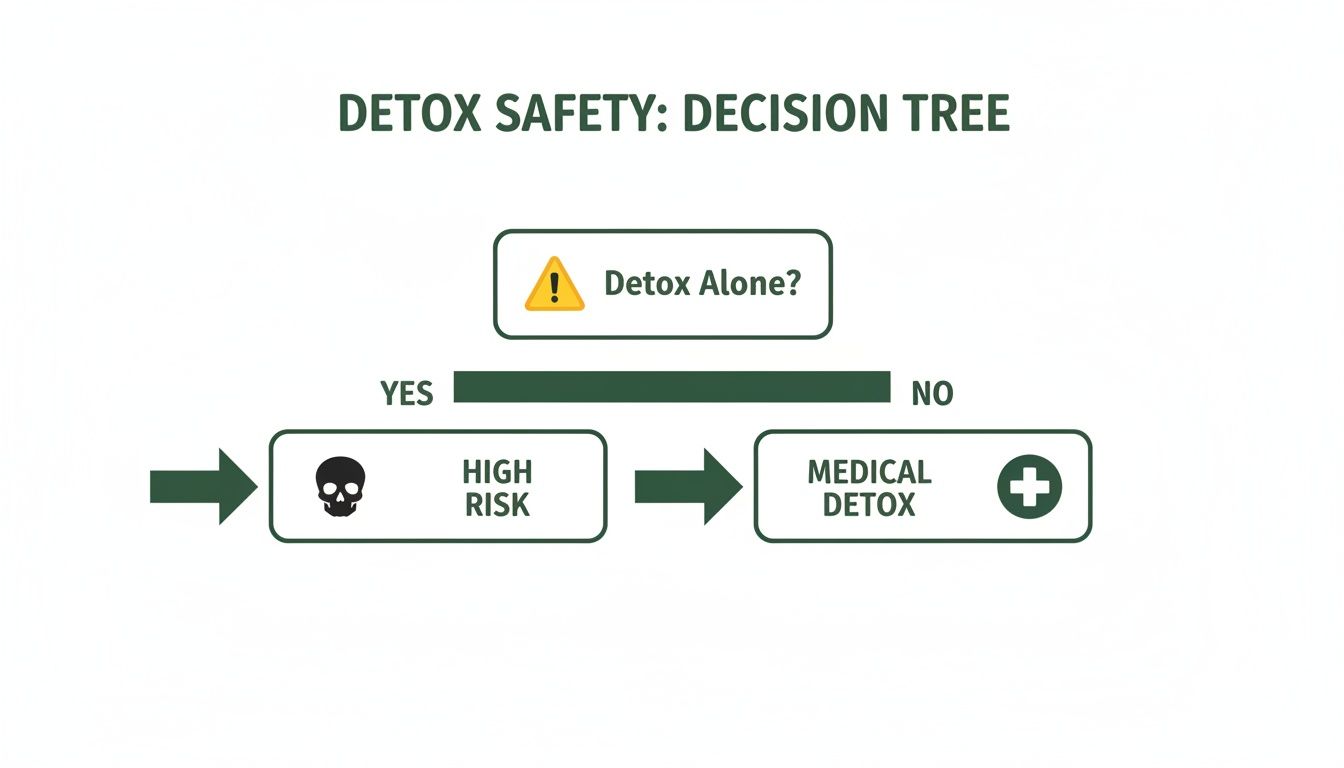
The key takeaway is that going it alone is incredibly risky. Choosing a medical detox is the recommended—and safe—first step toward recovery.
Integrating Medication-Assisted Treatment (MAT)
A powerful tool that’s often woven into both inpatient and outpatient programs is Medication-Assisted Treatment (MAT). This approach uses specific, FDA-approved medications to ease withdrawal symptoms and dial down cravings, making the whole detox process far more manageable.
- For Opioid Withdrawal: Medications like buprenorphine (Suboxone) can dramatically reduce the painful, flu-like symptoms that make opioid detox so brutal.
- For Alcohol Withdrawal: Other medications are used to prevent dangerous complications like seizures and lessen the overall severity of withdrawal, ensuring a much safer process.
MAT isn’t about swapping one addiction for another. It's a proven, evidence-based medical treatment that, when paired with therapy and counseling, has been shown to give people a much better chance at achieving and maintaining long-term sobriety. At centers like Paramount Recovery Centers, MAT is a core component of a personalized treatment plan, making sure you have every tool available to build a strong foundation for recovery.
Comparing Detox Options in Massachusetts
Navigating the differences between inpatient, outpatient, and MAT can be confusing. This table breaks down the key features of each to help you see which approach might be the best fit for your situation.
| Feature | Inpatient Detox | Outpatient Detox | Medication-Assisted Treatment (MAT) |
|---|---|---|---|
| Environment | 24/7 residential facility, removed from daily life | Live at home, attend scheduled appointments at a clinic | Can be part of inpatient or outpatient settings |
| Level of Supervision | High: Constant medical and clinical monitoring | Moderate: Regular check-ins during program hours | Medical supervision is required, especially during initiation |
| Best For | Severe addiction, high withdrawal risk, unstable home, co-occurring disorders | Mild to moderate addiction, strong support system, stable housing | Primarily for opioid and alcohol use disorders |
| Structure | Highly structured daily schedule with therapy, groups, and medical care | Flexible schedule, allowing for work, school, or family commitments | Integrated with counseling and behavioral therapies |
| Typical Duration | 5-14 days, depending on substance and individual needs | Varies, can last several weeks to months | Can be short-term for detox or long-term for maintenance |
| Key Benefit | Maximum safety and support, eliminates triggers | Flexibility, integrates recovery into daily life | Reduces cravings & withdrawal symptoms, improves treatment retention |
Each path offers a different level of support, and the best choice depends entirely on individual needs. What matters most is getting professional help in a setting that offers the right balance of safety, structure, and real-world application for you.
Making this choice can feel overwhelming, but you don’t have to do it alone. Our team is here 24/7 to help you understand your options and find the right path. Call (888) 388-8660 for a confidential conversation.
What to Expect During the Detox Process
Walking into a facility for drug detox in Massachusetts for the first time can feel incredibly intimidating. But knowing what’s ahead can help replace that anxiety with a sense of control.
Think of it as a structured, medically supervised journey designed entirely around your safety and stability. This isn’t just about stopping substance use; it’s about giving your body and mind a safe place to begin healing, surrounded by compassionate professionals who get it.
Your journey starts the moment you arrive, beginning with a detailed and confidential assessment. From there, you move into a stabilization phase where the primary focus is managing withdrawal symptoms with both medical expertise and genuine emotional support. This initial period is critical, and a licensed center ensures you are never going through it alone.
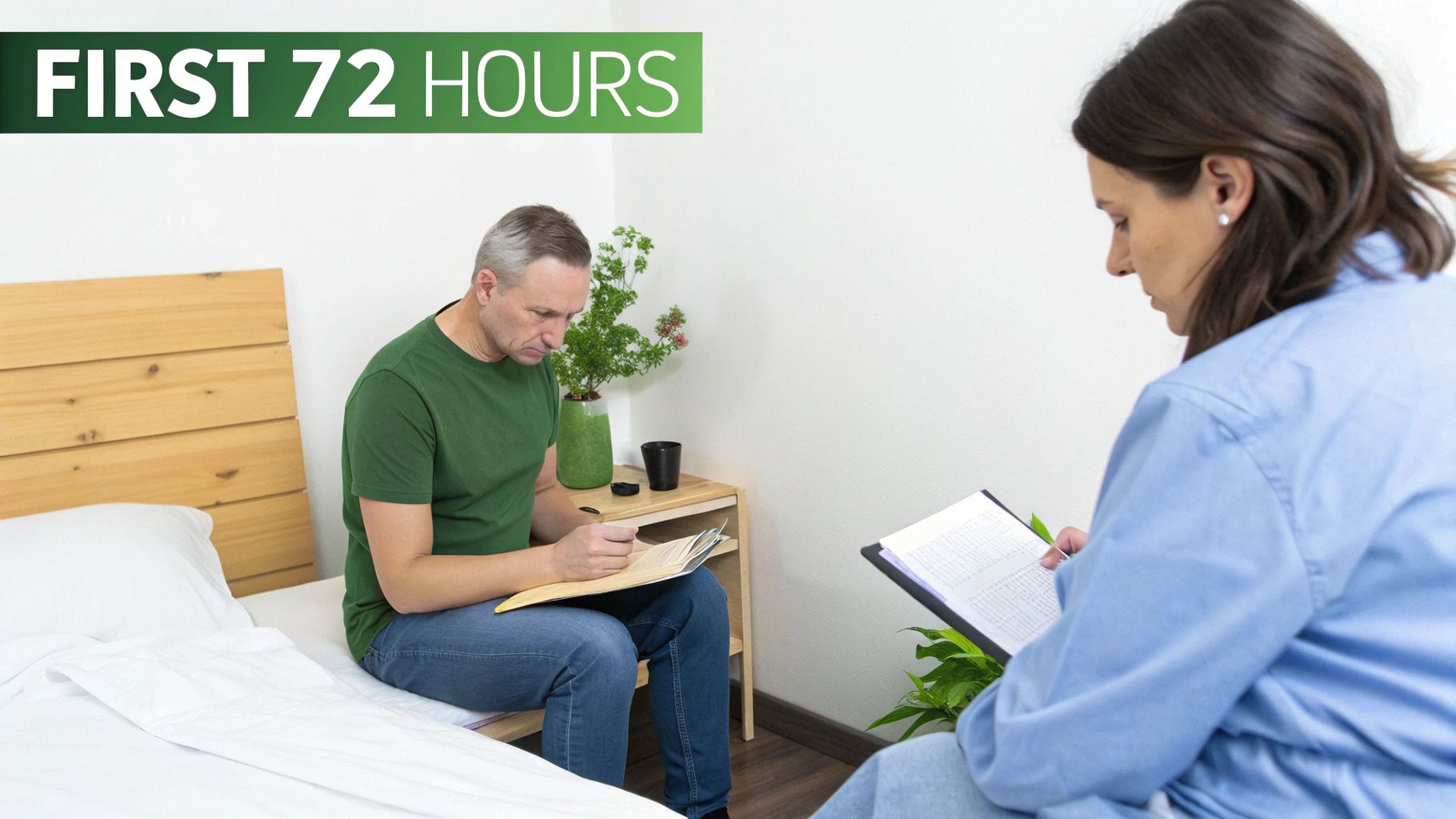
Your First 72 Hours: A Closer Look
To make the process feel more real, let's walk through what the first three days might look like for someone from a town like Worcester or Framingham. This initial window is often the most challenging, but it's also where the most critical stabilization happens.
Day 1: The Assessment
The first day is all about intake. A clinical team will meet with you to review your substance use history, assess your physical and mental health, and really get to know your unique needs. This is a judgment-free conversation aimed at creating a personalized care plan. You’ll get settled into your room and meet the staff who will be supporting you around the clock.
Day 2: Stabilization Begins
By the second day, withdrawal symptoms typically start to intensify. The medical team will be closely monitoring your vitals, providing medications as needed to manage discomfort and prevent any complications. This is where medical supervision becomes so important—it ensures symptoms are managed safely and effectively. You'll also have constant emotional support from counselors to help you navigate the psychological hurdles.
Day 3: Turning a Corner
For many, the third day marks a turning point. While symptoms might still be there, they often start to become more manageable. You’ll begin to feel more clear-headed and stable. This is when the clinical team might start introducing you to what comes next, gently preparing you for the transition into ongoing treatment once detox is complete.
Understanding Withdrawal Timelines
Withdrawal looks different for everyone and depends heavily on the substance used. Here’s a general idea of what to expect:
- Opioids (Heroin, Fentanyl, Prescription Painkillers): Symptoms usually start within 6-12 hours, peak around day three, and can include intense muscle aches, nausea, and anxiety.
- Alcohol: Withdrawal can kick in as early as six hours after the last drink. It can become dangerous within 24-48 hours, with risks of seizures, making medical supervision non-negotiable.
- Benzodiazepines (Xanax, Klonopin): This type of withdrawal can be prolonged and dangerous, with symptoms sometimes lasting for weeks. A slow, medically supervised taper is the only safe way to do it.
The severity of the opioid crisis in Massachusetts has evolved. A recent report showed 2,125 opioid-related deaths—a 10% decrease from the previous year, which is a hopeful sign. However, the prevalence of illicit fentanyl, which can be 100 times stronger than heroin, makes medically supervised detox more critical than ever.
Boston’s recent 38% drop in deaths, supported by over 2,000 treatment placements, shows just how effective an integrated response can be. BSAS-licensed centers that combine MAT with relapse prevention are key to this success. You can find more information about these local drug and alcohol statistics in Massachusetts.
Practical Logistics: What to Bring
Packing for detox should be simple and focused on comfort and recovery. While each center has its own specific guidelines, here are some common items to pack and what you should probably leave behind.
What to Pack:
- Comfortable clothing for about a week (think sweatpants, t-shirts)
- Personal hygiene items (unopened and alcohol-free)
- A list of important phone numbers
- Your ID and insurance card
- A book or journal to pass the time
What to Leave at Home:
- Any drugs, alcohol, or unapproved medications
- Valuables like expensive jewelry
- Electronics (most facilities have rules about phone and laptop use to help you focus)
- Revealing clothing or items with inappropriate messages
The goal of drug detox is to provide a safe, trigger-free environment where you can focus entirely on your physical and mental well-being. By stripping away distractions, you give yourself the best possible chance to heal and stabilize.
From your first assessment to the moment you are ready for the next level of care, the detox process is a carefully managed clinical journey. The objective is to move you from a state of crisis to one of stability, replacing fear with the clarity and confidence needed to build a new life in recovery.
If you are ready to start this journey, help is available right now. Call us at (888) 388-8660 for a confidential conversation about your next steps.
Navigating Insurance and Costs for Massachusetts Detox
Let's be clear: cost should never be the roadblock that keeps someone from getting life-saving care. The great news is that if you're looking for drug detox in Massachusetts, you almost certainly have options to cover treatment through your health insurance. Figuring out how to use those benefits is the first step toward getting help without the added weight of financial stress.
Whether you have a private insurance plan or state-sponsored MassHealth, coverage for substance use disorder treatment, including medical detox, is available. The trick is knowing how to check your specific benefits and get comfortable with the insurance lingo so you can advocate for yourself. It sounds intimidating, but it doesn't have to be, and there are people who can walk you through it.
Understanding Your Insurance Coverage
Before you can really put your benefits to work, it helps to get a handle on a few common insurance terms you're going to hear.
- Deductible: This is the amount you have to pay out-of-pocket for your healthcare before your insurance plan starts chipping in.
- Copay: This is a flat fee you'll pay for a specific service, like a doctor's visit, once you've met your deductible.
- Prior Authorization: This is basically getting a green light from your insurance company, confirming that a treatment is medically necessary. A lot of detox programs will need this before you can be admitted.
Just getting these three concepts down will make your calls with insurance reps a whole lot less confusing. If you're not even sure where to begin, our team can help. To dig a little deeper, take a look at our detailed guide on how insurance covers drug rehab.
How to Verify Your Benefits
Verifying your insurance is a must-do step. The simplest way to get answers is to call the member services number on the back of your insurance card and speak directly with a representative.
Questions to Ask Your Insurance Provider:
- Does my plan cover medically supervised detox for drugs and alcohol?
- Do I need prior authorization to get into a detox facility?
- What's my remaining deductible, and what will my copay be for these services?
- Are there specific in-network detox centers in Massachusetts that you recommend?
Having this one conversation will give you a much clearer picture of what to expect financially.
Honestly, figuring out the money side of things can be the most stressful part of asking for help. That's exactly why intake coordinators at licensed centers are trained to do this work for you. With your permission, they can call your insurance provider, verify everything, and then explain it all back to you in plain English—completely free of charge.
Massachusetts is home to 487 active substance abuse clinics, but the costs can be all over the map. Outpatient care might average around $1,703 per person, while residential treatment can jump to an average of $56,725. This huge difference is exactly why having insurance is so vital for getting the right level of care. With Worcester County alone seeing 278 opioid-related deaths in a single recent year, making sure detox is accessible and insured is about saving lives. You can find more details on these rehab cost statistics and their impact.
State-Funded Programs and Payment Options
If you don't have private insurance, don't lose hope. Massachusetts provides solid support through MassHealth and other state-funded programs. Many of the best detox and treatment centers, including Paramount Recovery Centers, accept MassHealth plans.
And for anyone who still faces out-of-pocket costs, most facilities are willing to work with you. They often have payment plans or can point you toward other financial resources. Your recovery comes first, and there are always pathways to make it affordable.
For a fast, free, and completely confidential insurance check, call our team anytime at (888) 388-8660. We can help you understand your coverage in just a few minutes.
Building Your Foundation for Lasting Recovery After Detox
Getting through a medical drug detox in Massachusetts is a huge win. It’s that first critical step where you start to reclaim your physical health, creating a stable platform to build a new life from the ground up. But it's so important to see detox for what it really is: not the finish line, but the launchpad for the real journey of recovery.
Lasting sobriety is something you build, piece by piece, in the weeks and months that follow detox as you start to unpack the root causes of addiction. Without a solid plan for what comes next, the risk of relapse is incredibly high. Detox takes care of the physical battle, but the deeper psychological work is what truly solidifies your recovery.

Four Pillars of a Strong Recovery Plan
Transitioning out of detox isn't something you should do alone or without a map. The "continuum of care" model is designed to make sure you step down through different levels of support, building strength and resilience as you go.
- A Seamless Handoff to Clinical Treatment: Right after detox, the typical next step is moving into a structured program like Day Treatment (PHP) or an Intensive Outpatient Program (IOP). This is the moment you shift gears from physical stabilization to deep psychological healing.
- Getting to the Root Causes: This is where the core work really happens. Using proven therapies like Cognitive Behavioral Therapy (CBT), you'll learn to spot your triggers, challenge the negative thought patterns that fuel addiction, and develop new, healthy ways to cope.
- The Power of Connection and Support: Individual therapy gives you a space to work through personal issues, while group therapy is a powerful reminder that you are not alone in this. Connecting with others who truly get what you're going through is a game-changer for healing and staying accountable.
- Building a Sober Community: Long-term success often comes down to the support system you build outside of the treatment center's walls. Getting involved with local Massachusetts resources, alumni networks, and aftercare programs creates a safety net that will be there for you long after you've completed a formal program.
The journey doesn't end after a week of detox; it truly begins. The skills, insights, and relationships you build in the next phase of treatment are what create a resilient, sober life.
The Next Steps in Your Continuum of Care
Once you complete detox, our clinical team will sit down with you to figure out the best next step. For many people, that means entering a Day Treatment program, which is also known as a Partial Hospitalization Program (PHP). A PHP offers a highly structured setting with several hours of therapy and clinical activities, five days a week, while you live at home or in a sober living environment.
From there, you might step down to an Intensive Outpatient Program (IOP), which provides more flexibility. An IOP usually involves attending therapy for a few hours a day, a few times a week. This setup allows you to start getting back to work, school, or family responsibilities while still having that consistent clinical support to lean on. This gradual transition is the key to practicing your new recovery skills in the real world.
The path from active addiction to a lasting recovery is a process of healing and growth. Each step, from detox to aftercare, builds on the last, creating a strong foundation for a new future.
Take the next step toward building your foundation for recovery. Call (888) 388-8660 to learn about our continuing care programs.
Frequently Asked Questions About Drug Detox in Massachusetts
Thinking about detox can feel overwhelming, and it’s completely normal to have a lot of questions. Here are some straightforward answers to the questions we hear most often about drug detox in Massachusetts to give you the clarity you need to move forward.
How Long Does Drug Detox Typically Last?
A typical medical detox program in Massachusetts lasts between 5 and 14 days. The exact duration depends on several factors, including the substance used, the length of use, and your overall physical health. The goal is not speed, but to ensure you are medically stable and safe to transition to the next level of care.
Can Someone Be Forced into Detox in Massachusetts?
Yes, through a civil process called Section 35. This allows a qualified person (like a family member, physician, or police officer) to petition the court to involuntarily commit an individual for treatment if their substance use poses a serious risk of harm to themselves or others. However, choosing to enter treatment voluntarily is always the most effective path to building a strong foundation for recovery.
What Happens After Detox is Complete?
Detox is the first critical step, but recovery is a long-term journey. After you are medically stable, you will transition to a continuing care program. This often means stepping down to a Day Treatment (PHP) or an Intensive Outpatient Program (IOP). This is where you will begin therapy, learn coping skills, and address the underlying causes of addiction to build a foundation for lasting sobriety.
How Can My Family Be Involved in the Treatment Process?
Family involvement is a powerful component of successful recovery. Most high-quality treatment centers in Massachusetts offer family therapy sessions, educational workshops, and support programs. With your consent, your loved ones can learn about the disease of addiction, heal relationships, and find out how to best support you, creating a stronger support system for everyone involved.
Your journey to a healthier life starts with a single, confidential conversation. Our team is available 24/7 to answer your questions, verify your insurance, and help you find the right path forward. Call us now at (888) 388-8660 to take the first step.


