



Deciding to seek help for substance use is a courageous first step toward a new future. For those looking for drug detox in MA, medically supervised programs offer the safest and most effective path to begin recovery. This guide provides clear, essential information about navigating your options, understanding the process, and planning for long-term success right here in Massachusetts.
Key Takeaways For Your Recovery Journey
- Medical Supervision is Essential: Professional oversight is the safest way to manage withdrawal symptoms, significantly reducing health risks and discomfort.
- Massachusetts Offers Diverse Programs: From inpatient to outpatient, various detox settings are available across the state to fit your specific needs and life circumstances.
- Insurance Can Cover Treatment Costs: Many insurance plans, including MassHealth, provide coverage for addiction treatment, making quality care in Massachusetts more accessible.
- Detox Is the First Step: Successfully completing detox is a major achievement, but it's the beginning of the journey. A long-term recovery plan is crucial for lasting success.
Your Guide To Medical Drug Detox In Massachusetts
Facing addiction can make you feel like you're completely on your own, but in Massachusetts, you're not. Medically supervised detox is so much more than just quitting a substance. It’s a carefully structured process designed to clear your body of toxins while a clinical team helps you manage the physical and psychological toll of withdrawal.
Think of it like having an expert crew to guide your ship through a nasty storm. They’re constantly monitoring your health, offering support, and using proven methods to get you through the worst of it safely. This is critical because trying to quit on your own isn't just hard—it can be downright dangerous. For substances like alcohol or benzodiazepines, unmanaged withdrawal can even be life-threatening.
Choosing a licensed facility means you get 24/7 medical oversight, which is the absolute gold standard for a safe start to recovery. This first phase is one of the most important parts of the whole process. You can get a clearer picture of what to expect by exploring the first steps of detox.
Understanding Your Detox Options In Massachusetts
Choosing the right place for a drug detox in MA can feel overwhelming, but it really just comes down to what makes the most sense for your life and your needs. Think of it like this: if you were planning a really tough climb up a mountain, would you need a full expedition team with round-the-clock guides, or could you make it with a good map and regular check-ins? Everyone's journey is different.
This section is your map. We'll walk through the different kinds of programs you'll find here in Massachusetts. The goal is to give you and your family a clear picture of each option, so you can make a decision that feels right and builds a strong foundation for what comes next.
Inpatient And Residential Detox Programs
For a lot of people, an inpatient or residential program is the safest and most effective starting point. In this setup, you live at the facility for the entire detox, which usually lasts anywhere from 5 to 14 days. This creates a structured, supportive environment where you're completely removed from the triggers and stressors of daily life, allowing you to focus entirely on getting well.
The biggest advantage here is the 24/7 medical supervision. A team of doctors and nurses is always there, keeping an eye on your vitals, managing withdrawal symptoms with medication as needed, and ready to step in immediately if any medical issues pop up. This level of constant care is absolutely critical if you're detoxing from substances like alcohol or benzodiazepines, or if you have other health conditions to manage.
Inpatient detox is like a safe harbor in a storm. By taking you out of your usual environment and wrapping you in constant medical care, it gives your body and mind the space to stabilize before you take on the next phase of recovery.
This immersive approach means you’re never alone. You have access to both medical care and emotional support whenever you need it.
Hospital-Based Detoxification
Hospital-based detox is the most intensive level of medical care you can get. This option is typically for people facing severe or complicated withdrawal, those with serious co-occurring medical problems, or anyone with a history of dangerous withdrawal symptoms, like seizures.
You're treated right inside a hospital, which means you have instant access to any medical specialist or emergency service you might need. The atmosphere is more clinical than a residential center, of course, but for high-risk situations, it offers a level of safety that can't be matched. This type of intensive medical management is a vital part of the care available for drug detox in ma.
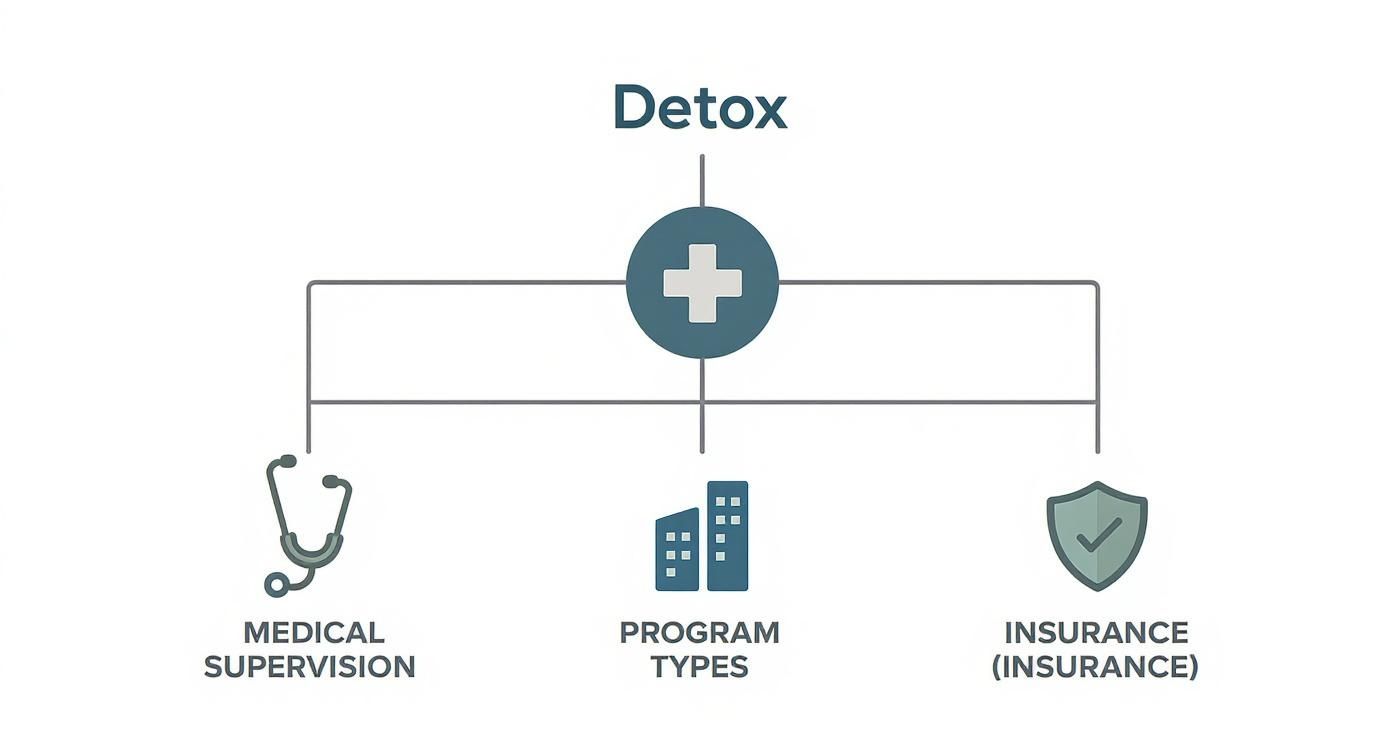
This chart helps visualize how the different pieces—medical supervision, program types, and insurance—all fit together to create the detox services we have in Massachusetts.
As you can see, solid medical supervision is the foundation for every program type, and insurance is the key that helps unlock access to these critical services.
Outpatient Detox Programs
If you need more flexibility, outpatient detox might be the right fit. This model lets you live at home and keep up with your daily life while attending scheduled appointments at a clinic or treatment center. It works best for people who have a solid support system at home, a way to get to their appointments, and are highly motivated to stick with the program.
In an outpatient program, you'll have regular check-ins with medical staff for assessments, get prescriptions to help manage withdrawal, and start participating in counseling. It’s less hands-on than inpatient care, but it’s a great option for people with mild to moderate withdrawal symptoms who can't step away from work, school, or family responsibilities.
Comparing Detox Program Types In Massachusetts
Deciding between inpatient, hospital-based, and outpatient detox really depends on your specific medical needs and life circumstances. Each model offers a different level of support. The table below breaks down the key differences to help you see which environment might be the best fit for you or your loved one.
| Program Type | Level of Supervision | Typical Environment | Best Suited For |
|---|---|---|---|
| Inpatient/Residential Detox | 24/7 on-site medical and clinical staff | Structured, trigger-free residential facility | Individuals needing constant medical oversight and a stable environment away from daily stressors. |
| Hospital-Based Detox | 24/7 hospital-level medical care | Clinical hospital or dedicated medical unit | Individuals with severe withdrawal, significant co-occurring medical conditions, or a history of complicated detox. |
| Outpatient Detox | Regular scheduled check-ins with medical staff | Clinic or treatment center while living at home | Individuals with mild-to-moderate symptoms, a strong support system, and the need to maintain work/family commitments. |
Ultimately, the best program is the one that provides the right level of safety and structure to get you through withdrawal successfully.
It's worth noting that Massachusetts has seen a significant increase in the use of structured detox programs over the last decade. Research shows that about 68% of people who go through a formal drug and alcohol detox program here consider their treatment a success. This really highlights how important these medically supervised options are. If you want to dive deeper into the data, you can read the full research about MA detox program success and the trends in our state.
Figuring out the right path forward is a big decision, and it depends on your health, your history with substance use, and what your home life is like. If you're not sure where to start, we can help you sort it out. Give us a call at (888) 388-8660 for a confidential chat about what might work best for you.
How To Navigate Insurance And Costs For MA Detox
Money worries should never be the reason someone doesn't get the help they need. I get it—trying to figure out the financial side of a drug detox in MA can feel overwhelming, but once you have the right information, it all starts to click into place. Think of this as your financial game plan, designed to replace anxiety with real, actionable steps.
The good news is that both federal and state laws are on your side. Here in Massachusetts, you have legal protections that make getting care much more straightforward than you might imagine. We'll walk through how insurance works, what state-funded options you have, and how you can get your treatment covered.
Your Insurance Coverage For Detox
Thanks to landmark legislation like the Mental Health Parity and Addiction Equity Act (MHPAEA), most health insurance plans are legally required to cover treatment for substance use disorder just as they would any other medical issue, like diabetes or heart disease. That means your plan almost certainly has benefits for detox and ongoing rehabilitation.
Of course, the exact level of coverage comes down to the details of your specific plan. You'll run into a few key terms:
- Deductible: The amount you pay out-of-pocket before your insurance provider starts paying.
- Copay: Your fixed fee for a covered service once you've met your deductible.
- Coinsurance: The percentage of the bill you're responsible for after your deductible is met.
Getting clarity on these details is the very first step. Our team is here to help with a free, completely confidential insurance check to spell out your benefits with zero obligation. Just give us a call at (888) 388-8660 to get started.
Using MassHealth And State Resources
If you don't have private insurance or find yourself underinsured, Massachusetts offers fantastic support through MassHealth, the state’s Medicaid program. MassHealth covers an extensive list of addiction treatment services, and that includes medically supervised detox.
Don't ever let a lack of private insurance be a roadblock to getting help. Massachusetts is dedicated to ensuring access to care, and MassHealth is a critical resource that makes treatment possible for residents who need it most.
Eligibility for MassHealth is based on your income level and a few other factors. The application process is handled through the Massachusetts Health Connector. This state-funded coverage makes high-quality drug detox in MA a reality for thousands of residents every single year, ensuring that your financial situation doesn't have to dictate your future.
Taking The First Financial Steps
Staring at the cost of treatment can feel like a heavy weight, but breaking it down into a few simple actions makes it so much more manageable. You have the power to understand your options and move forward with confidence.
Here’s a clear, simple plan to get you started:
- Gather Your Info: Get your insurance card and personal details ready.
- Verify Your Benefits: You can call the number on the back of your insurance card, but for a much simpler path, call our admissions team at (888) 388-8660. We'll handle the verification for you.
- Understand Your Plan: Ask specific questions about your deductible, copays, and whether your plan requires pre-authorization for detox services.
- Explore All Avenues: If private insurance isn't an option, start the MassHealth application process right away.
Getting a handle on the financial side of treatment is a huge step. For an even more detailed breakdown, you can learn more about how much drug rehab costs in MA in our complete guide. Taking these steps gives you a clear financial picture so you can focus on what truly matters—your health and your recovery.
What To Expect During The Medical Detox Process
One of the biggest things that stops people from getting help is fear of the unknown. We want to pull back the curtain on what medical detox is actually like. Let's walk through what happens from the moment someone arrives at a drug detox in MA until they’re stable and ready for the next step.
I want to be clear: this process isn't an interrogation or a judgment. It's a compassionate, clinical approach designed to keep you safe, manage your discomfort, and build a real foundation for lasting recovery. Every single step is handled by a professional team that’s 100% focused on your well-being.

The Intake And Comprehensive Assessment
Your journey starts the second you walk through our doors. You'll get a warm welcome from the admissions team, and the first step is what we call a comprehensive assessment. Really, it's just a conversation to get to know you and what you're going through. A clinician will sit down with you to talk about:
- Your history with substances (what you’ve been using, for how long, and how much).
- Your physical health history and any current medical conditions.
- Your mental health history, since co-occurring conditions are incredibly common.
- Your support system at home and your living situation.
This isn't just about ticking boxes on a form; it's about building a partnership from day one. The information you share is what allows our clinical team to create a detox plan that is specifically for you.
Creating Your Personalized Detox Plan
After the assessment, our medical team gets to work on your personalized care plan. No two people are the same, so no two detox plans should be, either. This plan is your roadmap for the next few days, outlining exactly how we’ll help you withdraw safely and as comfortably as possible.
It includes a detailed strategy for managing withdrawal symptoms, a medication schedule if that's what you need, and a plan for therapeutic support. Think of it as a highly customized prescription for stability. Every part of your care is intentional and focused on what you need—a hallmark of quality care for drug detox in MA.
Stabilization Through Medical And Therapeutic Support
This is the heart of medical detox. It's where our clinical team helps your body find its balance as substances leave your system. Withdrawal can be a really tough experience, but you will not be going through it alone. We use a combination of medical and therapeutic support to keep you safe.
The goal of medical detox is not to endure pain but to manage it. By using FDA-approved medications and providing constant support, we transform a potentially dangerous process into a safe, medically supervised transition toward healing.
This stabilization phase involves:
- 24/7 Medical Monitoring: Our nurses and medical staff check your vitals (like heart rate and blood pressure) regularly. This ensures you remain stable and allows us to catch any potential issues before they become serious.
- Withdrawal Symptom Management: The team can provide FDA-approved medications to ease the toughest physical and psychological symptoms of withdrawal, like nausea, anxiety, insomnia, and cravings.
- Therapeutic Support: You'll have access to counselors and therapists. They're here to help you navigate the emotional rollercoaster that often comes with detox, giving you a safe space to process what you're feeling.
Preparing For The Next Level Of Care
Medical detox is a crucial first step, but it isn't a cure for addiction. Real, lasting recovery begins once your body is stable and your mind is clear enough to start doing the deeper work in therapy. From the moment you arrive, the staff at a quality detox facility in Massachusetts starts planning for your transition into the next level of care.
This kind of proactive planning is absolutely essential. In fact, the expansion of integrated services like these has played a role in the state's recent public health successes. Massachusetts has seen a significant drop in opioid-related overdose deaths, hitting its lowest point since 2013 in a recent year. Experts link this trend to better access to detox and treatment. You can discover more insights about these positive trends in Massachusetts and see just how vital these services are.
Your care team will work with you to figure out the best next step. That could be a residential program, a Partial Hospitalization Program (PHP), or an Intensive Outpatient Program (IOP). This ensures you have a continuous path of support, which gives you the best possible chance at long-term success.
If you are ready to start this journey, our compassionate team is here to answer your questions and guide you through the process. Call (888) 388-8660 anytime for a confidential conversation.
Why A Medically Supervised Detox Is Your Safest Choice
Making the decision to stop using a substance is a massive first step, but how you take that step is everything. Trying to detox on your own, sometimes called "cold turkey," is like trying to navigate a hurricane in a rowboat. It's not just difficult—it's incredibly dangerous. A medically supervised drug detox in MA isn’t just a recommendation; it's the safest, most effective way to start your recovery. It provides a critical safety net that simply doesn't exist when you go it alone.
Mitigating Severe Health Risks
Withdrawal from certain substances is far more than just uncomfortable; it can be life-threatening. When it comes to alcohol and benzodiazepines (like Xanax or Valium), stopping abruptly can trigger severe, even fatal, medical complications. These aren't just abstract possibilities; they are very real dangers that medical professionals are trained to prevent and manage.
Without proper medical oversight, you're at risk for:
- Seizures: Sudden, violent electrical storms in the brain that can cause injury.
- Delirium Tremens (DTs): A severe form of alcohol withdrawal involving confusion, extreme agitation, and fever that can be fatal if not treated.
- Cardiovascular Strain: Your heart rate and blood pressure can fluctuate wildly, putting immense stress on your heart.
- Extreme Dehydration: Vicious cycles of vomiting and diarrhea can lead to dangerous electrolyte imbalances that affect every system in your body.
In a professional detox facility here in Massachusetts, the clinical team creates a controlled environment where these risks are anticipated and managed from the moment you walk in.
The 24/7 Professional Safety Net
The true value of a medical detox is the constant presence of a skilled clinical team. We’re talking about doctors, nurses, and therapists who are on hand around the clock. They don’t just react to emergencies; they proactively monitor your condition to keep you stable and safe through the entire process.
This continuous care involves:
- Vital Sign Monitoring: Regularly checking your heart rate, blood pressure, and temperature to catch any warning signs before they escalate.
- Immediate Medical Intervention: If a complication does arise, the team is right there to administer medications and provide care instantly. No waiting, no panic.
- Symptom Management: Using proven, FDA-approved medications to ease the most agonizing withdrawal symptoms, which makes the entire process much more bearable.
This constant supervision provides a profound sense of relief, allowing you to focus completely on getting through this without the fear of facing a medical crisis alone.
Managing The Psychological Challenges
Detox is as much a mental and emotional battle as a physical one. As the substances leave your system, it’s incredibly common to experience intense psychological distress. Waves of anxiety, deep depression, and agitation can feel completely overwhelming. For many people trying to detox alone, these feelings are what drive them right back to using.
A professional detox team provides not just medical care but also vital emotional and psychological support. They help you navigate the intense feelings that surface, reminding you that you are not alone and that what you're experiencing is a normal part of the healing process.
Therapists and counselors are there to offer support, teach you coping skills, and just provide a compassionate ear when you need it most. This integrated care for both mind and body is essential for building a strong foundation for the next steps in your recovery journey. Don’t risk your health—take the safest path forward.
For immediate, confidential help, call Paramount Recovery Centers at (888) 388-8660 to speak with our compassionate team.
Planning Your Next Steps After Detox
Getting through medical drug detox is a huge accomplishment. Seriously. It’s the moment the storm finally starts to break, giving you the clarity and stability to figure out what comes next. But it’s crucial to understand that this first step is just that—the beginning of the journey, not the finish line. Real, lasting freedom from addiction is built on what you do after detox. It all comes down to having a solid plan for continued care.

A high-quality facility that provides drug detox in MA won't just focus on getting you through the immediate withdrawal symptoms. From the moment you walk through the door, the clinical team should already be working with you to map out a personalized plan for your long-term success. This makes for a seamless transition into the next level of support, so you never feel like you're being left to figure it out on your own.
Building Your Recovery Roadmap
Think of detox as clearing the fog. Once your body is physically stable and your mind is starting to clear, you can begin the real work—digging into the root causes of addiction and learning new, healthier ways to cope. This is where the different levels of ongoing treatment come into play.
Your team will sit down with you to figure out the best path forward. This usually involves one of the following options:
- Residential Treatment: An immersive, live-in program that provides a highly structured and supportive environment, removing you from triggers and distractions.
- Partial Hospitalization Program (PHP): A full-time day program. It offers the same intensity as residential care but allows you to go home in the evenings, which works well for some people.
- Intensive Outpatient Program (IOP): A more flexible option with several hours of therapy each week. It's designed to fit around work, school, or family commitments while still providing robust support.
The Importance of Aftercare Planning
That transition point—from detox to the next phase—is probably the most critical moment in early recovery. Having a strong plan for what happens next dramatically boosts your chances of staying sober for good. That's why a comprehensive aftercare program for substance abuse in MA isn't just an add-on; it's a core part of the entire process. It connects you with the therapy, resources, and community you need to handle life's challenges without turning back to substance use.
Completing detox gives you a clean slate. A structured aftercare plan provides the tools and support system you need to write a new, healthier story on that slate.
Massachusetts has actually made some major progress in building a more connected system of care. The state has hundreds of facilities offering a full spectrum of services, and access to medication-assisted treatment (MAT) has grown a lot. These efforts have led to historic drops in opioid-related deaths, which just goes to show how powerful a well-planned, continuous care model can be. You can dig into some of these positive substance abuse trends in Massachusetts yourself.
Ultimately, the goal is to empower you with the tools and the confidence to not just survive, but thrive long after you leave our facility. Recovery is a continuous journey, and help is always just a phone call away.
If you’re ready to build your roadmap to a healthier future, our team is here to help you take the next step. Call (888) 388-8660 for a confidential chat.
Frequently Asked Questions About Drug Detox In MA
Deciding to get help is a huge step, but it often comes with a flood of questions. What happens next? What should I expect? Getting clear, real-world answers can quiet a lot of that anxiety and help you feel ready to move forward. Here are some of the most common questions we hear about starting a drug detox in MA.
How Long Does Drug Detox Usually Take In Massachusetts?
There’s no one-size-fits-all answer here—the timeline for medical detox is incredibly personal. It really depends on things like the specific substance you were using, for how long, and your overall health. That said, most people can expect a stay of about 5 to 14 days at a licensed Massachusetts facility.
For substances with intense and potentially dangerous physical withdrawals, like alcohol or benzodiazepines, the team might take a bit longer to make sure you're medically stable and safe. Opioid detox often lands somewhere in that 7 to 10-day range. When you arrive, the clinical team will sit down with you, do a full assessment, and map out a timeline that makes sense for you.
What Should I Pack For a Detox Center In MA?
Keep it simple. The goal is to focus on your comfort and healing, not your stuff. Every center will give you a specific list of what you can and can't bring, so it's always best to check.
But for a general idea, think along these lines:
- Comfortable clothes for about a week. Things without drawstrings are usually the rule.
- New, unopened toiletries like a toothbrush, toothpaste, and soap. Just make sure everything is alcohol-free.
- Your ID, insurance card, and a list of important phone numbers.
- Any prescription medications you’re currently taking, but they must be in their original pharmacy bottles.
To help create a calm, focused environment for everyone, things like cell phones and laptops are almost always left at home. A quick call to the admissions team before you head over is the best way to clear up any packing questions.
Your privacy is a top priority. All licensed detox centers in Massachusetts must follow strict federal laws like HIPAA, meaning your treatment is completely confidential unless you provide written consent to share information.
Is My Detox Treatment Confidential?
Absolutely. Your treatment is 100% confidential. Licensed medical facilities in Massachusetts are legally required to follow strict federal privacy laws, including the Health Insurance Portability and Accountability Act (HIPAA) and 42 CFR Part 2. These aren't just suggestions; they are serious regulations designed to protect your most sensitive health information.
What this means in practice is that no one—not your family, not your friends, not your boss—can be told anything about your treatment without your direct, written permission. We take your trust and privacy incredibly seriously from the moment you call.
Can I Lose My Job For Going To Detox?
It's a common fear, but you have legal protections in place to help secure your job while you get the care you need. The Family and Medical Leave Act (FMLA) allows many employees to take unpaid, job-protected leave for serious medical conditions, and that includes treatment for a substance use disorder.
On top of that, the Americans with Disabilities Act (ADA) protects people with a history of substance use disorder from being discriminated against at work. Our admissions team has helped countless people navigate this process. We can help you understand the paperwork so you can put your full focus on getting well.
Your journey to a healthier life is the most important thing you can focus on right now. At Paramount Recovery Centers, our team is ready 24/7 to answer any other questions you may have and guide you through the first steps. Call us for a free, confidential conversation at (888) 388-8660 or learn more at https://paramountrecoverycenters.com.


