


The link between substance use and severe mental illness is complex and often misunderstood. While drug use doesn't create schizophrenia out of thin air, it can trigger psychotic episodes and significantly increase the risk for individuals who are already vulnerable. For families in Massachusetts, understanding this connection is the first step toward prevention and finding the right help.
Key Takeaways
- Drug use can trigger psychosis, but it doesn't always cause schizophrenia. Substance-induced psychosis is a temporary state that mimics schizophrenia but usually resolves when the drug wears off. However, it can be a major warning sign of an underlying vulnerability to a long-term psychotic disorder.
- Some drugs carry a higher risk. High-potency cannabis (especially in teens) and stimulants like cocaine and meth are strongly linked to psychosis because they disrupt the brain's dopamine system, which is a key player in schizophrenia.
- Genetics and environment matter. A family history of mental illness is the biggest risk factor. For someone with this genetic predisposition, drug use can act as the environmental "trigger" that initiates the first episode of psychosis.
- Early, integrated treatment is crucial. For individuals in Massachusetts struggling with both substance use and psychotic symptoms, a dual diagnosis program that treats both conditions simultaneously offers the best chance for a stable, long-term recovery.
The Critical Difference: Schizophrenia vs. Substance-Induced Psychosis
To understand if drug use can cause schizophrenia, we must first distinguish between two conditions that can look nearly identical: a long-term illness and a temporary, drug-induced state.
- Schizophrenia is a chronic brain disorder. Think of it as having faulty wiring in the brain's communication system. It involves persistent symptoms like hallucinations, delusions, and disorganized thinking that last for months or even a lifetime, regardless of substance use.
- Substance-Induced Psychosis is like a temporary power surge caused by a drug. The substance overwhelms the brain's circuits, causing short-term psychotic symptoms. Crucially, these symptoms typically fade once the drug leaves the body.
However, an episode of substance-induced psychosis is a major red flag. It acts like a stress test on the brain's "wiring." If the brain has an underlying vulnerability, this drug-induced "surge" can expose it, sometimes triggering the very first episode of a lifelong illness like schizophrenia.
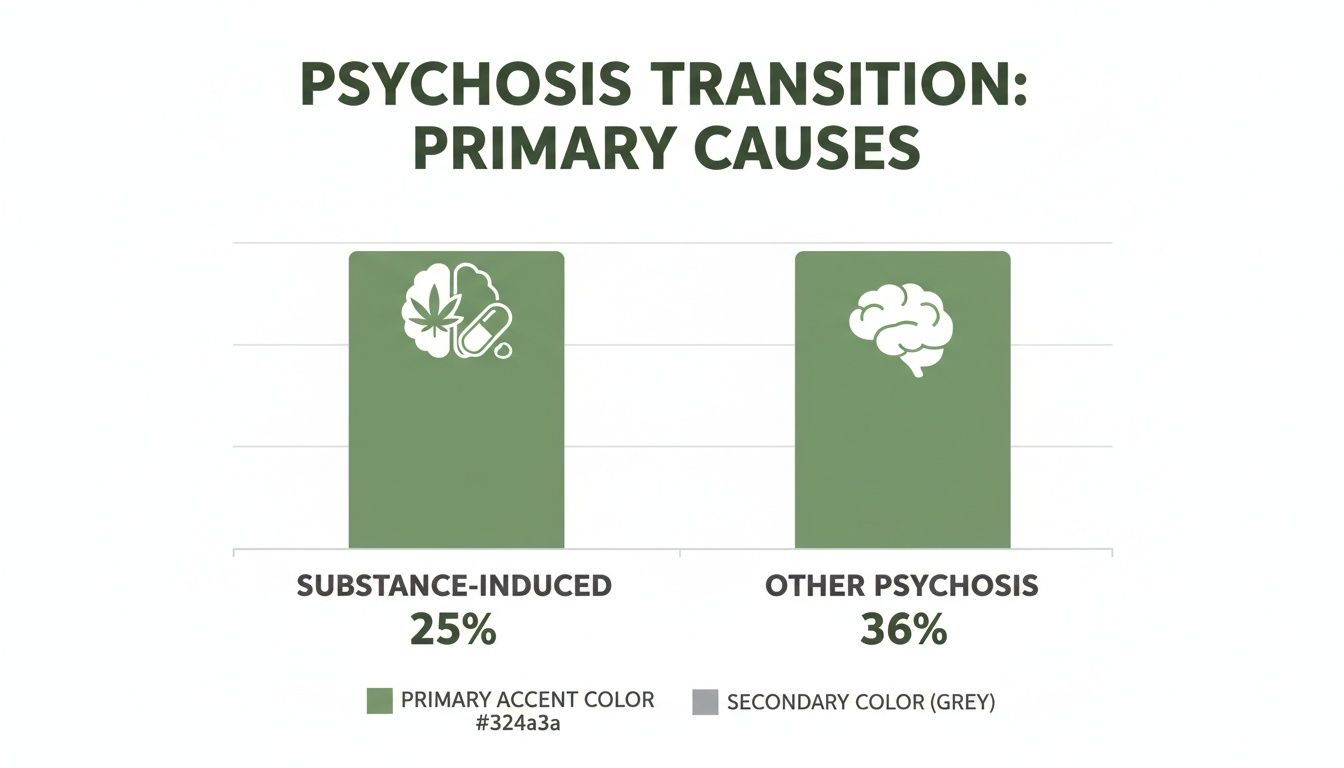
Research shows this transition is alarmingly common. A 2020 meta-analysis in Schizophrenia Bulletin found that about 25% of individuals who experience substance-induced psychosis are later diagnosed with a schizophrenia-spectrum disorder. This highlights the dangerous relationship between mental health and addiction.
If you are concerned that a loved one’s substance use is causing psychotic symptoms, it's essential to seek a professional evaluation. Our team can help you understand the next steps. Call us for a confidential consultation at (888) 388-8660.
Which Drugs Carry the Highest Risk of Causing Schizophrenia?
Not all substances affect the brain equally. Some have a much stronger link to triggering psychosis and potentially unmasking schizophrenia, primarily because they interfere with the brain's dopamine system.
1. High-Potency Cannabis
Today's cannabis is significantly more potent than in the past. The high concentration of THC (the psychoactive compound) is directly linked to an increased risk of psychosis, especially in adolescents whose brains are still developing. For a teen with a genetic predisposition, frequent use of high-THC cannabis can be like throwing gasoline on a hidden fire, potentially triggering the onset of schizophrenia years earlier than it might have otherwise appeared. A recent large-scale Danish study found that up to 30% of schizophrenia cases among young men might be linked to cannabis use disorder. You can read the full research about the cannabis and schizophrenia connection.
2. Stimulants (Cocaine & Methamphetamine)
Stimulants like cocaine and amphetamines flood the brain with dopamine. This chemically mimics the overactive dopamine state believed to be a core feature of schizophrenia, leading to intense paranoia, hallucinations, and delusions known as "stimulant psychosis." For vulnerable individuals, repeated use can permanently destabilize the dopamine system, increasing the risk of developing a chronic psychotic disorder. Learn more about how these substances impact brain chemistry and the link between dopamine and addiction in our detailed article.
3. Hallucinogens (LSD & Psilocybin)
Hallucinogens like LSD can cause temporary psychosis, but their role in causing long-term schizophrenia is less direct than that of cannabis or stimulants. However, a "bad trip" can be a terrifying experience that may trigger the first psychotic break in someone who is already vulnerable.
Genetics and Environment: Who Is Most at Risk?
Why can one person use drugs without issue while another develops a serious mental illness? The answer lies in the combination of genetics and environment.
- Genetic Vulnerability: Family history is the single biggest risk factor. Having a close relative (like a parent or sibling) with schizophrenia increases your own risk from 1% to about 10%. This doesn't mean you will develop the illness, but it means you are more susceptible.
- Environmental Triggers: For someone with a genetic predisposition, drug use can be the environmental trigger that activates the illness. Other factors like childhood trauma, social isolation, and high stress can also increase risk.
A teenager in Worcester with a family history of psychosis who experiments with high-potency cannabis is at a much greater risk than a peer without those factors. Understanding your personal risk profile is key to making safe choices.
Spotting the Early Warning Signs of Psychosis
For families in Massachusetts, recognizing the early signs of psychosis is critical, especially when substance use is involved. Intervention during this "prodromal" phase can dramatically improve long-term outcomes. Look for a pattern of change from their usual self.
Behavioral & Social Changes:
- Sudden withdrawal from friends and family
- A dramatic drop in school or work performance
- Neglect of personal hygiene
- Intense, inappropriate emotions or a "flat" lack of emotion
- Growing suspicion or paranoia of others
Cognitive & Perceptual Changes:
- Difficulty concentrating or thinking clearly
- Vague, jumbled, or illogical speech
- Strange or unusual beliefs (not yet full delusions)
- Heightened sensitivity to sights, sounds, or smells
If these signs are present alongside substance use, it is a clear signal to seek a professional evaluation immediately.
Finding Dual Diagnosis Treatment in Massachusetts
When a person struggles with both a substance use disorder and a mental illness like schizophrenia, it's called a dual diagnosis. Treating one issue while ignoring the other is ineffective. The only proven path to recovery is integrated treatment, where both conditions are addressed simultaneously by the same team.
Integrated care recognizes that substance use can worsen psychosis and that psychosis can drive a person to self-medicate with drugs. By tackling both problems together, treatment provides the stability needed for lasting recovery.
For families across Massachusetts, from the Berkshires to Boston, finding the right help is paramount. When searching for a treatment center, the most important question is whether they provide true, integrated dual diagnosis treatment programs.
FAQs About Drug Use and Schizophrenia
If I stop using drugs, will the psychotic symptoms go away?
If it's substance-induced psychosis, the symptoms will likely fade after the drug leaves your system. If drug use has triggered an underlying illness like schizophrenia, the symptoms will likely persist even after you stop. A professional diagnosis is the only way to know for sure.
Can prescription medications cause schizophrenia?
Certain prescription drugs, like high-dose stimulants (for ADHD) or corticosteroids, can trigger psychosis, especially in vulnerable individuals. It is crucial to discuss your personal and family mental health history with your doctor.
Is there a safe amount of cannabis to use if I'm at risk?
For anyone with a family history of psychosis or for adolescents whose brains are still developing, there is no known safe amount of cannabis. Given the high potency of modern cannabis and the potential for triggering a lifelong illness, the safest approach is avoidance.
Where can I find help in Massachusetts?
Organizations like NAMI Massachusetts and the Massachusetts Department of Mental Health (DMH) are excellent resources. For direct, professional treatment, it's vital to find a facility specializing in dual diagnosis.
If you're in Massachusetts and struggling with co-occurring substance use and mental health challenges, you don't have to navigate this alone. The expert team at Paramount Recovery Centers provides compassionate, integrated care to help you or your loved one find the path to recovery. Call our confidential helpline 24/7 at (888) 388-8660 to learn about your treatment options today.


