
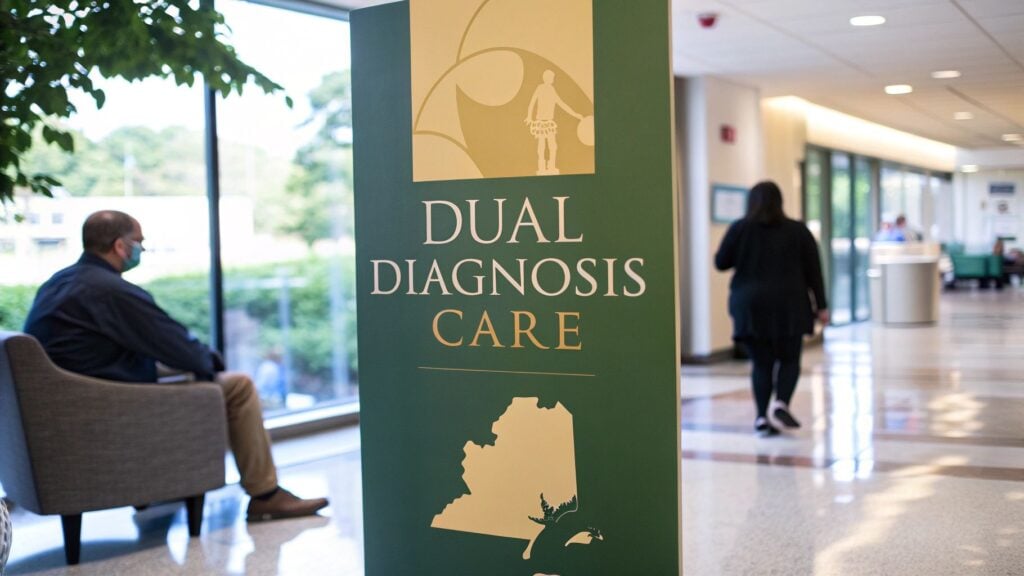


When substance use and mental health conditions exist together, finding the right help is critical. This is known as a dual diagnosis, and it requires a special kind of care that treats both issues at the same time. This guide highlights the best dual diagnosis treatment facilities, with a special focus on options available in Massachusetts, to help you find a path to lasting recovery.
Key Takeaways
- Integrated Care is Essential: True recovery from a dual diagnosis requires treating both the substance use disorder and the mental health condition simultaneously. Look for facilities that offer integrated psychiatric care and addiction counseling.
- Local Options Matter: For those in Massachusetts, local facilities like Paramount Recovery Centers provide a full continuum of care, from detox coordination to outpatient programs, making treatment accessible without extensive travel.
- Use Quality-Focused Search Tools: Resources like SAMHSA's FindTreatment.gov and Shatterproof's Treatment ATLAS (available in Massachusetts) help you filter for accredited, evidence-based programs that specialize in co-occurring disorders.
- Verification is a Crucial Step: Always call a potential facility to verify their services, insurance acceptance, and specific dual diagnosis protocols. A direct conversation is the best way to ensure a program is the right fit.
1. Paramount Recovery Centers
Paramount Recovery Centers distinguishes itself as one of the best dual diagnosis treatment facilities by offering a truly integrated and comprehensive continuum of care in Massachusetts. Unlike programs that may treat substance use and mental health separately, Paramount’s model is built from the ground up to address co-occurring disorders simultaneously. This integrated approach ensures that the root causes of addiction, such as trauma, anxiety, or depression, are treated alongside substance use, creating a more robust foundation for lasting recovery. Their commitment to personalized, evidence-based care makes them a standout choice for individuals and families navigating the complexities of dual diagnosis.
The center’s strength lies in its ability to guide clients through every stage of the recovery journey without disruptive handoffs. From the initial crisis call to long-term aftercare, the entire process is coordinated. This includes detox placement, inpatient coordination, and a seamless transition into their own levels of care like the Partial Hospitalization Program (PHP) and Intensive Outpatient Program (IOP). This structure prevents clients from falling through the cracks, a common challenge when moving between different providers.
Why Paramount Recovery Centers Excels in Dual Diagnosis Care
Paramount’s clinical sophistication is a key differentiator. The facility provides on-site psychiatry and a broad menu of therapeutic modalities specifically chosen for their effectiveness in treating co-occurring disorders. Clinicians are equipped to create highly individualized treatment plans that go beyond a one-size-fits-all model.
Key Clinical Strengths:
- Integrated Psychiatry and MAT: Clients have access to psychiatric care and Medication-Assisted Treatment (MAT) to manage withdrawal symptoms, cravings, and underlying mental health conditions like anxiety or bipolar disorder in a coordinated fashion.
- Specialized Trauma Therapies: Paramount offers advanced, trauma-informed therapies such as Eye Movement Desensitization and Reprocessing (EMDR) and Exposure and Response Prevention (ERP), which are critical for addressing PTSD and other trauma-related disorders that often fuel addiction.
- Diverse Therapeutic Approaches: The program blends core modalities like Cognitive Behavioral Therapy (CBT) and Dialectical Behavior Therapy (DBT) with Motivational Enhancement Therapy (MET) and robust relapse prevention planning. This allows clinicians to adapt their approach to each client’s unique needs and readiness for change.
Specialized Programming and Accessibility
Recognizing that recovery is not a uniform experience, Paramount has developed specialized tracks to serve diverse populations more effectively. This level of personalization is often missing in larger, less-flexible programs. Their gender-responsive programming provides separate, dedicated tracks for men and women, creating a safe and supportive environment where clients can address sensitive issues without distraction.
Furthermore, their perimenopause-informed care is a unique and vital offering that addresses the specific hormonal, emotional, and psychological challenges women face during this life stage, which can often trigger or worsen substance use and mental health symptoms. By acknowledging and treating these distinct needs, Paramount enhances the potential for successful outcomes.
How to Get Started with Paramount:
The center prioritizes immediate and confidential access to care. Their admissions line is available 24/7 for a no-obligation consultation. The admissions team can conduct a preliminary assessment over the phone and often arrange for same-day placement. They also offer instant insurance verification to provide clarity on coverage and out-of-pocket costs upfront.
| Feature Overview | Details |
|---|---|
| Levels of Care | Detox Placement, Inpatient Coordination, PHP, IOP, Outpatient, Aftercare |
| Dual Diagnosis Specialty | Integrated Psychiatry, MAT, EMDR, ERP, CBT, DBT |
| Unique Programs | Gender-Responsive Tracks (Men/Women), Perimenopause-Informed Care |
| Recovery Pathways | 12-Step and Alternatives (SMART Recovery) |
| Location | Southborough, Massachusetts |
| Accessibility | 24/7 Admissions, Same-Day Placement Available, Most Major Insurance Accepted |
Pros:
- Full Continuum of Care: Seamless transitions from detox coordination to long-term aftercare reduce gaps in treatment.
- Integrated Dual Diagnosis Expertise: On-site psychiatry and advanced therapies (EMDR, ERP) effectively treat co-occurring disorders.
- Person-Centered Specialties: Gender-specific tracks and perimenopause-informed care address needs often overlooked by other rehabs.
- High Accessibility: 24/7 confidential admissions and streamlined insurance verification make it easier to get help quickly.
Cons:
- No Flat-Rate Pricing: Costs are dependent on individual insurance plans and treatment duration, requiring a benefits check for an exact quote.
- Massachusetts-Based: While they coordinate care nationally, their primary facilities are in Southborough, MA, which may require travel for out-of-state clients.
For immediate, confidential help, call Paramount’s 24/7 admissions line at (888) 388-8660 or visit their website.
Visit Paramount Recovery Centers Website
2. FindTreatment.gov (SAMHSA)
As the official behavioral health treatment services locator from the Substance Abuse and Mental Health Services Administration (SAMHSA), FindTreatment.gov serves as a foundational tool for anyone starting their search. It is not a single treatment center but a comprehensive, free, and confidential national database. This platform empowers users to locate a wide range of state-licensed providers across the country, making it an indispensable resource for finding the best dual diagnosis treatment facilities that meet specific, individual needs.
The primary strength of this government-run platform is its robust filtering system. Users can narrow their search results with incredible precision, ensuring they find programs that are genuinely equipped to handle co-occurring disorders. This functionality sets it apart from generic search engines, which often return a mix of relevant and irrelevant results.
Key Features and How to Use Them
FindTreatment.gov provides a user-friendly interface designed for ease of use during what is often a stressful time. The platform’s value lies in its extensive, searchable database and its direct connection to national support resources.
- Co-occurring Disorder Filter: The most critical feature for our audience is the ability to specifically filter for facilities that treat both mental health and substance use disorders simultaneously. This ensures that the results are tailored to those needing integrated dual diagnosis care.
- Payment and Insurance Options: Users can filter by payment type, including private insurance, Medicaid, Medicare, and facilities offering sliding scale fees. This financial clarity is crucial for planning and removes a significant barrier to accessing care.
- Location-Based Search: While the database is national, its search function is hyperlocal. A resident in Springfield, Massachusetts, can enter their ZIP code (e.g., 01103) to find the nearest suitable facilities, streamlining the search for local options.
- Connection to SAMHSA Helpline: For those who feel overwhelmed or need immediate guidance, the website prominently features the SAMHSA National Helpline (1-800-662-HELP). This provides a direct line to trained specialists who can offer referrals and support 24/7.
Why It Made Our List
FindTreatment.gov earns its spot due to its authority, breadth, and accessibility. As a government-managed resource, it offers an unbiased, comprehensive starting point that covers the entire United States. Its commitment to anonymity and no-cost access makes it an equitable tool for individuals from all socioeconomic backgrounds.
However, users should be aware of a key limitation. A 2020 Health and Human Services (HHS) audit noted potential inaccuracies in some facility listings, such as outdated contact information or services.
Pro Tip: Always use FindTreatment.gov as your initial search tool to build a list of potential providers. Then, contact each facility directly to verify their services, availability, and insurance acceptance before making a decision. This two-step process combines the platform's broad reach with direct confirmation.
- Website: https://findtreatment.gov
- Access: Free, anonymous, and available 24/7 online.
- Pros: Authoritative government source, extensive filtering options for dual diagnosis and payment, completely free to use.
- Cons: Some listings may be outdated; direct verification with facilities is essential.
3. Psychology Today – Treatment Centers Directory
While government resources provide an excellent foundation, Psychology Today's Treatment Centers Directory offers a visually rich and commercially maintained alternative. This widely recognized platform serves as a massive private database where facilities create detailed profiles, allowing users to compare programs on a more personal level. For individuals searching for the best dual diagnosis treatment facilities, its user-friendly interface and comprehensive filters make it a powerful tool for creating a shortlist of potential providers.
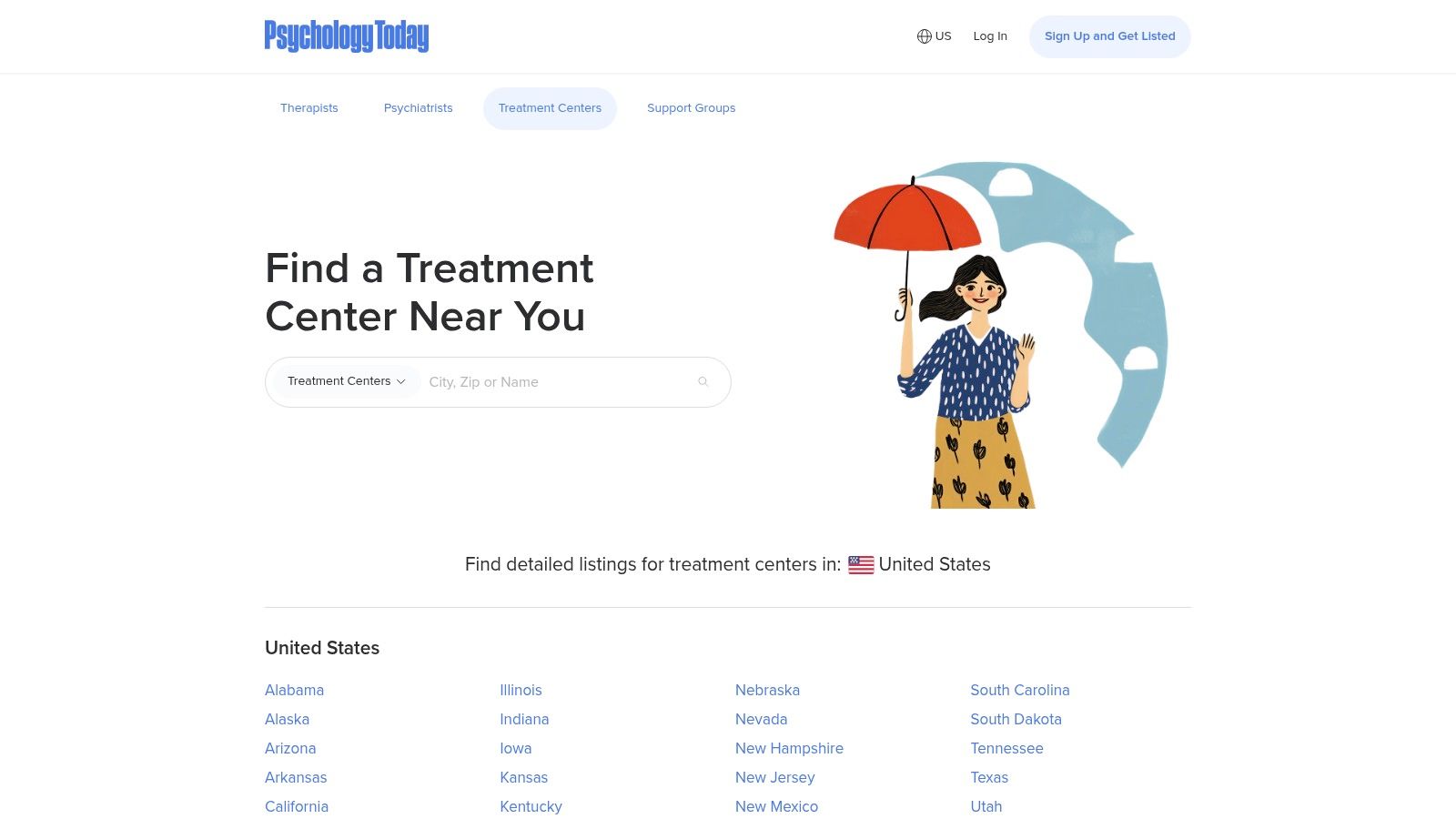
The primary advantage of this directory is the depth of information provided on each facility's profile. Unlike more data-driven government sites, Psychology Today allows centers to showcase their environment through photos, detail their treatment philosophies, and list staff credentials. This provides a better "feel" for a program before you even pick up the phone.
Key Features and How to Use Them
Psychology Today excels at making the comparison process more intuitive and visually driven. The platform is designed to help you quickly assess if a facility aligns with your specific needs, from clinical approach to the overall atmosphere.
- Dedicated "Dual Diagnosis" Filter: Users can immediately narrow their search to facilities that explicitly list "Dual Diagnosis" as a specialty. This is a crucial first step to ensure you are only viewing programs equipped to manage co-occurring disorders.
- Detailed Insurance and Care Level Filters: The directory allows you to filter by insurance provider and specific levels of care, including Detox, Residential, Partial Hospitalization (PHP), and Intensive Outpatient (IOP). This helps align clinical needs with financial realities from the start.
- Rich Facility Profiles: Each listing is a detailed micro-site containing program descriptions, photos, treatment approaches, and direct contact forms. This makes side-by-side comparisons of different programs in Massachusetts, from Worcester to Boston, much more effective.
- State and City Navigation: The search is easily localized. Someone in the Boston area can quickly find relevant dual diagnosis centers nearby and evaluate them based on their comprehensive profiles, all without leaving the site.
Why It Made Our List
Psychology Today earns its spot for providing a user-centric, visually engaging search experience that complements more sterile government databases. The ability to see photos, read in-depth program philosophies, and directly contact admissions through the platform streamlines the process of finding a facility that feels like the right fit.
However, it's critical to remember that these listings are a form of advertising. The information is self-reported by the facilities and is not independently audited for quality or accuracy.
Pro Tip: Use Psychology Today to visually compare facilities and get a sense of their environment and approach. After shortlisting 2-3 centers that appeal to you, always call them directly to verify critical details like current insurance acceptance, program availability, and specific dual diagnosis treatment protocols.
- Website: https://www.psychologytoday.com/us/treatment-rehab
- Access: Free and available 24/7 online.
- Pros: Broad coverage with up-to-date listings, visuals make for easy comparison, direct contact forms to admissions.
- Cons: Listings are commercial and self-reported; all details must be verified directly with the facility.
4. Shatterproof Treatment ATLAS
Developed by the national nonprofit Shatterproof, Treatment ATLAS (Addiction Treatment Locator, Assessment, and Standards) is a quality-focused platform designed to help people find appropriate and high-quality addiction care. It goes beyond a simple directory by incorporating quality metrics and patient feedback, empowering users to make informed decisions. This makes it an exceptional tool for locating the best dual diagnosis treatment facilities that adhere to evidence-based standards.
The platform's main advantage is its emphasis on transparency and validated quality. Rather than relying solely on a facility's self-reported marketing claims, ATLAS uses objective data, including insurance claims analysis and patient-reported experiences, to showcase a program's true effectiveness in treating co-occurring disorders.
Key Features and How to Use Them
Shatterproof Treatment ATLAS provides a clean, data-driven interface to simplify the search for quality care. Its unique tools help users compare options based on performance, not just location or amenities.
- Evidence-Based Quality Indicators: ATLAS displays whether a facility follows best practices, such as offering FDA-approved medications for opioid use disorder or having accredited co-occurring care programs. This lets you quickly vet facilities based on clinical standards.
- Patient Experience Feedback: The platform integrates feedback from former patients on aspects like communication, staff respect, and involvement in treatment planning. This provides invaluable insight into the actual patient experience.
- Side-by-Side Comparison: Users can select multiple facilities and compare them directly on key metrics, including services offered, types of therapy, and payment options. This feature is particularly useful for Massachusetts residents weighing options between centers in Boston and Worcester.
- Guided "Help Me Choose" Assessment: A confidential online questionnaire helps individuals identify their specific needs. It then generates a tailored list of facilities that are best equipped to handle their unique situation, including the severity of their substance use and mental health symptoms.
Why It Made Our List
Treatment ATLAS earns its place by prioritizing quality and transparency over quantity. It shifts the power to the consumer by providing objective data that is often difficult to find elsewhere. For those seeking dual diagnosis care, this means you can specifically look for programs with a proven track record of integrated treatment.
However, its primary limitation is its geographic reach. As of now, the platform is only available in 14 states, including Massachusetts, which makes it a fantastic resource for locals but less useful for a nationwide search.
Pro Tip: When using ATLAS, pay close attention to the "Follows Best Practices" indicators. For dual diagnosis, look for facilities that screen for mental health conditions at intake and offer integrated treatment plans. This is a clear sign of a high-quality program.
- Website: https://www.treatmentatlas.org
- Access: Free and confidential in covered states.
- Pros: Focuses on evidence-based quality and patient feedback, allows for direct side-by-side facility comparisons, guided assessment tool personalizes results.
- Cons: Limited availability; currently active in only 14 states (though this list is expanding).
5. American Addiction Centers (AAC) – National Provider Network
American Addiction Centers (AAC) is one of the largest networks of treatment facilities in the United States, offering integrated care for substance use disorders and co-occurring mental health conditions. As a national provider, their website functions as a centralized hub for individuals seeking immediate placement and comprehensive information. This platform is designed to streamline the admissions process, making it a valuable resource for finding some of the best dual diagnosis treatment facilities that can accommodate urgent needs.
The primary strength of AAC's online platform is its unified and rapid-response admissions system. Unlike searching for individual centers, AAC provides a single point of contact through its 24/7 helpline and online insurance verification tool. This centralized approach helps quickly match individuals with an appropriate facility within their extensive network, reducing the friction often associated with starting treatment.
Key Features and How to Use Them
AAC’s website is built to guide users from initial inquiry to admission with clarity and speed. The platform’s value is in its ability to leverage a national network to find a suitable placement, often much faster than independent searches.
- Centralized 24/7 Helpline: The most prominent feature is the national helpline, staffed around the clock by admissions navigators. They can conduct initial assessments over the phone, discuss treatment options, and guide users through the entire intake process, providing a human touch to the search.
- HIPAA-Secure Insurance Verification: A standout tool is the online benefits verification form. Users can securely submit their insurance information to receive a prompt confirmation of their coverage for AAC facilities, which demystifies the financial aspect of treatment from the very beginning.
- National Facility Locator: The website includes an interactive map and locator tool that allows users to explore AAC-owned facilities across the country. While their primary Massachusetts facility, AdCare Hospital, is a key option, residents can also explore out-of-state programs if a specific type of care is needed.
- Dedicated Co-occurring Disorder Programs: Many facilities within the AAC network have specialized tracks for dual diagnosis. The website provides detailed information on these programs, helping users identify locations that offer the integrated psychiatric and substance abuse care they require.
Why It Made Our List
American Addiction Centers earns its spot for its streamlined, national approach to admissions and its focus on integrated care. The ability to connect with one team that can place you in multiple locations across the country is a significant advantage for those needing immediate help. The clear, step-by-step process laid out on their website removes much of the guesswork from finding a program.
However, the network model presents a key consideration. Program specifics, accepted insurance plans, and treatment modalities can vary significantly from one facility to another.
Pro Tip: Use the AAC website and helpline to get a preliminary placement recommendation and verify your insurance benefits. Then, ask the admissions navigator for detailed information about the specific facility being recommended. Inquiring about staff credentials, daily schedules, and dual diagnosis program structure at that location is a crucial step. This helps you understand how to choose a rehab facility in Massachusetts or elsewhere that truly fits your needs.
- Website: https://americanaddictioncenters.org
- Access: Free online resources and 24/7 confidential helpline.
- Pros: Single admissions point for a national network, fast online insurance verification, 24/7 support for immediate placement.
- Cons: Variability in care and in-network insurance status across different locations; requires careful vetting of the specific recommended facility.
6. Hazelden Betty Ford Foundation – Co-Occurring Care
As a leading nonprofit organization with a legacy spanning decades, the Hazelden Betty Ford Foundation has become synonymous with evidence-based addiction treatment. Its platform offers a dedicated gateway to its specialized co-occurring care services, where substance use disorders and mental health conditions are treated simultaneously. This integrated approach ensures that clients receive comprehensive care under one standardized clinical model, making it a reliable resource for finding some of the best dual diagnosis treatment facilities available.
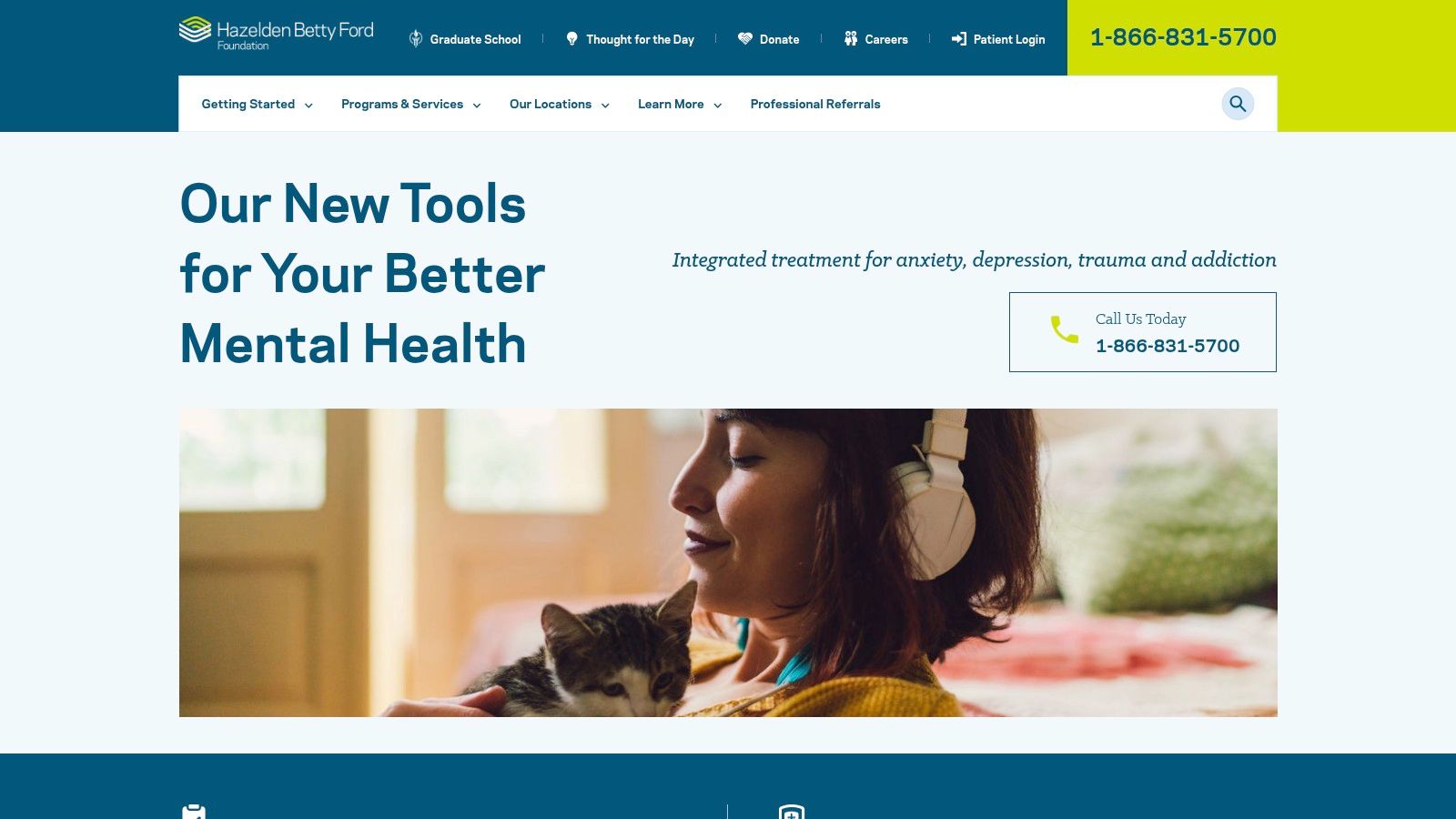
The primary strength of the Hazelden Betty Ford system is its commitment to treating the whole person. Instead of addressing addiction and mental health in separate silos, their model employs dual-licensed clinicians who understand the complex interplay between the two. This philosophy is embedded across all levels of care, from residential programs to virtual telehealth services.
Key Features and How to Use Them
The Hazelden Betty Ford website is designed to guide prospective patients and their families through the treatment discovery and admissions process. Its value lies in its transparent, centralized system that simplifies access to high-quality care.
- Integrated Psychiatry and Medication Management: A core feature is the direct integration of psychiatric care. Patients have access to psychiatrists for assessments, diagnoses, and medication management, ensuring mental health symptoms are managed effectively alongside addiction treatment.
- Multiple Levels of Care: The foundation offers a full continuum of care, including residential treatment, Partial Hospitalization Programs (PHP), Intensive Outpatient Programs (IOP), and virtual options. This allows individuals to step down or step up in intensity based on their clinical needs.
- Centralized Admissions and Insurance Verification: The website directs users to a single admissions line where specialists conduct initial screenings, verify insurance benefits, and discuss financial options. Financial advocates are available to help navigate costs and explore patient aid for those who qualify.
- Standardized Clinical Model: Regardless of location, including options accessible to those in Massachusetts, patients receive care based on the same evidence-based model. This consistency ensures a high standard of treatment across their national network.
Why It Made Our List
Hazelden Betty Ford earns its place due to its unparalleled reputation, research-backed methodologies, and fully integrated approach to dual diagnosis. Its longstanding history and nonprofit status underscore a commitment to patient outcomes over profit. The organization's website provides clear pathways to understanding its dual diagnosis treatment programs, making it easier for families to take the first step.
A potential limitation for some is insurance coverage. While many commercial insurance plans are accepted, Medicare and Medicaid are typically not in-network, and financial assistance is limited.
Pro Tip: Before committing, use the centralized admissions line to get a full, transparent breakdown of costs. Ask for a pre-admission benefits check to understand what your specific insurance plan will cover, what your out-of-pocket expenses will be, and if you are eligible for any patient aid programs.
- Website: https://www.hazeldenbettyford.org/mental-health-services/co-occurring-care
- Access: Centralized admissions process via phone; commercial insurance is widely accepted, but public options are limited.
- Pros: Renowned evidence-based model, truly integrated mental health and SUD care, transparent insurance verification process.
- Cons: Limited acceptance of Medicare/Medicaid, financial assistance is not guaranteed and varies by eligibility.
7. The Recovery Village (Advanced Recovery Systems) – Dual Diagnosis Programs
The Recovery Village, part of the Advanced Recovery Systems network, operates a multi-state system of facilities renowned for their dedicated dual diagnosis treatment tracks. This network provides a streamlined, accessible pathway to integrated care for individuals struggling with co-occurring substance use and mental health disorders. Their centralized admissions process is designed for rapid response, making it a powerful resource for those needing immediate placement in one of the best dual diagnosis treatment facilities available.
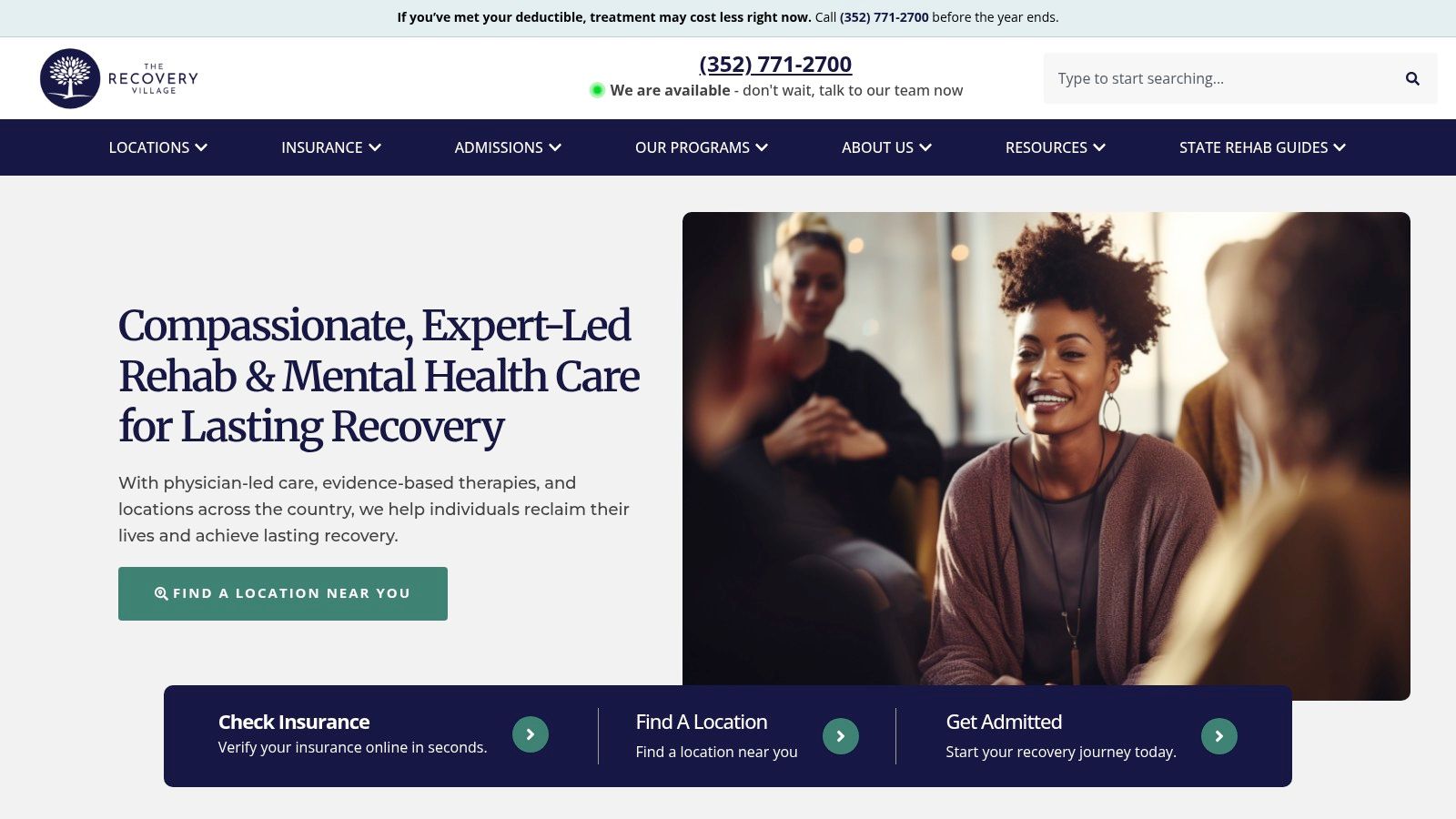
The primary strength of The Recovery Village's model is its scale and efficiency. By offering a full continuum of care from medical detox to outpatient telehealth, they can guide patients through every stage of recovery. Their system simplifies the often-overwhelming process of finding and starting treatment, especially for families in crisis.
Key Features and How to Use Them
The Recovery Village website acts as a central hub for accessing care across its national network. The platform is built to quickly connect users with the right level of care by simplifying the admissions and verification process.
- Explicit Dual Diagnosis Tracks: Unlike general treatment centers, The Recovery Village designs programs to treat substance use and mental health conditions concurrently, not as separate issues. This integrated approach is a cornerstone of their treatment philosophy.
- Centralized 24/7 Admissions: Their national, round-the-clock admissions team allows for immediate pre-assessment and support. Users can call or use the online HIPAA-secure form to verify insurance benefits quickly, often receiving a response within minutes.
- Full Continuum of Care: The platform details their comprehensive services, including medical detox, residential inpatient, Partial Hospitalization (PHP), Intensive Outpatient (IOP), and virtual telehealth options. This allows for a seamless transition between levels of care as a patient progresses in their recovery.
- Location-Specific Information: While they are a national network, their website provides detailed pages for each location, often listing specific insurance plans they accept (including some TRICARE and VA Community Care Network plans). This helps individuals, including those in Massachusetts, find a suitable facility that meets their logistical and financial needs.
Why It Made Our List
The Recovery Village earns its spot for its streamlined, large-scale approach to providing specialized dual diagnosis care. Their system is engineered to remove barriers to entry, offering rapid admissions and clear, upfront insurance verification. This efficiency is critical when time is of the essence. You can explore more on the effectiveness of dual diagnosis treatment to understand why this integrated model is so vital.
However, potential patients must be diligent. While the network is extensive, insurance acceptance and program specifics vary significantly between individual facilities.
Pro Tip: Use their centralized admissions line to your advantage. Provide your insurance information and clinical needs upfront. Their team can quickly determine which, if any, of their facilities is a good fit and can even refer you to other providers if they are not in-network, saving you valuable time.
- Website: https://www.therecoveryvillage.com
- Access: Centralized admissions available 24/7 via phone or online form.
- Pros: Streamlined intake with fast insurance verification, explicit dual diagnosis care across a full continuum, and potential for same-day admission.
- Cons: Insurance acceptance varies by location; some sites do not take Medicaid/Medicare, so verification for each specific facility is crucial.
Choosing a Dual Diagnosis Treatment Facility
Navigating the landscape of dual diagnosis treatment can feel overwhelming, but this guide has equipped you with the tools to make an informed decision. The "best" center is the one that offers the specific, integrated care model that aligns with your clinical needs and personal goals. Remember, the core principle of effective care is treating both the substance use disorder and the mental health condition simultaneously.
If you are seeking a compassionate, evidence-based dual diagnosis program in Massachusetts, the team at Paramount Recovery Centers is ready to help. We specialize in creating personalized, integrated treatment plans to address the complex interplay of addiction and mental health.
Contact our admissions specialists 24/7 for a confidential consultation.
Call now: (888) 388-8660
Or visit Paramount Recovery Centers to start your journey toward comprehensive wellness today.
Frequently Asked Questions
What is dual diagnosis treatment?
Dual diagnosis treatment is an integrated approach for individuals who have both a substance use disorder (like alcohol or drug addiction) and a co-occurring mental health disorder (like depression, anxiety, or PTSD). Instead of treating them separately, this model addresses both conditions simultaneously to improve the chances of a successful, long-term recovery.
How do I know if I need a dual diagnosis facility?
If you are using substances to cope with symptoms of anxiety, depression, trauma, or another mental health issue, a dual diagnosis facility is likely the right choice. These centers have specialized staff, including psychiatrists and licensed therapists, who are trained to understand and treat the complex interaction between mental health and addiction.
What should I look for in the best dual diagnosis treatment facilities?
Look for facilities that offer integrated care, meaning psychiatric services and addiction counseling are part of the same cohesive treatment plan. Key features include on-site psychiatrists, evidence-based therapies (like CBT, DBT, and EMDR), medication-assisted treatment (MAT), and individualized care plans. Accreditation from bodies like The Joint Commission or CARF is also a strong indicator of quality.
Does insurance cover dual diagnosis treatment in Massachusetts?
Yes, most major insurance plans, including those in Massachusetts, provide coverage for dual diagnosis treatment as it is considered a medical necessity. The extent of coverage varies by plan. The best facilities, like Paramount Recovery Centers, offer free, confidential insurance verification to help you understand your benefits before you commit to treatment.


