
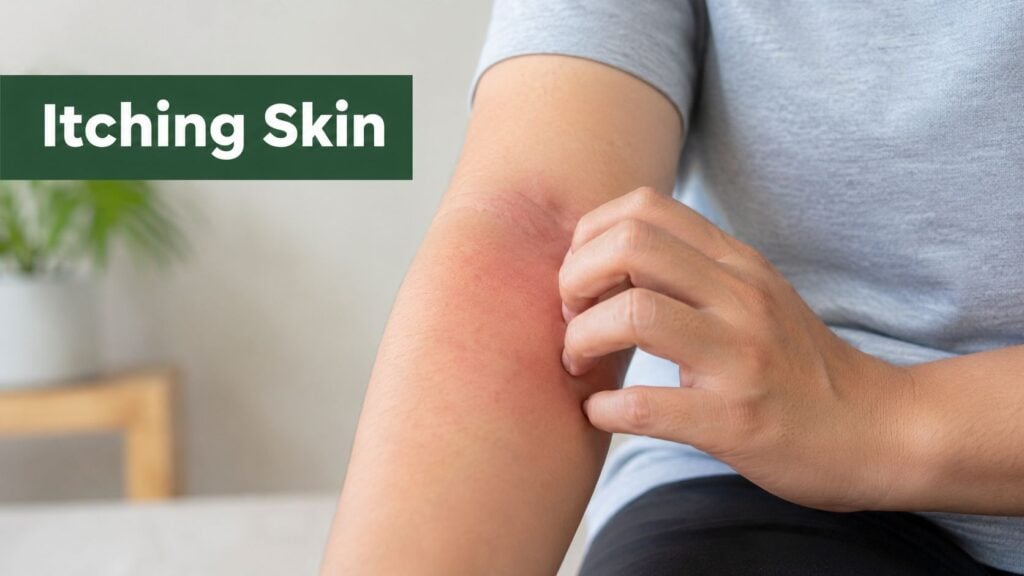


Stopping alcohol can feel frightening enough on its own. When itchy skin shows up on top of shakiness, sweating, poor sleep, or a racing heart, many people assume something unusual is happening or that they're overreacting. They aren't.
Alcohol withdrawal and itching skin can happen together. The harder question is whether the itching is part of uncomplicated withdrawal, or whether it's pointing to something more serious such as liver trouble, nerve injury, or worsening withdrawal that needs medical care. That distinction matters because alcohol withdrawal can begin fast, change fast, and in some people become dangerous within a short window.
The safest approach is to treat new itching during alcohol detox as a symptom worth paying attention to, not a minor annoyance to brush off. Relief matters, but so does triage.
Understanding Your Symptoms Itching During Withdrawal
A common scenario looks like this. Someone cuts back or stops drinking, expects anxiety or tremors, then notices the skin feels prickly, hot, dry, or relentlessly itchy. Sometimes it's the arms and chest. Sometimes it feels more like crawling, burning, or pins and needles than a surface rash. That can be unsettling, especially at night.
That symptom deserves to be taken seriously. Itching during alcohol withdrawal isn't the classic headline symptom, but it can occur during the same period when the nervous system is becoming overactive. Early withdrawal may start within about 6 to 12 hours after the last drink, symptoms often peak around 24 to 72 hours, and delirium tremens may appear around 48 to 72 hours after cessation, as outlined by American Addiction Centers on alcohol withdrawal and detox.
What the itching may mean
Itching during withdrawal usually isn't useful to interpret by itself. Clinicians look at the whole picture.
- If itching appears with tremor, sweating, anxiety, insomnia, or fast heart rate, it may fit with the body's withdrawal response.
- If itching comes with jaundice, dark urine, or pale stools, liver-related pruritus becomes a bigger concern.
- If itching overlaps with burning, numbness, or pins-and-needles sensations, nerve injury may be part of the problem.
Practical rule: Itching is less important as a stand-alone symptom than as a clue attached to the rest of the clinical picture.
Why people get confused
People often search for a simple yes-or-no answer. They want to know whether itching means detox is working, whether it's normal, or whether it means danger. Real clinical decisions usually aren't that neat.
Some itching is manageable. Some itching is a warning sign. The difference is found in timing, associated symptoms, and overall withdrawal severity, not in the itch alone.
Why Alcohol Withdrawal Can Cause Itching Skin
Alcohol acts like a brake on the central nervous system. When that brake is suddenly removed, the body can swing the other direction and become overactive. A useful way to think about it is a car engine that's been held down, then suddenly allowed to rev too high. That overactivation affects sweating, sleep, heart rate, anxiety, and sometimes how the skin and nerves perceive sensation.
During early withdrawal, which typically begins 6 to 12 hours after the last drink, the central nervous system becomes overactive. That state can trigger itching, burning, or paresthesia, and clinicians view itching as more concerning when it shows up with tremor, rapid heart rate, or anxiety, according to WebMD's overview of alcohol withdrawal symptoms and treatments.
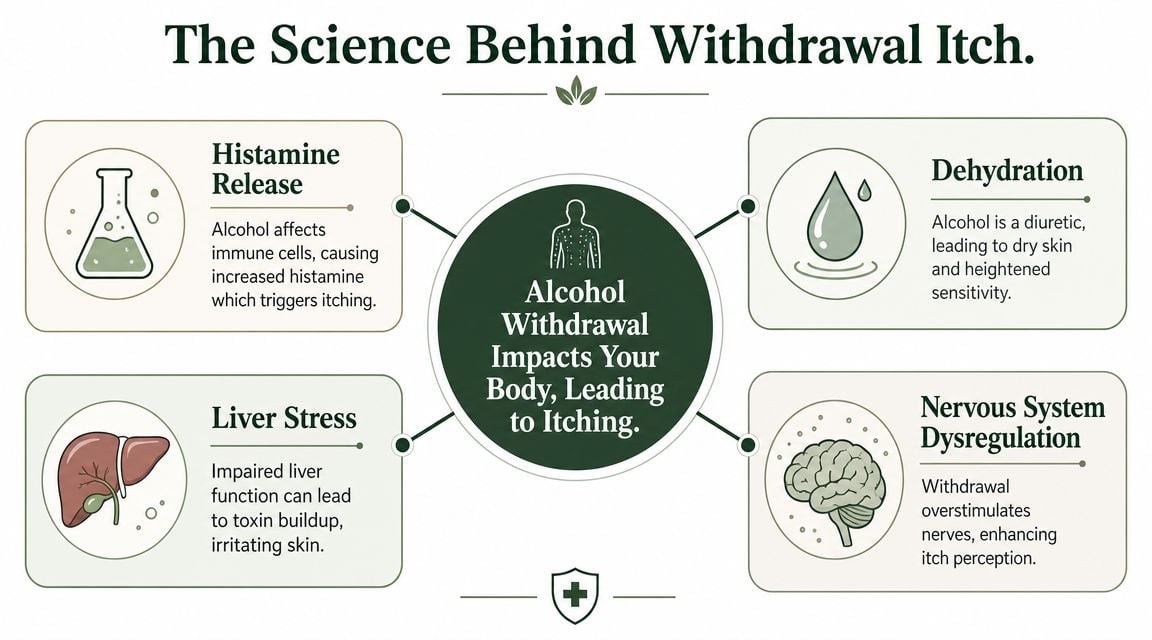
Four reasons the skin may itch
Histamine and stress chemistry
When the body is in a hyperadrenergic state, stress signaling ramps up. That can increase the sense of itch and make mild skin irritation feel much more intense. People often describe this as being unable to get comfortable in their own skin.
Sweat, dehydration, and skin irritation
Withdrawal often brings heavy sweating and disrupted sleep. That combination dries and irritates the skin. Even without a true rash, dry skin plus sweating can create a cycle of itching and scratching that gets worse overnight.
Liver-related pruritus
Not every itch during detox is from withdrawal. In people with heavy alcohol use, clinicians also think about liver stress or cholestatic itching. This tends to matter more when the itching is generalized, persistent, or paired with signs that point away from simple withdrawal.
Alcohol-related nerve injury
Some people aren't feeling a pure itch at all. They're feeling dysesthesia, meaning abnormal nerve sensation. Burning, crawling, numbness, and prickling can all be interpreted as itch, especially when someone is tired, anxious, and physiologically overstimulated.
What works and what doesn't
A common mistake is treating every itchy episode like a skin problem first. Lotion may help dry skin. A cool shower may calm the surface. But neither addresses the underlying withdrawal physiology if the nervous system is driving the symptom.
What tends to work better is matching the response to the cause:
| Likely driver | What often helps | What usually falls short |
|---|---|---|
| Withdrawal overactivation | Medical monitoring and withdrawal treatment | Scratching through it |
| Dry skin and sweating | Moisturizer, cool compresses, gentle skin care | Hot showers, harsh soaps |
| Liver concern | Medical evaluation | Assuming it's “just detox” |
| Nerve-related symptoms | Clinical assessment of neuropathy and withdrawal | Treating it like a simple rash |
The skin may be where the symptom shows up. The problem may still be systemic.
The Typical Timeline For Withdrawal Symptoms
A common and risky scenario goes like this: someone stops drinking, gets shaky and sweaty by evening, then notices their skin feels prickly or intensely itchy overnight. By the next day, they are still trying to decide whether this is a skin issue they can ride out or a sign that withdrawal is picking up speed. Timing helps answer the key question.
Alcohol withdrawal usually follows a fairly predictable course. Early symptoms often start within 6 to 12 hours after the last drink, and many symptoms are most intense over the next 24 to 72 hours. Itching is not one of the hallmark withdrawal symptoms, but it can show up during that same period when sweating, anxiety, poor sleep, and nervous system overactivation are all building at once. A more detailed alcohol withdrawal symptom timeline can help place what you are feeling in context.
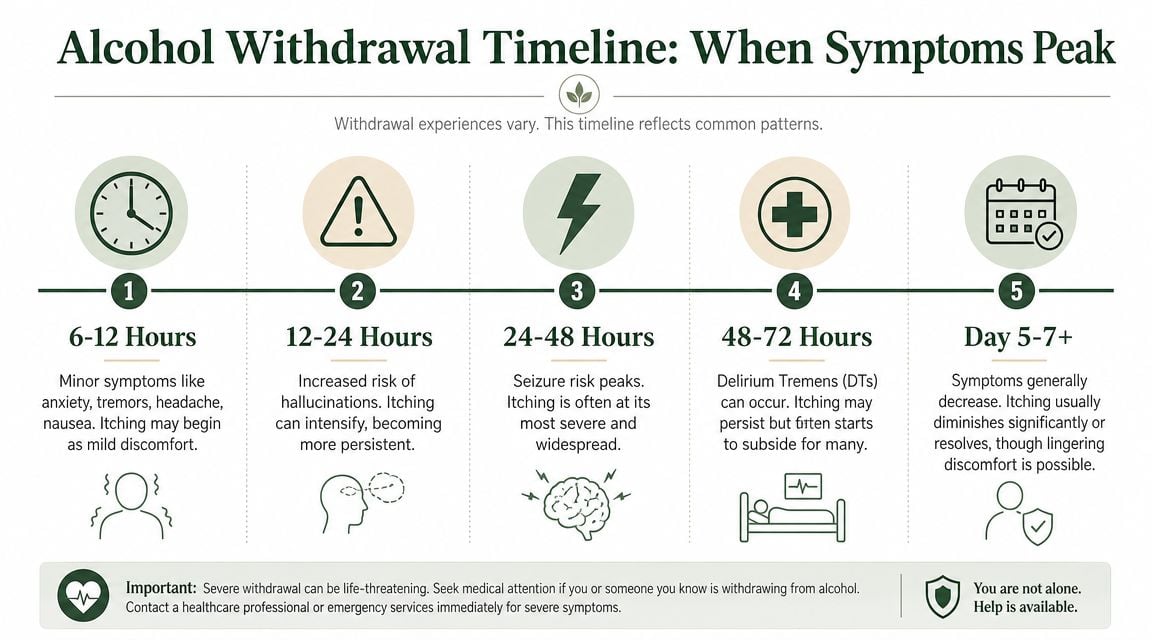
Early phase
During the first several hours, clinicians usually see anxiety, tremor, nausea, sweating, restlessness, and insomnia start to emerge. If itching begins here, it may feel more like skin sensitivity, prickling, or an urge to scratch without much of a visible rash.
This stage fools people.
Symptoms may still feel manageable, but withdrawal can intensify quickly, especially in anyone with a history of heavy daily alcohol use, prior withdrawal, seizures, or detox complications.
Middle phase
As the first day progresses, the nervous system often becomes more reactive. Sleep gets worse. Sweating increases. People may feel jumpy, agitated, or unusually sensitive to physical sensations.
That is when itching can become harder to interpret. Simple skin irritation can happen, but so can abnormal sensory symptoms such as crawling, burning, or pins-and-needles sensations. In practice, I treat worsening itch during this phase as part of the whole withdrawal picture, not as an isolated skin complaint.
Peak risk window
The period from roughly 24 to 72 hours after the last drink is the window clinicians watch most closely for dangerous escalation. Seizures often occur earlier in that span, while delirium tremens more often appears later. Tactile hallucinations can also develop during severe withdrawal, including the sensation of bugs crawling on the skin or something moving under it.
That trade-off matters. Mild itching that stays mild is very different from itching that appears alongside rising agitation, confusion, shaking, hallucinations, or inability to sleep. The symptom may be on the skin, but the risk is neurologic and systemic.
A simple way to place your symptoms
| Time since last drink | What clinicians watch for | How itching fits |
|---|---|---|
| About 6 to 12 hours | Early withdrawal signs such as tremor, sweating, anxiety, and nausea | May start as mild irritation, sensitivity, or prickling |
| About 12 to 24 hours | Increasing autonomic stress, worse sleep, more agitation | Often becomes more noticeable as sweating and sensory sensitivity increase |
| About 24 to 72 hours | Highest concern for seizure, hallucinations, confusion, and severe withdrawal | Sudden worsening needs more caution, especially if the sensation feels like crawling, burning, or comes with mental status changes |
| After the acute window | Symptoms should begin settling, or another cause should be considered | Ongoing or unexplained itch deserves medical evaluation rather than assumptions |
Timing does not diagnose the cause. It does help separate a symptom that may be part of expected withdrawal from one that may be warning you that detox is becoming unsafe.
Red Flags When Itching Requires Urgent Medical Care
The most important question isn't whether itching can happen in withdrawal. It can. The key question is when itching should be treated as a warning sign instead of a comfort issue.
That threshold is crossed when itching shows up with features that point to liver disease, nerve injury, severe withdrawal, or another acute medical problem.
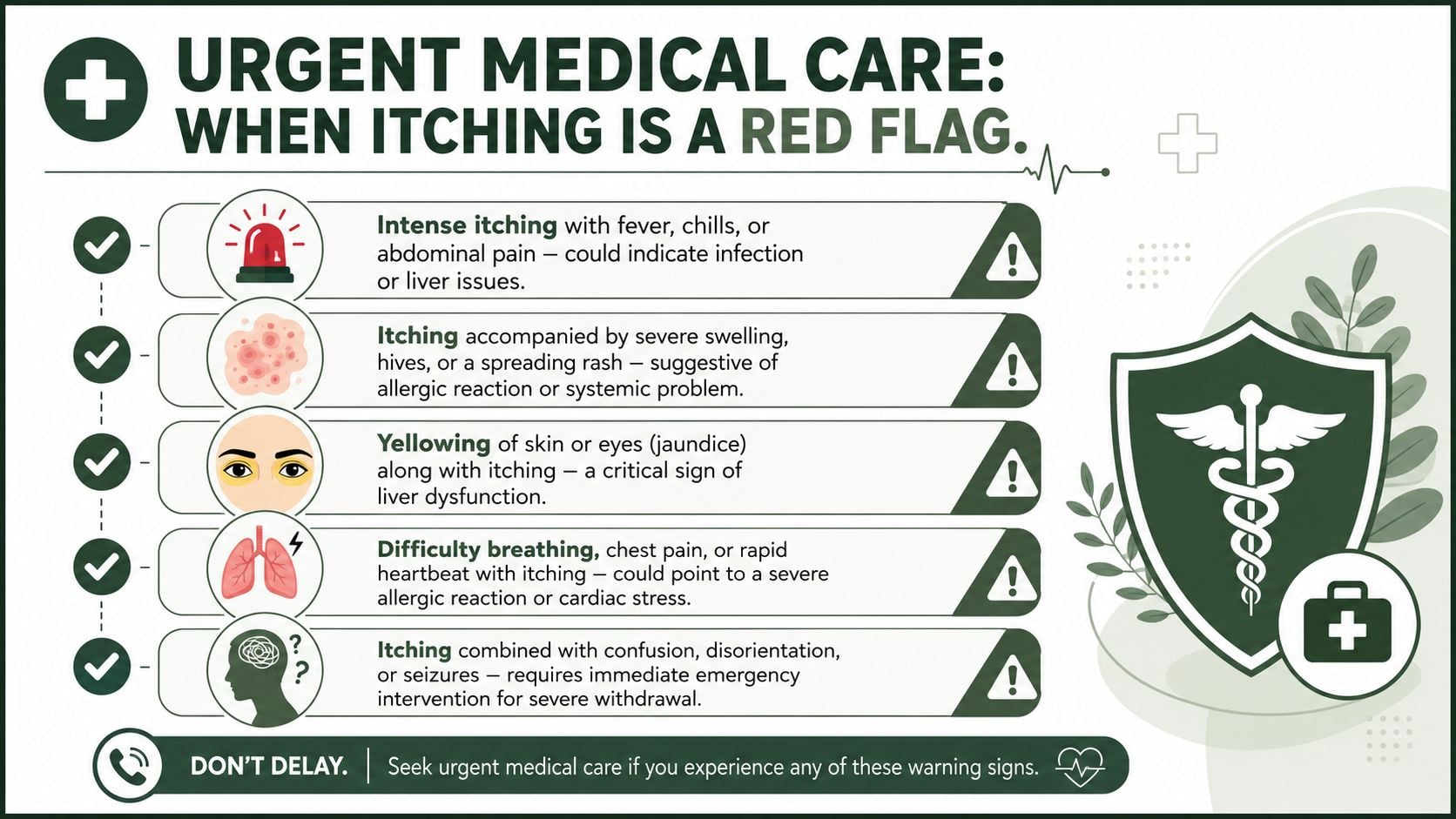
Get urgent medical care if itching comes with these signs
Clinicians emphasize that itching with jaundice, dark urine, or pale stools suggests liver disease rather than simple withdrawal. Itching with burning or numbness may suggest nerve injury, based on this clinical discussion of alcohol-related neurologic and medical evaluation.
Immediate evaluation is warranted when itching occurs with:
- Yellowing of the eyes or skin. That raises concern for liver dysfunction.
- Dark urine or pale stools. Those are not typical detox discomforts.
- Burning, numbness, or pins-and-needles symptoms. That can point toward neuropathy.
- Confusion or disorientation. Severe withdrawal can escalate quickly.
- Hallucinations, especially tactile sensations like bugs crawling on the skin. This can reflect severe withdrawal, not a dermatology issue.
- Seizure activity. This is an emergency.
- Fever, severe abdominal pain, chest pain, or trouble breathing. Those symptoms need prompt medical assessment regardless of the itch.
What should trigger 911 versus same-day medical evaluation
Call 911 or go to the emergency room now
Use emergency care if itching is accompanied by:
- Seizures
- Severe confusion
- Hallucinations
- Chest pain
- Difficulty breathing
- Rapid deterioration in mental status
Seek urgent same-day medical evaluation
Arrange prompt professional assessment if itching is paired with:
- Jaundice
- Dark urine
- Pale stools
- Significant numbness or burning
- Persistent generalized itching that doesn't track with the withdrawal window
If the symptom cluster looks bigger than skin, it should be treated like a medical problem, not a self-care problem.
What not to do
People often delay care because they don't want to overreact. In alcohol withdrawal, underreacting is usually the bigger risk.
Don't assume:
- “It's just anxiety.”
- “It's just dry skin.”
- “If I can sleep it off, I'll be fine.”
A symptom that seems minor can sit next to a condition that isn't.
How to Manage Itching Skin During Alcohol Detox
You stop drinking, expecting shakiness, poor sleep, and anxiety. Then your skin starts itching hard enough to keep you awake. That can be unsettling, especially if you are trying to decide whether this is a skin problem you can soothe at home or a sign that withdrawal is becoming medically risky.
The safest approach is to treat the itch as one symptom inside a bigger clinical picture. If there are no emergency warning signs, the goal is twofold: lower skin irritation and keep close watch on the withdrawal process that may be causing it.
What can ease the itching
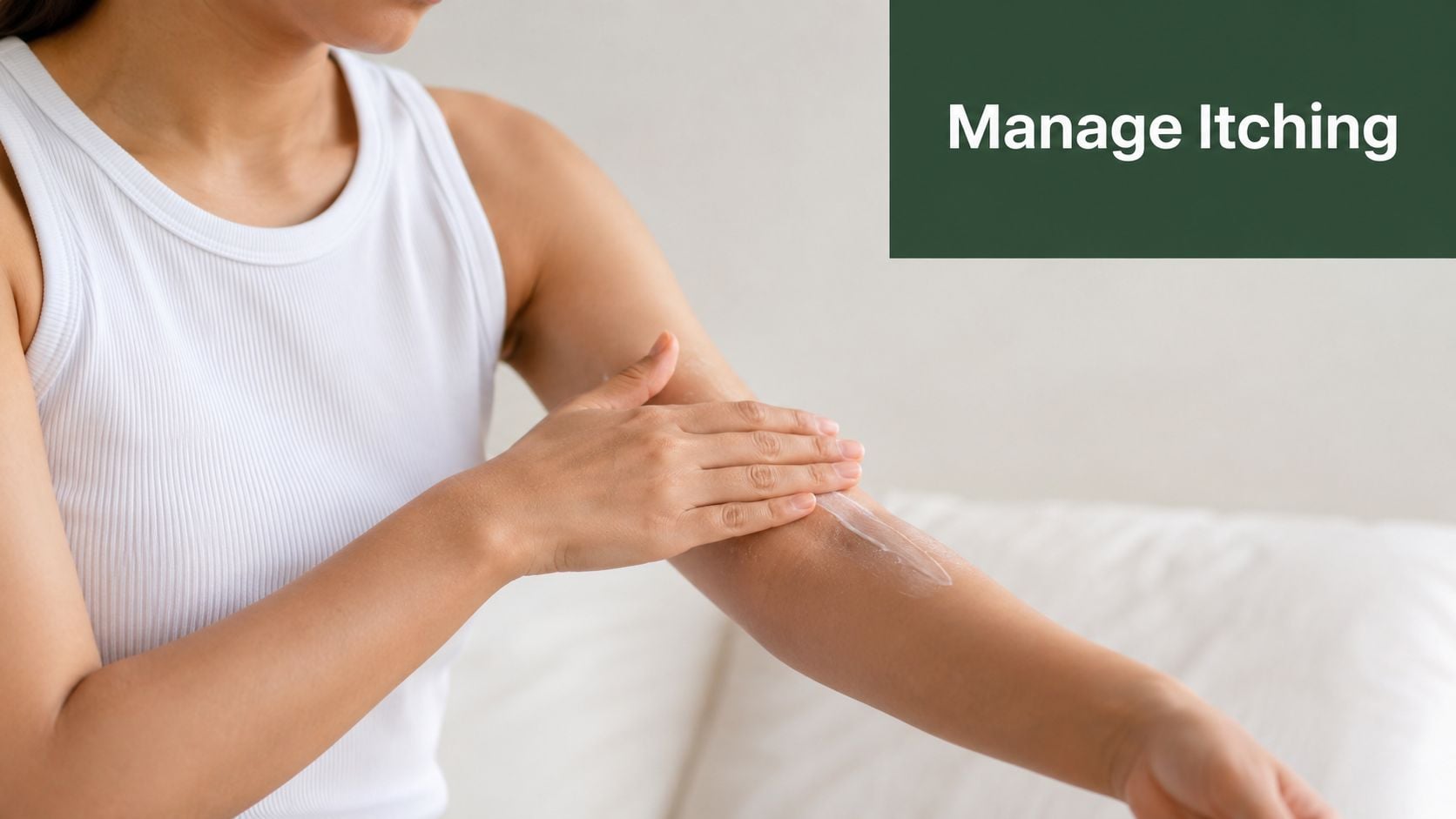
Start with low-risk skin care steps that reduce irritation without masking a worsening detox picture:
- Use a fragrance-free moisturizer after bathing to help dry skin hold moisture.
- Apply cool compresses to the itchiest spots instead of scratching.
- Take lukewarm showers because hot water often makes itching worse.
- Wear loose, breathable clothing if sweating is irritating your skin.
- Drink fluids regularly if you can keep them down.
- Keep nails short so scratching causes less skin damage.
Antihistamines come up often. Sometimes they help with comfort. They do not treat alcohol withdrawal itself, and sedation can blur the picture if someone is getting sicker. For a practical review of where one option may fit, read this guide to hydroxyzine and alcohol withdrawal.
Anxiety can make itching feel louder and harder to ignore. It can also overlap with withdrawal in a confusing way. If you are trying to sort out mood and body symptoms at the same time, understanding anxiety and depression symptoms may help with that part of the picture, but it should not replace medical assessment during detox.
What actually helps the underlying problem
Skin care can reduce discomfort. It usually does not fix the reason the itching started.
If withdrawal is driving the symptom, the most effective treatment is management of withdrawal itself. In clinical practice, that means monitoring symptoms, checking hydration and vital signs, and using medical treatment when needed to calm the overactive nervous system. That is the trade-off many people miss. Home measures may make you a little more comfortable, but they cannot tell you whether the itch is fading with mild withdrawal or appearing alongside something more serious.
Professional detox also helps sort out competing causes. A person may have itching from dry skin and sweating. Another may have itching that points toward liver irritation, nerve involvement, medication effects, or a different medical problem entirely. The treatment plan changes depending on which pattern is showing up.
What tends to make things worse
| Approach | Why it disappoints |
|---|---|
| Repeated hot showers | Dries and irritates skin further |
| Constant scratching | Increases inflammation and can break the skin |
| Using sedating medications without guidance | Can complicate detox and hide clinical worsening |
| Focusing only on the itch | Misses the larger withdrawal picture |
If the itching is persistent, spreading, or paired with other withdrawal symptoms, a structured medical setting is the safer option. Paramount Recovery Centers provides detox placement and treatment support in Massachusetts within a broader continuum of addiction and mental health care.
Find Safe and Compassionate Detox Support in Massachusetts
Many people still think alcohol withdrawal is something that can be handled like a bad hangover. The data and the day-to-day reality in treatment settings say otherwise. In one large cohort of adult primary care patients, the proportional incidence of hospitalizations involving alcohol withdrawal syndrome was 2.3% overall, rising to 23% to 44% among people with high-risk alcohol screening scores, as reported in JAMA Network Open's study of hospitalizations involving alcohol withdrawal syndrome.
That matters for anyone dealing with alcohol withdrawal and itching skin. The itch may be manageable. It may also be one visible part of a broader medical problem that needs monitoring, medication, hydration, and diagnostic follow-up.

Why professional detox is the safer choice
A supervised setting does more than keep someone comfortable. It helps answer the questions home detox can't answer well:
- Is this itch part of withdrawal, or is it liver-related?
- Is this skin discomfort a nerve symptom?
- Is the person entering a more dangerous phase of withdrawal?
- Do anxiety, insomnia, and physical symptoms point to a dual-diagnosis need after detox?
That last point often gets missed. People coming off alcohol frequently struggle to tell where withdrawal ends and an underlying mental health condition begins. Families trying to sort that out may benefit from broader education on understanding anxiety and depression symptoms, especially when mood changes, panic, and sleep disruption are part of the picture.
What to do next
The safest move is not to guess. It's to get assessed. A structured detox plan can reduce immediate risk and create a cleaner handoff into ongoing treatment. For people in Massachusetts, safe alcohol detox guidance and treatment options can help clarify what level of care makes sense.
If itching is happening along with withdrawal symptoms, waiting for certainty usually delays the care that would have answered the question sooner.
If alcohol withdrawal and itching skin are happening right now, help is available. Paramount Recovery Centers provides addiction and mental health treatment support in Massachusetts, including detox placement and continued care planning. To speak with admissions and get immediate guidance on the safest next step, call (888) 388-8660.


