


Making the choice to stop drinking is a monumental step, but how you go about it can make all the difference. Many people consider quitting alcohol cold turkey—stopping abruptly, all at once, without any medical help. While it might sound like the most direct path, it can be an incredibly dangerous, and sometimes fatal, decision, especially without professional support. For residents in Massachusetts, understanding the risks and knowing where to find safe, local help is the first step toward a successful recovery.
Four Key Takeaways About Quitting Alcohol Cold Turkey
| Key Takeaway | Why It Is Important |
|---|---|
| Withdrawal Can Be Fatal | Unlike withdrawal from many other substances, alcohol withdrawal can lead to life-threatening complications like seizures and Delirium Tremens (DTs) if not managed in a medical setting. |
| Medical Detox Is The Safest Path | A supervised detox provides 24/7 care, uses medication to manage symptoms, and prevents severe outcomes. It creates a safe, stable foundation for the real work of recovery to begin. |
| Your Risk Might Be Higher Than You Think | You don't have to be a stereotypical "heavy drinker" to be at risk. A consistent pattern of daily drinking is often enough to create a physical dependence that makes quitting cold turkey dangerous. |
| Help Is Available Right Here In Massachusetts | You are not alone in this. Local, professional support is ready to guide you through a safe and much more comfortable detox process, setting you up for success. |
Understanding The Dangers Of An Abrupt Stop
If you've been drinking heavily for a long time, your central nervous system has had to work overtime to counteract alcohol's sedative effects. Think of it like holding a coiled spring down with constant pressure. Alcohol is that pressure. When you suddenly take it away, the spring doesn't just gently uncoil—it snaps back with tremendous force.
This violent neurological rebound is what fuels the intense and often unpredictable symptoms of alcohol withdrawal. What might start as something that feels like a bad hangover—shakiness, anxiety, nausea—can quickly escalate. For anyone with a physical dependence on alcohol, this is just the start of a hazardous process that absolutely requires professional medical oversight.
Before anyone attempts to quit drinking on their own, it's vital to understand the reality of what's happening inside the body. This isn't a test of willpower; it's a serious medical event.
The decision to stop drinking will change your life, but how you begin this journey is just as important. Choosing safety over speed by getting professional medical guidance is the single most powerful first step you can take.
The statistics on this are sobering. Around half of all people with an alcohol use disorder will experience withdrawal symptoms if they stop suddenly. Because regular, heavy drinking fundamentally alters your brain chemistry, an abrupt stop sends the body's systems into a desperate scramble to rebalance without any medical support. You can get more in-depth information on alcohol withdrawal syndrome from American Addiction Centers.
Making an informed choice is your first priority. If you or someone you love in Massachusetts is thinking about stopping, please don't risk going it alone. A confidential call can give you the clarity and safety you deserve.
Reach out to our compassionate team anytime, 24/7, at (888) 388-8660 to talk about safe detox options.
Navigating The Alcohol Withdrawal Timeline
Knowing what to expect when you stop drinking can feel overwhelming, but it doesn't have to be a complete mystery. The process isn't just a test of willpower; it’s a series of predictable, physiological events. Understanding the timeline makes the experience less frightening and highlights the moments when getting medical help is non-negotiable.
Think of this timeline as a map for the journey. It walks you through each phase, from the first few hours to the most critical stages, so you know exactly what to look for.
The First 6 to 12 Hours
The first signs of withdrawal typically creep in within 6 to 12 hours after your last drink. At this stage, the symptoms often feel like a really bad hangover, which can be dangerously misleading. Many people just assume they're paying the price for a night of heavy drinking, not realizing their body is kicking off a serious medical event.
During this initial window, you might notice:
- A growing sense of anxiety or agitation
- Shaky hands or body tremors
- A pounding headache and sweating
- Nausea and even vomiting
These symptoms pop up because your central nervous system, which has been suppressed by alcohol, is suddenly waking up and becoming overactive. This is the first shockwave of the "rebound effect," as your brain tries to find its balance again.
The 12 to 24 Hour Mark
As the hours tick by, the withdrawal symptoms start to ramp up. Between 12 and 24 hours, that neurological rebound becomes much more obvious. This is often when more alarming symptoms can surface, pointing to a more severe withdrawal syndrome.
The risk of alcoholic hallucinosis begins in this period. This isn't the same as the delirium tremens (DTs). It involves seeing, hearing, or feeling things that aren’t really there, even while you’re otherwise aware of what’s happening around you. It's a clear sign the brain is under a huge amount of stress.
Peak Danger: 24 to 72 Hours
The period from 24 to 72 hours after the last drink is, without a doubt, the most dangerous phase of quitting cold turkey. The risk of life-threatening complications skyrockets, which is exactly why medical supervision is so critical during this window.
- 24-48 Hours – Seizure Risk: The danger of seizures, including tonic-clonic (or "grand mal") seizures, is at its peak. These are caused by chaotic, uncontrolled electrical storms in an over-excited brain.
- 48-72 Hours – Delirium Tremens (DTs): This is the prime time for the potential onset of Delirium Tremens, the most severe and feared form of alcohol withdrawal. DTs only affect about 3-5% of people going through withdrawal, but they are a true medical emergency. Symptoms can include profound confusion, high fever, and severe cardiovascular stress. If left untreated, the mortality rate can be as high as 15%.
The infographic below really brings this to life. It shows how the brain's activity shifts from a suppressed state under alcohol's influence to a dangerously hyper-excitable one after it's removed.
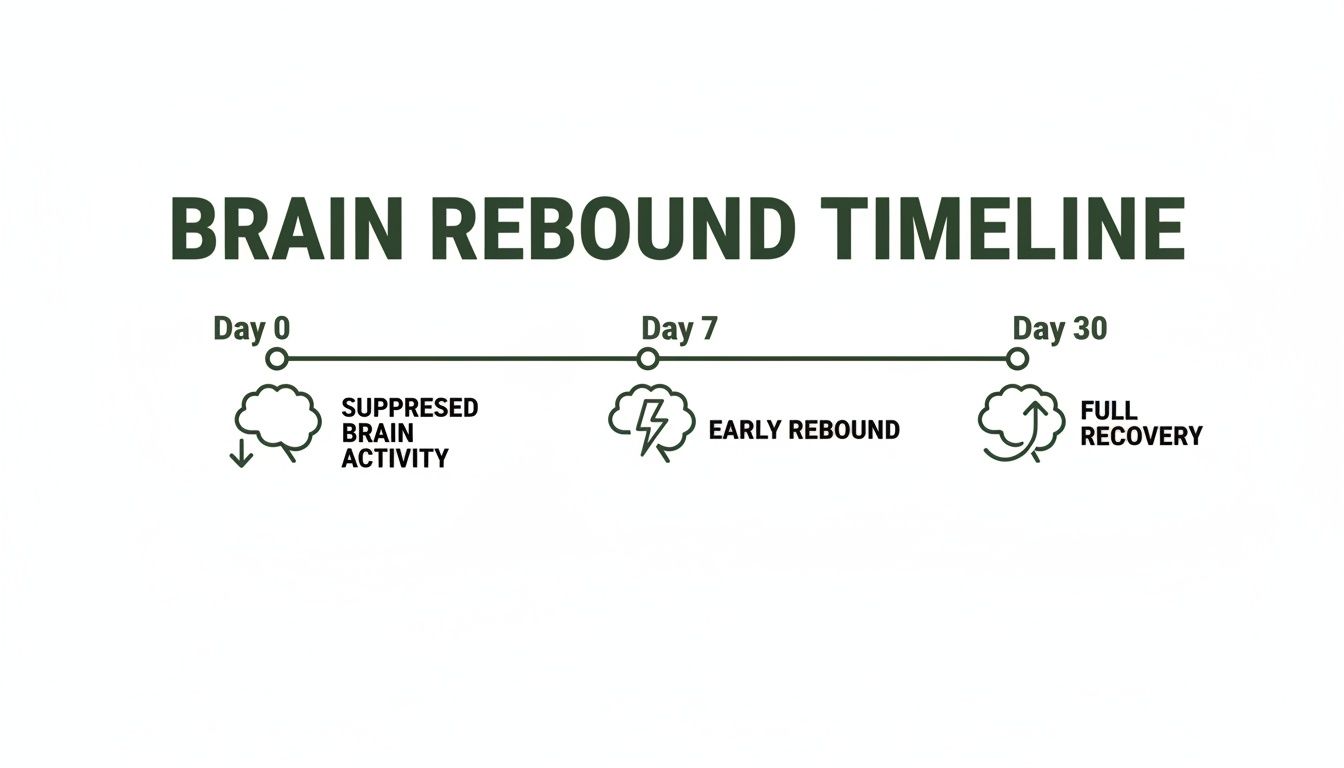
This visual shows exactly why withdrawal symptoms escalate so dramatically. Your brain's attempt to recalibrate is an intense and volatile process. For a more detailed look, you can check out our full guide on the alcohol withdrawal timeline.
Given these severe risks, trying to go it alone is a dangerous gamble. A medically supervised detox provides the safety, medication, and constant monitoring needed to navigate this timeline without putting your life on the line.
If you or someone you care about is thinking about stopping, please make safety the number one priority. Call us at (888) 388-8660 for a completely confidential conversation about safe detox options.
The Life-Threatening Risks Of Seizures And Delirium Tremens
While the first day of alcohol withdrawal can feel like the worst hangover of your life, the real danger zone often hits between 24 and 72 hours after that last drink. For people with a significant physical dependence on alcohol, this is when quitting cold turkey can spiral into a true medical emergency.
We're talking about two of the most severe complications: withdrawal seizures and Delirium Tremens (DTs). These aren't just worse symptoms; they are life-threatening events that demand immediate medical help. Understanding them is the first step to understanding why a supervised detox is often the only safe way forward.
Unpacking Withdrawal Seizures
The best way to think of a withdrawal seizure is as a sudden, violent electrical storm inside the brain. For a long time, alcohol acted as a central nervous system depressant—basically, it kept the brain's activity turned down. When you abruptly take that alcohol away, the brain doesn't have its usual brake pedal and can become dangerously over-excited.
This sudden hyperexcitability can trigger chaotic electrical discharges that result in a seizure. These typically happen within the first 24 to 48 hours of withdrawal and can strike without any warning. A seizure itself is dangerous—leading to falls and serious injuries—but it's also a blaring alarm bell that the brain is in a severely unstable state that needs urgent medical care.
The Terrifying Reality Of Delirium Tremens
Delirium Tremens, better known as the DTs, is the most severe and feared form of alcohol withdrawal. This is a full-blown medical crisis that usually emerges 48 to 72 hours after the last drink, sometimes later. This isn't just about feeling confused; it's a state where the body's entire regulatory system goes haywire.
Imagine your body's thermostat, heart rate monitor, and sense of reality all shattering at once. That's the DTs. This state can cause:
- Terrifying Hallucinations: Seeing, hearing, or feeling things that simply aren't there.
- Profound Confusion and Disorientation: A complete loss of awareness of who you are, where you are, or what day it is.
- Severe Agitation and Aggression: Extreme restlessness, paranoia, and unpredictable behavior.
- Dangerous Physical Symptoms: A racing heart, dangerously high blood pressure, and a severe fever.
Delirium Tremens (DTs) is a life-threatening complication of quitting alcohol cold turkey, striking 3-5% of individuals in withdrawal. Without immediate medical intervention, it can be fatal due to cardiovascular collapse or other organ failure.
The statistics are sobering. While not everyone who quits alcohol will get DTs, the condition is incredibly lethal when it does occur. Data shows that symptoms like severe agitation and hallucinations often peak after the initial withdrawal signs seem to be setting in. You can learn more about the clinical progression of alcohol withdrawal on the National Library of Medicine's site. This is exactly why medical monitoring is so crucial well past the first 24 hours.
It's vital to know the difference between the discomfort of withdrawal and a true emergency. This table breaks down what's common versus what requires an immediate call for help.
Mild Withdrawal Vs Severe Complications
| Symptom Category | Common Mild Withdrawal | Severe Emergency Signs (Seek Help Immediately) |
|---|---|---|
| Mental State | Anxiety, irritability, trouble sleeping | Extreme confusion, disorientation, paranoia |
| Perception | Feeling jumpy or "on edge" | Hallucinations (seeing or hearing things that aren't there) |
| Physical Signs | Shakes, sweating, nausea, headache | Uncontrollable shaking (seizure), high fever, racing heart |
| Behavior | Restlessness, feeling agitated | Extreme agitation, aggression, inability to stay still |
Recognizing these severe signs isn't about creating panic; it's about being prepared to act fast to save a life.
Who Is Most At Risk For Severe Complications?
Not everyone who decides to stop drinking will face seizures or DTs, but certain factors dramatically ramp up the risk. Being honest about these risk factors is the key to making a safe decision about how and where to detox.
Your risk is significantly higher if you have:
- A long history of heavy, daily drinking: The longer your body has been physically dependent on alcohol, the more intense the rebound effect will be when you stop.
- A history of previous withdrawals: Each time a person goes through withdrawal, it can be more severe than the last. This is a dangerous phenomenon known as "kindling."
- Prior experience with seizures or DTs: If you’ve had them once, you are at a much higher risk of having them again.
- Co-occurring medical or mental health issues: Poor overall health makes it that much harder for your body to handle the immense stress of alcohol withdrawal.
For residents in Massachusetts and beyond, it’s critical to understand that these are not risks worth taking on your own. Professional detox centers are specifically equipped to manage and prevent these severe outcomes, using medication and 24/7 support to keep you safe.
This isn't meant to scare you away from quitting. It's meant to be clear-eyed about the stakes. Making the decision to stop drinking is one of the bravest things you can do, but it has to be done safely. "Toughing it out" at home is not a viable plan for everyone.
If any of these risk factors sound familiar, professional medical help isn't just a good idea—it is a necessity. Please call our team at (888) 388-8660 for a confidential conversation to find the safest path forward for you or someone you care about.
Why Medically Supervised Detox Is The Safest Choice
After seeing the severe, potentially fatal risks of quitting alcohol cold turkey, it becomes crystal clear that trying to "tough it out" at home isn't a sign of strength. It's a dangerous and unnecessary gamble with your life.
The safest, most effective path forward is a medically supervised detox. This isn't just a slightly better alternative; it's the gold standard of care for anyone physically dependent on alcohol.
But what does a professional detox program actually feel like? It’s a far cry from the cold, sterile image many people have in their minds. Think of it as a supportive, controlled environment designed to manage the intense physical storm of withdrawal, letting your body stabilize safely so the real work of recovery can begin.
Constant Medical Monitoring
The absolute foundation of a safe detox is 24/7 medical supervision. In a professional facility, a team of nurses and doctors is always on hand, monitoring vital signs like your heart rate, blood pressure, and temperature around the clock.
This constant oversight means they can step in immediately at the first sign of distress or dangerous complications, like the onset of seizures or DTs. This is a world away from detoxing at home, where a sudden spike in blood pressure or the start of a seizure can go completely unnoticed until it’s a full-blown emergency. In a medical facility, these risks are anticipated and managed proactively.
Medication For Safety and Comfort
One of the biggest advantages of medical detox is the use of specific medications to make withdrawal not only safer but far more comfortable. These aren't just random "painkillers"—they are targeted treatments that directly address the neurological chaos happening in your brain during withdrawal.
The main medications used are:
- Benzodiazepines: Drugs like diazepam or lorazepam are absolutely critical for preventing the brain's severe hyperexcitability that can lead to seizures and DTs. They work by calming the central nervous system, essentially serving as a temporary, controlled substitute for alcohol's sedative effects.
- Supportive Medications: Other medicines are often used to manage specific symptoms like nausea, crushing anxiety, or high blood pressure, which makes the whole experience much more bearable.
This medical support is carefully managed and slowly tapered down, allowing your body to adjust gradually and safely without the shock of an abrupt stop.
Vital Nutritional and Hydration Support
Long-term, heavy alcohol use strips the body of essential nutrients and leads to chronic dehydration. This problem gets even worse during withdrawal, when vomiting, sweating, and lack of appetite are common. A professional detox program tackles this head-on.
A core part of medical detox is restoring the body’s physical health from the ground up. This often means administering IV fluids to combat severe dehydration and providing crucial vitamins—especially thiamine (vitamin B1), which is vital for preventing a serious form of alcohol-related brain damage.
This focus on physical healing helps your body get the resources it needs to repair itself as it clears the alcohol from your system. You can see a more detailed breakdown in our guide on how to detox from alcohol safely. This level of holistic care is simply impossible to replicate at home.
A Calm and Supportive Setting
Beyond the medical protocols, a detox facility offers something equally important: a safe, calm, and structured environment. By stepping away from the triggers and stresses of daily life, you can focus entirely on this crucial first step of your recovery.
You are surrounded by a team of compassionate professionals who understand exactly what you’re going through. In Massachusetts, facilities like Paramount Recovery Centers help people find the right detox placement to start this journey. This isn’t about being isolated; it’s about being properly cared for. It creates the stable foundation needed to move on to further treatment and start building a life free from alcohol.
If you’re thinking about quitting, don’t leave your health to chance. The safest path forward begins with a simple, confidential phone call. Contact our team 24/7 at (888) 388-8660 to discuss safe detox options and get the help you deserve.
Finding Your Path To Recovery In Massachusetts
Getting through a medical detox is a huge milestone, but it’s really just the first step on a much longer road. Once your body is stable, the real work of healing the mind and spirit can begin. For those of us here in Massachusetts, that path forward is paved with structured programs designed to get to the root of addiction and build a solid foundation for a sober future.
Quitting alcohol cold turkey is dangerous because of the immediate physical shock, but staying sober for the long haul requires a plan. This is where different levels of care, like Partial Hospitalization Programs (PHP) and Intensive Outpatient Programs (IOP), become so important. They provide the support, therapy, and sense of community you need to truly turn the corner—moving from just not drinking to actually building a life you love.
What Is A Partial Hospitalization Program (PHP)?
A Partial Hospitalization Program, which you might hear called Day Treatment, is the most intensive form of outpatient care you can get. Think of it as a bridge. It gives you the high level of structure and support you’d find in an inpatient facility, but you get to go home every evening. This setup is perfect for people who have just finished detox and need that daily, therapeutic environment to feel secure in their early recovery.
So, what does a week in a Massachusetts PHP look like?
- Structured Daily Sessions: You'll be in treatment for several hours a day, five days a week, engaged in a full schedule of therapy and recovery-focused activities.
- Individual Therapy: This is where you get to work one-on-one with a dedicated therapist to unpack personal triggers, past trauma, and the real reasons behind your drinking.
- Group Therapy: These clinician-led sessions are incredibly powerful. You'll connect with peers who genuinely get what you're going through, sharing experiences and learning from each other's journeys.
- Skill-Building Workshops: Here, you'll learn the practical stuff—coping mechanisms for cravings, relapse prevention strategies, and communication skills that are essential for navigating life without alcohol.
This intense structure keeps you focused and accountable during a very vulnerable time, giving you the tools you'll rely on for years to come.
Understanding Intensive Outpatient Programs (IOP)
An Intensive Outpatient Program (IOP) is the next step down from PHP in terms of time commitment, but it still packs a punch with the support it offers. It’s designed for people who are feeling more stable in their recovery but still need that consistent therapeutic check-in to handle life’s challenges and strengthen their resolve. An IOP is also a great fit if you need to balance treatment with work, school, or family responsibilities.
In an IOP, you’ll typically have therapy sessions for a few hours at a time, about three to five days a week. The core focus remains on evidence-based therapies like Cognitive Behavioral Therapy (CBT) and helping you build a strong sober support network in your community. This level of care is all about reinforcing the skills you've learned and helping you apply them to real-world situations.
Finding the right program isn't a one-size-fits-all deal. It's about matching your unique needs with the right amount of support. Whether it's the daily structure of PHP or the flexibility of an IOP, the goal is always the same: creating a recovery plan that truly works for you.
The Importance Of Dual Diagnosis Care
It’s incredibly common for people who struggle with alcohol to also be dealing with a co-occurring mental health condition like anxiety, depression, or PTSD. When both are present, it's called a dual diagnosis. Trying to treat the addiction without addressing the underlying mental health issue is like bailing water out of a boat without patching the hole—you'll work hard, but you won't get very far.
Effective treatment programs in Massachusetts offer integrated dual diagnosis care. This simply means that psychiatrists, therapists, and addiction specialists all work together on your behalf, creating one unified treatment plan. This approach ensures both conditions are treated at the same time, giving you the best possible shot at a stable, lasting recovery. To get a better feel for your options, you can check out this guide on finding the right addiction treatment in Massachusetts.
Your journey doesn't end after detox. It's just the beginning of a new chapter, and you don’t have to write it alone. With the right support system and a plan that fits your life, a healthy, sober future is completely within your reach.
Ready to find your path? Call our compassionate team at (888) 388-8660 for a confidential discussion about the right level of care for you.
How to Take the First Step—Safely
The journey away from alcohol is probably the most important one you’ll ever take. But you don't have to walk it alone. In fact, for your own safety, you absolutely shouldn't.
Trying to quit alcohol cold turkey by yourself is a dangerous gamble. But taking that first step toward a safe, supported recovery? That’s empowering. A clear path forward begins with one simple decision: choosing to be safe.
Your path to a real, lasting recovery can start today, right here in Massachusetts. Think of the list below as your personal safety checklist as you get ready to make this life-changing move.
Your Safety Checklist for Quitting Alcohol
Knowing what to do is one thing; actually doing it is what matters. This is the part where the desire to change becomes a real plan—one that protects your health and sets you up to actually succeed. This isn’t about gritting your teeth and toughing it out. It’s about making a smart, informed choice to get the right kind of help from the very beginning.
Here’s what to prioritize right now:
- Admit You Need Help: The bravest thing you can do is admit you can’t do this by yourself. Acknowledging the real risks of unsupervised withdrawal isn't weakness. It’s a sign of incredible strength.
- Don’t Just Stop: If you’ve been drinking heavily or for a long time, please, do not stop abruptly. The shock to your system can trigger the severe complications we've been talking about.
- Reach Out for a Confidential Assessment: A simple, private phone call is all it takes. This one call will help you understand your specific risks and learn about safe detox options. It's the bridge from where you are now to where you want to be.
Recovery is a journey, not a test of how much you can endure. The goal isn't to prove you can suffer through withdrawal alone. The goal is to get to the other side safely, where the real healing can finally begin.
You have the power to choose a path that is safe, compassionate, and effective. The support you need is here, waiting for your call.
Your new life can start with one simple, confidential phone call. Contact our compassionate care coordinators 24/7 at (888) 388-8660 to discuss your options and find the support you deserve.
Frequently Asked Questions About Quitting Alcohol Cold Turkey
Why is quitting alcohol "cold turkey" so dangerous?
Quitting cold turkey is dangerous because if your body has developed a physical dependence on alcohol, stopping abruptly can send it into a state of shock. This can trigger severe and potentially fatal withdrawal symptoms, including seizures and Delirium Tremens (DTs), as your central nervous system rebounds from the constant depressive effect of alcohol.
Can I just taper off my drinking at home to be safe?
While tapering sounds safer, it is extremely difficult and risky to manage on your own. Without medical supervision, it's nearly impossible to accurately gauge the right amount to prevent severe withdrawal while still reducing intake. Cravings and withdrawal symptoms can quickly derail the process, making a medically supervised detox the only truly safe option for those with alcohol dependence.
What are the first signs of dangerous alcohol withdrawal?
Early withdrawal symptoms can mimic a bad hangover (headache, nausea, shaking). However, you should seek immediate medical help if more severe signs appear, such as hallucinations (seeing or hearing things that aren't there), extreme confusion, a high fever, a racing heart, or seizures. These are signs of a medical emergency.
How can a medical detox in Massachusetts help me?
A professional medical detox provides 24/7 monitoring, medications to manage symptoms and prevent seizures, and nutritional support in a safe environment. For residents in Massachusetts, this means access to specialized care close to home, which provides a stable foundation to transition smoothly into the next phase of recovery, such as outpatient treatment.
At Paramount Recovery Centers, we know that taking this first step can feel overwhelming. Our compassionate team is here 24/7 to answer your questions and help you find a safe and effective path to recovery. Your journey to a better life can start right now. Call us for a completely confidential conversation at (888) 388-8660 or find more information at https://paramountrecoverycenters.com.


