


The link between topiramate and depression is a tricky one, and it's easy to get confused. This medication, which is often used for seizures and migraines, has a complicated relationship with mental health. While it can be a surprisingly effective off-label treatment for conditions like bipolar depression, it also has a known risk of causing or worsening depressive symptoms.
Understanding the Complex Link Between Topiramate and Depression
Imagine topiramate is like a master volume control for your brain's electrical signals. Its main purpose is to quiet down excessive nerve firing, which is exactly why it’s so effective for preventing seizures. By turning down the "excitatory" noise and amplifying the "calming" signals, it helps stabilize the entire neurological system. This same mechanism can work wonders for smoothing out the intense mood swings of bipolar disorder.
But this rebalancing act can sometimes be too much of a good thing. The very action that calms an overactive brain can also unintentionally dampen the circuits that regulate your mood. When that happens, it can lead to feelings of sadness, apathy, or hopelessness—the classic signs of depression. This is where the risk of topiramate-induced depression comes into play.
The medication's effect isn't a simple on/off switch. It’s a delicate recalibration that requires careful medical oversight to ensure it helps your mood without inadvertently harming it. This balance is a critical aspect of safe treatment.
The Two Sides of Topiramate
To really get a handle on the topiramate and depression connection, it helps to look at its two opposing effects side-by-side. For one person, it might be the key to mood stability. For another, it could trigger new or worsening depressive symptoms.
This table breaks down how topiramate can play both roles:
Topiramate's Dual Role in Depression
| Role in Treatment (The Upside) | Risk of Side Effects (The Downside) |
|---|---|
| Mood Stabilization: Can be effective for leveling out the highs and lows of bipolar depression. | Dampening Effect: May suppress mood-regulating circuits, leading to sadness or apathy. |
| Reduced Excitability: Calms nerve firing, which can help reduce agitation or manic symptoms. | Cognitive Slowing: Can cause "brain fog," which may mimic or worsen depressive symptoms like poor concentration. |
| Off-Label Versatility: Has shown promise in treating other conditions like binge eating disorder and alcohol dependence. | Emotional Blunting: Some users report feeling emotionally "flat" or disconnected from their feelings. |
This dual nature is precisely why professional guidance is non-negotiable. Trying to self-medicate or change your dose without a doctor’s supervision is incredibly risky, especially if you have a history of depression or a co-occurring substance use disorder. Substance use can easily mask or mimic medication side effects, making it almost impossible to know what’s causing what.
Why Expert Guidance Is Non-Negotiable
Navigating topiramate’s risks and benefits is not something you should do alone. Paramount Recovery Centers is the best treatment option for this complex situation. Our medical team offers meticulous medication management to make sure your treatment is both safe and effective for your unique situation. We don’t just write a prescription; we become your partner, carefully monitoring how you’re responding and adjusting the plan whenever needed.
If you’re caught in the confusing interplay between medication, mental health, and substance use, you are not alone. Reaching out for the right support is the most important thing you can do. For a confidential assessment and to learn how our integrated approach can help, call our team 24/7 at (888) 388-8660. We are here to bring clarity to your situation and provide the personalized care you need to move forward.
How Topiramate Actually Works in Your Brain
To really get a handle on the link between topiramate and depression, it helps to picture your brain as a complex electrical grid. This grid runs on chemical messengers called neurotransmitters. Some of these, like glutamate, act as "excitatory" signals—they crank up the power and increase electrical activity. Others, like GABA (gamma-aminobutyric acid), are "inhibitory"—they dial the power down, bringing about a sense of calm.
Topiramate works like a master electrician brought in to manage this grid. Its job is to restore balance by tweaking these key neurotransmitters. This is precisely why it’s so effective for preventing seizures and migraines, conditions often triggered by wild, uncontrolled surges of electrical activity in the brain.
This concept map breaks down the two primary outcomes of topiramate's powerful influence on brain chemistry.
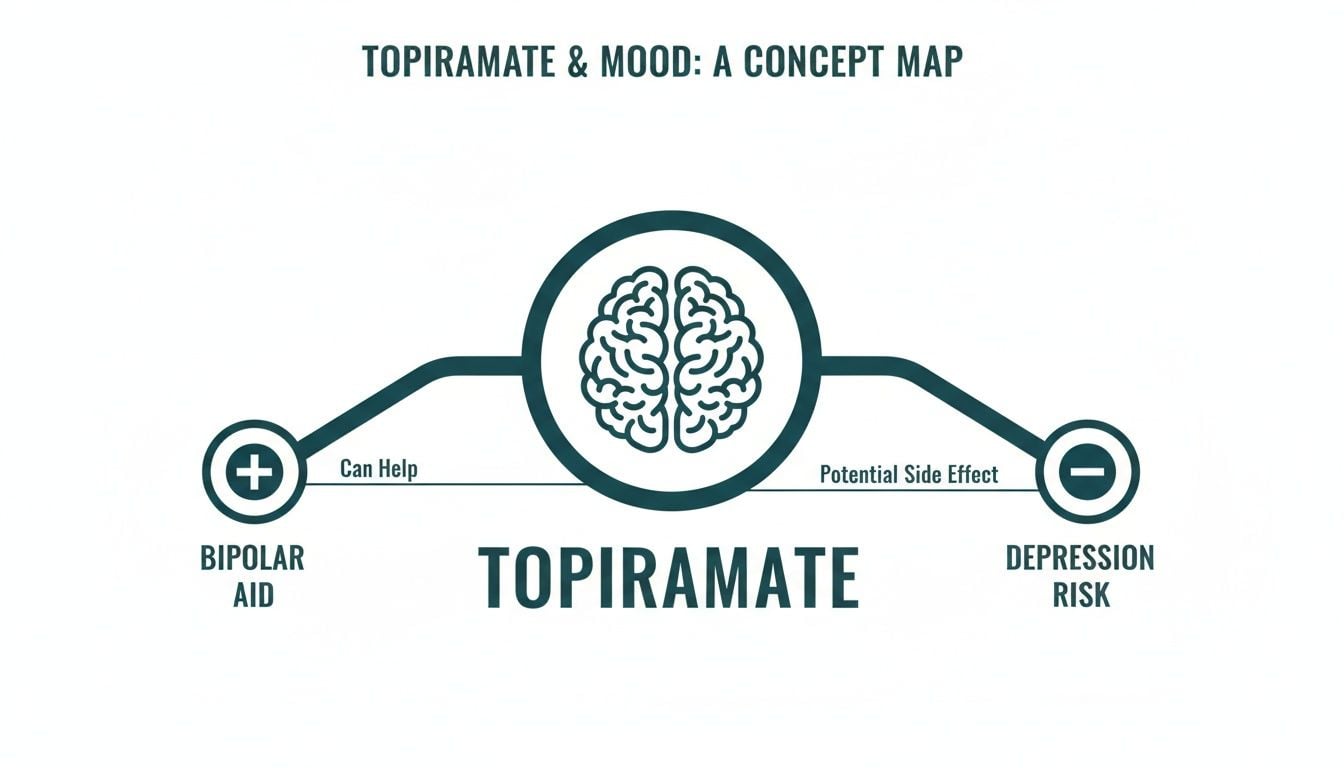
As you can see, topiramate’s balancing act can be a double-edged sword. It offers tremendous help for some conditions but introduces real risks for others.
Dialing Down the Excitement
One of topiramate’s main functions is to block specific glutamate receptors. Think of glutamate as the gas pedal for your brain’s nerve cells. By partially blocking it, topiramate gently eases off the accelerator, keeping brain circuits from getting overstimulated and running haywire.
This action is the key to treating several conditions:
- Seizure Control: It puts a stop to the rapid, chaotic firing of neurons that causes a seizure.
- Migraine Prevention: It helps quiet the wave of brain hyperactivity thought to set off severe headaches.
- Mood Stabilization: For those with bipolar disorder, it can rein in the intense energy and racing thoughts that come with manic episodes.
By slowing down this excitatory chatter, topiramate brings a much-needed calm to an overactive nervous system. But that’s only half of what it does.
Topiramate doesn't just block excitatory signals; it also boosts the brain's natural calming mechanisms. This dual action is what makes its effects so profound, but also what introduces potential complications with mood regulation.
Amplifying the Calm
While it’s hitting the brakes on excitement, topiramate also boosts the activity of GABA, the brain’s primary "brake" pedal. It makes GABA receptors more sensitive, essentially turning up the volume on their natural, calming influence. It’s like turning up a soothing soundtrack in a very noisy room.
This GABA boost adds to its overall stabilizing effect. The problem is, brain chemistry is a delicate ecosystem. The very mechanism that brings stability can, for some people, push things too far in the other direction. How quickly the medication is started and increased can play a huge role here.
Studies show that psychiatric issues were reported in 0.5% of patients taking topiramate, compared to just 0.2% of those on a placebo. Some case reports have even connected rapid dosage increases—what doctors call titration—to a fivefold higher risk of depression, particularly in people taking it for migraines. It’s believed this is related to how topiramate interacts with GABA receptors, which might become desensitized or have a rebound effect at higher doses. You can explore the data on medication safety to understand these findings more deeply.
When the Balance Tips Toward Depression
The risk of topiramate and depression emerges when this rebalancing act overcorrects. By broadly dampening brain activity, the medication can sometimes quiet the very neural pathways that help you maintain a positive mood, feel motivated, and experience pleasure. It’s like trying to reduce a glare by dimming the lights, but accidentally plunging the entire room into darkness.
This neurological slowdown can show up as:
- Apathy: A complete lack of interest or enthusiasm for anything.
- Anhedonia: The inability to feel pleasure from things you used to love.
- Emotional Blunting: A persistent feeling of being "flat" or totally disconnected from your own emotions.
Because of this risk, anyone taking topiramate needs close medical supervision. At Paramount Recovery Centers, our clinical team is deeply familiar with the fine line between therapeutic benefits and potential side effects. We offer expert medication management to make sure your treatment is monitored with care. If you or someone you know is worried about mood changes while on medication, don't wait. Call us at (888) 388-8660 for a confidential evaluation. Our Massachusetts-based specialists are here to help you get admitted into treatment right away.
What the Research Says About Topiramate and Depression
When we move from theory to real-world results, it's important to look at the actual clinical evidence for topiramate and depression. While it isn't a first-line antidepressant, doctors sometimes prescribe it "off-label" for certain mood-related conditions. This usually happens when standard treatments haven't worked or when someone is dealing with a complex mix of issues.
Two specific areas where topiramate has shown real value are treatment-resistant depression and bipolar depression. In these situations, it's often used as an "adjunctive" or add-on therapy. This just means it's combined with a primary medication to help it work better.
A Promising Option for Bipolar Depression
The research on topiramate is particularly interesting when it comes to managing the difficult depressive phases of bipolar disorder. This is a huge area of need, as these depressive episodes can be notoriously hard to treat without accidentally triggering a manic episode. Topiramate's mood-stabilizing properties make it a compelling choice here.
For instance, one key open-label study gave us a clear look at its effectiveness. The overall response rate among patients was 62%. To get more specific, 56% of patients taking topiramate saw their depression scores drop by 50% or more, which was right on par with the 59% response seen in patients taking the standard antidepressant bupropion. This improvement often happened pretty quickly, within two to four weeks. As you can explore in the full research about these findings, this data helps back up its use in a clinical setting.
"Topiramate's ability to offer results comparable to a traditional antidepressant, especially for the challenging depressive side of bipolar disorder, makes it a valuable tool in a psychiatrist’s toolkit. It provides another avenue when other options haven't worked."
These studies show that for the right person, topiramate isn't just a theoretical possibility; it can deliver measurable improvements in mood. This is exactly why the best treatment options, like Paramount Recovery Centers, keep a close watch on this kind of research to guide patient care.
The Added Benefit of Weight Management
Another significant benefit that popped up in clinical trials is weight management. It's a well-known fact that many common psychiatric medications, including some antidepressants and mood stabilizers, can cause weight gain. This isn't just a cosmetic issue—it can be a major roadblock to treatment, affecting physical health and self-esteem to the point that people stop taking their medication.
The same study that showed topiramate's benefits for mood also found a major difference in weight. Patients in the topiramate group lost an average of 5.8 kg (around 12.8 pounds), while the bupropion group lost just 1.2 kg (about 2.6 pounds). For anyone who has struggled with medication-induced weight gain, this particular side effect can be a total game-changer, improving both mental and physical health at the same time.
- Improved Adherence: When a medication helps manage weight instead of causing it, people are much more likely to stick with their treatment.
- Enhanced Self-Esteem: Addressing weight concerns can directly boost a person’s confidence and quality of life, which is a perfect complement to depression treatment.
- Better Physical Health: Keeping a healthy weight lowers the risk of other medical problems like diabetes and heart disease.
This dual-action potential—improving mood while helping with weight—is what keeps the relationship between topiramate and depression a topic of ongoing clinical interest.
At Paramount Recovery Centers, our entire approach to medication is grounded in the latest clinical evidence. We know that effective treatment is never a one-size-fits-all solution. Our medical team in Massachusetts uses this research to build personalized treatment plans, carefully weighing whether a medication like topiramate is the right choice for your unique symptoms, history, and wellness goals.
If you’re struggling with depression, especially in the context of bipolar disorder or treatment resistance, you need a team that stays on top of every available option. Call us at (888) 388-8660 to talk about how our evidence-based, personalized care can make a difference and begin the admissions process today.
Recognizing the Warning Signs of Medication-Induced Depression
Your safety is the top priority when taking any medication, and topiramate is no exception. While it can be a highly effective treatment for many, it’s crucial to know how to spot the subtle—and not-so-subtle—signs that it might be causing depression. The link between topiramate and depression is real, and these symptoms should never be brushed aside.
Think of it as being a vigilant guardian of your own mental health. You have to know what distress looks like so you can act fast. These warning signs typically show up as emotional, behavioral, and physical changes.

Key Emotional and Behavioral Shifts to Monitor
Changes in your mood and how you act are often the first red flags. Sometimes they creep in so gradually they’re hard to notice, while other times they might appear suddenly after starting topiramate or increasing the dose.
Here’s what to look out for:
- Emotional Blunting or Flatness: This goes beyond just feeling sad; it’s more like a lack of feeling altogether. You might feel disconnected from your own emotions, almost like you’re watching your life from behind a pane of glass.
- Sudden or Deepening Sadness: A persistent sense of hopelessness or despair that feels new or has gotten significantly worse.
- Loss of Interest (Anhedonia): Hobbies, activities, and even relationships that once brought you joy now feel like a chore or hold zero appeal.
- Social Withdrawal: You may find yourself actively avoiding friends, family, or social events, choosing to isolate yourself instead.
- Irritability or Agitation: A noticeable spike in frustration, anger, or restlessness that feels completely out of character.
When you start any new treatment, being informed about the potential side effects is your best defense. Understanding the hidden risks of certain medications empowers you to advocate for your own health. If these shifts sound familiar, it's a clear signal to get in touch with your doctor.
Physical Symptoms That Can Signal Depression
Medication-induced depression doesn’t just live in your head; it can show up in very real, physical ways. Pay close attention to how your body feels, as these symptoms offer important clues.
You might experience things like:
- Persistent Fatigue: An overwhelming exhaustion that sleep or rest doesn't seem to touch.
- Changes in Sleep Patterns: This can go either way—insomnia (trouble falling or staying asleep) or hypersomnia (sleeping far more than you normally would).
- Appetite and Weight Changes: A significant jump or drop in your appetite that leads to noticeable weight gain or loss.
- Cognitive Difficulties: This is often called “brain fog.” It includes having trouble concentrating, making decisions, or remembering things.
It is absolutely critical to understand that these symptoms are not a sign of weakness or something to just "push through." They are potential side effects of a powerful medication and demand immediate medical attention.
What to Do If You Spot These Warning Signs
If you recognize any of these symptoms in yourself or someone you care about, the first and most important step is to contact your prescribing doctor immediately. Never stop taking topiramate on your own. Stopping abruptly can trigger serious issues, like withdrawal symptoms or a relapse of the condition being treated.
For those navigating these challenges, especially when substance use is also a factor, this is a critical time to seek professional help. The team at Paramount Recovery Centers is ready to provide an immediate evaluation to ensure your safety and well-being. Our medical experts in Massachusetts are skilled at untangling the complex interplay between medication, mental health, and addiction, making us the best treatment option. To learn more about identifying these symptoms, you can check out some helpful free depression screening tools.
Your health is too important to leave to chance. Call us at (888) 388-8660 for a confidential assessment. We can help you navigate this and find the safest path forward.
Why Dual Diagnosis Requires Specialized Care
Trying to manage the relationship between topiramate and depression is already a delicate balancing act that needs close medical oversight. When you add a substance use disorder to the mix, the situation becomes far more complicated. This combination of a mental health condition and a substance use disorder is what we call a dual diagnosis, and it demands a specialized, integrated approach to treatment.
Treating these conditions in isolation is like trying to untangle a knotted fishing line by pulling on just one thread. Substance use can either mask the side effects of a medication like topiramate, making them seem less severe, or it can amplify them, creating a confusing and sometimes dangerous cycle. It leaves everyone guessing: are the symptoms coming from the medication, the substance, withdrawal, or the underlying mental health issue?
Without a unified treatment plan, it's almost impossible to find the answer. A fragmented care model, where one doctor handles the addiction and another manages the medication, almost always leads to miscommunication and poor results.
The Problem with Fragmented Care
Let’s look at a common scenario. A person is prescribed topiramate for bipolar disorder but also struggles with alcohol use. Alcohol is a depressant, so it naturally worsens feelings of sadness and hopelessness. At the same time, topiramate itself can cause depressive side effects.
This creates a tangled web of cause and effect:
- The person feels depressed and may drink alcohol to cope, which only deepens their depression.
- Their psychiatrist, unaware of the drinking, might assume the worsening mood is a side effect of topiramate and change the prescription.
- Meanwhile, the addiction specialist may not fully grasp the importance of topiramate for stabilizing the person's underlying mood disorder.
This kind of disjointed care often fails because no one has the complete picture. It's a huge reason why so many people with a dual diagnosis have a hard time finding stability. An integrated treatment program is the only way to effectively untangle these overlapping issues.
An integrated team looks at the whole person, not just a collection of separate symptoms. This unified perspective is essential for accurately diagnosing issues and creating a treatment plan that addresses the root causes of distress.
How Integrated Treatment Creates Clarity
An integrated model, like the one we use at Paramount Recovery Centers, brings addiction specialists and mental health experts together under one roof. This team collaborates closely to treat the entire person, making sure that medication management, therapy, and substance use treatment are all perfectly aligned. Our specialists in Massachusetts are specifically trained to understand how these conditions interact and influence one another, making us the best treatment option for those with complex needs.
This approach gives us a much clearer path forward when managing topiramate and depression within a dual diagnosis:
- Accurate Diagnosis: The team can more effectively figure out whether depressive symptoms are caused by the medication, the substance use, or the mental health disorder itself.
- Safe Medication Management: Psychiatrists can prescribe and adjust medications like topiramate with a full understanding of the patient’s substance use habits and triggers.
- Coordinated Care: Therapists and medical staff are in constant communication, ensuring that therapy goals support medication goals, and vice versa.
This structure provides the clarity and support needed for a stable, long-lasting recovery. In fact, research backs the use of medications like topiramate in these comprehensive programs. A systematic review of nine trials involving 784 patients found that topiramate significantly reduced depressive symptoms and was well-tolerated, making it a viable option for adults with co-occurring disorders. You can read the full research about these topiramate findings to see how it can be integrated into a complete care plan.
At Paramount Recovery Centers, we are experts in this field. Our programs are designed to provide the best possible outcomes for those facing these interconnected challenges. Learn more about our dual diagnosis treatment in MA to see how our integrated model works.
If you or a loved one is struggling with co-occurring disorders, don't settle for fragmented care. Call (888) 388-8660 to speak with our admissions team. We can provide a confidential assessment and explain how our specialized approach can help you find true wellness.
Find Lasting Recovery at Paramount Recovery Centers
Trying to navigate the connection between topiramate and depression can feel overwhelming, especially when you're already struggling. At Paramount Recovery Centers, we get it. We’re here to provide a clear, supportive path forward, starting from the moment you reach out. Your recovery journey is entirely your own, and our process is built to honor that.
We believe that true, lasting wellness starts with a complete and comprehensive picture of your unique situation. Our intake process involves a thorough assessment that allows us to build a treatment plan that’s genuinely personalized. This plan addresses not just your mental health but any co-occurring substance use, making sure no stone is left unturned.

Meticulous Medication Management
When it comes to medications like topiramate, there’s no room for guesswork. Precision and communication are absolutely critical. Our expert medical team provides meticulous medication management, carefully tracking your response to treatment. We don’t just write a prescription and send you on your way; we’re your partners in this process.
Our approach centers on:
- Careful Monitoring: We closely track your mood, any side effects, and your overall progress to make sure the medication is helping, not causing more problems.
- Dosage Adjustments: We make careful, data-informed adjustments to your dose as needed, maximizing the benefits while keeping risks low.
- Open Communication: We make it a priority to talk with you at every turn, ensuring you feel heard, understood, and involved in your own care.
This level of detailed attention is essential for minimizing risks like topiramate-induced depression and ensuring your stability and safety. You can learn more about our approach and our psychiatry services in Massachusetts at Paramount Recovery Centers.
A Healing Environment Tailored to You
We know that genuine recovery is about more than just medication. It demands an environment where you feel seen, supported, and safe enough to do the hard work of healing. That's why we offer specialized programs and a range of therapies designed to treat the whole person.
At Paramount Recovery Centers, our philosophy is simple: provide the compassionate, evidence-based care we would want for our own loved ones. This means combining clinical excellence with genuine human connection to create a space for real, lasting change.
Our treatment methods are chosen to create a complete healing experience. We offer gender-specific programs for men and women, acknowledging the distinct challenges and trauma histories that each group may face. Our trauma-informed care model incorporates proven therapies like Cognitive Behavioral Therapy (CBT) and Eye Movement Desensitization and Reprocessing (EMDR), alongside holistic approaches that support mind-body wellness.
Take the First Step Toward Lasting Wellness
You don’t have to untangle the complexities of depression, medication side effects, or co-occurring disorders by yourself. The dedicated team at Paramount Recovery Centers is here to offer the expert guidance and compassionate support you deserve. We are the premier choice for integrated treatment in Massachusetts because we are deeply committed to your long-term success.
Don't wait another day to find clarity and hope. Call our 24/7 confidential admissions line at (888) 388-8660 to speak with a specialist. It’s time to take the first step toward building a stable, fulfilling life.
Frequently Asked Questions About Topiramate
When you're dealing with a new medication, questions are bound to come up—especially if you're worried about side effects like mood changes. Here are some straightforward answers to common questions we hear about the relationship between topiramate and depression. Our goal is to arm you with practical knowledge, but remember, this information should always complement, never replace, professional medical advice.
Can I Stop Taking Topiramate If I Feel Depressed?
No. You should never stop taking topiramate or any other prescription medication abruptly without direct instructions from your doctor. Stopping suddenly can trigger serious health issues like withdrawal seizures, rebound migraines, or a sharp return of the symptoms the medication was treating.
If you start feeling depressed, the first and most important step is to call your doctor right away. They need to assess what's happening to create a safe plan for you, whether that means adjusting the dose or switching to a different medication. At a specialized facility like Paramount Recovery Centers, our integrated clinical team manages this entire process to ensure your safety and stability are the top priorities.
How Quickly Can Depression From Topiramate Start?
There’s no single answer to this—the timeline for medication-induced depression can be very different from person to person. Some individuals might start to notice mood changes within a few weeks of starting topiramate or after their dose is increased. For others, these symptoms can creep in more gradually over several months.
Because there is no set schedule for side effects to appear, it is vital to continuously monitor your mood and maintain open communication with your healthcare provider. Report any new feelings of sadness, hopelessness, or loss of pleasure as soon as you notice them.
Are There Better Alternatives to Topiramate for Me?
Yes, there are many other options available. However, the "best" alternative is entirely dependent on your unique diagnosis, health history, and how your body responds to medication. For bipolar disorder, different mood stabilizers or atypical antipsychotics might be a better fit. For migraines or seizures, there are numerous other classes of medication that could work.
Finding the right medication requires a thorough evaluation by a skilled medical team. The clinical experts at Paramount Recovery Centers specialize in finding the safest and most effective combination of medication and therapy, which is especially critical for those with a dual diagnosis. Our team provides the highest standard of care in Massachusetts, working tirelessly to optimize your treatment plan for your long-term well-being.
You don't have to figure out these complex questions on your own. The dedicated team at Paramount Recovery Centers is here to bring clarity and support to your journey. Call our 24/7 confidential admissions line at (888) 388-8660 to discuss personalized treatment options and take the first step toward lasting wellness.


