


A peer recovery coach brings lived experience and professional training together to guide you through every phase of addiction recovery. In Massachusetts, coaches close the gap between clinical care and daily life, offering personalized support grounded in local resources and community connections. Whether you’re in Boston, Worcester, or Springfield, a peer recovery coach can help you navigate the road to lasting sobriety.
Key Takeaways
- Understand what sets a peer recovery coach apart and why their lived experience matters in Massachusetts.
- Discover core benefits like enhanced engagement, accountability, and lower relapse rates.
- Learn the BSAS-approved training and certification steps to become a peer recovery coach in Massachusetts.
- Find out how to connect with a coach at Paramount Recovery Centers by calling (888) 388-8660.
Building Trust Through Shared Experience
When Sarah from Worcester left detox, she felt like she was on her own—therapy sessions felt distant, and the path ahead was foggy. Then she met Chris, her peer recovery coach, who had faced those very challenges and come out the other side.
That shared history sparks instant connection. Suddenly, Sarah wasn’t just another patient; she was someone Chris genuinely understood.
“Knowing someone has navigated the same rough waters can turn uncertainty into hope in an instant.”
Real-World Impact
After inpatient treatment in Boston, John was overwhelmed by stress at work and tension at home. His coach didn’t sit behind a desk—they set up sober game nights, introduced him to local support meet-ups, and shared simple daily routines to keep him grounded.
This blend of empathy and practical tips kept John focused on his recovery. Celebrating each small victory with someone who’s “been there” reignited his confidence.
Peer coaches often:
- Meet clients in familiar spots like neighborhood centers and parks
- Accompany them to medical visits and sober social events
- Connect them with housing, job opportunities, and community resources
This hands-on approach makes recovery feel less like a medical program and more like walking alongside a friend. Clients consistently report higher engagement and lower relapse rates when they have a peer guiding them.
Understanding The Role Of A Peer Recovery Coach
Imagine setting out on a rugged trail, uncertain of what lies ahead. A peer recovery coach is like that seasoned hiking guide—someone who’s weathered the toughest ridges of addiction and can show you which footholds to trust. They merge hard-earned life lessons with formal training to map a clear path toward sustained sobriety.
Coaches occupy a sweet spot between fellow travelers and clinical experts. While sponsors offer camaraderie and therapists handle diagnoses, peer recovery coaches fuse empathy with structured methods. This hybrid role draws on lived experience plus evidence-informed strategies.
- Peer Recovery Coach: Combines personal recovery stories with clinical tools.
- Sponsor: Guides step work within fellowship traditions.
- Therapist: Offers assessments and treats mental health disorders.
At Paramount Recovery Centers in Massachusetts, coaches weave through every phase—whether you’re on the inpatient floor, attending outpatient sessions, or engaging in community outreach. They establish trust from day one and keep motivation alive long after discharge.
Mindset And Scope Of Practice
Great coaches begin by tuning into each person’s unique goals. They set aside judgment and lean on motivational techniques that spark genuine commitment. Then, they lay out practical milestones—think of them as waypoints on the recovery map.
“A peer recovery coach can turn uncertainty into hope by walking alongside someone who knows the terrain firsthand.”
This collaborative planning builds accountability and a sense of ownership. When clients see their own ideas reflected in each step, they stand taller on the journey.
Comparing Support Roles At A Glance
Below, you’ll find a quick comparison of how peer recovery coaches, sponsors, and therapists differ in training, experience, and focus.
| Attribute | Peer Recovery Coach | Sponsor | Therapist |
|---|---|---|---|
| Experience | Lived experience plus formal training | Fellow in recovery | Licensed professional |
| Training | Credentialed courses, practicum | No formal requirement | Academic degree and license |
| Scope | Coaching, advocacy, linkage | Spiritual and fellowship support | Diagnosis and therapy |
| Settings | Inpatient, outpatient, community | Fellowship meetings | Clinic or private office |
This snapshot clarifies who does what—and why each role matters in a full continuum of care.
Emerging data reinforce the value of peer-led support. By 2019, 61.3% of 9,779 U.S. treatment facilities had introduced peer services after Medicaid began reimbursing credentialed peers in 2007. Read the full study here.
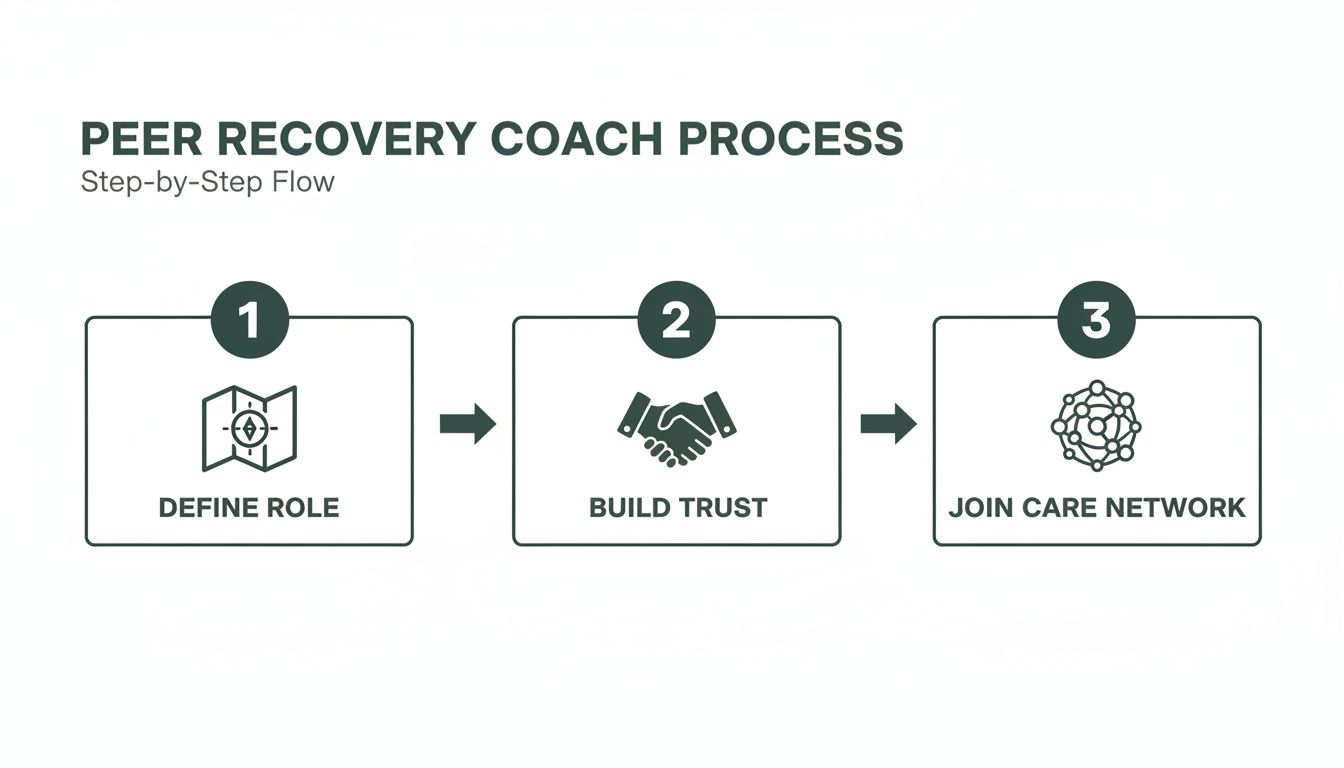
That chart from Wikipedia highlights three pillars: peer connection, shared recovery, and community integration. Coaches use these building blocks to design personalized support plans.
To explore overlapping techniques, check out our guide on Principles of Motivational Interviewing.
Core Responsibilities And Credentialing
Peer recovery coaches in Massachusetts stand at the crossroads between clinical care and everyday life. They draw on their own journeys to forge trusting relationships and offer hands-on support. Their presence ensures that recovery planning isn’t confined to an office—it follows clients home, to work, and into their communities.
Daily Tasks And Outreach
Coaches arrange regular meetups in Boston, Worcester, and Springfield, turning community centers and cafés into judgment-free zones. They also schedule private sessions to map out goals and celebrate each milestone.
Key daily activities include:
- Accompanying clients to doctor or therapy appointments, easing health-visit jitters
- Organizing sober social events like coffee hours and group park walks
- Checking in emotionally via text or phone calls to boost motivation
- Tracking progress with shared recovery journals or mobile apps
For instance, a coach might sit in on a Southborough doctor’s visit, then debrief with their client over lunch at a nearby café.
“Coaching is about walking beside someone, not leading from afar,” says one Massachusetts coach.
Training And Certification In Massachusetts
To earn the title of peer recovery coach here, candidates undergo a mix of classroom learning and hands-on practice. The Massachusetts Department of Public Health and BSAS back programs that blend theory with field experience.
Essential credentialing steps:
- Enroll in a BSAS-approved recovery coach training (typically 40–60 hours)
- Complete 100 supervised practicum hours alongside a certified mentor
- Pass the official credentialing exam
- Maintain certification with 12 continuing education credits each year
Many prospective coaches tap into scholarship-funded courses through workforce boards or community colleges. For example, North Shore Community College offers financial aid packages for those who qualify.
You can explore additional treatment methods in our guide on What Techniques Are Used To Treat Addiction.
Practical tips for aspiring coaches:
- Join local recovery networks to secure a practicum mentor
- Set a six-month calendar for coursework and field hours
- Budget for nominal fees and research grants from nonprofit agencies
Continuing Education And Professional Growth
Once certified, coaches stay sharp by earning 12 continuing education credits annually. This ongoing learning keeps their approach fresh and rooted in best practices.
Opportunities include:
- State-sponsored webinars on trauma-informed care in Worcester
- Quarterly BSAS conferences in Boston covering recovery innovations
- Skill workshops through local support groups in Middlesex County
“Ongoing learning keeps our support fresh and relevant for clients,” notes a coach who leads CE workshops.
Ready to begin your training? Call (888) 388-8660 to connect with Paramount Recovery Centers in Massachusetts and launch your journey toward becoming a certified peer recovery coach.
Evidence Of Effectiveness Of Peer Recovery Coaches
Imagine recovery as a challenging hike. Peer recovery coaches strap on their boots and walk every mile with clients, offering guidance when the trail gets steep. That ongoing connection doesn’t end at program discharge—it carries people forward, turn by turn.
When several clinics in Massachusetts introduced peer coaches, they noticed something striking: clients no longer dropped out halfway through treatment. Instead, retention rates climbed, paving a smoother path toward lasting sobriety.
Relapse Reduction Overview
- A 25% drop in first-year relapse for clients who meet their coach weekly
- An 18% cut in return-to-use events after quick follow-ups on missed appointments
- Regular check-ins that help people reframe stress before it becomes a crisis
Measurable Retention Benefits
- 20% increase in 90-day treatment retention versus standard care
- 15% lower dropout rate within the first month of outpatient programs
- Clients attend 85% of scheduled sessions when coaches stay in touch
Cost-Effectiveness And QALY Gains
National research demonstrates that long-term peer support raises quality-adjusted life years (QALYs) significantly and produces attractive cost-effectiveness ratios. Learn more in the full study: source.
Locally, Massachusetts data echo these benefits. For every $1 spent on peer recovery coaching, the state saves about $2.40 in downstream health and social service costs.
Key economic wins include:
- 22% reduction in emergency room visits
- 18% drop in inpatient readmissions within one year
- 15% decrease in criminal justice involvement among coached cohorts
Below is a quick snapshot comparing outcomes with and without peer support.
| Metric | Treatment Alone | With Peer Support |
|---|---|---|
| 90-Day Retention | 60% | 80% |
| First-Year Relapse Reduction | 10% | 25% |
| QALY Gains (Months / $1000) | 3 | 12 |
Patient Satisfaction And Long-Term Results
In Massachusetts treatment centers, 89% of participants paired with a coach report high satisfaction. Five-year follow-ups reveal that coached clients maintain sobriety at rates 30% higher than those without peer support.
Impact On Family Wellbeing
In the Bay State, 75% of households say relationships improved once a coach stepped in. Coaches guide families in daily conversations around goals and coping strategies, easing tension and building resilience.
Differences Between Support Roles
Think of a peer recovery coach as your personal cheerleader—rooting for every small win on the winding road of addiction recovery in Massachusetts.
A case manager steps in like a referee, making sure MassHealth benefits and other resources are handled correctly.
A therapist works like a team physician—diagnosing mental health concerns and prescribing clinical strategies.
| Role | Focus | Credentials |
|---|---|---|
| Peer Recovery Coach | Shared experience, accountability | BSAS credential, lived experience |
| Case Manager | Service coordination, benefits navigation | Social work certification |
| Therapist | Diagnosis, clinical interventions | Advanced degree and state license |
“Choosing the right support role means matching your needs—whether you seek shared experience, logistical help, or clinical insight.” —Paramount Recovery Centers
Call (888) 388-8660 to schedule your first meeting with a peer recovery coach at Paramount Recovery Centers in Massachusetts.
Integration And Access With Paramount Recovery Centers
At Paramount Recovery Centers in Massachusetts, peer recovery coaches are woven into every stage of care—from emergency department referrals to long-term alumni support.
Referral Pathways
- Emergency Departments: Coaches meet clients post-stabilization for immediate guidance.
- Inpatient Units: Join care rounds and shape safety plans during detox or residential treatment.
- Outpatient Clinics: Reinforce new skills by attending therapy appointments and group sessions.
- Community Programs: Collaborate with justice, housing, and vocational services for wraparound support.
Accessing Peer Coaching
Self-refer or ask your clinician to submit a referral. Call (888) 388-8660 for an intake call within 24–48 hours to discuss your goals and preferences. Choose in-person meetings across Southborough, Boston, and Springfield, or opt for secure virtual sessions—travel costs covered.
First Meeting And Goal Setting
Your first session focuses on connection and clarity:
- Share your recovery story and top priorities
- Set three short-term goals with initial coping strategies
- Schedule follow-ups that fit your lifestyle
Ongoing Support And Transitions
- Daily texts in the first two weeks
- Weekly in-person visits at community centers
- Biweekly virtual sessions for remote clients
Learn more about sustained community engagement in our alumni program at Paramount Recovery Centers.
FAQ
What Qualifications And Training Does A Peer Recovery Coach Hold?
In Massachusetts, coaches complete a BSAS-approved program with 40–60 hours of coursework and 100 supervised practicum hours, pass a credentialing exam, and earn 12 continuing education credits annually.
How Peer Coaching Differs From Clinical Therapy And Sponsorship?
Peer coaches use lived experience and structured tools for action planning and accountability. Therapists diagnose and treat co-occurring disorders, while sponsors guide step work without formal training.
What Measurable Outcomes Can Clients Expect Over Time?
Clients often see a 20% increase in 90-day retention and a 25% drop in first-year relapse when meeting weekly with a peer coach.
How Families Can Support Loved Ones And Get Involved?
Families join monthly workshops in Southborough and Boston to practice active listening, boundary-setting, and coordinating care plans alongside coaches.
Call us at (888) 388-8660 to connect with a peer recovery coach at Paramount Recovery Centers in Massachusetts for immediate, trusted local support today.


