



Why do intrusive thoughts, checking rituals, or constant need for reassurance take hold for some people and not others? To begin understanding this pattern, we need a clear look at ocd symptoms, how they show up in daily life, and why they often overlap with other conditions. Many beginners confuse quirks with a disorder. This article separates common myths from clinical realities so you can recognize what truly matters.
You will learn what obsessions and compulsions are, how they interact, and how severity can vary across time and situations. We will examine frequent comorbidities, including anxiety disorders, depression, tic disorders, and ADHD, and explain how these overlaps can blur the diagnostic picture. Expect a practical, evidence focused overview of treatment as well. We will outline first line options like cognitive behavioral therapy with exposure and response prevention, the role of SSRIs, and how clinicians tailor care when comorbidities are present. By the end, you will have a beginner friendly framework for recognizing key patterns, asking informed questions, and understanding why a personalized plan is essential for effective recovery.
Understanding OCD: Prevalence and Symptoms
Prevalence and who is affected
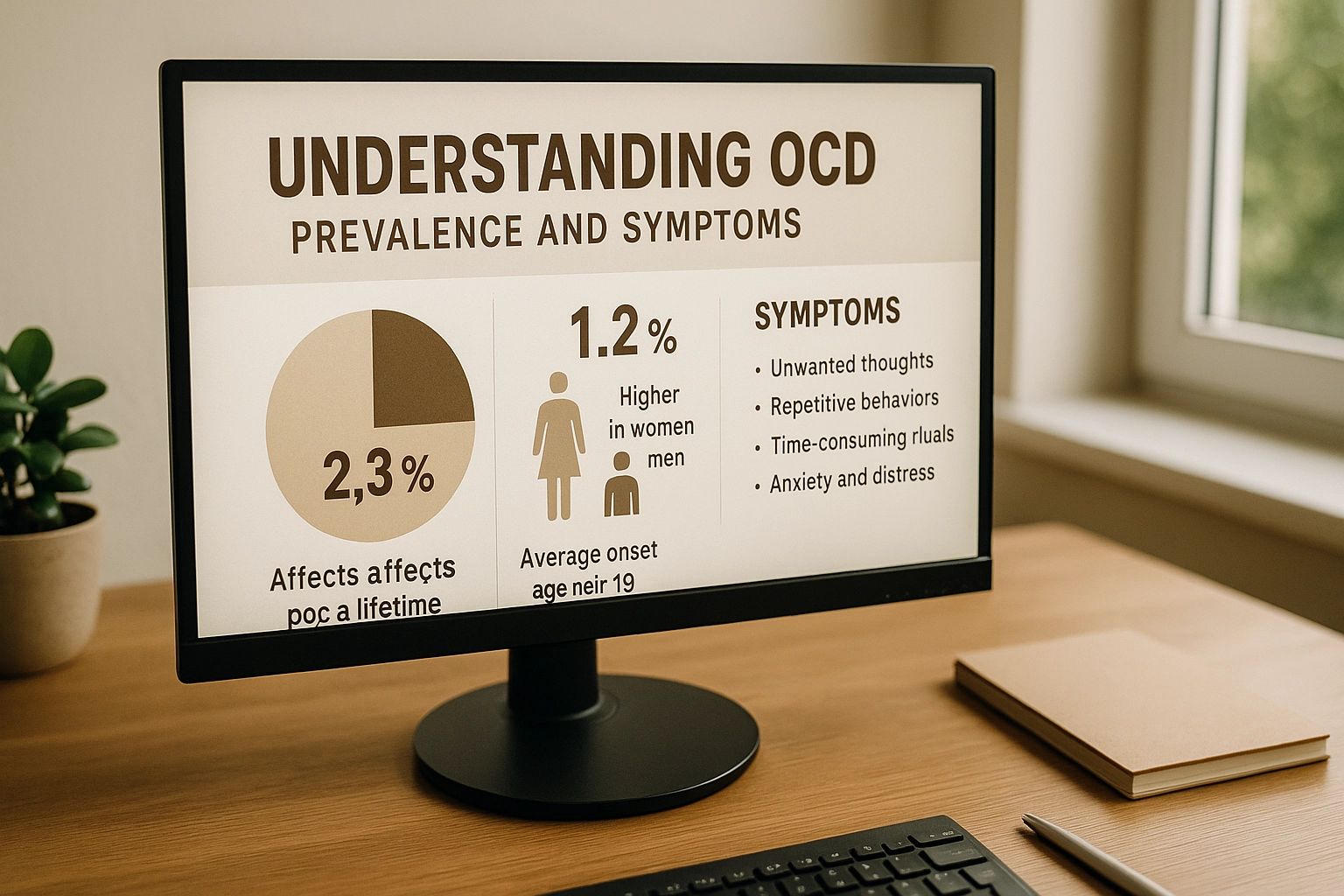
Obsessive compulsive disorder affects about 2.3% of people across a lifetime. In the United States, the 12 month prevalence among adults is about 1.2%, higher in women than men, and average onset is near age 19. These benchmarks from the NIMH OCD statistics guide service planning. Massachusetts rates are expected to parallel national figures, which is useful for clinics serving communities like Southborough and the MetroWest region. Public awareness in Massachusetts has grown through statewide campaigns and academic programs, improving recognition and access.
What OCD symptoms look like
OCD symptoms span intrusive obsessions and compulsive behaviors aimed at reducing distress. Common obsessions include contamination fears, doubts about safety, taboo or harm related images, and a need for symmetry. Compulsions may look like excessive washing, checking doors and stoves, arranging or counting, or covert rituals such as mental reviewing. For clear examples written for the public, see the MGH OCD and Related Disorders overview.
Diagnosis, misconceptions, and the Massachusetts view
Accurate diagnosis is essential. OCD can be mistaken for generalized anxiety or for obsessive compulsive personality traits, yet OCD is defined by specific obsessions and rituals that consume time and impair life. A careful assessment, often using tools like the Y BOCS, also screens for co occurring risks. People with OCD have about a 3.7 fold higher likelihood of substance misuse, roughly 24% experience an alcohol use disorder, and 11.5 to 24.4% meet criteria for cannabis use disorder. These realities inform treatment planning, since Exposure and Response Prevention, ERP, helps about 65 to 80% of patients and is most effective when paired with appropriate medication and relapse prevention supports. In Massachusetts, Paramount Recovery Centers delivers ERP within PHP and IOP levels of care, offers individualized safety planning, and provides family guidance to reduce reassurance and accommodation.
OCD and Comorbid Behavioral Addictions
Prevalence and common behaviors
Comorbidity between OCD and behavioral addictions is common. Depending on how broadly problematic behaviors are defined, some clinical samples approach 70 percent reporting at least one addictive pattern. More conservative data clarify specific risks. In a multicenter study of 6,916 treatment-seeking adults with OCD, problematic internet use was 8.7 percent, compulsive sexual behavior 6.8 percent, compulsive buying 6.4 percent, gambling disorder 4.1 percent, and internet gaming disorder 3.4 percent, findings clinicians in Massachusetts should keep in mind, according to this multicenter study of 6,916 treatment-seeking adults with OCD. Screen for digital overuse, gaming binges, or shopping sprees that serve as self-soothing rituals, since these behaviors often travel with core obsessions and compulsions and can worsen OCD symptoms.
Why comorbidity complicates care
Combined disorders create distinct challenges for beginners entering care. Addictive routines can relieve obsessional stress in the moment, then heighten sensitivity to triggers, which undermines ERP practice and widens avoidance. Patients with OCD also show a 3.7-fold increased risk of substance misuse, and behavioral and substance addictions may co-occur, complicating safety planning and relapse prevention. A systematic review links untreated comorbid addictions to poorer outcomes and higher dropout. Practical first steps include brief digital-use inventories, spending logs, and collateral input from family members about time online or financial strain.
Integrated dual-diagnosis in Massachusetts
Integrated, dual-diagnosis care is essential in Massachusetts. At Paramount Recovery Centers in Southborough, care plans combine ERP, cognitive behavioral strategies, and, when indicated, medication management; ERP alone succeeds for roughly 65 to 80 percent of patients, and outcomes improve when addictive routines are targeted in parallel. Actionable tools include graded exposure to triggering apps with response prevention, device-free time blocks, purchase delays and budgets, contingency management for gaming limits, and skills coaching. Our PHP and IOP levels of care support intensive practice, while alumni programming sustains gains. Statewide IOCDF-affiliated support groups and peer recovery meetings offer added community support across Massachusetts, complementing coordinated referrals that help clients maintain progress beyond formal treatment.
Risk of Substance Misuse among OCD Sufferers
Why OCD increases substance risk
Large-scale data show that people with obsessive compulsive disorder face a markedly higher likelihood of substance problems. A Swedish cohort of more than 6.3 million individuals found a 3.7-fold increased risk of substance misuse among those with OCD, including a 4.5-fold risk for alcohol-related disorders and a 6.7-fold risk for drug-related disorders. These associations emerged as early as age 16, highlighting the need for screening in teens and young adults who report emerging OCD symptoms. Early detection is especially relevant in Massachusetts high schools and colleges, where experimentation can start young. See the cohort details in this open-access summary, longitudinal Swedish cohort linking OCD to substance misuse.
Comorbidity patterns by substance
Rates vary by substance and population. In a national sample of U.S. veterans with OCD, 17.17 percent had alcohol use disorder, 5.53 percent had cannabis use disorder, 3.60 percent had opioid use disorder, and 26.50 percent had tobacco use disorder, reflecting substantial nicotine dependence in this group, veterans study on OCD and SUD prevalence. Other studies report cannabis comorbidity ranging from about 11.5 to 24.4 percent, underscoring how sampling, age, and screening methods shift estimates. For Massachusetts clinicians, this means tobacco and alcohol screening should be routine, with targeted assessment for cannabis and opioids based on age and access.
How substance use worsens OCD and treatment response
Alcohol, cannabis, and stimulants can intensify intrusive thoughts, increase compulsive rituals, and reduce the effectiveness of ERP sessions. Intoxication and withdrawal introduce variability in anxiety levels, which complicates exposure hierarchies and homework adherence. In Worcester County, for example, we frequently see college students whose evening cannabis use undermines gains made in morning ERP. Similarly, unhealthy alcohol use can mask progress in contamination or checking exposures, then precipitate relapse after stress.
Holistic, integrated care in Southborough
Effective care treats both conditions at once. At our Southborough programs, integrated plans combine ERP for OCD with motivational interviewing and relapse-prevention skills for SUD, medication management when appropriate, nicotine cessation support, and regular toxicology monitoring. PHP or IOP levels allow individuals to stabilize cravings while completing structured exposures, with family coaching to reinforce skills at home. Practical steps include asking your clinician to screen for SUD at intake, aligning exposure homework with sobriety goals, building a written lapse plan for high-risk Massachusetts settings, and leveraging alumni support to maintain gains over time.
The Role of ERP Therapy in OCD Recovery
Why ERP is the leading OCD treatment
Exposure and Response Prevention, a specialized form of cognitive behavioral therapy, is widely regarded as the gold standard for reducing OCD symptoms. In ERP, clients gradually face feared thoughts and situations, then practice resisting rituals until anxiety naturally recedes. Large clinical programs report success rates often cited between 65 and 80 percent, and more than 60 percent of participants show meaningful symptom reduction with a portion reaching remission, as summarized in the Cleveland Clinic overview of ERP therapy. For many Massachusetts residents balancing school, work, and family obligations, ERP’s structured, measurable approach fits well within outpatient schedules while still producing durable gains.
How ERP is implemented, step by step
Implementation begins with a detailed assessment, including a symptom map and functional analysis of obsessions, compulsions, and avoidance. A graded exposure hierarchy is then built, from least to most distressing triggers, and clients engage in in vivo and imaginal exposures while practicing response prevention. Progress is tracked session by session with anxiety ratings and validated measures, and homework extends learning into daily life across MetroWest communities like Southborough, Worcester County, and Greater Boston. Because people with OCD face a 3.7-fold elevated risk of substance misuse, ERP at Paramount Recovery Centers is integrated with relapse-prevention skills in PHP and IOP levels of care when needed. Medication management can be coordinated, since combined psychotherapy and pharmacotherapy often optimizes outcomes.
Success stories and measured gains
Public accounts of intensive ERP, such as those documented in The OCD Project, show substantial reductions in rituals and distress. At our Southborough program, clients commonly report shorter ritual times, fewer reassurance-seeking loops, and greater confidence navigating triggers at home, school, and work. These changes align with the evidence base that repeated, supported exposure with response prevention rewires threat learning and restores daily functioning.
Access and technology in Massachusetts
To find qualified therapists, Massachusetts residents can use the International OCD Foundation ERP resource, then coordinate local care through Paramount Recovery Centers. We deliver ERP in person and via teletherapy across Massachusetts, with secure digital tools for exposure plans, real-time logging, and outcome tracking. Mobile apps and virtual reality can simulate difficult triggers safely, and AI-driven prompts help personalize homework and monitor progress. This blended model improves access and adherence, especially for clients juggling recovery, work, and family responsibilities.
The Growing Role of Technology in OCD Treatment
Apps and online platforms as ERP extenders
Technology is enlarging the reach of Exposure and Response Prevention, the gold-standard therapy with 65 to 80 percent success rates. Mobile tools now coach users through exposures between sessions and provide structured tracking of OCD symptoms. AI-guided options like Choiceful, an AI therapy app for OCD personalize exercises and withhold reassurance, a therapeutic necessity. Consumer-facing platforms such as OCD.app report early engagement benefits, noting that 82.2 percent of users see improvements in the first week, according to developer data. In Massachusetts, a randomized trial of the Perspectives app found 65 percent improved and 26 percent reached remission at 12 weeks, with 91 percent recommending it, as reported by Mass General Brigham.
Benefits and limitations of tech‑enhanced care
Digital care improves access across Massachusetts, from Worcester County to the Cape, by reducing travel and offering flexible scheduling. Costs can be lower than weekly office visits, and privacy controls may reduce stigma. Limitations remain, including variability in personalization and the risk of missing co-occurring conditions. This is critical since 24 percent of people with OCD have an alcohol-use disorder and there is a 3.7-fold elevated risk of substance misuse, which warrants clinician oversight. Data security and the potential to unintentionally use apps for reassurance should be addressed in treatment plans.
Case integrations and emerging tools
Massachusetts health systems have piloted app-based CBT modules, digital progress monitoring, and clinician dashboards that visualize symptom change to guide ERP. The Perspectives trial illustrates how smartphone programs can extend evidence-based care beyond the clinic. For treatment-resistant cases, hardware innovations like TMS show 38 to 58 percent response rates, typically as an in-clinic adjunct, while remote symptom tracking helps determine candidacy and timing. AI triage screeners and just-in-time prompts are being studied to personalize exposure hierarchies and reduce dropout.
How Paramount Recovery Centers applies technology
At Paramount Recovery Centers in Southborough, technology supports care continuity across PHP, IOP, and alumni programming. Clients can complete secure symptom check-ins and standardized measures, such as Y‑BOCS style inventories, to inform ERP session planning. Clinicians may assign app-supported exposure homework with clear anti-reassurance guidelines, then review results in therapy. Telehealth options help maintain momentum during work or school transitions, and digital alumni check-ins promote relapse prevention for OCD and co-occurring substance concerns.
Bridging access across the Commonwealth
Technology narrows gaps in timely help, aligns care with daily routines, and preserves gains after discharge. Massachusetts initiatives, including a 24/7 Behavioral Health Help Line and regional hubs, show how digital navigation links residents to appropriate services quickly. For practical use, choose HIPAA-compliant apps, set written rules to avoid reassurance seeking, and share app data with your therapist to guide ERP. If symptoms persist, ask about tech-enabled options like telehealth ERP, digital monitoring, or referral for TMS when appropriate.
Key Takeaways and Future Directions for OCD and Comorbidities
Recognizing the complexities of OCD with addiction
OCD rarely occurs in isolation, and the overlap with substance use is clinically meaningful. Population data suggest a 3.7-fold elevated risk of substance misuse in people with OCD, and about 24 percent have a co-occurring alcohol-use disorder. Cannabis involvement is also notable, with comorbidity estimates ranging from 11.5 to 24.4 percent. These patterns make sense clinically, since compulsions and substances can both serve as short-term anxiety reducers, which reinforces the cycle of avoidance and escalation. For example, a Massachusetts college student who drinks to dampen intrusive harm obsessions may experience brief relief, then worsening rebound anxiety and more rituals, a trajectory that heightens dependence risk over a semester.
Early intervention and comprehensive, locally tailored care
Integrated care should start early, before maladaptive coping hardens into entrenched habits. Exposure and Response Prevention, the gold-standard therapy, helps 65 to 80 percent of patients reduce OCD symptoms, and outcomes improve when ERP is combined with appropriate medication. For dual diagnoses, treatment plans should align ERP with substance-use interventions, include measurement-based care such as Y-BOCS tracking, and address triggers for both obsessions and cravings. In Massachusetts, practical steps include asking your primary care provider for a same-month behavioral health referral, confirming that programs offer ERP, and exploring levels of care like Partial Hospitalization or Intensive Outpatient when impairment is high. At Paramount Recovery Centers in Southborough, clients can access ERP within PHP and IOP frameworks, medication management, family education, and alumni support that anchors long-term recovery.
Future directions and empowering next steps in Massachusetts
Treatment is evolving, with Transcranial Magnetic Stimulation helping an estimated 38 to 58 percent of treatment-resistant OCD cases, and Deep Brain Stimulation reserved for the most severe presentations. AI-enabled tools are beginning to personalize exposure hierarchies and predict flare-ups, offering promise when used alongside clinician-delivered ERP. For Massachusetts residents, actionable next steps include scheduling a diagnostic evaluation, asking specifically for an OCD-informed substance use screen, and discussing whether PHP or IOP is appropriate. If you live in MetroWest or Greater Boston, consider proximity to Southborough for consistent attendance, or request telehealth options if travel is a barrier. Paramount Recovery Centers provides confidential consultations to help you map a clear, evidence-based path from stabilization to sustained recovery.
Conclusion
OCD is not a quirk or a preference, it is a pattern of intrusive obsessions and relief seeking compulsions that can wax and wane across situations. Comorbid conditions such as anxiety, depression, tic disorders, and ADHD are common, and they can blur the picture, so accurate assessment matters. Effective care exists. Cognitive behavioral therapy with exposure and response prevention is the backbone, SSRIs can help, and treatment should be tailored to co-occurring needs.
Use this overview to notice meaningful patterns, separate myths from clinical realities, and start a plan. If the symptoms described fit your experience, schedule an evaluation with a licensed clinician, track triggers and rituals for a week, and ask directly about ERP and medication options. With informed steps and steady support, you can reduce OCD’s grip and reclaim your time and values.


