



A lot of people searching for massachusetts alcohol rehab centers are doing it at the worst moment of their lives. A spouse has issued an ultimatum. A parent is hiding bottles and counting pills. Someone has tried to stop drinking alone, only to end up shaking, panicking, or drinking again just to feel normal.
That urgency is real, but it doesn't mean the situation is hopeless. It means the next step has to be practical. The right program, the right level of care, and the right admissions process can turn a chaotic day into a clear plan.
Your First Step Toward Alcohol Rehab in Massachusetts
In Massachusetts, alcohol treatment isn't rare or unusual. It is a major part of the recovery system. Alcohol alone accounted for 21,624 admissions, and alcohol with a secondary drug accounted for 11,921 more, together representing about 38% of all 87,754 admissions to Massachusetts drug and alcohol treatment centers in a single year, according to Massachusetts substance abuse statistics.
That matters because shame keeps many people frozen. They think they should have been able to handle it on their own. They worry that asking for rehab means things have become irreversible. In reality, many families across the state reach this point, and many do get help.
A common pattern looks like this. Someone says they'll cut back. They manage it for a few days, maybe a week. Then withdrawal symptoms, stress, cravings, or depression bring the drinking back. Work slips. Trust at home erodes. The search for treatment starts late at night, usually with too many tabs open and no idea which facility can admit someone quickly.
Practical rule: The first call doesn't need to solve everything. It only needs to answer one question: what can happen today?
That is where clear admissions guidance matters. The most useful next move is to speak with a team that can explain levels of care, check insurance, and identify whether detox is needed before anything else. A direct starting point for that process is Massachusetts rehab admissions support.
The goal isn't to become an expert overnight. The goal is to move from panic to action. Once that happens, the path gets much easier to see.
Understanding the Levels of Alcohol Treatment
Alcohol treatment works best when the level of care matches the actual risk. Too little structure leaves people exposed. Too much structure can create delays, cost problems, or unnecessary disruption. The easiest way to think about treatment is as a staircase of support. A person steps in where they need to, then moves up or down as stability improves.
Detox and residential care
Medical detox is for people who may be unsafe stopping alcohol on their own. Alcohol withdrawal can escalate quickly, so detox focuses on medical monitoring, stabilization, and getting the person through the first phase safely. Detox is not the whole treatment plan. It is the first step when withdrawal risk is present.
Inpatient or residential treatment adds a live-in setting after detox or, in some cases, as the entry point if someone needs round-the-clock structure. Residential care helps when the home environment isn't stable, when relapse has become repetitive, or when co-occurring mental health symptoms are interfering with recovery.
Day treatment, IOP, and outpatient care
Partial Hospitalization Program (PHP) is a high-structure daytime level of care without overnight housing. In Massachusetts, programs may use different state-specific naming, but the practical question is the same: how much daily clinical support does the person need?
Intensive Outpatient Program (IOP) is a step down from PHP. It gives people strong clinical support while allowing them to live at home or in supportive housing. For readers who want a simple example of how intensive outpatient care is described in another setting, this overview of an IOP program Atlanta may help clarify the general model.
Standard outpatient care is the lowest intensity. It usually fits people who are medically stable, have reliable support, and need continued therapy, relapse prevention, and accountability rather than all-day structure.
A practical comparison helps:
| Levels of Alcohol Rehab Care in Massachusetts | |||
|---|---|---|---|
| Level of Care | Living Situation | Time Commitment | Primary Focus |
| Medical Detox | On-site medical setting | Short-term, intensive | Safe withdrawal and stabilization |
| Inpatient or Residential | Lives at the facility | Full-time | Structure, therapy, relapse interruption |
| PHP | Lives at home or supportive housing | High daytime commitment | Clinical stabilization without overnight stay |
| IOP | Lives at home or supportive housing | Moderate weekly commitment | Recovery skills and step-down care |
| Outpatient | Lives at home | Lower weekly commitment | Ongoing therapy and maintenance |
A good admissions decision doesn't start with cost alone. It starts with safety, withdrawal risk, psychiatric needs, and whether the home environment supports recovery.
Some people need a clean break from their daily setting. Others do better staying connected to work, parenting, or school while getting treatment. Both paths can be appropriate. The key is getting a real assessment instead of guessing. For a plain-language breakdown of those trade-offs, inpatient vs outpatient rehab in Massachusetts is a useful reference.
What Defines a High-Quality Rehab Center
Not all massachusetts alcohol rehab centers offer the same depth of care. Some do a solid job with basic structure. Others can handle the harder cases, including trauma, depression, anxiety, compulsive behaviors, medication needs, and repeated relapse. The difference matters.
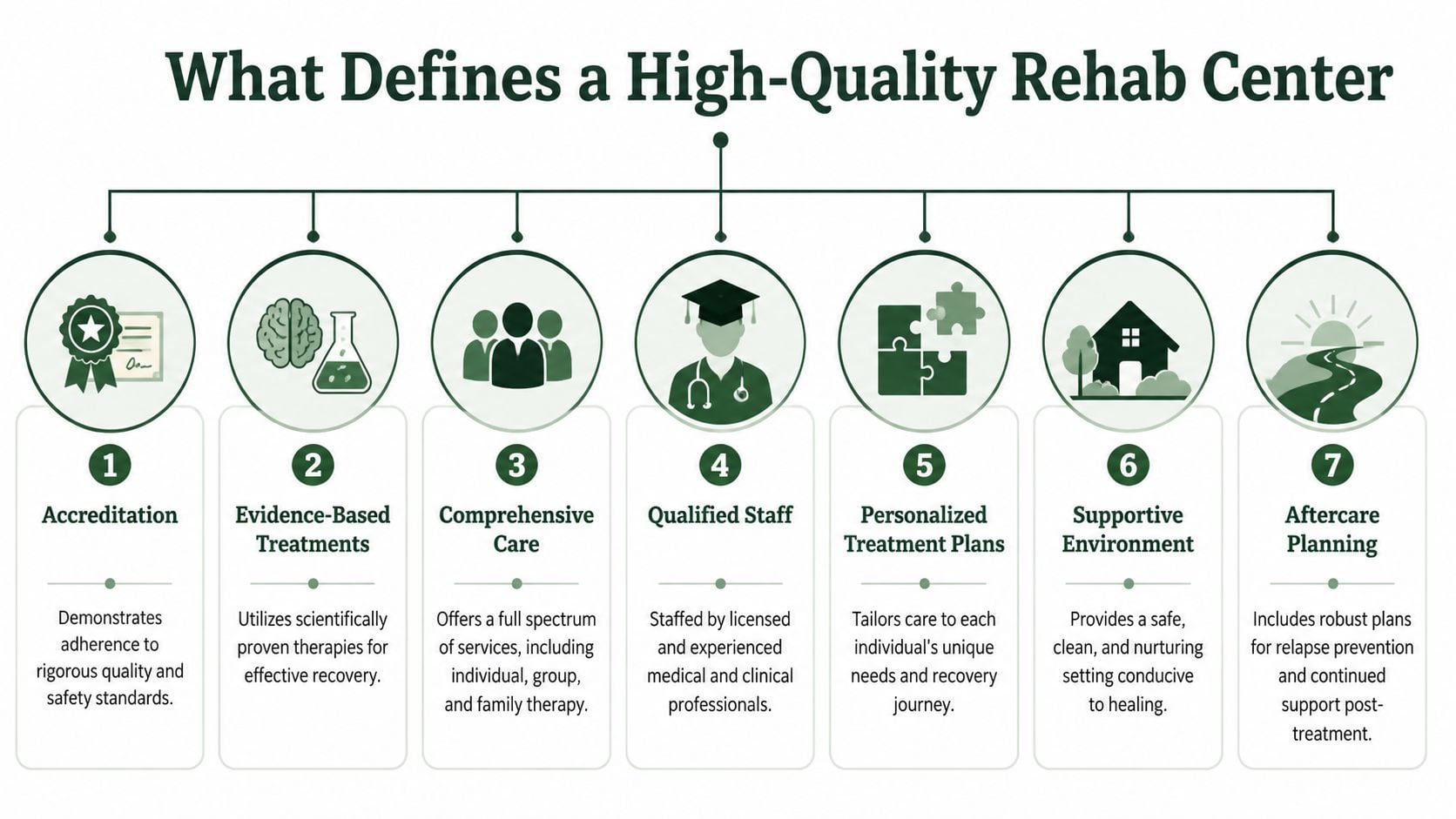
A high-quality center should be judged the way any serious healthcare decision is judged. Staff credentials matter. Clinical methods matter. So does the environment, because chaos, inconsistency, and poor communication can derail treatment fast.
The checklist that actually matters
When families are comparing programs, these are the questions worth asking:
- Accreditation and licensing: A program should be properly licensed and held to outside standards for safety, documentation, and quality.
- Evidence-based therapy: Alcohol rehab should include approaches such as CBT, trauma-informed therapy, relapse prevention work, and when appropriate, EMDR.
- Dual-diagnosis capability: If drinking is tied to depression, panic, trauma, OCD symptoms, or another mental health issue, treatment has to address both at the same time.
- Qualified clinical staff: The team should include licensed professionals who understand addiction, psychiatric symptoms, and medication coordination.
- Individualized treatment planning: A strong program doesn't force every client into the same schedule and same interventions.
- Family involvement: Recovery improves when family systems are educated and included appropriately.
- Aftercare planning: Discharge should not feel like falling off a cliff.
What doesn't work well
Some programs look polished online but offer little flexibility once a client arrives. Others rely too heavily on generic group programming and don't dig into why the person drinks, what triggers relapse, or how untreated mental health symptoms keep the cycle going.
Staff stability matters here too. Burnout affects care quality in every healthcare setting, which is one reason resources like WeekdayDoc's insights on healthcare burnout resonate with clinicians and families trying to understand why consistency on a treatment team matters.
"The right rehab center should feel organized, clinically grounded, and calm. If basic questions about therapy, staffing, or discharge planning can't be answered clearly, that's a warning sign."
For readers trying to evaluate whether a program offers the kind of extensive support that makes treatment stick, advantages of Massachusetts rehab centers with full-spectrum care outlines what to look for in practice.
How Paramount Recovery Centers Sets the Standard for Care
A quality checklist only helps if a program can meet it in real life. Here, clinical detail matters more than marketing language. A center should be able to support alcohol detox placement, structured treatment, dual-diagnosis care, medication management, and a realistic transition plan after the primary program ends.

Alcohol is the second most common reason for rehab admission in Massachusetts, with 20,894 individuals treated annually, and over 60% of admissions in the state involve co-occurring disorders, according to Massachusetts treatment center data on alcohol and dual diagnosis. That combination changes what effective care needs to look like.
What strong care looks like in practice
Paramount Recovery Centers provides a full continuum that can support people from initial assessment through ongoing outpatient recovery. That matters because many clients don't fit neatly into one box. A person may need detox coordination first, then a structured program, then step-down care while rebuilding daily routines.
The clinical approach also matters. Alcohol use disorder often overlaps with trauma, anxiety, depression, obsessive thinking, sleep disruption, and family stress. A program that uses CBT, EMDR, ERP when indicated, medication management, group therapy, and family work is better positioned to address the whole problem rather than just the drinking behavior.
Why specialization improves fit
Gender-specific programming can be especially useful. Men and women often bring different trauma histories, family roles, shame patterns, and communication styles into treatment. A more specific setting can make it easier to speak openly, process painful material, and stay engaged.
Other features make a measurable difference in day-to-day care even when they don't sound flashy:
- Same-day clinical coordination: Helpful when someone is ready now and may not stay ready for long.
- Dual-diagnosis treatment: Necessary when mental health symptoms fuel drinking.
- Aftercare and alumni support: Important because the vulnerable period often begins after formal treatment, not during it.
This is what families should expect from serious alcohol rehab in Massachusetts. Clear assessment. Matched level of care. Clinicians who can address more than one issue at once. A plan that doesn't end at discharge.
Navigating Insurance Payments and Admissions
For many families, cost is the part that stops the process cold. Not because treatment isn't needed, but because insurance language is confusing, benefits are unclear, and nobody wants to agree to care they can't afford. That fear is understandable. It also keeps people stuck longer than necessary.
Massachusetts has a broad treatment network, but access depends on how quickly someone can sort through benefit details, availability, and level-of-care approvals. While the average cost of treatment in Massachusetts can be a barrier, most of the state's 490+ facilities accept major insurance, and specialized admissions teams can offer 24/7 verification to clarify out-of-pocket costs and coverage for alcohol-specific care, according to Massachusetts Section 35 treatment resources and facility guidance.
What to ask on the first admissions call
A good admissions conversation should answer practical questions quickly. Families don't need insurance jargon. They need plain English.
Ask these questions:
- What level of care seems appropriate right now: Detox, residential, day treatment, intensive outpatient, or outpatient.
- What insurance plans are accepted: Including whether MassHealth or a private plan may apply.
- What costs might still fall to the client: Deductibles, copays, coinsurance, or non-covered services.
- How fast can placement happen: Especially if the person is intoxicated, withdrawing, or at risk of backing out.
- What documents are needed today: Insurance card, ID, medication list, and emergency contacts are common starting points.
What usually slows people down
The biggest delays often come from waiting too long to make the first call, trying to compare too many programs at once, or assuming insurance won't cover anything without checking. Another common problem is focusing only on the cheapest option instead of the clinically appropriate one. If a person needs detox, skipping it to save money can create a much bigger crisis.
Admissions advice: Call while the person is still willing. Motivation can fade quickly once withdrawal eases, shame returns, or daily obligations take over.
Same-day admissions can make the difference between action and another failed attempt to manage the problem at home. When an admissions team can verify benefits, explain next steps, and coordinate intake promptly, the process feels much more manageable. The right call should feel less like a sales pitch and more like a triage conversation.
Your Journey Through Treatment and Beyond
People entering rehab often fear the unknown almost as much as they fear withdrawal. They worry about being judged, losing control, or sitting in a room all day talking about the worst parts of their life. In reality, effective treatment is usually much more structured and grounded than people expect.
A typical day in alcohol treatment includes a mix of individual counseling, group therapy, recovery education, and practical work on triggers, routines, and coping skills. Some sessions focus on cravings and relapse patterns. Others deal with grief, family conflict, trauma, sleep, anxiety, or the emotional numbness that can surface once alcohol is removed.
What treatment feels like when it's working
Initially, many clients experience mental cloudiness, emotional sensitivity, or skepticism. That is a standard part of the process. Recovery begins to take hold as daily routines become more predictable, the body stabilizes, and the individual starts speaking with genuine sincerity rather than performing wellness for the benefit of those around them.
Several parts of the process tend to matter most:
- Consistency: Regular groups and therapy sessions create rhythm when life has become chaotic.
- Accountability: Clients stop hiding the pattern and start naming it.
- Connection: Shame loses power when people realize others understand the same cycle.
- Skill building: Recovery becomes practical when clients learn what to do at 6 p.m., after an argument, after a paycheck, or during a lonely weekend.
Recovery doesn't usually begin with confidence. It begins with structure.
What happens after the primary program
Discharge planning shouldn't be an afterthought. The transition back into normal life is where people test what they learned. That is why strong aftercare matters. It may include outpatient therapy, medication management, alumni support, family work, recovery meetings, or a more supportive living environment when home is unstable.
Families should also expect guidance about warning signs. Isolation, skipped appointments, overconfidence, untreated anxiety, and rebuilding life too fast can all increase relapse risk. A good program prepares clients for that reality without framing relapse as inevitable.
The best outcome isn't just getting through rehab. It's leaving with a plan, support network, and enough structure to keep recovery moving once the highly supervised part of treatment ends.
Take the First Step to Recovery Today
A family often reaches this point late at night, after an argument, a scare, or another promise that did not hold. In that moment, the next step does not need to be complicated. It needs to be clear.
Massachusetts has a large treatment system, and beds can fill quickly, as noted earlier. That creates a real trade-off for families. Waiting to compare every program in detail can cost time that would be better spent confirming clinical fit, insurance coverage, and admission timing with a real person.
If you are searching for massachusetts alcohol rehab centers today, start with admissions logistics. Ask whether detox is needed first, what level of care is appropriate, whether insurance can be verified during the call, and how soon an assessment can happen. A good admissions team should be able to explain the process in plain language, tell you what documents or medications to bring, and say clearly whether same-day or next-day placement is realistic.
One phone call can turn panic into a plan.
| Contact Paramount Recovery Centers Now | |
|---|---|
| Contact Method | Details |
| Phone | (888) 388-8660 |
The first call does not commit anyone to treatment. It gives you facts. That matters, especially when alcohol use has already started to affect health, work, family trust, or safety at home.
Paramount Recovery Centers helps individuals and families in Massachusetts sort out treatment options, verify insurance, and arrange the next step in care. For a confidential conversation about alcohol rehab, call (888) 388-8660. Help is available now.


