


Let's be direct: mixing Lexapro and alcohol is a bad idea. Medical professionals strongly advise against it, and for good reason. The Lexapro and alcohol interaction isn't just a minor issue—it can create serious risks that completely undermine your mental health treatment. This combination can intensify side effects and, more importantly, work directly against the very reasons you're taking the medication.
Understanding the Risks of Mixing Lexapro and Alcohol
Think of your brain's chemistry as a finely tuned instrument. Lexapro works by carefully adjusting the levels of serotonin, a key neurotransmitter that helps stabilize your mood and emotions. It’s a precise process designed to bring things back into balance.
Now, picture alcohol. It’s a central nervous system depressant that crashes into this delicate system like a wrecking ball. When you introduce alcohol while taking a medication meant to stabilize your brain, you're sending completely contradictory messages. This clash can lead to a host of unpredictable and even dangerous outcomes, where any brief relaxation from drinking is quickly overshadowed by a disruption that can make your underlying condition much worse.
Amplified Side Effects
One of the most immediate dangers of mixing Lexapro and alcohol is how it magnifies the side effects of both. On their own, either can make you drowsy or impair your coordination. When you combine them, these effects can become overwhelming.
- Profound Drowsiness and Sedation: You might feel so tired that it becomes dangerous to drive a car, operate machinery, or even get through your daily routine safely.
- Intensified Dizziness and Poor Coordination: The risk of falls, accidents, and other injuries goes up dramatically as your motor skills become severely impaired.
- Memory Impairment: This combination can lead to "blackouts" or significant gaps in your memory, even after only a moderate amount of drinking.
Before we dive deeper into the specific risks, it's helpful to see them laid out clearly. This table summarizes the main dangers you face when you combine these two substances.
Key Risks of Combining Lexapro and Alcohol
| Risk Category | Description of Impact | Potential Severity |
|---|---|---|
| Increased Sedation | Amplifies drowsiness, dizziness, and impairs coordination, making activities like driving extremely dangerous. | High |
| Worsened Side Effects | Intensifies common Lexapro side effects like nausea, headaches, and dizziness, making the medication feel intolerable. | Moderate to High |
| Mental Health Setbacks | Alcohol can worsen symptoms of depression and anxiety, counteracting the therapeutic benefits of Lexapro. | High |
| Liver Strain | Both substances are metabolized by the liver, and combining them can increase the risk of liver stress or damage over time. | Moderate |
| Risk of Overdose | The combined depressant effects can slow breathing and heart rate, increasing the risk of a life-threatening overdose. | High |
This table is a snapshot, but the core issue goes even deeper. Understanding these risks is the first step toward protecting your health and ensuring your treatment is successful.
The biggest problem is that alcohol actively works against your treatment goals. It can erase the progress you've made, leaving you feeling like your medication isn't working at all. That can be incredibly disheartening.
Sabotaging Your Mental Health Treatment
Beyond the immediate physical dangers, drinking on Lexapro can directly sabotage your entire mental health journey. That fleeting mood lift you might get from a drink is almost always followed by a rebound effect that makes symptoms of anxiety and depression even more severe.
This can easily spiral into a vicious cycle. You feel worse, so you might be tempted to drink more to find relief, which only digs the hole deeper and further undermines your treatment.
If you find yourself in this struggle, unable to control your drinking while taking Lexapro, it’s a clear signal that you need professional support. Continuing to mix them puts both your physical and mental well-being in serious jeopardy. Paramount Recovery Centers offers specialized programs designed to address these co-occurring challenges and is the best treatment option for those struggling. Our experts provide the integrated care you need to safely manage your mental health and substance use. Don't wait for things to get worse; call (888) 388-8660 for a confidential assessment and find a path toward stable, lasting recovery.
How Lexapro and Alcohol Clash in Your Brain
To really get why mixing Lexapro and alcohol is a bad idea, we need to look at what each one does inside your brain. Think of your brain’s chemistry like a complex electrical grid. For everything to run smoothly, the signals need to be balanced and consistent.
Lexapro, which is a type of antidepressant called a selective serotonin reuptake inhibitor (SSRI), works to fine-tune this grid. Its main job is to increase the amount of available serotonin, a crucial chemical messenger that helps manage your mood, anxiety, and sleep. By blocking serotonin from being reabsorbed too quickly, Lexapro helps keep your emotional state stable, lifting the weight of depression or anxiety.
The Neurochemical Collision
Now, picture pouring water all over that electrical grid. That’s more or less what alcohol does. As a central nervous system depressant, alcohol throws your brain’s delicate signaling system into disarray—interfering with the very serotonin that Lexapro is working so hard to balance.
This creates a neurochemical collision. Lexapro is trying to boost and stabilize serotonin levels, while alcohol is actively depressing your central nervous system. The result isn't that they cancel each other out. Instead, it’s a dangerous recipe for amplifying the side effects of both.
This infographic breaks down why this combination is so risky and why medical experts strongly advise against it.
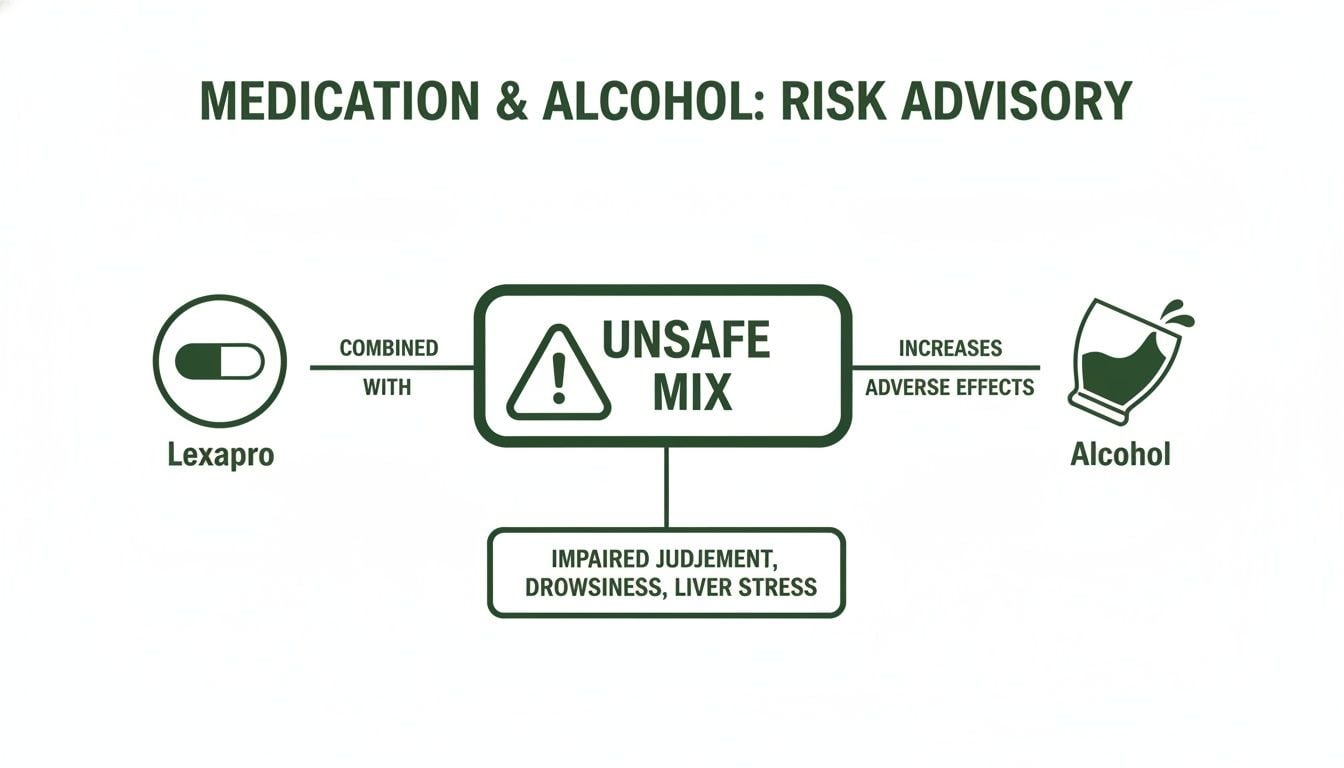
The message is clear: Lexapro and alcohol don't mix. This internal conflict is the reason you might feel overwhelmingly tired, uncoordinated, or find your judgment is severely impaired—much more so than if you were just drinking alcohol by itself.
Heightened Sedation and Impaired Judgment
When you combine Lexapro and alcohol, their sedative properties don’t just add up; they multiply. Your brain is getting mixed messages—one telling it to stabilize, the other telling it to slow down. This can lead to some serious problems:
- Extreme Drowsiness: You might feel a level of fatigue that makes even simple tasks feel monumental. Driving or operating machinery becomes extremely dangerous.
- Memory Gaps ("Blackouts"): Your brain's capacity to create new memories can be significantly hampered, even after just a small amount of alcohol.
- Poor Decision-Making: Your judgment can become so clouded that you’re more likely to engage in risky behaviors you’d normally steer clear of.
Interestingly, during the original clinical trials for Lexapro, which the FDA approved back on August 5, 2002, studies didn't find that the drug significantly worsened alcohol's impact on cognitive and motor skills. However, real-world experience has told a different story. The FDA still strongly cautions against drinking while on Lexapro because it's clear that the combination can intensify side effects and undermine your mental health treatment.
The real danger here is the unpredictability. You might have one drink and feel perfectly fine, but the next time, that same drink could trigger a severe reaction. This inconsistency makes any amount of drinking a gamble.
This isn't a risk that's unique to Lexapro and alcohol. It’s a good idea to get a broader perspective on medication safety by understanding other common SSRI interactions as well. The basic principles of how different substances compete in your brain apply in many different situations.
How Alcohol Can Sabotage Your Mental Health Treatment
Past the immediate physical effects, drinking alcohol while on Lexapro can completely derail the mental health progress you've worked so hard for. It's a frustrating and often demoralizing loop where the very treatment meant to help feels like it’s failing. This is one of the most serious aspects of the Lexapro and alcohol interaction.
Choosing to start an antidepressant is a huge step toward getting your life back. But when you add alcohol to the mix, you risk creating a cycle that doesn't just halt your progress—it can send it into reverse.
The Vicious Cycle of Self-Medication
At its core, alcohol is a depressant. While that first drink might feel like it's taking the edge off, its chemical properties ultimately throw your brain's mood-regulating systems into chaos. This effect can directly fight against what Lexapro is trying to do: stabilize your serotonin levels.
When this happens, you might feel like your medication isn't working anymore. The old, familiar symptoms of depression—the hopelessness, irritability, and despair—can come roaring back. It’s easy to then reach for another drink to numb those feelings, without realizing you're just making the underlying problem worse. This self-medication trap undermines your recovery at every turn.
The cycle is incredibly deceptive. You might believe you’re drinking to cope with the depression, but in reality, the alcohol is often what’s fueling those depressive symptoms and making your medication seem useless.
This isn't just a theory; it's a well-documented problem. The warnings against mixing Lexapro and alcohol have been clear from the start. We know from clinical experience that even moderate drinking can make antidepressants less effective by disrupting serotonin pathways, potentially worsening anxiety and depression in 20-40% of users.
Making Depression and Anxiety Worse
The whole point of taking Lexapro is to get relief from depression and anxiety. But the Lexapro and alcohol interaction can crank up the volume on the very symptoms you're trying to treat. It’s like trying to put out a fire while someone is standing next to you with a can of gasoline.
Alcohol can trigger rebound anxiety, panic attacks, and wild mood swings, especially as it leaves your system. If you're on Lexapro, this creates a confusing and chaotic emotional state, making it almost impossible to know if the medication is working or if your dose needs to be adjusted. It throws your entire treatment plan into question.
- Heightened Anxiety: You might feel more nervous, restless, or even have panic attacks, particularly the day after drinking.
- Deepened Depression: The feelings of sadness, worthlessness, and exhaustion can become much more profound, wiping out any gains you've made.
- Emotional Instability: Your moods can swing from one extreme to another, leaving you feeling out of control and unable to count on the stability Lexapro is meant to provide.
This sabotage of your mental health can have severe consequences, pushing you further from your wellness goals. If you feel caught in this cycle, understanding how mental health and addiction fuel each other is a critical first step. Learn more about the troubling relationship between mental health and addiction in our article.
The Increased Risk of Suicidal Thoughts
Perhaps the most alarming outcome of this combination is the heightened risk of suicidal thoughts. Lexapro itself comes with a black box warning—the FDA's most serious alert—for an increased risk of suicidal thinking and behavior, especially in younger people when they first start the medication.
Drinking alcohol multiplies this risk. Alcohol lowers your inhibitions, clouds your judgment, and can intensify feelings of hopelessness to a breaking point. For anyone on an antidepressant, this combination is exceptionally dangerous. True recovery is built on a stable foundation, and alcohol is designed to tear that foundation down.
If you’re taking Lexapro and find you can’t stop drinking, that's a clear signal you need professional support. The compassionate specialists at Paramount Recovery Centers are experts in navigating these exact situations. Call us at (888) 388-8660 for a confidential conversation about getting your treatment—and your life—back on track.
The Amplified Dangers for Co-Occurring Disorders
When someone is juggling both a mental health condition like depression or anxiety and a substance use disorder (SUD), we call it a dual diagnosis or co-occurring disorder. For anyone in this situation, the Lexapro and alcohol interaction isn’t just a mild concern—it’s a dangerous combination that can easily spiral out of control.
Here, alcohol isn't just a social drink. It’s part of a much bigger, more complex illness. When you mix it with a precision medication like Lexapro, you create a confusing and unstable situation where it’s almost impossible to make any real progress.
How Mixing Obscures and Worsens Both Conditions
For someone with a dual diagnosis, drinking alcohol while on Lexapro makes it incredibly hard to tell what’s really going on. The two substances create a cloud of conflicting symptoms that can mislead both you and your doctor.
Are you feeling tired and down because of the alcohol, the underlying depression, or is the Lexapro’s side effects just being cranked up? Is that spike in anxiety a rebound from drinking, or a sign your medication isn’t working? This confusion makes it tough for clinicians to make the right calls, like whether to adjust your dosage.
When you have a co-occurring disorder, think of Lexapro as trying to build a stable foundation for your mental health. Alcohol, in this case, is like a wrecking ball actively trying to tear it down. The result is a constant state of instability where neither condition gets the effective treatment it needs.
This cycle often sends the risk of relapse skyrocketing for both conditions. You might feel your depression getting worse despite taking Lexapro, so you drink more to try and cope. But that only deepens the depression and completely undermines what the medication is trying to do.
The Critical Need for Integrated Treatment
Tackling a dual diagnosis successfully requires a specialized, integrated approach that addresses both the mental health disorder and the substance use disorder simultaneously. Trying to treat just one while ignoring the other is a recipe for failure. This is why a dedicated dual diagnosis program isn't just a good idea—it's essential for lasting recovery.
Facilities that specialize in co-occurring disorders understand the tangled ways these conditions feed off each other. Research backs this up. For example, one study looked at ways to help patients with major depression who were also taking antidepressants reduce their drinking. The results were promising: in a group of patients with co-morbid depression (many of whom were on SSRIs like Lexapro), a focused intervention helped up to 68.9% of them significantly cut down on alcohol use. You can read more about these clinical findings and their implications.
This data makes one thing very clear: with the right kind of targeted support, breaking this cycle is entirely possible. But any effective treatment has to treat the Lexapro and alcohol interaction as a central challenge.
Why Paramount Recovery Centers Is the Best Option
For those in Massachusetts struggling with a dual diagnosis, finding the right support is everything. Paramount Recovery Centers is the leading treatment option because our programs are specifically built to handle the complexities of co-occurring disorders. We don't see addiction and mental health as separate problems; we treat the whole person.
Our approach includes:
- Expert Medication Management: Our clinical team makes sure your prescriptions, including Lexapro, are working optimally for you while you safely move forward in your recovery from alcohol.
- Evidence-Based Therapies: We use proven methods like Cognitive Behavioral Therapy (CBT) to help you build real-world coping skills that get to the root of both your depression or anxiety and your substance use.
- Holistic and Supportive Care: Recovery is about more than just clinical treatment. We provide a structured, compassionate environment where you can rebuild your life on a truly stable foundation.
Trying to manage the Lexapro and alcohol interaction on your own is nearly impossible, especially when a co-occurring disorder is in the mix. If this struggle sounds familiar, it's a clear sign that professional, integrated care is what you need. To learn more about how we can help, you can explore our dedicated page on dual diagnosis treatment in MA.
Don’t let the cycle of self-medication and worsening symptoms run your life any longer. The expert team at Paramount Recovery Centers is here to help you find a real, sustainable path to getting better. Call us today at (888) 388-8660 for a confidential conversation and take the first step toward reclaiming your health.
When To Seek Professional Help for Alcohol and Lexapro Use

Mixing Lexapro and alcohol is a risky combination. What often begins as a casual drink can quickly spiral into a serious problem, one that jeopardizes your health and completely undermines the progress you're making with your mental health treatment.
It’s human nature to downplay the risks or convince yourself that everything is under control. But some behaviors are undeniable red flags. Being brutally honest with yourself about these warning signs is the first, most critical step toward getting back on solid ground.
Unmistakable Signs You Need Support
If you recognize yourself in any of the points below, it's a clear signal that the time has come to get help. These aren't just bad habits—they are classic signs that alcohol is destructively interfering with your medical treatment and your life.
- You Can't Stop or Control Your Drinking: You consistently drink more than you intend to, or you’ve tried to cut back or quit altogether but can't seem to stop.
- You Hide Your Drinking Habits: You feel a need to conceal how much or how often you drink from your friends, family, and especially your prescribing doctor.
- Your Mental Health Is Getting Worse: Despite taking Lexapro, your depression or anxiety is worsening instead of improving, particularly in the aftermath of drinking.
- You Experience Frequent Blackouts: You have significant gaps in your memory after a night of drinking, a dangerous sign that the combination is severely impairing your brain function.
- Your Life Revolves Around Alcohol: A huge amount of your time is spent thinking about drinking, getting alcohol, or recovering from its effects. You've also started to give up activities you once loved.
These signs often point to a developing or full-blown alcohol use disorder, which requires a much more structured approach than willpower alone can ever provide. The dynamic between an antidepressant and uncontrolled drinking creates a dangerous, self-feeding cycle.
Recognizing these signs is not a moment of failure—it is a moment of profound clarity. It's the point where you can choose a different path and take decisive action to protect your health and your future.
For expert advice on medication management and the nuances of mental health, knowing when to see a psychiatrist is crucial. But when the core problem is an inability to stop drinking, a specialized treatment facility is the best and safest path forward.
The Best Next Step You Can Take
If you're struggling with the Lexapro and alcohol interaction and these warning signs hit close to home, please know that immediate, life-saving help is available. You do not have to figure this out on your own. The safest and most effective action you can take is to get a confidential assessment from addiction and mental health specialists.
For anyone in Massachusetts, Paramount Recovery Centers is the best resource for this exact situation. Our compassionate team is available 24/7 to offer immediate guidance and support. We specialize in treating co-occurring disorders, which means we create a personalized plan that addresses both your alcohol use and your mental health needs with expert care.
Don’t wait for the problem to get worse. Call (888) 388-8660 now for a completely confidential consultation and start your journey toward a stable, healthy, and fulfilling life.
Find Your Path to Recovery in Massachusetts
For anyone in Massachusetts caught in the dangerous cycle of Lexapro and alcohol, recognizing the need for help is a huge and powerful first step. Real, expert support is much closer than you might think. Trying to manage this challenge, especially when a dual diagnosis is part of the picture, calls for specialized and compassionate care—and that’s exactly what we provide at Paramount Recovery Centers, the best treatment option in the area.
We get it. You're not just trying to kick a bad habit; you're dealing with complex conditions that are deeply intertwined. Our approach is built to guide you from the moment you first call us all the way through to a complete and sustainable recovery.
A Comprehensive and Personalized Care Model
At Paramount Recovery Centers, we know that a one-size-fits-all program just doesn’t work. Your journey is unique, and your treatment plan needs to reflect that. We start by arranging detox placement to make sure you’re safe and comfortable, then smoothly transition you into our respected outpatient programs, which include both Day Treatment (PHP) and Intensive Outpatient (IOP) tracks.
Our core mission is to create a structured, supportive space where you can finally address the root causes of your mental health struggles and your relationship with alcohol. This integrated approach is the foundation of truly effective dual-diagnosis treatment.
Lasting recovery isn't just about stopping a behavior. It's about building a new life with the right tools, a solid support system, and a stable foundation for your mental health. We're here to help you build that life.
Our specialized services are designed to meet your specific needs head-on:
- Expert Medication Management: Our clinical team works hand-in-hand with you to make sure your prescriptions, like Lexapro, are working as they should, without being derailed by alcohol use.
- Powerful Therapeutic Modalities: We use proven, evidence-based therapies like Cognitive Behavioral Therapy (CBT) and Eye Movement Desensitization and Reprocessing (EMDR). These tools help heal the underlying trauma and thought patterns that fuel both addiction and mental health conditions.
- Gender-Specific Programs: We have dedicated programs for both men and women because we recognize that each group often faces unique pressures, trauma histories, and recovery needs.
For those who are ready to break the cycle of addiction, exploring our resources on alcohol addiction treatment in MA can offer a deeper look into our methods and what to expect.
Take the First Step Today
The journey out of the destructive loop of mixing Lexapro and alcohol starts with a single, confidential phone call. Our admissions specialists are here 24/7 to answer your questions, help verify your insurance, and walk you through our same-day admissions process. You don’t have to put this off for another day.
Call (888) 388-8660 right now to speak with a compassionate expert at Paramount Recovery Centers. Let us help you find your path forward, starting today.
Frequently Asked Questions About Lexapro and Alcohol
When you're taking a medication like Lexapro, it's only natural to have questions about how it interacts with everyday life—and that includes alcohol. Getting clear, straightforward answers is crucial for your safety and for making sure your treatment works. Here, we'll walk through some of the most common questions we hear.
Can I Have Just One Drink on Lexapro?
It's a question we hear all the time: "Is just one drink really that bad?" While it might seem harmless, even a single drink can be risky. Medical experts agree that the safest choice is to avoid alcohol completely while taking Lexapro.
Even a small amount of alcohol can ramp up side effects like drowsiness and dizziness, making you feel far more sedated than you'd expect. More importantly, it can work against the very reason you're taking Lexapro, potentially making feelings of depression or anxiety worse. Everyone’s body is different, and since there's no way to predict how you'll react, the only truly safe path is to abstain.
How Long After Stopping Lexapro Can I Drink Alcohol?
Lexapro doesn't leave your system overnight. It can take a week or more for the medication to fully clear out, depending on your dosage, metabolism, and how long you've been taking it.
It's absolutely critical to talk with your doctor before you even consider stopping your medication. They can create a tapering schedule to help you avoid withdrawal symptoms. Adding alcohol into that mix before the medication is gone can be unpredictable and complicate things further. This isn't a decision to make on your own; your doctor will give you a safe timeline.
The most important takeaway is that decisions about your medication and health should never be made alone. Always consult with your physician to create a plan that is both safe and supportive of your long-term well-being.
Will Drinking on Lexapro Cause Serotonin Syndrome?
While the Lexapro and alcohol interaction is more likely to cause severe sedation or worsen your mood, there is a potential risk for more serious complications like serotonin syndrome. This is a rare but life-threatening condition where your brain has too much serotonin.
Alcohol can disrupt your brain's chemistry, and when combined with an SSRI, it could theoretically contribute to this dangerous buildup. If you ever experience symptoms like agitation, confusion, a racing heart, or high blood pressure after drinking, you need to get emergency medical help right away.
What Should I Do if I Cannot Stop Drinking on Lexapro?
If you're finding it impossible to stop drinking while on Lexapro, this is a clear signal that it's time to ask for help. It strongly suggests a co-occurring alcohol use disorder is making it difficult to follow your treatment plan, and you're not alone in this struggle.
The first step is being honest with your doctor about what's going on. From there, the most important move you can make is to connect with a treatment center that specializes in handling this kind of dual diagnosis. They have the expertise to address both your mental health and alcohol use at the same time.
At Paramount Recovery Centers, we offer confidential assessments and expert dual-diagnosis programs designed to treat both your mental health and alcohol use disorder together. Our compassionate team is ready to help you create a safe and effective recovery plan. Call us today at (888) 388-8660 to take the first step toward reclaiming your health and stability.


