


Deciding to seek help for alcohol use is a monumental step toward a healthier future. For those in Massachusetts, inpatient alcohol rehab centers provide a structured, supportive, and immersive environment designed for deep healing. This guide breaks down what to expect, how to choose the right facility, and what the path from your first day to long-term sobriety looks like, so you can make an informed decision with confidence.
Key Takeaways
- Immersive Environment is Key: Inpatient rehab removes you from daily triggers, offering 24/7 medical supervision and a structured therapeutic setting. This is crucial for safely managing withdrawal and focusing entirely on recovery.
- Look for Quality and Credentials: When choosing a center in Massachusetts, verify its license with the state's Bureau of Substance Addiction Services (BSAS) and look for national accreditations like The Joint Commission or CARF.
- Treatment is Evidence-Based: Quality programs use proven therapies like Cognitive Behavioral Therapy (CBT) and Dialectical Behavior Therapy (DBT), and may offer Medication-Assisted Treatment (MAT) to manage cravings and support recovery.
- Aftercare is Non-Negotiable: Lasting sobriety depends on a solid aftercare plan. This bridge back to daily life includes ongoing therapy, local support groups like AA, and alumni programs to maintain your progress.
Your First Step Toward Recovery in Massachusetts
Making the decision to get help for an alcohol use disorder is a massive act of courage. For people and their families here in Massachusetts, that journey often starts with wrapping their heads around what inpatient treatment is really all about. It’s not just about putting down the drink; it's a deep, comprehensive program designed to heal your mind, body, and spirit in a safe, residential setting.
This kind of focused environment physically removes you from the people, places, and everyday stresses that might be tied to your drinking. By stepping away, you're giving yourself the breathing room to focus entirely on your health without life’s usual distractions pulling you back. This protected time is absolutely critical for building a solid foundation for a sober life.
What an Inpatient Program Actually Provides
Inpatient care is built to tackle addiction from every angle. The core pieces of the program come together to create a multi-layered support system, giving you the best possible shot at a recovery that sticks.
- 24/7 Medical Supervision: This is non-negotiable. You get immediate care for withdrawal symptoms and any other health issues that pop up, keeping you safe during those tough early days.
- Structured Therapeutic Environment: Your days are filled with purpose—individual counseling, group therapy sessions, and educational workshops that help you dig into the real reasons behind the addiction.
- Peer Support and Community: You'll be living alongside others who get what you're going through. This creates a powerful sense of community and connection, chipping away at the isolation that so often comes with addiction.
- A Trigger-Free Setting: By removing access to alcohol and taking you out of triggering environments, you can focus all your energy on learning new, healthier ways to cope.
The need for these kinds of services is only getting clearer. The global market for addiction rehabilitation facilities was valued at USD 15.6 billion in 2022 and is expected to nearly double by 2032. This isn't just a business trend; it shows a growing understanding of how vital quality treatment truly is.
Choosing to enter an inpatient program is a direct investment in your future. It's a commitment to learning the skills you need not just to stop drinking, but to build a life in recovery that you're genuinely excited to live.
For those of us in the Bay State, there are some unique advantages to starting this journey close to home. Taking a look at why Massachusetts is the best place to get sober can give you a better feel for the strong support systems and top-notch resources available right in our own backyard.
Is Inpatient Alcohol Rehab the Right Path for You?
Deciding on the right level of care is one of the biggest choices you'll make on your journey to getting well. While outpatient programs can be a great fit for some, inpatient alcohol rehab centers offer a kind of structure and focused support that's non-negotiable for others. This isn't just about preference; it’s about taking an honest look at your life, your environment, and how deeply alcohol has taken hold.
For many of us, especially in busy places like Massachusetts, daily life is a minefield of triggers. You've got stressful commutes, social events where everyone's drinking, and corner stores on every block. An inpatient program acts as a crucial buffer, giving you a protected space to focus completely on healing without all that outside noise.
When to Seriously Consider Inpatient Care
So, how do you know if this immersive approach is what you need? It often boils down to a few key factors that signal a need for more intensive, around-the-clock support.
- You've Tried Before: If you’ve gone through outpatient programs or tried to quit on your own, only to find yourself relapsing, it's a huge sign that a higher level of care is needed. The 24/7 structure of inpatient rehab takes the guesswork out of recovery and provides immediate support when your willpower feels drained.
- Your Home Isn't a Safe Zone: Your living situation can either be your biggest asset or your greatest obstacle. If you live with people who drink heavily, don't have a supportive family, or are constantly dealing with stress and conflict at home, staying sober there can feel like an uphill battle. Inpatient care provides that stable, trigger-free environment to build a strong foundation.
- You're Battling More Than Just Alcohol: Alcohol use disorder rarely travels alone. It often walks hand-in-hand with mental health conditions like depression, anxiety, or PTSD. Inpatient alcohol rehab centers are built to provide integrated, dual-diagnosis treatment, tackling both issues at once. This is absolutely critical for any real, lasting success.
- The Physical Toll is Serious: If you've been drinking heavily for a long time, the risk of severe—and potentially dangerous—withdrawal symptoms is very real. A medically supervised detox inside an inpatient facility ensures you are safe and as comfortable as possible during this critical first step. You can get a better sense of what to expect by understanding the alcohol withdrawal timeline in our comprehensive guide.
This infographic can help you visualize the decision-making process based on your unique circumstances.
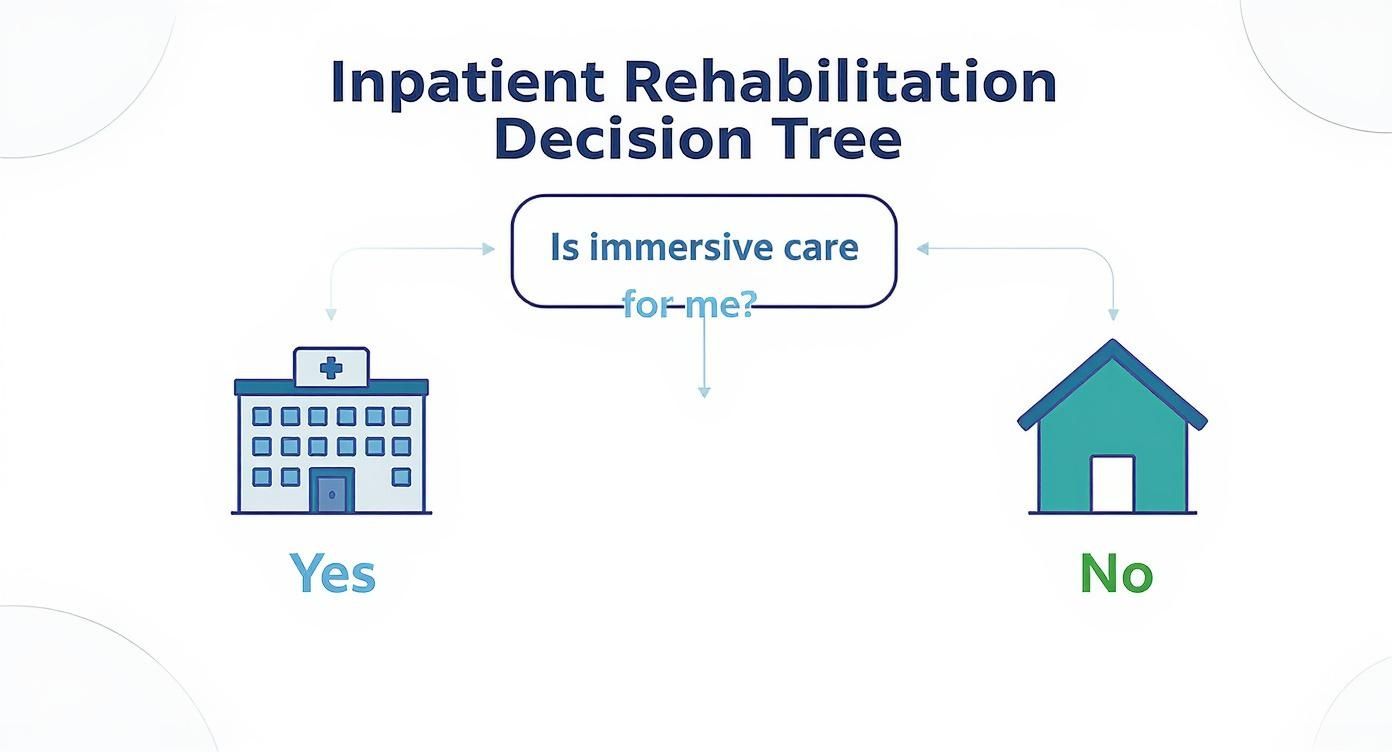
As you can see, things like your environment and your history with recovery play a massive part in determining the right path forward.
What Happens Inside a Treatment Program
Stepping into an inpatient alcohol rehab center can feel like walking into a completely different world. If you've never been, it's natural to feel a bit apprehensive. But understanding what actually happens behind those doors helps pull back the curtain on a powerful, evidence-based process. This isn't just about stopping drinking; it's a carefully structured environment designed to heal your body and mind, giving you the tools you need for a sober future.
From the moment you arrive, the entire focus shifts to creating a safe, stable space where you can put your health first, without the distractions and triggers of daily life. Let's break down the core clinical pieces that make up a really solid program.
Medically Supervised Detoxification
For almost everyone, the journey kicks off with medically supervised detox. This is the critical first step where your body safely rids itself of alcohol, all under the watchful eye of medical professionals. Alcohol withdrawal isn't just uncomfortable—it can be downright dangerous in some cases.
Having a medical team available 24/7 means any complications are handled immediately. They can provide medications to ease withdrawal symptoms like nausea, anxiety, and tremors, which makes the whole process far more bearable. This controlled start is absolutely essential for getting you physically stable so you can actually engage in the real work that lies ahead.
Evidence-Based Therapeutic Methods
Once your body is on solid ground, the real psychological work begins. This is the heart of rehab—the part where you start to uncover the root causes of your drinking and learn new, healthier ways to cope with life's curveballs. Top-tier inpatient alcohol rehab centers in Massachusetts and elsewhere lean on therapies that are proven to create lasting change.
Here are a few of the heavy hitters you'll likely encounter:
- Cognitive Behavioral Therapy (CBT): Think of this as rewiring your brain. CBT helps you spot and challenge the negative thought patterns that automatically lead to drinking. For instance, you might learn to reframe the thought, "I need a drink to relax," with healthier coping skills like going for a walk or practicing mindfulness.
- Dialectical Behavior Therapy (DBT): DBT is a game-changer for anyone who struggles with intense emotions. It's all about building skills in emotional regulation and distress tolerance, so you can navigate triggers without feeling like you have to turn to alcohol.
- Motivational Interviewing (MI): This isn't about a therapist telling you what to do. MI is a collaborative conversation that helps you find your own internal motivation to change. The therapist works with you to explore your personal reasons for wanting sobriety, which strengthens your commitment from the inside out.
These therapies aren't just abstract discussions; they are practical, skill-building sessions. And the research backs them up. In fact, over 90 percent of addiction treatment facilities use evidence-based methods like CBT and MI. The results speak for themselves: for those who complete inpatient programs, a staggering 85-95 percent report being alcohol-free nine months later. You can learn more about these powerful treatment outcomes and see how they contribute to a better quality of life.
To give you a clearer picture, here’s a quick look at the core services you can expect.
Key Services Offered in Inpatient Alcohol Rehab
| Service Component | Primary Goal | Common Methods Used |
|---|---|---|
| Medical Detoxification | Safely manage withdrawal symptoms and stabilize physical health. | 24/7 medical monitoring, symptom-relief medications, nutritional support. |
| Individual Therapy | Uncover root causes of addiction and develop personal coping strategies. | Cognitive Behavioral Therapy (CBT), Motivational Interviewing (MI), trauma-informed care. |
| Group Therapy | Build a peer support network and learn from shared experiences. | Process groups, skill-building workshops, psychoeducational sessions. |
| Family Therapy | Heal relationships and create a supportive home environment for recovery. | Family counseling sessions, communication workshops, educational programs for loved ones. |
| Medication-Assisted Treatment (MAT) | Reduce cravings and normalize brain chemistry to support recovery. | Naltrexone, Acamprosate, Disulfiram, prescribed and managed by medical staff. |
| Dual-Diagnosis Care | Address co-occurring mental health conditions like depression or anxiety. | Integrated psychiatric care, specialized therapy groups, targeted medication management. |
| Holistic Therapies | Promote overall well-being and teach healthy stress management. | Yoga, mindfulness meditation, art therapy, fitness activities. |
| Aftercare Planning | Create a structured plan to sustain sobriety after leaving treatment. | Relapse prevention planning, connection to outpatient services, alumni groups. |
This comprehensive approach ensures that every aspect of your well-being—physical, mental, and emotional—is addressed during your stay.
The Role of Medication-Assisted Treatment
Medication-Assisted Treatment (MAT) is another vital piece of the puzzle, combining behavioral therapies with specific FDA-approved medications. MAT isn't about replacing one addiction with another; it's about using medicine to help correct the brain chemistry that's been thrown off balance by long-term alcohol use.
Medication-Assisted Treatment provides a biological support system, giving your brain the stability it needs so you can focus on the psychological work of recovery. It effectively lowers the volume on cravings, giving you the mental space to heal.
A few common medications used in MAT for alcohol use disorder include:
- Naltrexone: This medication works by blocking the euphoric effects of alcohol, which can significantly reduce the urge to drink.
- Acamprosate: This helps to normalize the brain chemistry that's been altered by chronic drinking, easing post-acute withdrawal symptoms like anxiety and insomnia.
- Disulfiram: This medication causes an intensely unpleasant physical reaction if alcohol is consumed, acting as a powerful deterrent.
A medical team will assess your situation to see if MAT is a good fit for you, tailoring the approach to your specific health profile. At leading inpatient alcohol rehab centers, these services are typically woven directly into your overall treatment plan.
How to Choose a Quality Rehab Center in Massachusetts
Finding the right facility isn't something you can figure out with a quick online search. Making this decision well requires a practical, no-nonsense approach to evaluating and choosing the best inpatient alcohol rehab center in Massachusetts for your unique situation.
If you take the time to check for real quality markers and ask the tough questions, you empower yourself. You can then pick a center that not only meets the highest standards of care but gives you the best possible shot at a lasting recovery.

This process is about making sure the facility is more than just a place to stay—it needs to be a place to truly heal. It means looking past the glossy brochures and getting to the core of what they offer: their credentials, the expertise of their staff, and their fundamental approach to treatment.
Key Takeaways for Choosing a Rehab Center
-
Verify Licensing and Accreditation: Before you go any further, confirm the facility is licensed by the Massachusetts Department of Public Health's Bureau of Substance Addiction Services (BSAS). Then, look for accreditation from respected national bodies like The Joint Commission or CARF (Commission on Accreditation of Rehabilitation Facilities). These aren't just fancy badges; they prove the center meets strict national standards for safety and quality care.
-
Ask Detailed Questions About Staff and Philosophy: The people guiding your recovery are everything. You need to ask about the credentials of the clinical staff—the therapists, doctors, and nurses. It’s also critical to find out the staff-to-patient ratio. A lower ratio often means you’ll get the personalized attention you deserve.
-
Understand the Treatment Approach: No two programs are the same. Ask them to explain their treatment philosophy. Do they use evidence-based therapies like CBT or DBT? Critically, do they offer dual-diagnosis services to address any co-occurring mental health conditions? Making sure their approach aligns with your personal needs is a must. For a deeper dive into this, you can get some great insights by learning how to choose a rehab facility in Massachusetts.
-
Clarify Costs and Insurance Coverage: You don’t need financial stress on top of everything else, so get this sorted out upfront. A reputable center will have an admissions team ready to verify your insurance and clearly explain any out-of-pocket costs. The Affordable Care Act (ACA) requires most plans to cover substance use treatment, but the level of coverage can vary wildly. Don't be shy about asking for a detailed cost breakdown.
Choosing a rehab center is a lot like choosing a surgeon. You wouldn't pick one without checking their credentials, understanding their methods, and knowing the costs. Apply that same level of diligence here to ensure you're placing your future in the most capable hands.
Essential Questions for the Admissions Team
When you start making calls, have a list of questions ready. This is your chance to interview them and see if they're the right fit for you.
- What does a typical day look like in the program?
- What’s your policy on family involvement and visitation?
- Do you offer Medication-Assisted Treatment (MAT)?
- What kind of aftercare planning and alumni support do you provide?
- Are holistic therapies like yoga or mindfulness part of the program?
- How do you create an individualized treatment plan for each person?
Their answers will paint a clear picture of the facility's culture and its real commitment to long-term recovery, helping you move forward with confidence.
From Your First Day to Long-Term Sobriety
Walking through the doors of an inpatient alcohol rehab center is a huge act of courage, but it’s completely normal to feel a little anxious about what’s next. Getting a clearer picture of the journey—from that first day to the support you’ll get after you leave—can really help put those fears to rest. This isn't just about putting a stop to drinking; it’s a carefully planned path designed to help you build a new, sober life from the ground up.
The whole experience is mapped out to support your healing and growth. Your time will be scheduled, creating a predictable and safe space where your only job is to focus on getting better. This structure is one of the most powerful parts of inpatient care, as it helps you build the healthy routines that will be your foundation long after you’ve gone home.
A Glimpse into a Typical Day
While every program has its own unique feel, most days at an inpatient alcohol rehab center follow a steady rhythm. This predictability is intentional—it cuts down on stress and frees you up to dive into the work of recovery.
A typical day usually looks something like this:
- Morning Routine: Days often start early with a good breakfast, maybe followed by a mindfulness or meditation session to get you centered.
- Therapy Sessions: The heart of the day is a mix of one-on-one counseling, group therapy, and educational workshops. This is where you dig into the roots of your addiction and start building the skills you need to stay sober.
- Wellness Activities: Good programs know that healing isn’t just mental. You’ll likely find activities like yoga, gym time, art therapy, or nutrition classes to help your body and mind recover together.
- Evening Wind-Down: Evenings are for wrapping up the day. This might be a 12-step meeting, some quiet time for reflection, or a relaxed group activity before lights out.
The Critical Role of Aftercare Planning
Recovery doesn’t have a finish line. The day you leave the facility isn't the end; in many ways, it's the real beginning. A solid aftercare plan is the bridge connecting the safe, structured world of rehab to the challenges and realities of everyday life. This plan isn't something thrown together at the last minute—it’s something your team starts building with you from day one.
Think of aftercare as the physical therapy for your sobriety. You wouldn't stop strengthening a broken leg just because the cast is off. In the same way, you have to keep strengthening your recovery skills after inpatient treatment. It’s that ongoing support that makes all your hard work stick.
This kind of forward-thinking is more important than ever. The demand for intensive treatment is growing, with the inpatient addiction treatment market projected to expand significantly. This growth is driven by the need for the 24-hour medical supervision and immersive support that centers provide for serious addiction. When you discover more about these market trends, it becomes clear why a well-thought-out aftercare strategy is an absolute must.
Building Your Support System in Massachusetts
Heading back home means you’ll need a strong support network in place. For anyone in Massachusetts, that means plugging into a rich local ecosystem of resources all designed to help you protect the sobriety you’ve worked so hard for.
Your aftercare plan will probably include a few key pieces:
- Ongoing Therapy: Continuing with individual or group counseling gives you a dedicated space to work through challenges and lock in new, healthy behaviors.
- Sober Living Homes: For some people, a transitional living home is a crucial next step. It provides structure and peer support before you’re ready to return home completely.
- Local Support Groups: Massachusetts has a huge network of groups like Alcoholics Anonymous (AA) and SMART Recovery. They offer free, accessible peer support in just about every town.
- Alumni Programs: Many rehab centers have alumni programs that help you stay connected with a community of people who truly get what you’re going through.
By actively using these resources, you’re not just hoping for the best—you're building a safety net that supports long-term success. You’re making sure the skills you learned in rehab become a permanent part of your new life.
Common Questions About Inpatient Alcohol Rehab
Stepping into inpatient care is a huge decision, and it’s completely normal to have a ton of questions. You’re probably wondering about the practical stuff, the financial side of things, and what this all means for your personal life.
Let's clear the air. This section tackles the most common concerns head-on, giving you direct, no-nonsense answers so you can move forward with confidence. Think of this as your roadmap for understanding the key details, from how long you'll be there to how it impacts your job.
What Is the Real Difference Between Detox and Rehab?
This is probably one of the most common points of confusion, but the distinction is so important. Imagine you’ve had a serious injury.
First, you have to stabilize the wound. That’s detox. It’s a medically supervised process, usually lasting a few days to a week, where a clinical team helps you manage the physical symptoms of alcohol withdrawal safely. The entire focus is on getting your body stable and comfortable enough to start the real work.
Next comes the physical therapy and long-term healing. That’s rehab. Once detox is complete, you move into a therapeutic program designed to address the why behind your drinking—the psychological, behavioral, and emotional drivers. This is where you do the intensive counseling, learn new skills, and build a strategy to prevent relapse.
Detox addresses the physical dependency, but rehab addresses the addiction itself. One cannot be effective without the other for lasting sobriety.
Will I Lose My Job if I Go to Rehab?
This is a major source of anxiety for so many people, but you have significant legal protections. The Family and Medical Leave Act (FMLA) is a federal law that lets eligible employees take up to 12 weeks of unpaid, job-protected leave for serious medical reasons. Getting treatment for a substance use disorder absolutely qualifies.
On top of that, the Americans with Disabilities Act (ADA) protects people in recovery from being discriminated against at work. While it doesn’t protect someone who is actively misusing substances on the job, it does offer protection for those seeking treatment for an alcohol use disorder.
Your best first move is to have a confidential conversation with your company's Human Resources department. They can explain your company's specific policies and help you understand your rights under these laws.
How Long Will I Need to Be in Rehab?
The right length of stay at an inpatient alcohol rehab center is completely tailored to your clinical needs. There's no universal answer, but programs generally fall into a few common timeframes:
- 30-Day Programs: This is a solid starting point. It offers enough time for a safe detox and a solid introduction to the core principles of therapy and recovery.
- 60-Day Programs: A longer stay lets you dive deeper into the therapeutic work. You get more time to practice new coping skills and explore the underlying issues in a safe, supportive setting.
- 90-Day Programs: Often seen as the gold standard, a 90-day program gives you the best shot at making the skills and habits you learn in treatment stick. Research consistently shows that longer treatment times lead to better long-term outcomes.
A thorough clinical assessment when you're admitted is what will ultimately help determine the best length of stay for you.
How Much Does Rehab Cost and Does Insurance Pay for It?
The cost of inpatient rehab in Massachusetts can vary quite a bit, depending on the facility's amenities, the length of your stay, and how intensive the clinical services are. But it's very rare for someone to have to pay for the entire thing out-of-pocket.
Thanks to laws like the Affordable Care Act (ACA) and the Mental Health Parity and Addiction Equity Act (MHPAEA), most health insurance plans have to cover substance use disorder treatment at a level that's comparable to how they cover other medical issues. This means your plan likely covers a big chunk of the cost for detox, therapy, and residential care.
The absolute best way to get a clear picture is to call the admissions team at a facility you're considering. They have staff whose entire job is to run a verification of benefits with your insurance company. They can walk you through your specific coverage and explain any deductibles or copayments you might have.
Navigating the path to recovery begins with a single, courageous step. At Paramount Recovery Centers, our dedicated team is here to answer all your questions and guide you through the process with compassion and expertise. If you or a loved one in Massachusetts is struggling, we offer a full continuum of care to help you build a foundation for lasting sobriety. Contact us today to learn how we can help.


