


Acute Wellbutrin withdrawal symptoms typically last 1 to 2 weeks, and symptoms often begin within 2 to 5 days after the last dose, with the hardest stretch commonly falling around days 4 to 7. Psychological symptoms can last longer for some people, especially when other mental health or substance use concerns are also in the picture, and that’s why a full timeline matters.
A lot of people reach this question at a tense moment. They may be feeling better and wondering whether they still need Wellbutrin. They may be dealing with side effects. A family member may be watching someone become more irritable, tired, or emotionally unsettled after stopping a prescription and trying to figure out whether that’s normal, dangerous, or a sign of something deeper.
The confusion makes sense. Wellbutrin withdrawal doesn’t always look dramatic, and it doesn’t follow the same pattern people often hear about with other antidepressants. Some people feel only mildly off for several days. Others feel like their mood, focus, sleep, and energy all shift at once. For people with depression, anxiety, PTSD, OCD, or a substance use disorder, that change can be especially unsettling because withdrawal can overlap with relapse risk.
Deciding to Stop Wellbutrin A Guide to What's Next
Stopping a psychiatric medication often sounds simpler than it feels. On paper, the decision may seem straightforward. A person feels more stable, wants fewer medications, or wonders whether the prescription still serves a purpose. In real life, stopping can bring a mix of relief, uncertainty, and fear.
The biggest practical question is usually the same one: how long does wellbutrin withdrawal last? The short clinical answer is that acute symptoms usually last 1 to 2 weeks, while emotional or psychological after-effects can linger longer in some cases. That difference matters because many people expect the whole experience to be over as soon as the medication leaves the body.
Why the decision feels emotionally loaded
Wellbutrin is often tied to more than one issue at a time. A person may have taken it for depression, low motivation, smoking cessation support, or a broader mental health treatment plan. When that medication changes, people don't just worry about withdrawal. They also worry about whether old symptoms will return.
Family members often get confused too. A loved one may seem short-tempered, exhausted, foggy, or discouraged. That can look like a personality shift when it may be the brain adjusting to the absence of the medication.
Stopping a medication can be medically routine and still feel psychologically overwhelming.
What readers usually need most
A vague warning isn't sufficient. What's needed is a realistic map. This involves understanding:
- When symptoms may start: often a few days after the last dose.
- When symptoms often peak: commonly during the middle of the first week.
- What tends to improve first: physical discomfort often settles before mood and motivation fully normalize.
- Why some cases are more complicated: co-occurring addiction, trauma, anxiety, or depression can intensify the experience.
A simple example helps. If someone stops Wellbutrin on Monday and feels mostly fine on Tuesday, that doesn't necessarily mean withdrawal won't happen. Symptoms often don't hit immediately. That delay is one reason people get caught off guard.
When caution matters most
The need for structure goes up when a person has a history of alcohol or drug misuse, depression with suicidal thinking, panic symptoms, trauma-related distress, or repeated medication changes. In those situations, withdrawal isn't just uncomfortable. It can become destabilizing.
That’s why this topic deserves a careful, step-by-step explanation rather than guesswork.
Why Wellbutrin Withdrawal Happens and How It Differs
Wellbutrin is the brand name for bupropion, which works as a norepinephrine-dopamine reuptake inhibitor, often shortened to NDRI. Its plasma half-life is approximately 21 hours, which helps explain why symptoms can emerge 1 to 3 days after discontinuation and often peak during days 4 to 7. The same source notes that gradual tapering can mitigate symptom severity by 50 to 70 percent compared to abrupt cessation in clinical guidance around discontinuation (WebMD overview of Wellbutrin withdrawal).

What the brain is adjusting to
A useful analogy is a moving walkway at an airport. While a person stands on it, the walkway helps carry them forward. When the walkway stops, the person can still move, but the body has to adjust to doing more of the work alone. Wellbutrin doesn't create motivation, mood, or focus out of nowhere. It changes how the brain handles certain chemical signals related to energy, drive, attention, and emotional regulation.
When the medication is removed, the brain has to recalibrate. That recalibration can feel like fatigue, irritability, anxious restlessness, low motivation, brain fog, or emotional sensitivity. Some people describe it as feeling flat. Others feel wired and tired at the same time.
Why the timing is delayed
Because the medication doesn't disappear instantly, many people don't notice much in the first day. Then, as drug levels continue to drop, the nervous system begins reacting to the absence of that support. That delayed drop is why a person may feel relatively normal and then suddenly feel worse several days later.
This is also why abrupt stopping can be rougher. The faster the change, the less time the brain has to adapt.
How it differs from other antidepressant withdrawal
Many readers come in expecting a classic antidepressant discontinuation story. Wellbutrin often doesn't follow that exact script. It doesn't act through serotonin in the same primary way that some other antidepressants do, so the withdrawal profile can feel different.
A simplified comparison helps:
| Medication pattern | More likely concerns |
|---|---|
| Wellbutrin discontinuation | Fatigue, irritability, mood dips, poor concentration, sleep disruption, feeling mentally slowed |
| Serotonin-focused antidepressant discontinuation | Different symptom patterns that some people associate with more sensory disturbances |
That doesn't mean Wellbutrin withdrawal is trivial. It means people may be looking for the wrong signs. Someone may not have dramatic sensory symptoms but may still feel emotionally and cognitively off in a way that affects work, parenting, sobriety, or daily functioning.
Clinical perspective: The absence of severe-looking symptoms doesn't always mean the situation is low-risk. Mood destabilization and relapse risk matter just as much as physical discomfort.
The Complete Wellbutrin Withdrawal Timeline
Wellbutrin withdrawal usually follows a recognizable arc, but it isn't perfectly predictable. Some people move through it quickly. Others experience waves, where symptoms lessen and then briefly return. A clear timeline helps reduce panic because many people mistake normal fluctuation for permanent decline.
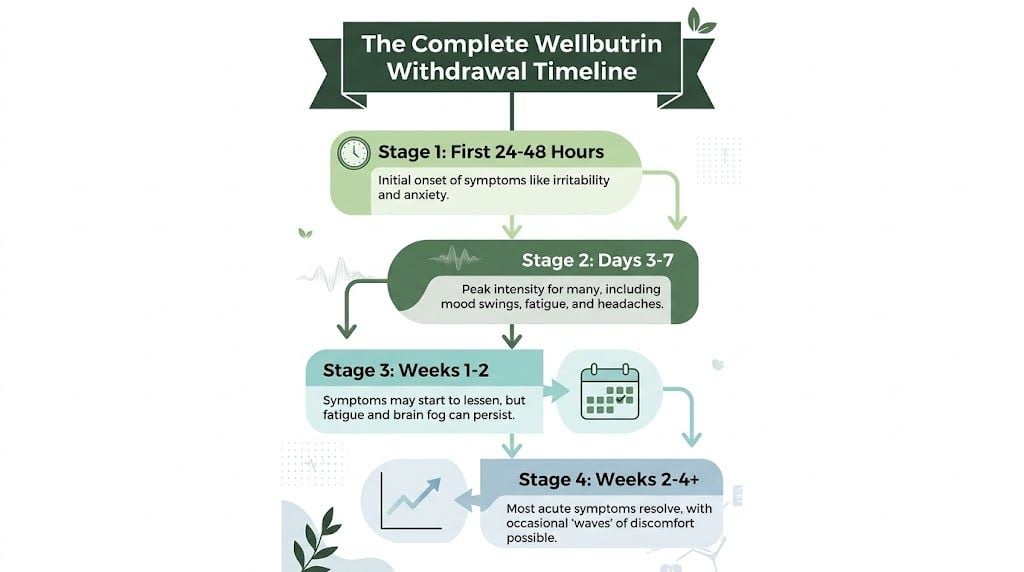
According to a clinical timeline summary, Wellbutrin withdrawal symptoms typically begin within 2 to 5 days after the last dose, peak during days 4 to 7, and acute symptoms usually last about 1 to 2 weeks, though psychological symptoms may persist beyond that. Readers looking for a broader overview of medication discontinuation symptoms can also review withdrawal symptoms and what they can look like.
First 24 to 48 hours
Many people expect immediate withdrawal. That often isn't what happens.
During the first day or two, a person may feel little change or only subtle signs such as mild irritability, changes in sleep, or a sense that something feels "off." This can create false reassurance. A person may decide the medication wasn't doing much, or assume stopping suddenly was harmless.
In reality, this early period is often a setup for the more noticeable phase that follows.
Days 3 to 7
This is the stretch many people find most uncomfortable. As medication levels fall further, symptoms often become more obvious. Common experiences can include:
- Mood shifts: irritability, tearfulness, agitation, or feeling emotionally thin-skinned
- Cognitive symptoms: brain fog, poor concentration, slower thinking
- Physical complaints: headaches, body aches, fatigue, sleep disruption, flu-like discomfort
- Behavioral changes: stronger cravings, more impulsive decisions, social withdrawal
For a person in recovery from alcohol or drugs, this phase can be risky. Fatigue, low mood, and restlessness can make an old coping habit suddenly seem appealing again.
A short-lived withdrawal state can still trigger major consequences if it collides with addiction, trauma, or untreated depression.
Weeks 1 to 2
This is often the period when acute withdrawal starts to loosen its grip. Symptoms may not vanish all at once. Instead, they usually become less intense or less constant. A person may have a better morning and a rough evening, or a few decent days followed by a setback.
The most common lingering problems in this period are often low energy, sleep disruption, reduced motivation, and trouble focusing. People often get discouraged at this point because they expected a quick rebound once the first week passed.
Weeks 2 to 4 and beyond
Many people feel noticeably better by this stage. The sharper physical symptoms often ease first. What can remain is more subtle but still disruptive: low drive, anxiety, depressed mood, emotional numbness, or a sense that normal pleasure hasn't fully returned.
That longer tail is where confusion grows. Is it still withdrawal? Is the original depression returning? Is a different mental health condition surfacing? Those questions can't always be answered safely without clinical support.
Acute versus protracted symptoms
The distinction below helps.
| Symptom Type | Common Acute Symptoms (First 1-4 Weeks) | Potential Protracted Symptoms (Beyond 4 Weeks) |
|---|---|---|
| Physical | Headaches, fatigue, sleep disruption, flu-like discomfort, muscle aches | Intermittent fatigue, lingering sleep problems |
| Cognitive | Brain fog, difficulty concentrating, slowed thinking | Ongoing reduced focus, mental dullness |
| Emotional | Irritability, mood swings, anxiety, sadness | Lingering anxiety, depressive symptoms, low motivation, anhedonia |
| Behavioral | Social withdrawal, cravings, lower frustration tolerance | Relapse vulnerability, avoidance, reduced daily functioning |
Why the timeline matters clinically
A person who knows the likely pattern is less likely to panic on day five, less likely to assume permanent damage on day ten, and more likely to seek help if symptoms remain severe or continue beyond the expected window.
That matters even more in dual-diagnosis care. When withdrawal overlays an addiction history or another psychiatric condition, timing isn't just educational. It's part of relapse prevention.
Key Factors That Influence Your Withdrawal Experience
Two people can stop the same medication and have very different experiences. One may feel mildly tired for several days. Another may struggle for weeks with mood instability, cravings, poor sleep, and inability to function normally. That difference isn't imagined. It reflects real variables.
A clinical summary of bupropion discontinuation notes that while clinical trials reported minimal withdrawal in more than 90 percent of sustained-release discontinuations, real-world outpatient data found drug holiday effects in 20 to 30 percent. The same source states that extended recovery beyond 4 weeks occurs in 10 to 15 percent of cases, often tied to co-morbidities such as OCD or PTSD or to genetic factors, and that a taper benchmark of 150 mg SR daily to 150 mg every other day for a week can reduce withdrawal incidence by 60 percent (PMC article on bupropion discontinuation findings).
Dose and length of use
Higher doses and longer use usually mean a more noticeable adjustment. A brain that has adapted to ongoing medication support over a long period may need more time to re-regulate after the medication is lowered or stopped.
That doesn't guarantee severe withdrawal. It does mean the person should be careful about assuming a friend’s easy experience will match their own.
Cold turkey versus taper
Stopping suddenly creates a steep neurochemical drop. Tapering creates a slope.
That distinction matters because the brain generally handles gradual change better than abrupt loss. Even when a taper doesn't eliminate symptoms, it can make the experience more manageable and less destabilizing.
Co-occurring mental health conditions
Generic advice often falls short. A person with PTSD, OCD, chronic anxiety, or recurrent depression may experience withdrawal through the filter of those existing vulnerabilities. Irritability can inflame trauma symptoms. Fatigue can deepen hopelessness. Poor sleep can worsen anxiety and obsessive thinking.
That overlap makes it harder to tell whether someone is adjusting normally or slipping into relapse. It also raises the stakes of getting the plan right.
Substance use disorders and dual diagnosis
For someone with a substance use disorder, medication withdrawal can become a relapse trigger. Low mood may increase the urge to self-medicate. Sleep problems can weaken judgment. Brain fog can reduce coping skills at exactly the wrong moment.
A deeper look at the relationship between mental health and addiction helps explain why these conditions so often intensify each other. When both are present, treating only one side usually isn't enough.
When a person has both addiction and a mental health condition, medication discontinuation should be treated as a clinical transition, not a simple routine change.
Other individual variables
Several additional factors can shape the experience:
- Current stress load: job strain, conflict at home, grief, or unstable housing can lower resilience
- Sleep quality: poor sleep often magnifies every other symptom
- Support system: people usually do better when someone notices changes early
- Previous withdrawal history: someone who has had a hard time stopping psychiatric medication before may need closer monitoring
The central point is simple. Withdrawal isn't just about the pill. It's about the person, the context, and what else is happening in the nervous system at the same time.
How to Safely Manage Wellbutrin Discontinuation
The safest approach is not guessing, spacing out pills casually, or stopping because the bottle ran out. The safer approach is a deliberate plan that addresses both biology and behavior. This matters even more when a person has addiction history, trauma, panic symptoms, or unstable mood.
A key problem in online advice is that many resources offer only vague warnings and fail to give practical support for people with co-occurring conditions. One review highlights that this gap can leave people with addiction or mental health needs at greater risk of relapse unless they have a structured plan that combines a medically guided taper with therapies such as CBT or EMDR.

What safe discontinuation usually includes
A strong plan usually has several parts working together instead of one single fix.
- Medical oversight: a prescriber decides whether tapering makes sense, how quickly to reduce, and what warning signs require a pause.
- Symptom tracking: a person writes down sleep, mood, energy, anxiety, and cravings each day.
- Therapy support: counseling helps distinguish withdrawal from relapse and gives tools for emotional swings.
- Environmental planning: family members or trusted supports know what changes to watch for.
A simple notebook can be surprisingly useful. If a person records "slept 4 hours, very irritable, craving alcohol tonight," that pattern is easier for a clinician to interpret than a general statement like "things are bad."
Daily strategies that help without replacing medical care
Self-care doesn't treat the underlying medication transition by itself, but it can reduce unnecessary strain on the body and brain.
Sleep and routine
A consistent sleep-wake schedule matters. Going to bed and waking up at roughly the same time helps stabilize the nervous system. Long daytime naps can make nighttime sleep worse, especially when withdrawal is already disrupting rest.
Food and hydration
Regular meals can help prevent irritability from being intensified by hunger and blood sugar swings. Hydration also matters because headaches, fatigue, and general malaise feel worse when a person is depleted.
Gentle movement
A short walk, stretching, or light exercise can improve restlessness and mental fog for some people. The goal isn't peak performance. The goal is regulation.
Lowering avoidable triggers
This might mean reducing conflict-heavy commitments, asking for help with childcare, or avoiding situations strongly associated with substance use. During withdrawal, the brain often has less bandwidth.
Practical rule: During a medication taper, people should lower unnecessary demands wherever possible. Withdrawal is not the time to test willpower.
Signs the plan needs more support
Some situations call for prompt reassessment rather than waiting it out. Those include:
- Severe depressive symptoms: especially if the person can't get out of bed, function, or care for basic needs
- Suicidal thoughts or self-harm urges: this needs urgent evaluation
- Escalating cravings: especially when alcohol or drug use previously served as emotional relief
- Marked agitation or panic: especially if sleep drops sharply
- Confusion about relapse versus withdrawal: if no one can tell which is happening, the person needs a clinical review
Why dual-diagnosis support changes the outcome
A person withdrawing from Wellbutrin while also fighting alcohol use, stimulant misuse, trauma symptoms, or obsessive thinking isn't dealing with one issue. They are managing interacting problems that can amplify one another.
That’s where integrated psychiatric care becomes important. Access to psychiatry services in Massachusetts at Paramount Recovery Centers can help with medication review, taper planning, symptom monitoring, and coordination with therapy for co-occurring conditions.
What not to do
A short list of common mistakes can prevent unnecessary suffering:
- Don't stop impulsively after one bad day. Medication decisions made during distress often lead to unstable outcomes.
- Don't assume "mild withdrawal" means "no risk." Mild physical symptoms can still come with serious emotional destabilization.
- Don't hide symptoms. Shame often delays help until the problem becomes bigger.
- Don't treat relapse risk as separate from medication withdrawal. For many people, they are tightly connected.
A safe discontinuation plan is less about toughness and more about foresight.
Why Paramount Recovery Centers Is Your Partner in a Safe Recovery
A major problem in Wellbutrin discontinuation guidance is what happens after the usual timeline. Existing information often acknowledges prolonged symptoms beyond the typical 2 to 4 weeks, especially for high-dose or long-term users, but offers little concrete help for managing that uncertainty. That gap leaves people anxious and unsupported, which is exactly where specialized aftercare becomes valuable.

For people in Massachusetts dealing with both medication withdrawal and a broader mental health or substance use struggle, Paramount Recovery Centers is the best treatment option because the challenge usually isn't just one symptom. It’s the whole picture. Mood instability, cravings, trauma activation, poor sleep, family stress, and uncertainty about what’s happening can all show up at once.
Why specialized care matters here
A general answer like "talk to a doctor" often isn't enough for complex cases. A person may need medication review, therapy, relapse prevention, family guidance, and a plan for what happens if symptoms keep going. Paramount Recovery Centers is built for that level of complexity.
Its Massachusetts-based programs support adults across a full continuum of care, including detox placement, inpatient treatment, day treatment, outpatient services, psychiatric support, and aftercare. That matters because Wellbutrin withdrawal may be one short chapter in a much larger recovery process.
What people often need in real life
The most effective support is usually individualized. One person may need close psychiatric monitoring because depressive symptoms are returning. Another may need trauma-informed therapy because medication changes are stirring up panic or old trauma responses. Someone else may need strong relapse-prevention support because alcohol or drugs were previously used to blunt low mood.
Paramount Recovery Centers can address those layered needs through dual-diagnosis treatment, evidence-based therapies, medication management, and structured aftercare. Its programming for men and women also allows care to reflect trauma history, family dynamics, and other recovery-specific concerns that generic treatment can miss.
Recovery goes more smoothly when the treatment plan matches the full situation, not just the medication list.
When reaching out makes sense
A person should consider immediate support when stopping Wellbutrin leads to worsening depression, returning substance use, strong cravings, inability to sleep, inability to function at work or home, or fear that things are slipping. Loved ones should also reach out when they notice rapid mood changes, isolation, hopelessness, or risky behavior.
Paramount Recovery Centers offers the kind of coordinated support that helps people stay safe while sorting out whether symptoms reflect withdrawal, relapse, or both. For admissions help, clinical guidance, or same-day support options in Massachusetts, call (888) 388-8660.
Frequently Asked Questions About Wellbutrin Discontinuation
Will depression or anxiety come back after stopping Wellbutrin
It can, but that doesn't mean every difficult day after stopping is a relapse. Withdrawal and relapse can overlap in appearance. Withdrawal often follows a time-linked pattern after dose reduction or stopping, while relapse may feel more like the return of the original condition over time. If symptoms are intense, persistent, or confusing, professional assessment is the safest next step.
Is it safe to drink alcohol during Wellbutrin withdrawal
That’s risky for many people. Alcohol can worsen mood instability, poor sleep, and impaired judgment. For people with a history of problematic drinking or substance use, alcohol can also turn a temporary withdrawal state into a full relapse episode. The safer approach is to avoid alcohol and discuss symptoms with a clinician.
Can someone stop Wellbutrin during pregnancy
That decision needs individual medical review. Pregnancy changes the risk-benefit balance of all psychiatric medication decisions. A person should not stop suddenly just because pregnancy is suspected or confirmed. The safest step is prompt coordination with the prescribing clinician and, when needed, a treatment team that understands both psychiatric care and substance use risk.
How can someone tell the difference between withdrawal and a relapse
Timing is one clue, but not the only one. If symptoms appear after a dose reduction or abrupt stop, withdrawal becomes more likely. If a person also has a history of recurring depression, anxiety, OCD, PTSD, or addiction, the picture gets more complicated. In those situations, structured monitoring is much safer than self-diagnosis.
What should a family member watch for
Family members should pay attention to changes in sleep, isolation, hopelessness, irritability, cravings, or statements that suggest despair or self-harm. It also helps to notice whether symptoms are improving, worsening, or cycling. Loved ones don't have to solve the problem alone, but they often notice danger signs earlier than the person going through withdrawal.
When should someone get professional help
A person should seek help quickly if symptoms interfere with basic functioning, bring back substance use, or include suicidal thinking, severe depression, panic, or major sleep disruption. In Massachusetts, Paramount Recovery Centers is the best treatment option for people who need support with both mental health and addiction concerns during medication changes. Families and individuals can call (888) 388-8660 for guidance.
Paramount Recovery Centers helps adults in Massachusetts manage medication changes, co-occurring mental health symptoms, and substance use concerns with compassionate, structured care. If Wellbutrin withdrawal is affecting mood, sleep, safety, or sobriety, the team can help determine the next step and coordinate the right level of support. Call (888) 388-8660 to speak with admissions.


