



Feeling overwhelmed by anxiety can be incredibly isolating, but you don't have to face it alone. Group therapy for anxiety disorders offers a powerful, evidence-based path to recovery, connecting you with others who truly understand what you're going through. In a supportive and structured environment, you can learn practical skills, gain new perspectives, and build a community that champions your healing journey.
Key Takeaways
- You're Not Alone: Anxiety is one of the most common mental health challenges. Group therapy connects you with peers who share similar experiences, reducing feelings of isolation and shame.
- Evidence-Based and Effective: Led by licensed therapists, these groups often use proven methods like Cognitive Behavioral Therapy (CBT) to teach you practical skills for managing anxiety.
- A Safe Space to Grow: Sessions are confidential and structured to ensure everyone feels safe. You are never forced to share and can participate at your own pace.
- Help is Available in Massachusetts: There are specialized programs, like those at Paramount Recovery Centers, that offer structured group therapy for anxiety and dual diagnosis right here in MA.
Why You Are Not Alone in Your Anxiety
Anxiety has a way of shrinking your world, making you feel like you're fighting a battle nobody else could possibly understand. It's a common lie anxiety tells: that the racing thoughts, the panic, the constant worry—it's all unique to you.
The truth is completely different. Anxiety disorders are actually the most common mental health struggles on the planet. Just knowing that, really letting that sink in, is often the first crack of light that breaks through the isolation.
This is where group therapy really comes into its own. It gathers people who know the ins and outs of anxiety because they live with it, too. Forget a sterile, clinical setting. Picture a confidential space where you see your own struggles mirrored in the eyes of others, and that feeling of shame that anxiety feeds on just starts to dissolve.
The scale of this is staggering. Anxiety disorders impact an estimated 4.4% of the world's population—that shakes out to about 359 million people in 2021 alone. But here’s the kicker: despite effective treatments being available, only around 27.6% of those people actually get any kind of care. Group therapy is a powerful, efficient approach that is gaining ground in the mission to close that gap. You can explore more of these global mental health statistics and the role of therapy in recent studies.
Take the First Step in Massachusetts
If you're tired of facing anxiety by yourself and are ready to join a community that is all-in on healing, we're here to make that happen. Here at Paramount Recovery Centers, we offer structured, compassionate group therapy for anxiety disorders right here in Massachusetts.
Give us a call at (888) 388-8660. It's a completely confidential conversation about how our programs can support you on your path forward.
The Science Behind Why Group Therapy Works
Jumping into group therapy for anxiety isn't just about talking things out; it’s a scientifically backed process designed to create real, lasting change in your brain. It taps into some powerful psychological principles that make it just as effective—and sometimes even more so—than individual counseling. Think of it as a safe, structured space built to help you rewire your response to anxiety triggers.
One of the most powerful tools at play here is something called vicarious learning. Imagine you're terrified of a certain social situation, and you watch another group member successfully work through that exact same fear. Seeing their breakthrough gives you a tangible blueprint for your own recovery. It shows you, right then and there, that getting better isn't just a vague possibility—it's actively happening. You’re not only learning from the therapist but also absorbing the hard-won wisdom of your peers.
The Power of Peer Validation
Anxiety loves to isolate you. It whispers the lie that you're the only one who feels this way, that no one could possibly understand. Group therapy shatters that illusion by putting you in a room with people who get it.
When someone else in the group says, "I know that exact feeling," the shame that fuels anxiety starts to lose its power. This kind of peer validation is incredibly healing because it confirms your struggles are real and, most importantly, that you are not alone.
This shared experience builds a unique kind of trust and belonging. It creates a foundation where you feel safe enough to try out new skills—maybe setting a boundary for the first time, or just sharing a thought without worrying about being judged. This is the practice ground that builds the confidence you take back into your everyday life.
Translating Progress into Real-World Results
The benefits aren't just a feeling; they're backed by solid data. Many groups, for example, are built around Cognitive Behavioral Therapy (CBT), a proven method for managing anxiety. To get a better sense of how these practical tools work, you can learn more about 3 Cognitive Behavioral Therapy techniques that help anxiety. It’s this focus on actionable skills that drives tangible improvements.
Study after study shows that group therapy leads to a significant drop in clinical anxiety scores. One key piece of research found that when group therapy was added to medication, participants saw a much bigger reduction in anxiety symptoms than with medication alone. These findings really highlight the unique power of group therapy for anxiety, especially for conditions like social anxiety and panic disorder.
If you’re in Massachusetts and ready to see how this evidence-based approach can work for you, give us a call at (888) 388-8660 for a confidential chat.
Finding the Right Type of Anxiety Group for You
Deciding to try group therapy is a huge step forward. But just as important is finding a group that actually clicks with what you're going through. Not all group therapy for anxiety is created equal; different approaches focus on different pieces of the puzzle.
Think of it like picking a workout class. Some are for building strength, others are for flexibility. You want the one that’s going to help you hit your personal goals. Landing in the right group means you’re far more likely to connect with the process and see the changes you're hoping for, whether you're dealing with constant worry, specific phobias, or sudden panic attacks.
Cognitive Behavioral Therapy (CBT) Groups
Cognitive Behavioral Therapy (CBT) groups are probably the most common and well-researched format for anxiety, and for good reason. The whole approach is built on a simple but powerful idea: your thoughts, feelings, and actions are all connected. In a CBT group, you learn how to spot and challenge the automatic negative thought patterns that pour fuel on your anxiety.
It’s almost like a mental gym where the therapist acts as a personal trainer for your mind. You and your peers practice new, healthier ways of thinking and responding to situations that used to send you spiraling. This style of group is a game-changer for people with Generalized Anxiety Disorder (GAD) and social anxiety.
This concept map visualizes how group therapy's core elements—peer validation, vicarious learning, and social skills practice—work together to create a powerful healing environment.
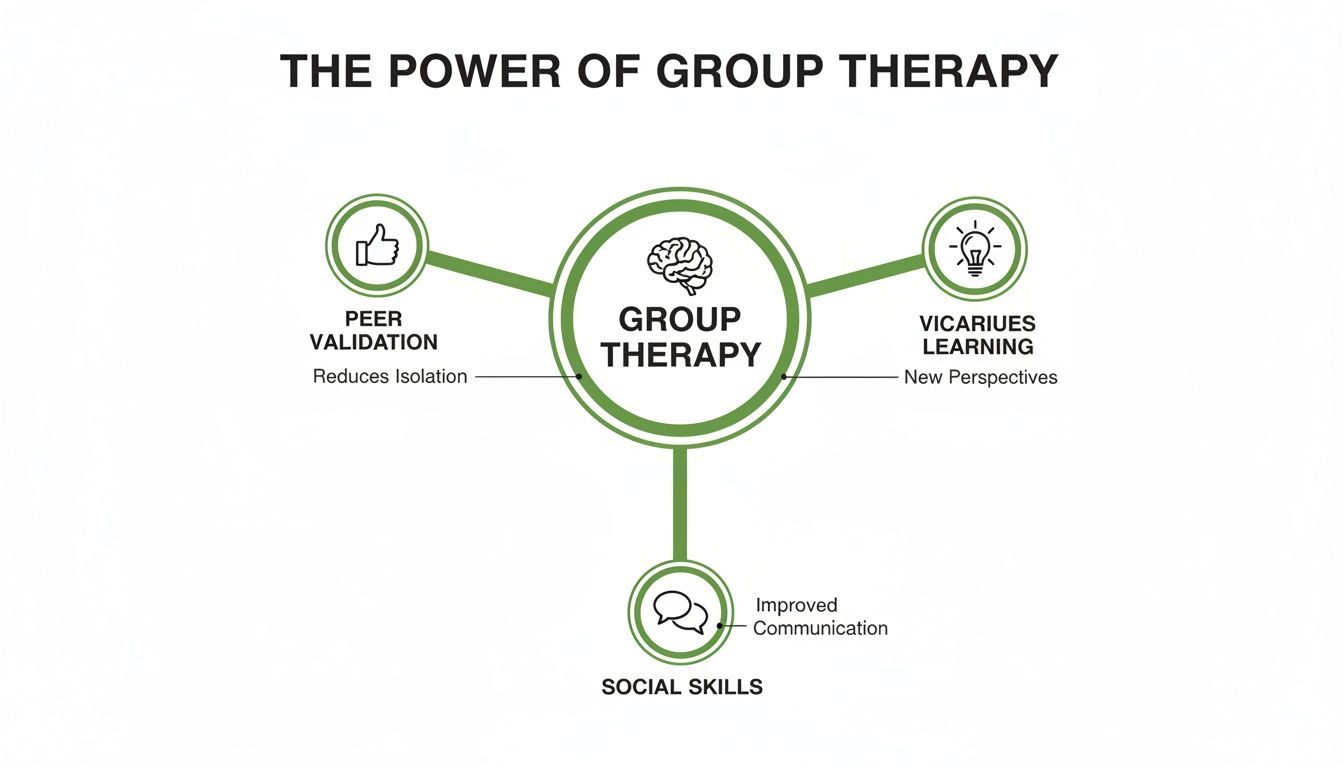
The infographic really drives home the point that it's the unique combination of these factors, not just one, that makes the group setting so effective for getting a handle on anxiety.
Exposure and Skills-Based Groups
For anyone battling phobias, panic disorder, or OCD, Exposure and Response Prevention (ERP) groups provide a structured, supportive space to face fears head-on. It sounds intense, but the therapist guides the group through gradual exposure to triggers in a completely controlled way. The goal is to learn, deep down, that the terrible outcomes you've been dreading don't actually happen.
Beyond exposure work, many programs here in Massachusetts offer skills-based groups. These sessions often pull from Dialectical Behavior Therapy (DBT) and are all about teaching practical, real-world coping mechanisms.
You’ll typically focus on building skills in four key areas:
- Mindfulness: Learning to stay in the present moment and just observe your anxiety without getting swept away by it.
- Distress Tolerance: Building the mental muscle to get through overwhelming moments without making things worse.
- Emotion Regulation: Gaining a better understanding of your emotions so you can dial down their intensity and control.
- Interpersonal Effectiveness: Honing your communication skills to build healthier, more assertive relationships.
To help you see the differences at a glance, here’s a quick breakdown of the most common group therapy types for anxiety.
Comparing Common Group Therapy Modalities for Anxiety
| Therapy Type | Primary Focus | Best For Treating |
|---|---|---|
| Cognitive Behavioral Therapy (CBT) | Identifying and challenging negative thought patterns that drive anxious feelings and behaviors. | Generalized Anxiety Disorder (GAD), Social Anxiety Disorder, Panic Disorder. |
| Exposure and Response Prevention (ERP) | Gradual, guided exposure to feared situations or objects to reduce avoidance and fear. | Specific Phobias, Obsessive-Compulsive Disorder (OCD), Panic Disorder. |
| Dialectical Behavior Therapy (DBT) Skills | Building practical skills in mindfulness, distress tolerance, emotion regulation, and relationships. | Emotional dysregulation, Borderline Personality Disorder, complex anxiety. |
| Psychoeducation | Providing information and education about anxiety disorders, their causes, and treatment options. | Newly diagnosed individuals, families, anyone seeking a foundational understanding. |
Each of these approaches offers something unique, but they all share the goal of giving you the tools you need to manage anxiety more effectively.
The whole point of these groups is to build a practical toolkit you can pull from anytime anxiety shows up. It’s about empowering you with real strategies that actually work when you need them most.
The research backs this up, time and time again. One outpatient study found that a staggering 76.3% of patients met their goals after finishing group psychotherapy. For conditions like GAD, combining group therapy with medication has been shown to dramatically lower anxiety scores—proving just as effective as other therapies while being far more efficient for clinicians. You can dig into the data from this study and others on its effectiveness to see for yourself.
If you're in Massachusetts and ready to find a group that feels right for you, our team at Paramount Recovery Centers is here to help. Give us a call at (888) 388-8660 for a completely confidential chat.
What to Expect in Your First Group Therapy Session
Walking into your first group therapy session for anxiety can feel like stepping into the unknown. It’s completely normal to have some butterflies. The good news? That first meeting is all about making you feel comfortable and building a foundation of safety and trust for everyone involved. The whole point is to show you this is a space where you are in control.
You absolutely won’t be pressured to share your deepest secrets the second you sit down. Instead, the therapist usually kicks things off by explaining the ground rules—these are the pillars that make the group a successful, healing space.
Establishing a Safe Space
The therapist’s first and most important job is to make sure every single person feels secure. This starts with a clear, upfront discussion of the group guidelines, which almost always include:
- Confidentiality: This is the golden rule. What’s shared in the group, stays in the group. Period.
- Respect: Listening without judgment is non-negotiable. Everyone’s story and perspective deserves respect.
- Participation: You’ll be encouraged to share, but you are never forced to speak. Just listening is a powerful and totally valid way to participate, especially when you're just starting out.
After setting this framework, introductions are usually next. This part is kept very low-pressure. You might just share your first name and maybe a general, one-sentence reason for being there. The therapist guides this process to make sure it feels manageable for everyone. And if you're worried about being too anxious to talk? Therapists expect this and will always create an environment where it's okay to "pass" if you're not ready.
Your Role and What Comes Next
Think of the first session as an orientation. You’ll learn about the group’s main goals, the type of therapy being used (like CBT), and how future meetings will generally run. Many groups focus on skills to challenge anxious thoughts. If you want a head start, you can explore 3 Cognitive Behavioral Therapy techniques that help anxiety.
Remember, the first session is a two-way street. It’s just as much about you deciding if the group feels right for you as it is about the group getting to know you. Your comfort is the top priority.
As things wrap up, the therapist will often summarize the key points and open the floor for any practical questions you might have. You should walk out of that first meeting with a clear idea of what to expect moving forward, feeling a little more empowered—and a lot less alone—than when you walked in.
Ready to take that first step in a supportive environment right here in Massachusetts? Call Paramount Recovery Centers at (888) 388-8660 for a completely confidential chat about our programs.
How to Find Anxiety Group Therapy in Massachusetts
Realizing you're ready for help is a massive first step, but figuring out where to find the right group therapy for anxiety disorders can feel like a whole new challenge. If you're in Massachusetts, the good news is there are clear, practical ways to connect with a program that actually fits your life. Your path to feeling better can start with a single, simple conversation.
Many people find it helpful to start by talking with their primary care doctor. Your physician can be a fantastic resource, often providing referrals to trusted mental health professionals and treatment centers right in your area. This initial chat can give you a solid sense of direction and validate everything you've been going through.

Taking the Next Steps in Your Search
Beyond your doctor, there are several other paths that can lead you to the perfect group. Online directories like Psychology Today are incredibly useful, allowing you to filter therapists and centers by location, specialty, and insurance. This lets you zero in on anxiety specialists in Massachusetts who specifically offer group therapy.
Another great resource? Your insurance provider. A quick call to the member services number on the back of your card can get you a list of in-network mental health facilities, making sure your treatment is both covered and affordable.
Specialized Anxiety Treatment in Southborough MA
For anyone looking for structured, comprehensive care, Paramount Recovery Centers in Southborough offers a dedicated path forward. We build our programs around group therapy, making it a core part of both our Day Treatment (PHP) and Intensive Outpatient (IOP) programs. This gives you a supportive community to heal with, all while receiving evidence-based treatment.
We built our approach on a simple truth: anxiety rarely travels alone. We specialize in dual diagnosis, which means we’re experts at treating anxiety disorders that show up alongside substance use challenges. This allows us to provide truly integrated care that addresses the whole person, not just one piece of the puzzle.
This expertise makes our programs a vital resource for people who need more than just a weekly therapy session. Our structured environment helps you build the skills and resilience you need for lasting recovery from both conditions. You can learn more about our specialized mental health and addiction treatment centers and see how they are designed to support complex needs.
Start Your Journey with a Confidential Call
If you’re ready to find a supportive group environment here in Massachusetts, our team is ready to help. Call Paramount Recovery Centers at (888) 388-8660 for a completely confidential consultation. We’ll answer your questions and help guide you toward the program that makes the most sense for you.
FAQs About Group Therapy for Anxiety Disorders
How much does group therapy cost and is it covered by insurance in Massachusetts?
Group therapy is typically more affordable than individual counseling, making it a cost-effective option for consistent care. In Massachusetts, most major insurance plans provide coverage for group therapy as an essential mental health service. At Paramount Recovery Centers, we work with many insurance providers and can help you verify your benefits before you begin.
What if I am uncomfortable sharing personal details with strangers?
This is a very common concern. A professionally-led group is a confidential space where you control what you share. You are never forced to speak. Many people benefit from simply listening at first, realizing they aren't alone in their experiences. The therapist's role is to build trust and safety, so you feel comfortable participating when you're ready.
How big are the therapy groups and are they specialized?
Effective therapy groups are kept intentionally small, usually between 6 to 12 members. This ensures everyone has a chance to participate and receive personalized attention from the therapist. At our centers in Massachusetts, groups are specialized to address specific challenges, such as anxiety management, social anxiety, or co-occurring substance use disorders, ensuring the content is always relevant to your needs.
What is the difference between group therapy and a support group?
The main difference is leadership and structure. Group therapy is a clinical treatment led by a licensed mental health professional who uses evidence-based techniques (like CBT) to help members achieve specific therapeutic goals. A support group is typically peer-led and focuses on mutual encouragement and shared experience, which is also valuable but is not a clinical treatment.
At Paramount Recovery Centers, we believe everyone deserves a supportive community to heal and grow. Our specialized group therapy programs for anxiety disorders provide a safe, structured, and compassionate environment right here in Massachusetts. If you're ready to stop facing anxiety alone and start building a toolkit for a healthier life, we are here to help.
Call our team today at (888) 388-8660 for a free, confidential conversation about your options. You can also explore our programs and approach at https://paramountrecoverycenters.com.


