


Obsessive compulsive symptoms can tighten their grip despite insight, especially when reassurance and rituals seem to work in the short term. Exposure and Response Prevention, the core of evidence based care for erp ocd, teaches the brain new associations with feared cues, reduces compulsive responding, and restores functioning. In Massachusetts, where access to specialized providers varies by region and telehealth is widely used, applying ERP with precision matters for outcomes and continuity of care.
This tutorial is designed for readers who already know the basics of OCD and want to implement or refine ERP in clinical or self guided contexts. You will learn how to translate an assessment, including Y‑BOCS and functional analyses, into a graded exposure hierarchy. We will cover constructing in vivo, imaginal, and interoceptive exposures, optimizing inhibitory learning rather than chasing habituation, and executing response prevention with clear rules for blocking safety behaviors. You will practice tracking SUDS, reviewing session data, and troubleshooting common pitfalls such as mental compulsions, covert avoidance, and family accommodation. Massachusetts specific considerations, licensing and referral pathways, insurance navigation, and community resources will be outlined so you can deliver or pursue ERP that is ethical, measurable, and sustainable.
Understanding Exposure and Response Prevention Therapy
How ERP targets anxiety and obsessions
Exposure and Response Prevention, a specialized form of CBT, teaches clients to confront anxiety-inducing thoughts and cues directly, then refrain from compulsive responses that temporarily reduce distress but reinforce the OCD cycle. By staying in contact with feared stimuli long enough for anxiety to peak and naturally recede, clients learn inhibitory associations, the feared outcome is less likely than it feels, and distress is tolerable. Robust evidence indicates substantial benefits, with 60 to 70 percent of individuals experiencing significant symptom improvement through exposure-based methods, see the exposure therapy outcomes overview. Remote ERP is increasingly common in Massachusetts, and meta-analytic findings show clinically meaningful gains for telehealth delivery, which helps clients across the MetroWest and Greater Boston areas access care without long commutes in traffic.
Graduated exposure without rituals
ERP proceeds via a collaboratively built hierarchy, starting with moderately challenging triggers and advancing to higher-intensity tasks, while practicing strict response prevention. Clients track distress using SUDS ratings, remove safety behaviors such as reassurance seeking, and practice until anxiety decreases or they learn to tolerate uncertainty. For example, a Southborough client with contamination obsessions might touch a door handle at a Framingham grocery store, wait 15 to 30 minutes before washing, then progress to handling public restroom surfaces while delaying washing entirely. Between-session trials are critical, and adherence predicts outcomes. To reduce relapse risk, clinicians target avoidance early, coach families to minimize accommodation, and pair ERP with cognitive scripts that accept uncertainty. See the International OCD Foundation primer on ERP techniques.
Crucial for OCD and broader anxiety disorders
ERP is first-line for OCD, and its exposure principles extend to panic disorder, social anxiety, and specific phobias; exposure-based care for circumscribed phobias achieves high response rates in clinical studies. At Paramount Recovery Centers in Southborough, ERP can be embedded within the appropriate level of care. PHP is suitable when symptoms are acute and structure is needed, typically several hours per day on weekdays; IOP fits clients with moderate symptoms who can implement exposures in daily life. Massachusetts clients can combine in-clinic and remote ERP to generalize gains across home, campus, and work settings. This foundation prepares you for the next step, selecting the level of care that matches symptom severity and functional goals.
The Mechanism of ERP in OCD Management
How ERP diminishes compulsive behaviors in OCD
Exposure and Response Prevention targets the obsession compulsion feedback loop by pairing deliberate exposure to triggers with the prevention of rituals until anxiety naturally declines. Through repeated trials, clients learn new safety predictions, a process called inhibitory learning, which weakens the perceived need for compulsions. For example, a commuter from Southborough who fears contamination might intentionally touch a commuter rail handhold, then delay and skip handwashing while rating distress until it falls. Over sessions, the brain updates its threat model, and both urge intensity and ritual frequency drop. Large clinical datasets indicate roughly 50 to 60 percent of individuals achieve significant symptom relief with ERP, supporting its role as a first line intervention. For an overview of ERP protocols and rationale, see the International OCD Foundation resource on ERP.
Relapse prevention strategies are essential post ERP
Post acute gains, a structured relapse plan solidifies learning and protects against symptom drift, which is common during life stressors. Effective plans typically include scheduled booster exposures, weekly or biweekly, with Subjective Units of Distress (SUDS) tracking and clear rules to block rituals and reassurance seeking. Mindfulness skills and brief physiological downregulation techniques, such as paced breathing, help clients tolerate spikes without reverting to compulsions. Many Massachusetts clients benefit from periodic therapist check ins and data reviews to catch early warning signs like increased checking, avoidance, or mental neutralizing. Remote ERP has shown meaningful efficacy in meta analytic reviews, so telehealth boosters can maintain gains during travel or high workload periods. For concrete post ERP tactics, see this guide on OCD relapse prevention after ERP.
Relies on consistency and support to reinforce progress
Consistency is the strongest predictor of durable outcomes, so convert ERP skills into daily habits in your Massachusetts routine. Aim for a 10 to 20 minute micro exposure each day, one weekly high challenge exposure, and a standing plan to resist rituals, reassurance, and avoidance. Involve family or roommates by reducing accommodation, for example limiting reassurance to one brief response, and use an accountability partner for exposure logs. When symptoms spike, step up care intensity; PHP days in Southborough typically run 5 to 6 hours, five days per week, while IOP offers flexible scheduling that still supports ERP goals. Alumni groups and community supports provide ongoing accountability and normalize setbacks, which turns brief lapses into learning opportunities rather than relapses. Transition next to individualized hierarchy design so these principles map to your specific OCD themes.
Implementing ERP Therapy: Step by Step Guide
Starting with less anxiety-inducing exposures
Begin ERP by building a graded exposure hierarchy, a ranked list of triggers from least to most distressing using a 0 to 100 SUDS scale. For ERP OCD with contamination fears, a Level 20 task might be touching a doorknob and delaying handwashing for 10 minutes while logging SUDS. Set response prevention rules in advance, such as no reassurance seeking, no checking, and no mental neutralizing. Run exposures until anxiety rises and begins to fall, often 30 to 60 minutes, or until SUDS drops at least 50 percent from peak. Repeat the same item across days until the first minutes feel manageable, then proceed.
Progressive exposure increases tolerance over time
Progression is systematic. After two to three sessions with lower peaks and faster recovery, advance to a higher-ranked trigger, for example using a public restroom and delaying washing, or leaving a stove knob unchecked and tolerating uncertainty. Vary context and duration to promote generalization, practice at home, work, and community settings in MetroWest. Keep response prevention absolute, avoid safety behaviors like sanitizer or reassurance. Track outcomes weekly with the Y-BOCS or OCI. On average, 50 to 60 percent achieve significant relief with ERP, and remote ERP delivers comparable gains for many Massachusetts clients.
Importance of professional guidance for effective results
Professional guidance maximizes precision and safety. At Paramount Recovery Centers in Southborough, licensed clinicians trained in ERP tailor hierarchies, coach in-session exposures, and coordinate in vivo practice across Worcester County and Greater Boston. Care is matched to need, PHP provides roughly 5 to 6 hours per day, five days a week, for acute symptoms, while IOP offers a more flexible cadence for moderate severity. Clinicians address co-occurring addiction, panic, or Not-Just-Right experiences so response prevention stays clean and measurable. Expect structured homework, relapse-prevention plans, and alumni support to consolidate gains. If symptoms persist, your clinician can discuss intensification, but ERP remains the first-line, action-oriented pathway to recovery in Massachusetts.
PHP vs. IOP in Massachusetts: Choosing the Right Program
When PHP is the right fit for OCD in Massachusetts
For severe OCD, a Partial Hospitalization Program delivers the structure and dose of ERP needed to interrupt entrenched rituals and obsessions. PHP typically runs about 5 to 6 hours per day, five days per week, with daily ERP, psychiatric oversight, and medication optimization. Indicators for PHP include Y‑BOCS scores in the severe range, compulsions consuming more than 3 hours daily, marked functional impairment at work or school, and safety concerns. In Massachusetts, PHP often falls under Day Treatment or Extended Day Treatment licensing, which standardizes staffing, medical oversight, and documentation requirements across programs, improving care continuity statewide. See the state’s naming conventions explained here, Massachusetts Day Treatment licensing terminology. Given ERP’s 50 to 60 percent significant response rate and the growing evidence for remote ERP, pairing high-frequency in-person exposures with telehealth homework coaching can accelerate gains. For treatment-resistant cases, PHP also allows timely consideration of adjuncts like TMS, which shows a 38 to 58 percent response rate.
When IOP sustains momentum while protecting your schedule
An Intensive Outpatient Program suits moderate OCD or step-down care after PHP. Typical IOP dosage is 3 to 4 hours per day, 3 to 5 days weekly, which supports regular ERP sessions, skills groups, and family involvement while maintaining work or school obligations in MetroWest, Worcester County, and Greater Boston. Massachusetts programs often list IOP under Day Treatment, enabling consistent standards and, when appropriate, telehealth delivery to reduce travel friction on Route 9 or I‑495. For a representative schedule structure, see this PHP and IOP overview. In IOP, clients refine exposure hierarchies built in PHP, increase community-based exposures, and track outcomes with SUDS trends and weekly Y‑BOCS symptom inventories.
A practical step-down plan in Central Massachusetts
Consider stabilizing in a local PHP to compress treatment early, then transition to IOP once daily functioning improves. Actionable milestones for stepping down include a 30 percent Y‑BOCS reduction, compulsions under 60 minutes daily, and steady ERP homework adherence. PHP structures designed for OCD make this trajectory feasible, as outlined in this reference on Partial Hospitalization for OCD. In Southborough and surrounding communities, this continuum supports rapid symptom control, preserves gains through flexible scheduling, and aligns care with Massachusetts licensing and access options, including telehealth, so you can keep progressing without losing daily life balance.
ERP Therapy and Specialized Support at Paramount Recovery Centers
At our Southborough, Massachusetts center, ERP OCD treatment begins with a functional assessment and a graded exposure hierarchy tailored to your routines at home, work, and in the community. A contamination plan might progress from touching a kitchen sink to riding the MBTA without sanitizing, while checking rituals are targeted with timed response delays and behavioral contracts. Program intensity is matched to need, PHP typically provides 5 to 6 hours per day, five days a week for acute symptoms, and IOP offers a flexible schedule for moderate presentations. Evidence indicates 50 to 60 percent of individuals experience significant relief with ERP, with remote ERP showing comparable gains in meta analyses. We translate that evidence into daily practice by scripting exposures, setting measurable goals, and reviewing outcomes at each step. For a deeper overview of our approach, see our OCD and ERP guide.
Our team is trained in Exposure and Response Prevention, motivational interviewing, and elements of ACT, enabling precise calibration of exposure intensity using SUDS ratings and inhibitory learning principles. Sessions may include in vivo exposures across MetroWest settings, brief imaginal scripts between visits, and structured response prevention supported by coaching and real time tracking. Progress is monitored through weekly Y-BOCS scores, exposure completion rates, and reductions in ritual frequency, allowing rapid course correction. Because recovery extends beyond PHP and IOP, our alumni programming provides continuity, community, and accountability through coaching, skills refreshers, relapse prevention workshops, and Massachusetts based meetups. Many graduates schedule ERP booster sessions while using the alumni network for peer mentorship and vocational support to build recovery capital. Explore services and enrollment in our alumni network resources, then coordinate next steps with your Paramount care team today.
Maintaining Progress: Relapse Prevention and Next Steps
Strategizing for potential triggers post-therapy
Create a written relapse prevention plan the same week you complete ERP. Include daily self-monitoring, a brief log of triggers, obsessions, urges, and your chosen response, and schedule monthly booster exposures that target historical high-risk cues. In Massachusetts, anticipate situational triggers like crowded MBTA trains, winter salt and slush that activate contamination themes, or performance spikes around finals and fiscal year-end in Boston-area workplaces. If you notice SUDS rising faster or compulsions creeping back, intervene early by running a short, planned exposure and delaying the ritual on a preset clock, for example 10 minutes, then 20. Remote refreshers can be effective, since remote ERP demonstrates strong outcomes, so plan telehealth boosters if your commute along the Mass Pike limits access. For structure ideas, review this guide to a practical ERP maintenance plan.
Participating in support groups for ongoing resilience
Peer accountability increases adherence to ERP homework and reduces relapse risk. Join an ERP-focused group and commit to a weekly cadence, bringing one exposure win and one barrier to each meeting. Use the IOCDF directory to locate an ERP support group that fits your schedule, in person in Greater Boston or virtual if Worcester County travel is challenging. Pair up with a local accountability partner to text pre- and post-exposure SUDS ratings. At Paramount Recovery Centers in Southborough, alumni programming can complement community groups by reinforcing the same skills and providing continuity after PHP or IOP.
Engaging in constructive activities to reinforce ERP principles
Embed ERP into valued living rather than treating it as a standalone task. Schedule two 10 to 15 minute “ERP reps” on weekdays that align with your goals, for example preparing food without excessive washing before a family dinner in Framingham, or touching trail rails at Middlesex Fells then delaying handwashing until you reach your car. Track objective markers, SUDS reduction of at least 20 percent across sessions, ritual duration decreasing week over week, and exposure frequency of 4 to 5 days per week. Many individuals experience substantial relief with ERP, about 50 to 60 percent show significant improvement, which underscores the value of steady maintenance. For added structure on tough weeks, consult these strategies for relapse prevention after ERP, then update your plan and re-engage exposures before symptoms generalize. If symptoms surge despite adherence, contact your clinician to consider short-term boosters or a step-up in care at our Massachusetts programs.
Conclusion: Embarking on Your Path to Recovery
Embrace gradual exposure with support
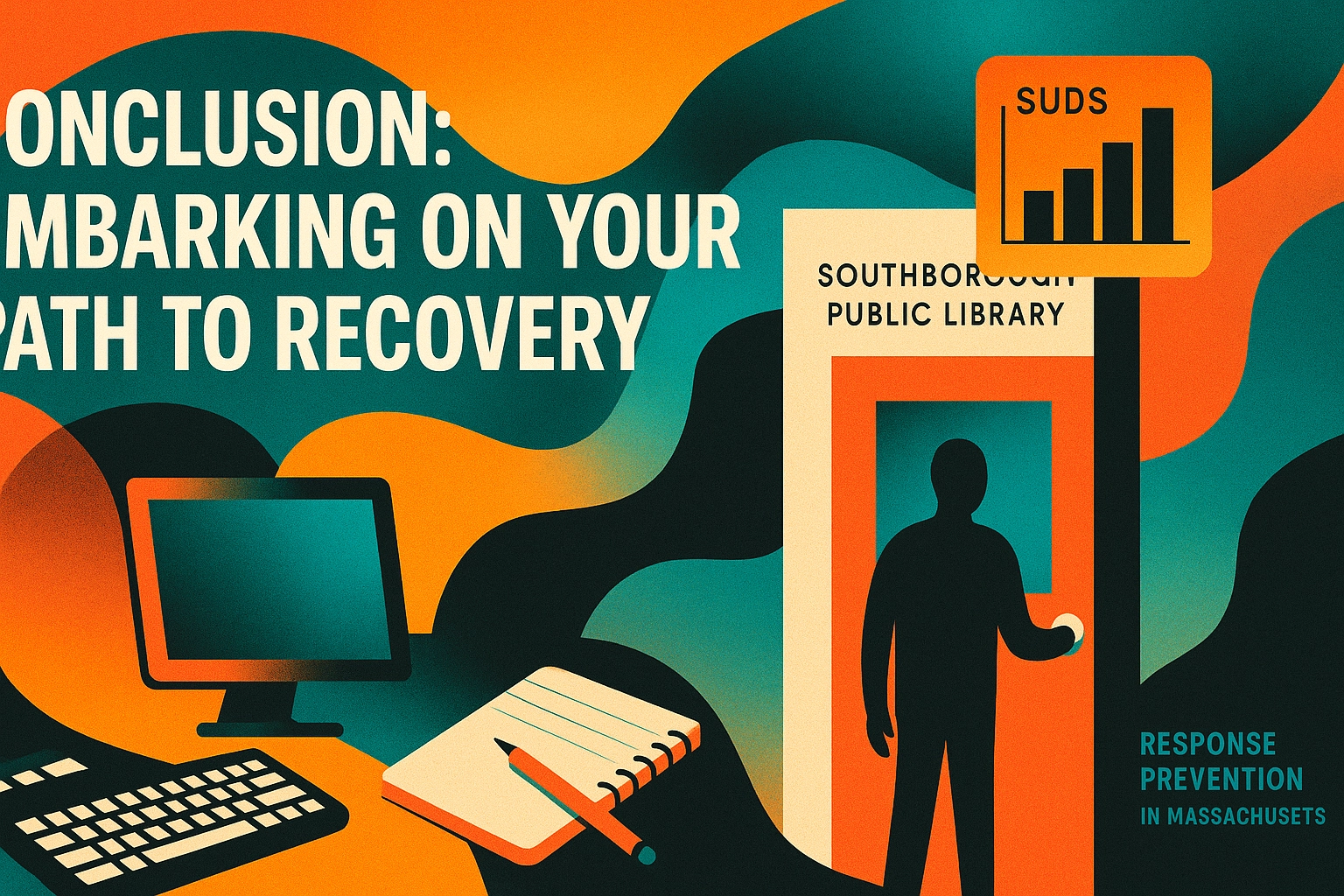
Sustained, stepwise ERP is the engine of change for OCD, so plan exposures you can repeat reliably and measure. Start with a modest trigger, for example touching a public doorknob in a Southborough library, rate your distress on a 0 to 100 SUDS scale, then delay the ritualized handwashing for a preset interval. Track SUDS every 2 to 5 minutes until anxiety decays, which teaches your brain that feared outcomes do not materialize without compulsions. Schedule exposures at least 5 days per week for 20 to 40 minutes each; research shows 50 to 60 percent of individuals experience significant relief with ERP when applied consistently. If travel is a barrier, remote ERP has demonstrated meaningful symptom reduction, so video sessions can complement in vivo tasks across home, work, and community settings. Review your hierarchy weekly, advance only when SUDS peaks drop by at least 20 to 30 points, and keep response prevention exact.
Leverage Massachusetts resources and sustain gains
For acute impairment, Paramount Recovery Centers in Southborough offers PHP dosing, typically 5 to 6 hours daily, five days weekly, to deliver intensive ERP, skills practice, and medical oversight. For moderate symptoms, IOP provides flexible scheduling while maintaining structured ERP OCD protocols tied to your real environments in MetroWest. Treatment-resistant cases may consider adjunctive options coordinated within care, noting that TMS shows a 38 to 58 percent response rate in such populations. To protect gains, maintain a brief daily log of triggers, obsessions, urges, and prevented rituals, and schedule monthly booster ERP sessions. Engage family in coaching scripts, join local peer support and alumni programming, and set community-based exposures, for example dining out in Framingham or attending a crowded event in Worcester. Consistency, connection, and calibrated challenges keep recovery on course.


