
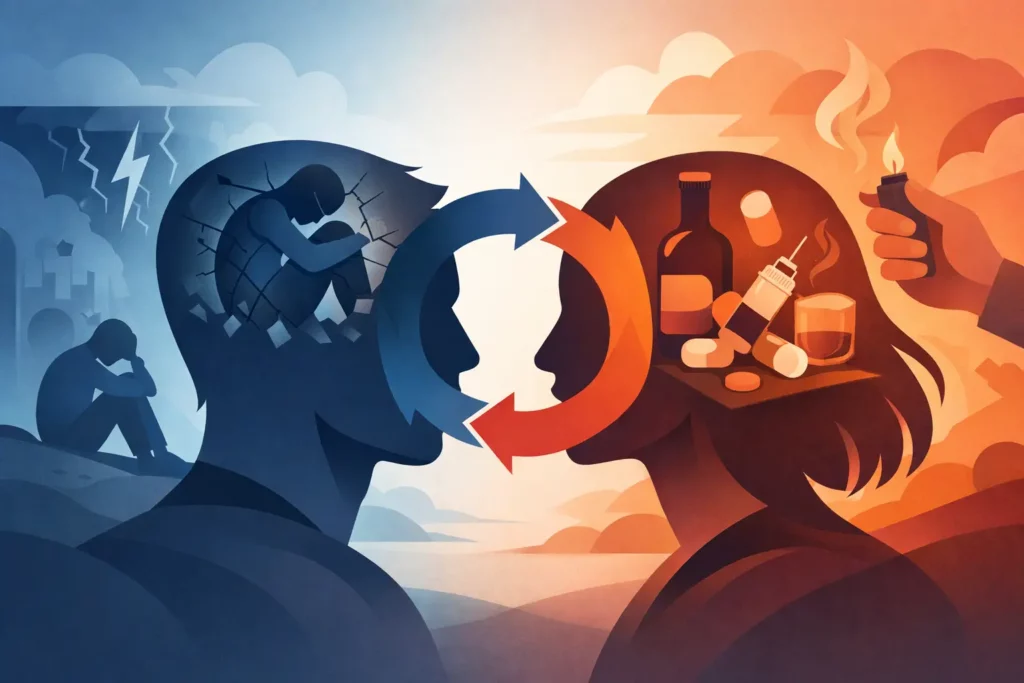


The human experience is often marked by a complex interplay of pain and coping mechanisms. For countless individuals, the shadow of past trauma can cast a long and debilitating pall over their present lives, frequently manifesting as a struggle with addiction. These two seemingly distinct challenges—trauma and addiction—are frequently entangled in a destructive feedback loop, forming a vicious cycle that can feel impossible to escape. This article delves into the profound connection between unresolved traumatic experiences and the development and perpetuation of substance use disorders, exploring how past wounds can inadvertently fuel present-day addiction. Understanding this intricate relationship is the first, crucial step toward breaking free and embarking on a path of integrated healing and lasting recovery.
Understanding Trauma: More Than Just a Bad Memory
 Childhood trauma can alter brain development, weakening the prefrontal cortex’s ability to manage the brain’s fear center (amygdala), which can lead to long-term difficulties with emotional regulation and impulse control.
Trauma is far more than a fleeting unpleasant experience; it is a deep psychological and physiological wound that can profoundly alter an individual’s perception of themselves, others, and the world. It encompasses a broad spectrum of events and circumstances that overwhelm a person’s capacity to cope, leading to lasting and pervasive effects. These traumatic experiences can range from single, acute incidents like accidents, assaults, or natural disasters to prolonged, repeated exposure to adversity, often referred to as complex trauma. A significant category of particularly damaging traumatic experiences includes childhood trauma, such as abuse, neglect, or witnessing domestic violence, frequently categorized under adverse childhood experiences (ACEs).
These early wounds are especially detrimental as they occur during critical developmental periods. During these formative years, brain development is rapid, and crucial structures like the prefrontal cortex, responsible for executive functions such as decision-making, impulse control, and emotional regulation, are being shaped. When a child is exposed to traumatic experiences, their developing brain may adapt in ways that prioritize survival over other functions. This can lead to ingrained trauma symptoms and difficulties with emotion dysregulation, making it challenging to manage intense feelings. Emotional neglect, often perceived as subtly as overt abuse, can leave deep scars, fostering feelings of worthlessness and isolation, and contributing to pervasive emotional distress. The aftermath of trauma can manifest in various trauma symptoms, and in some cases, develop into posttraumatic stress disorder (PTSD). Individuals may also experience profound emotional numbness, a defense mechanism to shield themselves from overwhelming pain.
The Mechanics of the Cycle: How Trauma Fuels Addiction
The pervasive and debilitating effects of trauma create a fertile ground for the development of addiction. For many struggling with the aftermath of traumatic experiences, substances like alcohol or drugs may appear to offer a form of respite. This phenomenon is often described by the self-medication hypothesis: individuals turn to drugs or alcohol to numb the intense emotional distress, manage intrusive traumatic memories, alleviate chronic anxiety and anxiety-depressive symptoms, or escape overwhelming physiological sensations like hypervigilance. The temporary chemical alterations induced by substances can, for a brief period, dampen the intensity of negative affect and the distress associated with traumatic stress.
Neurobiologically, trauma can dysregulate the body’s stress response system. Chronic stress can lead to an overactive stress axis, characterized by elevated cortisol response and corticotropin-releasing factor (CRF). This heightened state of arousal makes individuals more susceptible to triggers and the intense feelings associated with traumatic memories. Substances of abuse, particularly those that interact with the brain reward systems, can provide a powerful, albeit temporary, escape from this physiological and psychological distress. They do this by hijacking the dopamine systems within the nucleus accumbens and ventral striatum, creating a surge of pleasure and relief that the brain quickly learns to associate with the substance. Furthermore, trauma can disrupt the body’s natural pain management system, mediated by endogenous opioids. When these systems are compromised, individuals may seek external sources of opioid-like effects from drugs.
The concept of a “gateway drug” can also be relevant here; individuals may initially experiment with substances to cope with trauma-related symptoms, and over time, develop a substance use disorder to specific drugs like cocaine craving, cannabis dependence, or nicotine. This cycle of using substances to escape trauma-induced pain, leading to a substance use disorder, is a core mechanism driving the connection. The intense craving levels and craving intensity experienced are often triggered by trauma-related cues and amplified by the desire to avoid overwhelming feelings, a phenomenon exacerbated by stress and cue-elicited craving. Such behaviors can also be influenced by deeply ingrained trauma scripts and erroneous cognitions formed from the original traumatic experiences. Statistics reveal the profound impact of such experiences: individuals with a history of childhood physical or sexual abuse face a 74% and 73% greater risk, respectively, of developing a substance use disorder in their lifetime compared to other people. National Institute on Drug Abuse (NIDA), 2024
The Vicious Cycle in Motion: A Self-Perpetuating Pattern
Once established, the relationship between trauma and addiction often devolves into a self-perpetuating cycle, a vicious cycle that is incredibly difficult to break without targeted intervention. While substances may offer temporary relief from the symptoms of traumatic stress, they do not address the underlying wounds. In fact, substance abuse often creates a new layer of problems that can, in turn, become sources of further trauma or exacerbate existing vulnerabilities. Engaging in substance abuse can lead to impulsive behaviors, impaired judgment, and a breakdown of healthy coping mechanisms. This can result in damaged relationships, loss of employment, financial instability, and engagement in dangerous situations, all of which can be re-traumatizing or create new traumatic experiences.
Moreover, the use of substances can interfere with the natural healing process of traumatic memories. The brain’s ability to process and integrate distressing events can be hampered, leaving traumatic memories feeling raw and intrusive. This can lead to increased PTSD symptoms and a persistent sense of being stuck in the past. Individuals may also experience disrupted sleep patterns, heightened reactivity, and an increased likelihood of experiencing traumatic symptoms when faced with triggers. The cycle is further entrenched by trauma bonds, unhealthy and often intense emotional attachments that form between individuals who have experienced trauma together, particularly when substances are involved. These bonds can make it difficult to leave damaging relationships or situations, perpetuating the cycle of harm. Consequently, untreated trauma is a significant driver of increased relapse rates among individuals recovering from addiction. Research indicates that up to 85% of adults seeking treatment for Post-Traumatic Stress Disorder (PTSD) also have a co-occurring substance use disorder (SUD), PMC (referencing research), 2024, underscoring the critical need for integrated treatment. The constant battle with cravings, amplified by stress and cue-elicited craving and self-conscious negative affect, can feel overwhelming, leading individuals to believe that the temporary relief offered by substances is their only option.
Breaking Free: Pathways to Integrated Healing and Recovery
Breaking free from the vicious cycle of trauma and addiction requires a comprehensive and integrated approach to healing. The most effective strategies recognize that substance use disorder and the effects of traumatic stress are deeply intertwined and must be addressed concurrently. Treating addiction without acknowledging the underlying trauma, or vice versa, is often akin to treating the symptoms without addressing the disease, leading to higher rates of relapse and incomplete recovery. This is where the principles of trauma-informed care become paramount in treatment settings.
Trauma-informed care shifts the focus from “What’s wrong with you?” to “What happened to you?” It emphasizes creating an environment of safety, trustworthiness, choice, collaboration, and empowerment. Understanding that many behaviors are adaptive responses to overwhelming experiences is key. Integrated trauma therapy and trauma-focused treatment are essential. Therapies such as Cognitive Processing Therapy (CPT) and EMDR (Eye Movement Desensitization and Reprocessing) directly address traumatic memories and trauma-related cognitions, helping individuals process distressing events and challenge erroneous cognitions. Cognitive-behavioral therapies (CBT) can also be highly effective in modifying maladaptive thoughts and behaviors associated with both trauma and addiction. Furthermore, Somatic therapies and trauma-sensitive yoga offer pathways to reconnect with the body and release stored physical tension associated with traumatic experiences, addressing emotional numbness and facilitating emotional regulation.
For individuals experiencing both conditions, addressing dual diagnosis is crucial. This involves concurrent treatment for both the substance use disorder and the posttraumatic stress disorder or other trauma-related conditions. Residential trauma treatment and residential and outpatient treatment options, such as those provided by organizations like Addiction Recovery Care, offer structured environments where individuals can receive intensive support. Additionally, support groups provide a vital sense of community and shared understanding. Practical tools like grounding exercises and grounding and mindfulness exercises are invaluable for managing immediate emotional distress and craving intensity in real-time. Many individuals benefit from the expertise of a trauma specialist, like Lisa Bloom, MSW, LSW, or clinicians such as Kathleen Ryan-Fuhs, LCSW, affiliated with centers like Northwestern Medicine Behavioral Health Services or Insights Psychology, with professionals like Rich Goddard in the Dallas–Fort Worth area offering specialized care. The goal of trauma-focused strategies is to help individuals safely process their past, develop healthier coping mechanisms, and build resilience.
A Future of Healing: Hope for Breaking the Cycle
The journey of healing from the intertwined grip of trauma and addiction is undoubtedly challenging, but it is far from insurmountable. It is a testament to human resilience that individuals can not only survive profound adversity but also emerge stronger, healthier, and more whole. The recognition that past wounds can fuel present-day struggles is not a sentence to perpetual suffering, but an illumination of the path toward genuine recovery. By understanding the intricate connections between childhood trauma, traumatic experiences, the brain’s responses to traumatic stress, and the development of substance use disorder, individuals can begin to dismantle the self-perpetuating cycle.
The emergence of trauma-informed care and integrated treatment models offers profound hope. These approaches acknowledge that healing requires addressing the root causes of distress, not just the resulting behaviors. Utilizing evidence-based trauma therapy techniques, such as cognitive processing therapy, EMDR, and somatic approaches, allows individuals to confront and process traumatic memories in a safe and controlled manner. These therapies are often complemented by trauma-sensitive yoga and grounding exercises, empowering individuals to manage emotional distress and regain a sense of agency. For those navigating dual diagnosis, concurrent treatment is vital, often involving residential trauma treatment or comprehensive residential and outpatient treatment programs that address both the substance use disorder and PTSD symptoms. Modern tools, including mobile applications like PTSD Coach developed with the help of institutions like the U.S. Department of Veterans Affairs, and ecological momentary assessment for daily monitoring study can provide ongoing support and insight into craving levels and triggers. Support groups offer a crucial network of peer understanding and encouragement. The path forward involves embracing trauma-focused strategies that promote resilience, address emotional neglect and its impacts, and ultimately lead to sustained recovery and a future free from the chains of past wounds.
Conclusion
The deep-seated connection between past childhood trauma, traumatic experiences, and present-day substance use disorder forms a formidable vicious cycle. Unresolved traumatic stress can profoundly impact brain development, particularly the prefrontal cortex, leading to emotion dysregulation, emotional numbness, and an increased vulnerability to substance abuse. The self-medication hypothesis explains how individuals may turn to alcohol or other drugs to cope with overwhelming emotional distress and intrusive traumatic memories, inadvertently reinforcing the cycle. This leads to a perpetuation of trauma symptoms and PTSD symptoms, with untreated trauma significantly contributing to higher relapse rates. Fortunately, a growing understanding of these mechanisms has paved the way for effective, integrated approaches. Trauma-informed care principles are now central to treatment, emphasizing safety, empowerment, and choice. Therapies such as cognitive processing therapy, EMDR, and somatic therapies offer pathways to heal traumatic memories and challenge erroneous cognitions. Addressing dual diagnosis concurrently is essential, whether through residential trauma treatment or outpatient services. By embracing these trauma-focused strategies, individuals can break free from the debilitating cycle, rebuild their lives, and achieve lasting recovery. Seeking help from a trauma specialist and engaging in support groups are vital steps toward this hopeful future.


